
GRMA Day 36: A Visual Review
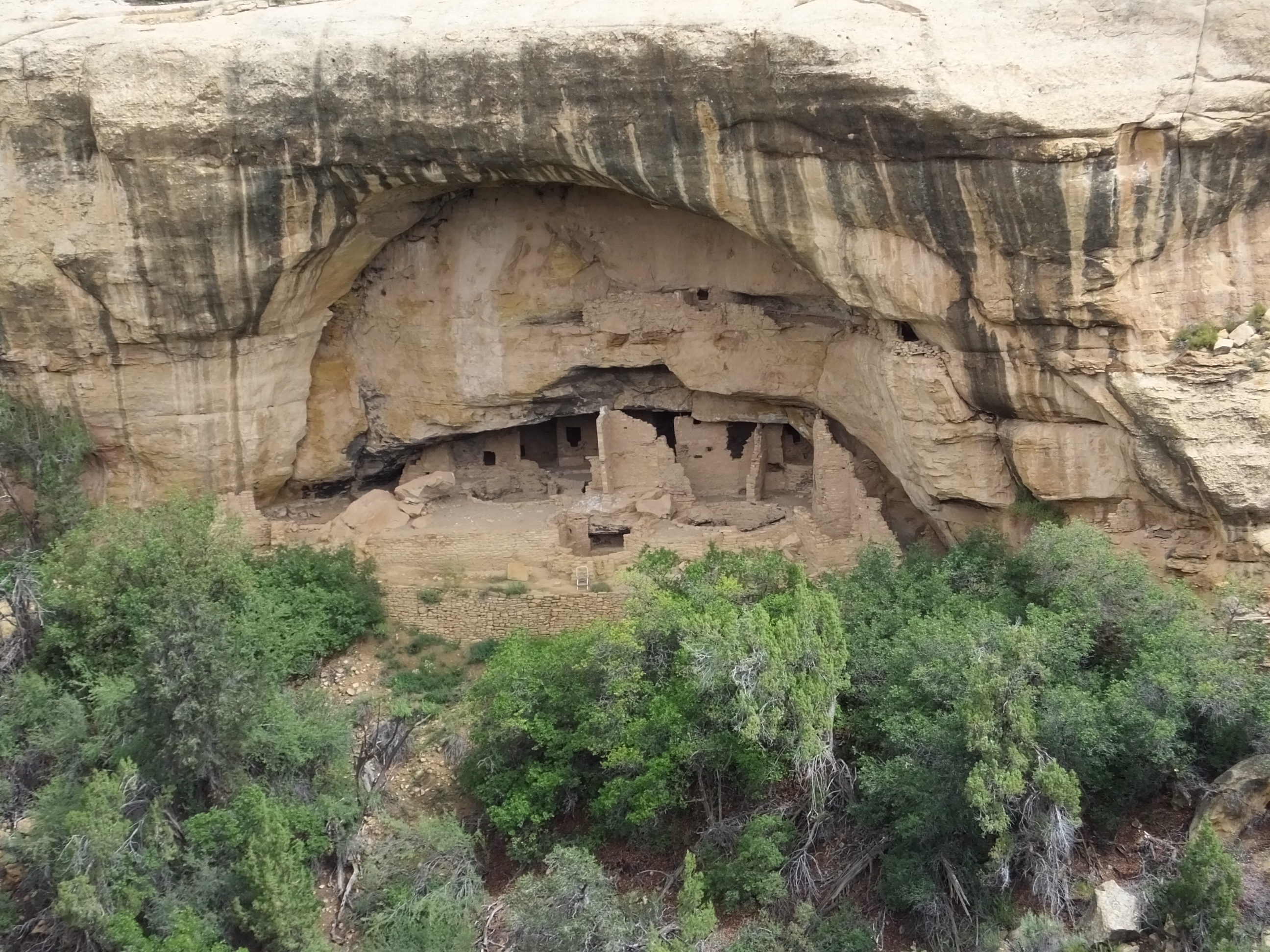
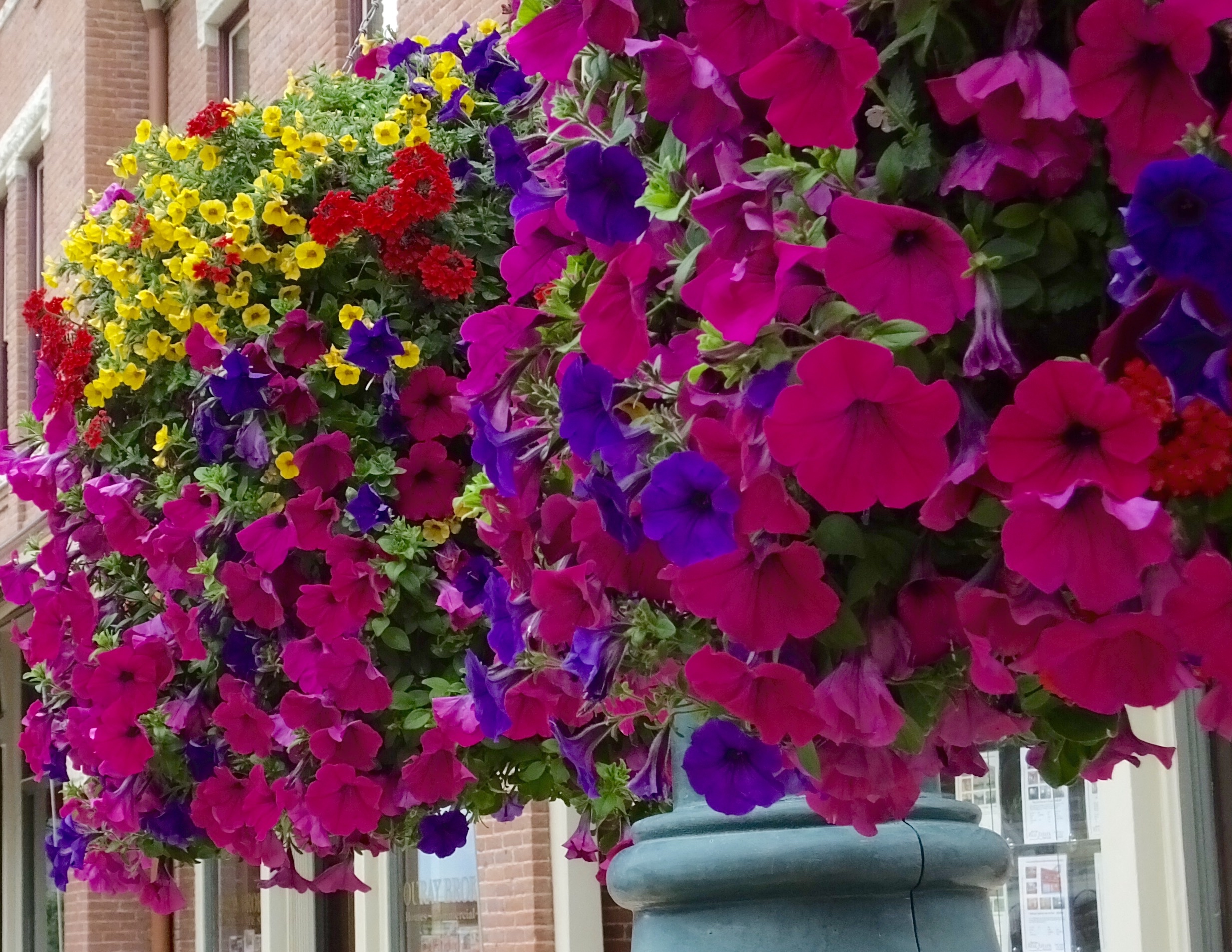
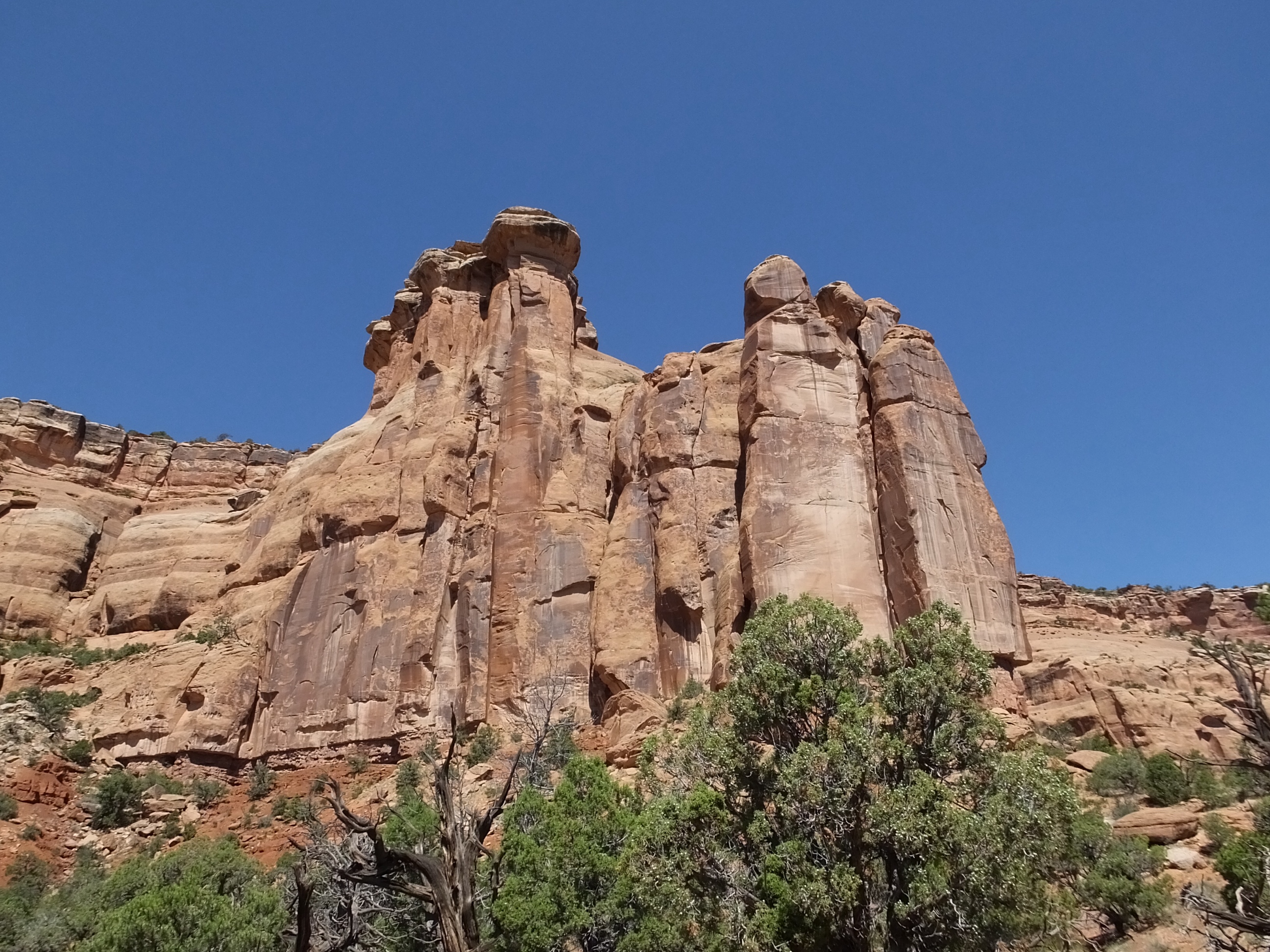
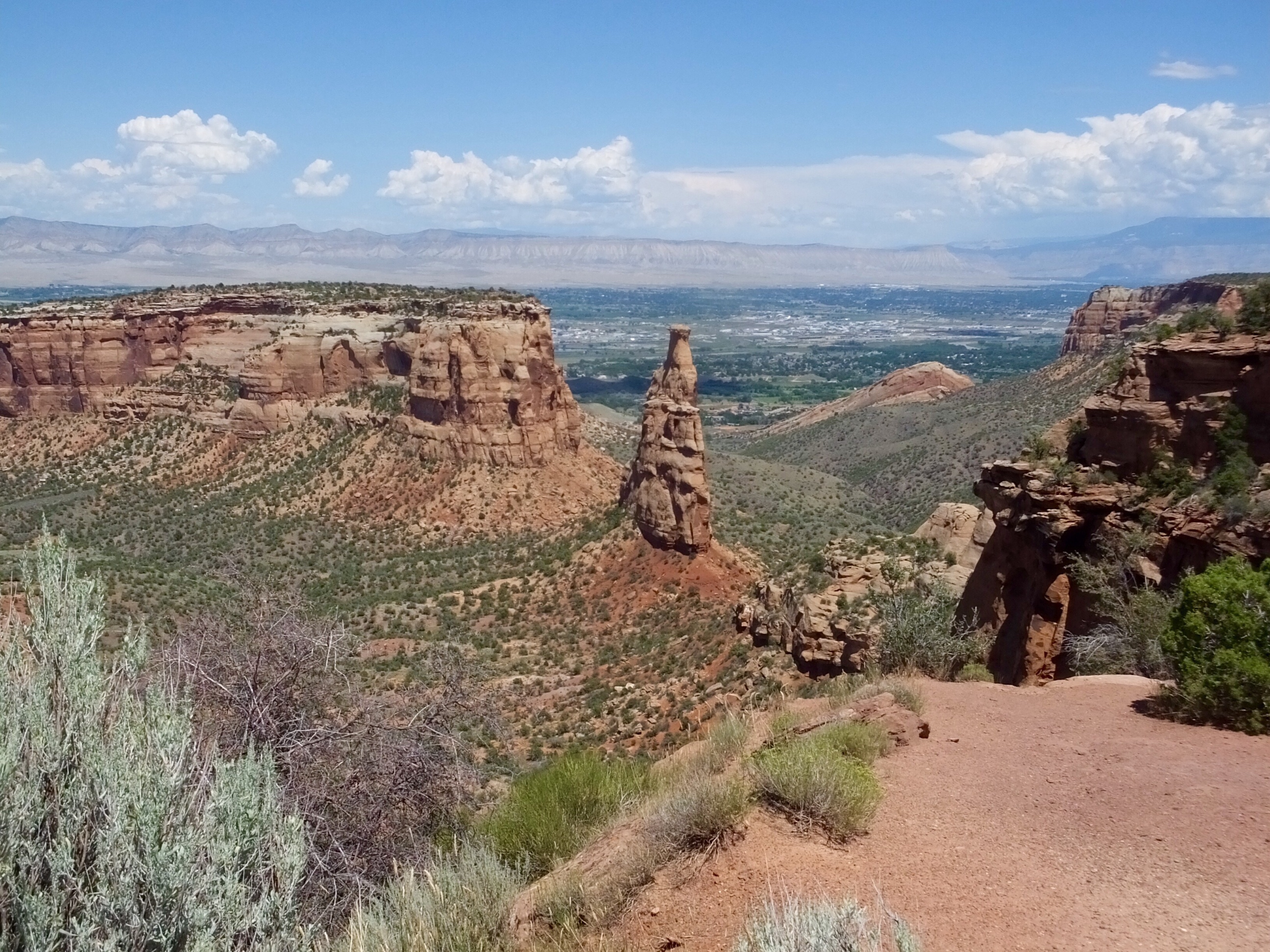
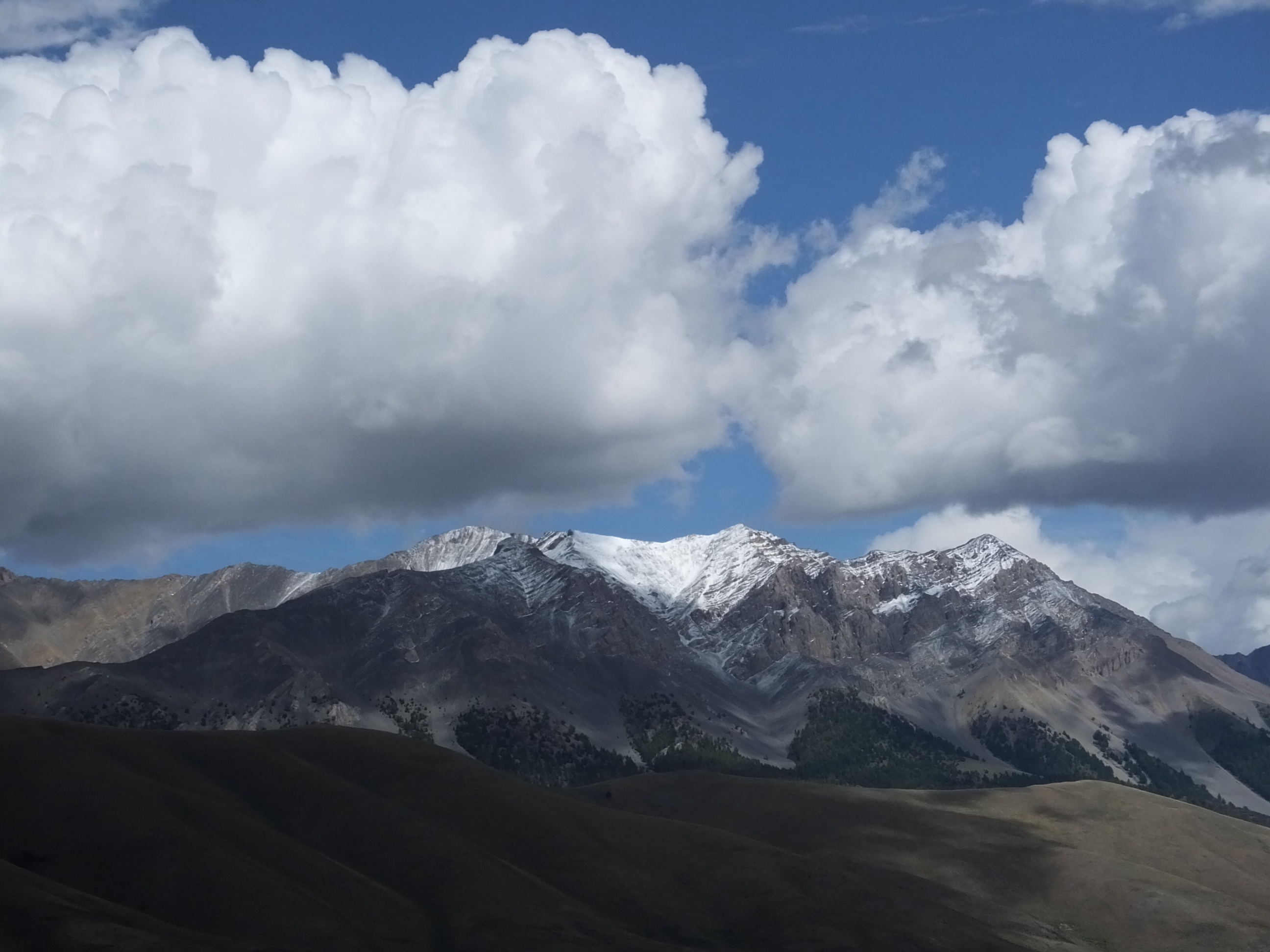
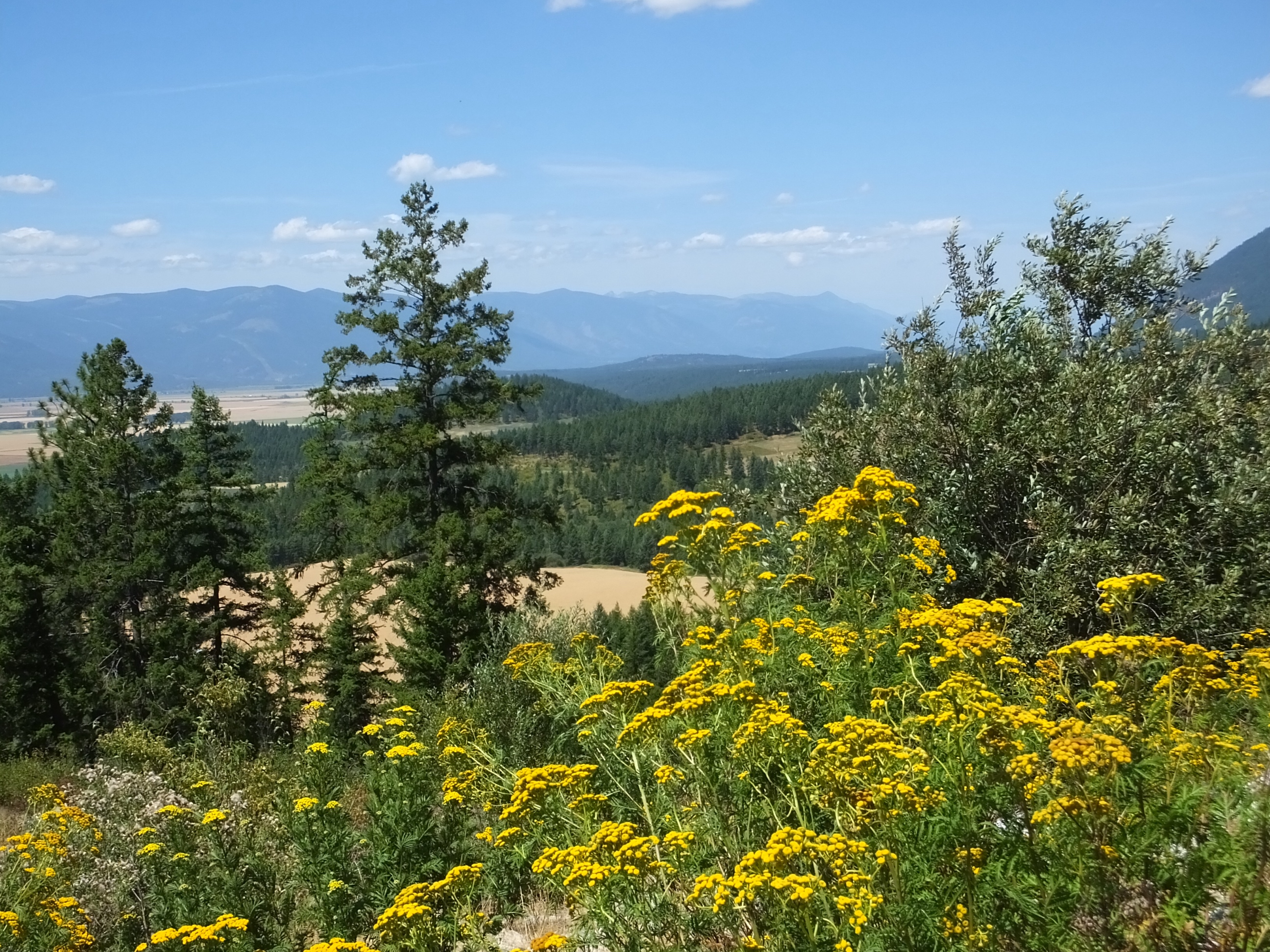
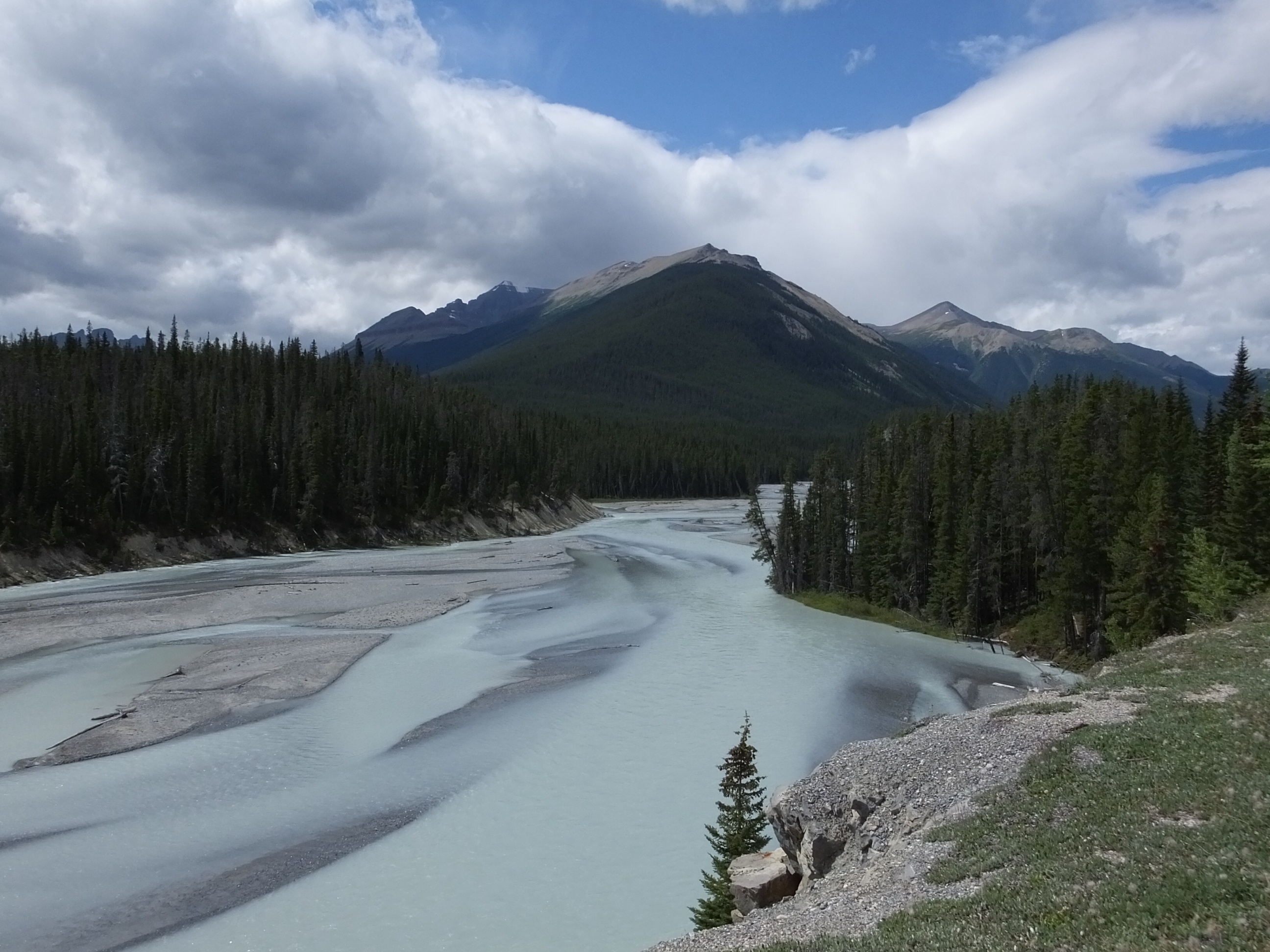
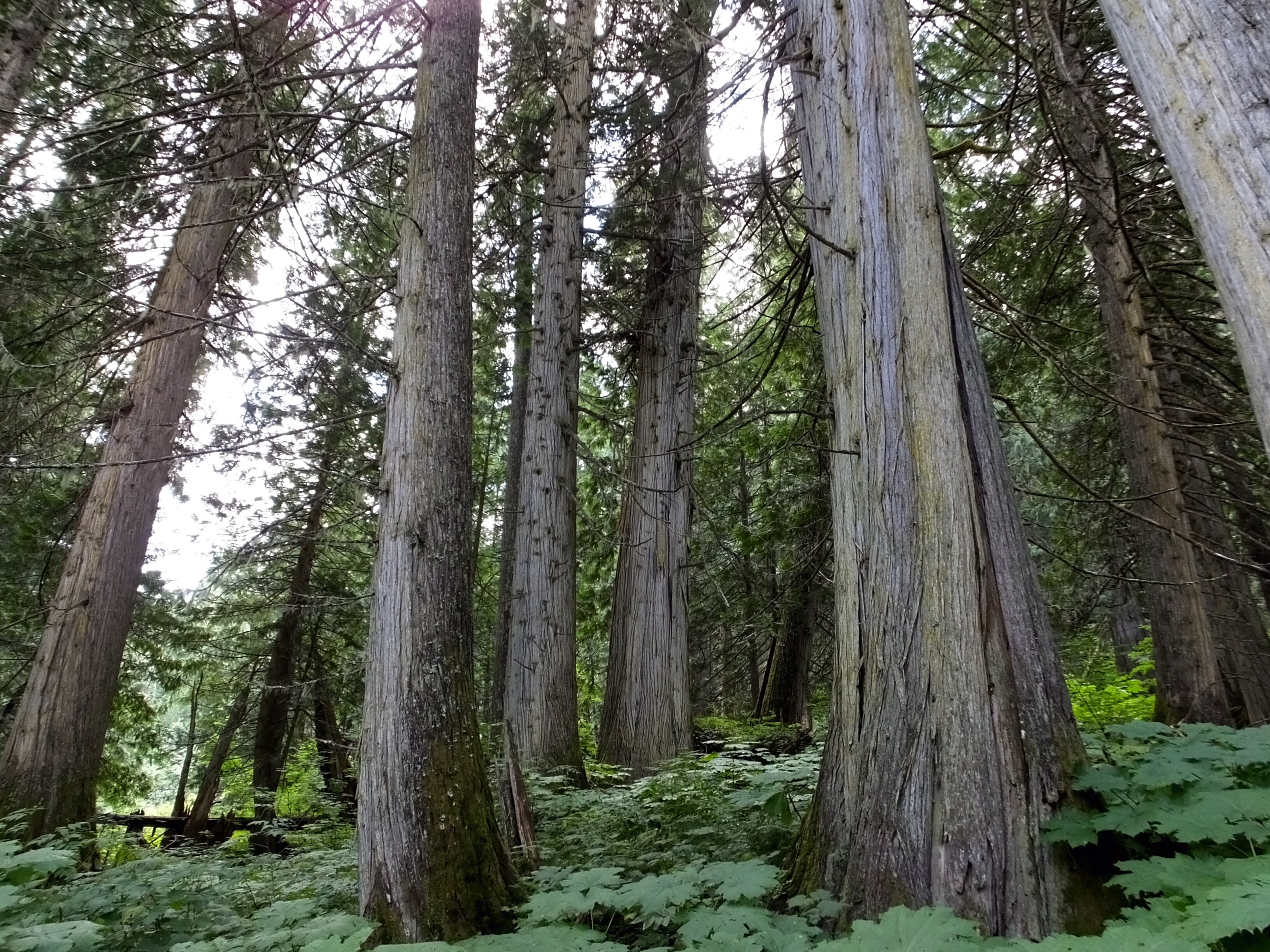
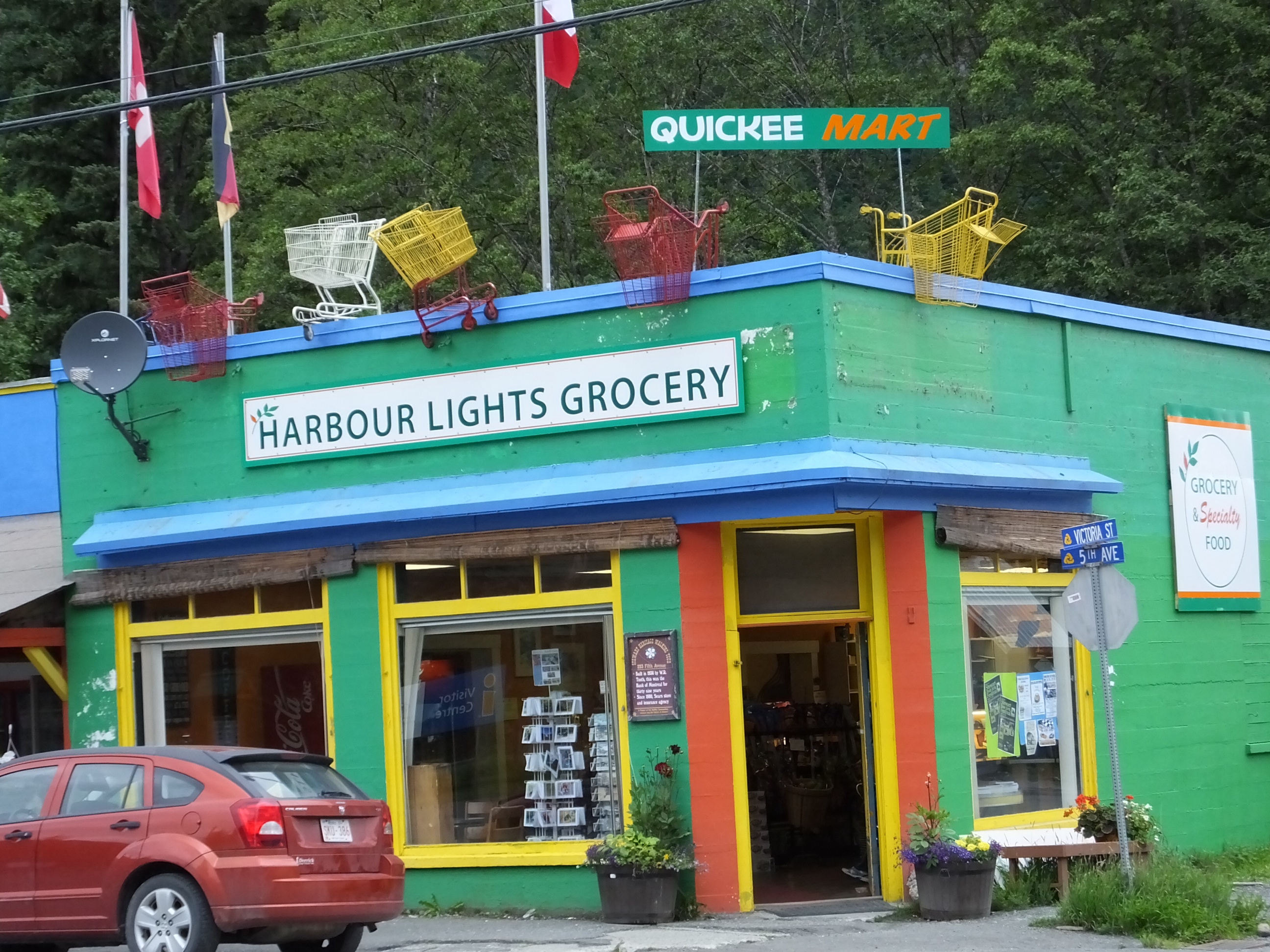
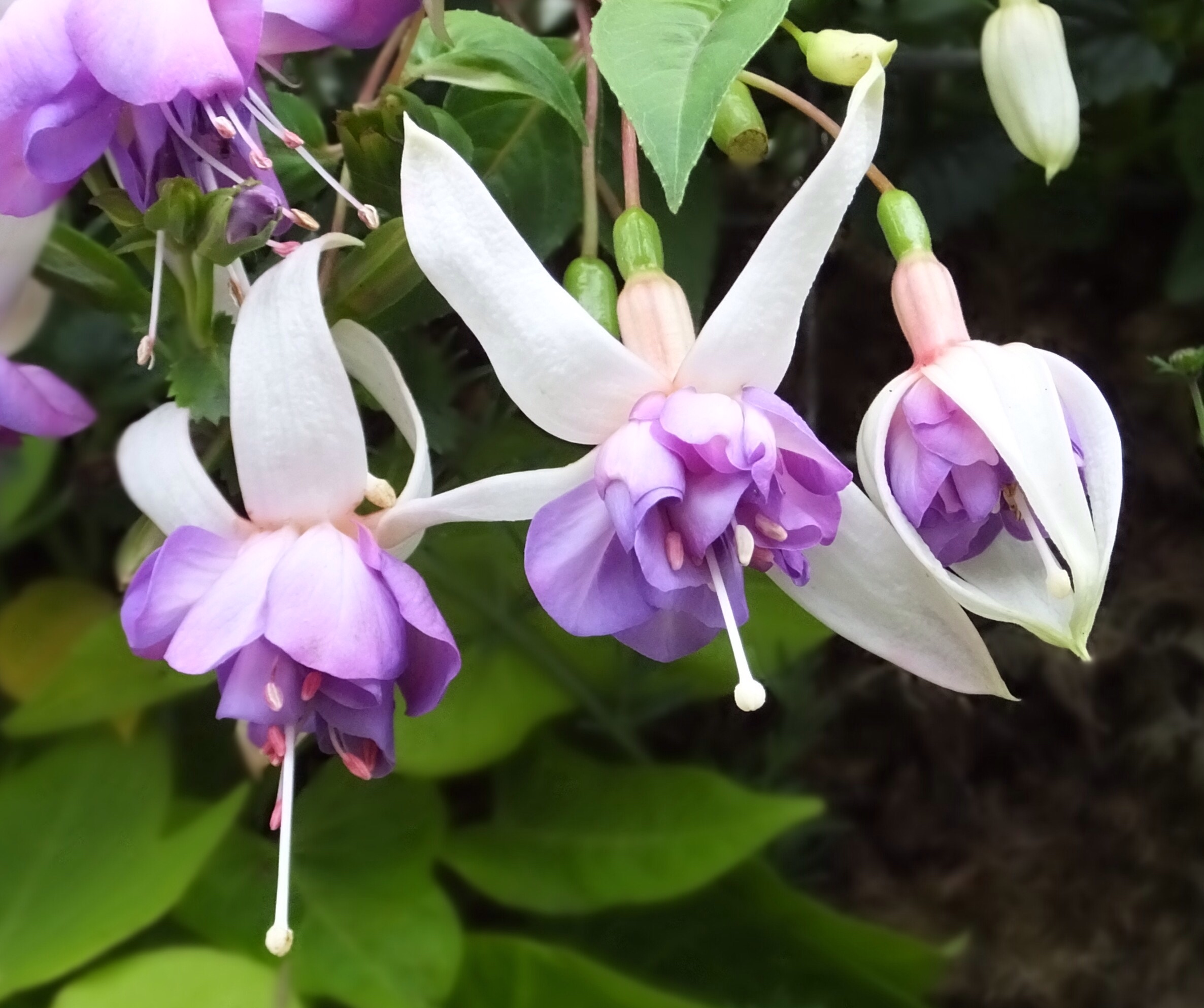
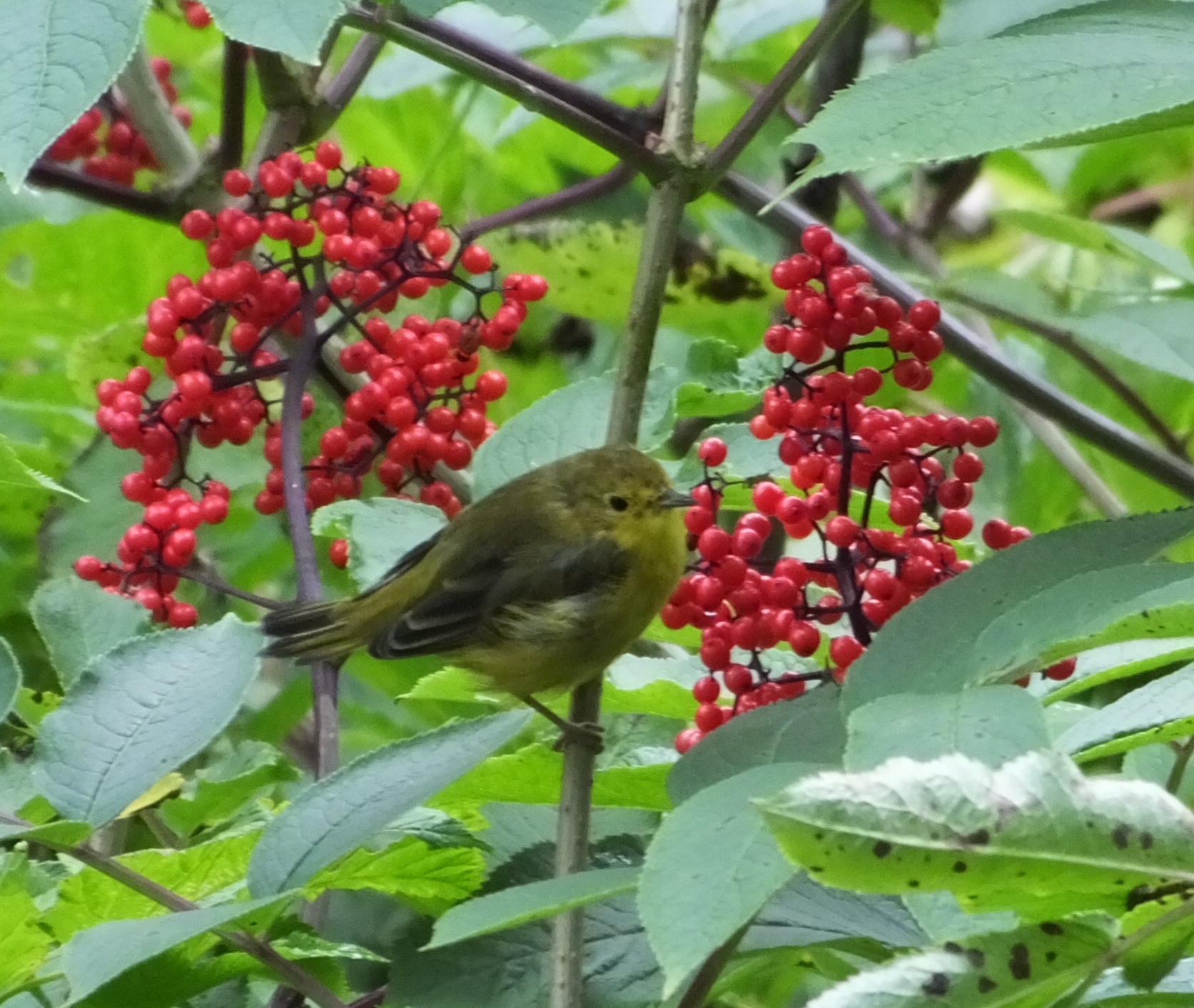
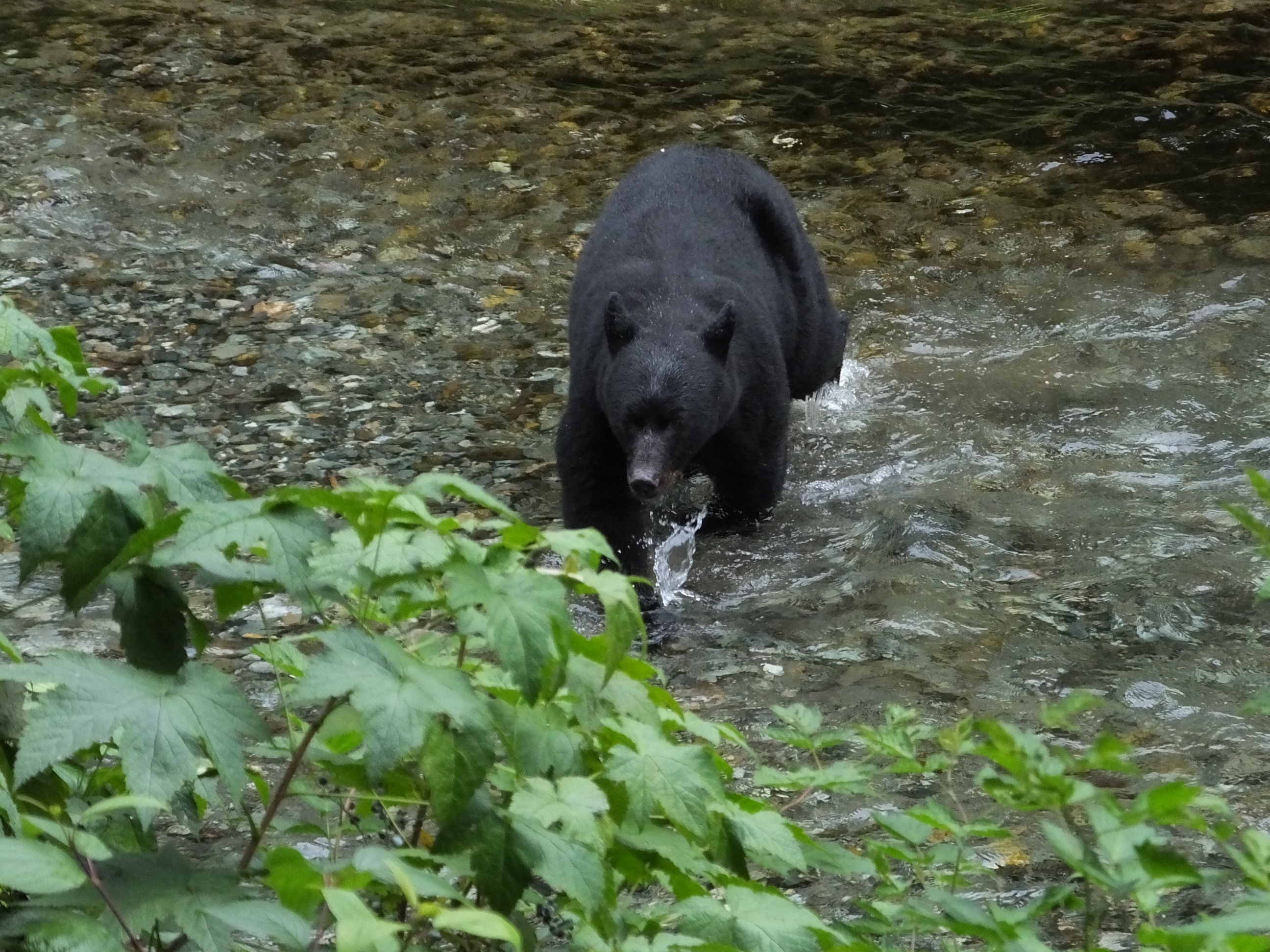
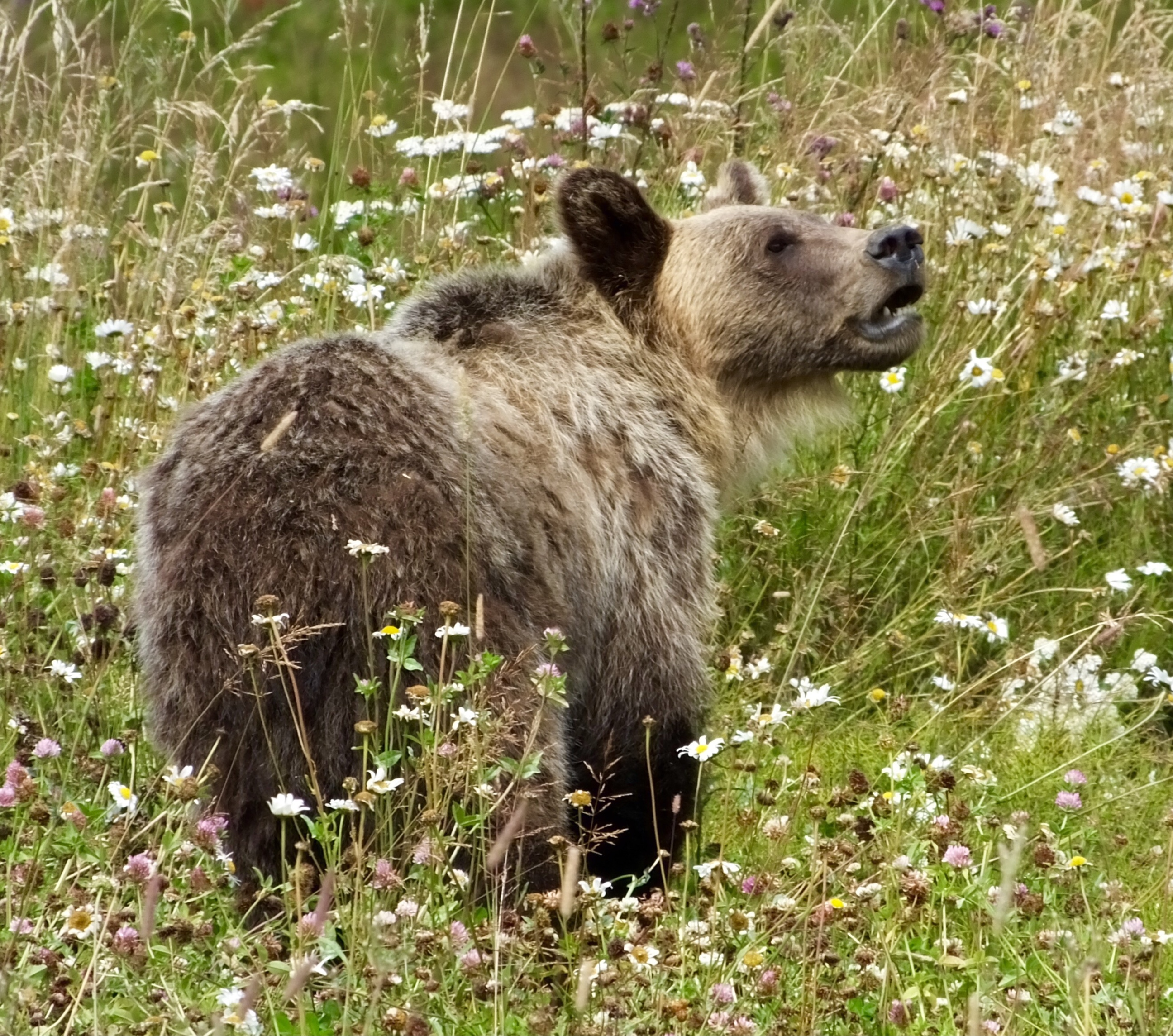
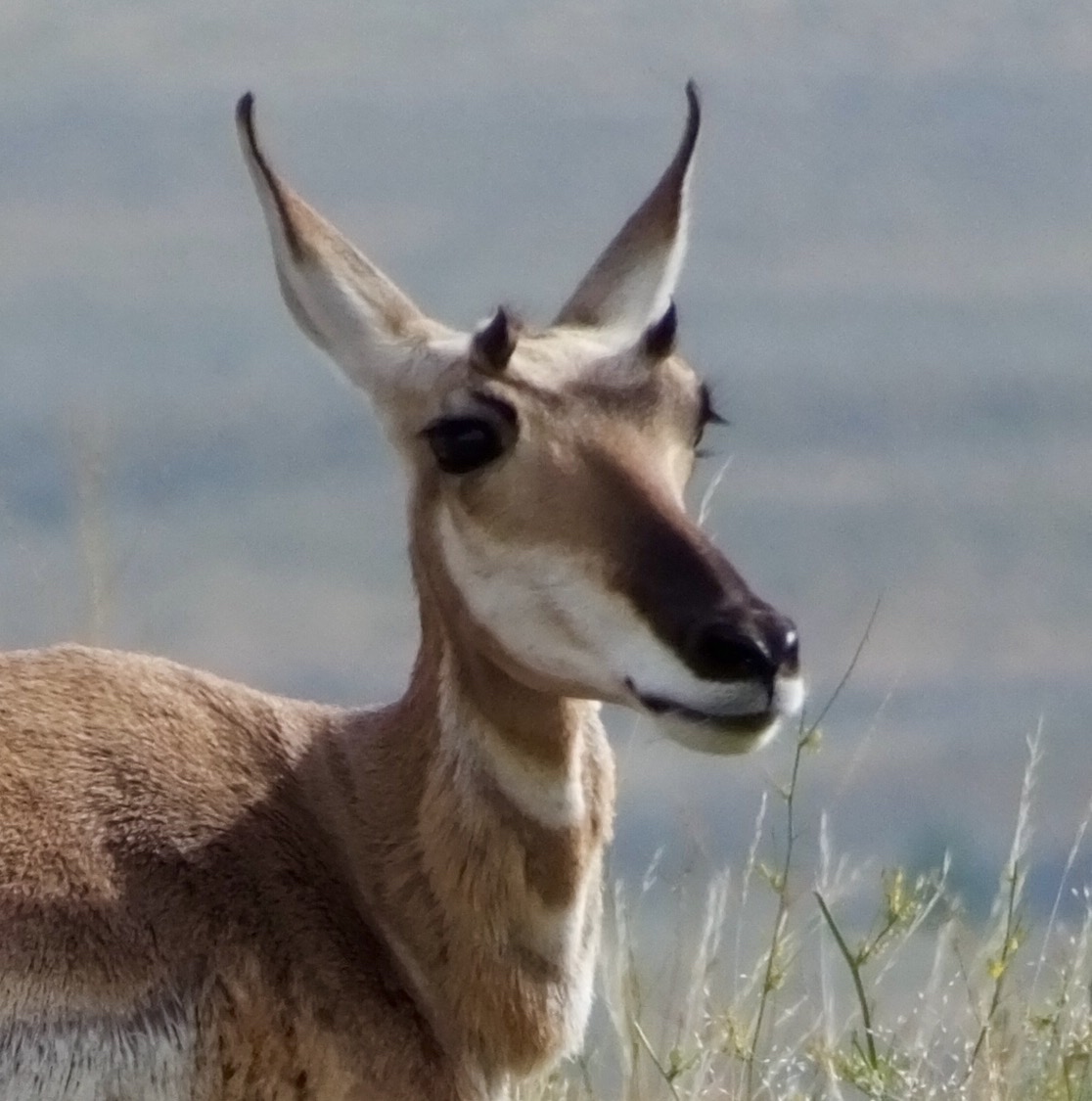
Assuming that most people don’t want to hear about me doing my laundry or taking my mother to the store, I won’t spend any time describing my day. Instead, I’ll take the time to pick out some images from the 1,200 or so that I’ve taken so far that reflect the Great Rocky Mountain Adventure. I’ll write more in the coming days.
Enjoy.
GRMA Day 35: The Mountains in My Rear View Mirror
Several county music songs make reference to some town “in my rear view mirror,” usually with a sense of being happy to put something unpleasant behind the balladeer. This morning as I left Pueblo I could see the Rockies in my rear view mirror (well actually side view mirrors but you get the picture). As I looked at the flat prairie unfolding before me and the majestic mountains shrinking to nothingness at the miles rolled by, I had sharply mixed feelings. It’s good to be going home after nearly five weeks on the road, but I know I’m going to miss the mountains that gave me so many hours of riding pleasure, miles of scenic wonders, and crucial moments of spiritual contentment.
These beautiful piles of various rocks, these soaring stony spires, these color wheels of geologic evolution, these Rocky Mountains have lasted for tens of millions of years; I imagine they’ll still be there when I return. And I will return. Many times, I think, before I’m done riding on two wheels.
During August, eastern Colorado is a lot like western Kansas. Small dusty towns trying to hang on to their pioneer past; flat landscape; hot stale air; wheat fields and alfalfa fields that stretch endlessly to the horizon; odiferous feed yards every 30 miles or so packed with clueless cattle. What’s a rider to do? Well, one approach, and the one I took today when I could, is to go fast, don’t stop and try to get through it as quickly as possible. But when you have 440 miles to go and every 20 miles bright orange cones, dusty yellow highway equipment and florescent lime-green safety vests pop up like spring flowers in a fecund meadow, the distance from point A to point B seems to shrink much too slowly. Still, by pushing the speedometer above the posted speed suggestion limit signs pointlessly littering the roadside, I covered the distance in about eight grueling hours. And that included a pie and coffee lunch (coconut cream, again) and two petrol stops.
I’m back in Wichita with family for a couple days. I’ll continue to write and post some short remarks. I may even go back through my photo gallery and post a few pictures taken along the way that didn’t make the cut to the blog the day they were taken but probably should have. There will, as always, be something here for die-hard blog readers who are usually killing time at their desks when they ought to be doing the productive work they’re getting paid for. At any rate, I’m glad some readers are hanging on to the end of the GRMA. There may still be some Adventures along the way home.
GRMA Day 34: The Loop is Completed
The goal for this year’s Great Adventure was to loop the Rocky Mountains–from the southern end in New Mexico to the northern in the Yukon Territory and back. When I rolled into Pueblo, Colorado, late this evening, the loop was completed since this is where I began 28 days ago. I haven’t seen all the many ranges and sub-ranges in the Rockies, but I’ve sure seen a lot of them. And they were all I expected and more. Mountains–especially the Rockies–produce in nearly everyone who sees them feelings of awe and wonder and amazement and reverence and more.
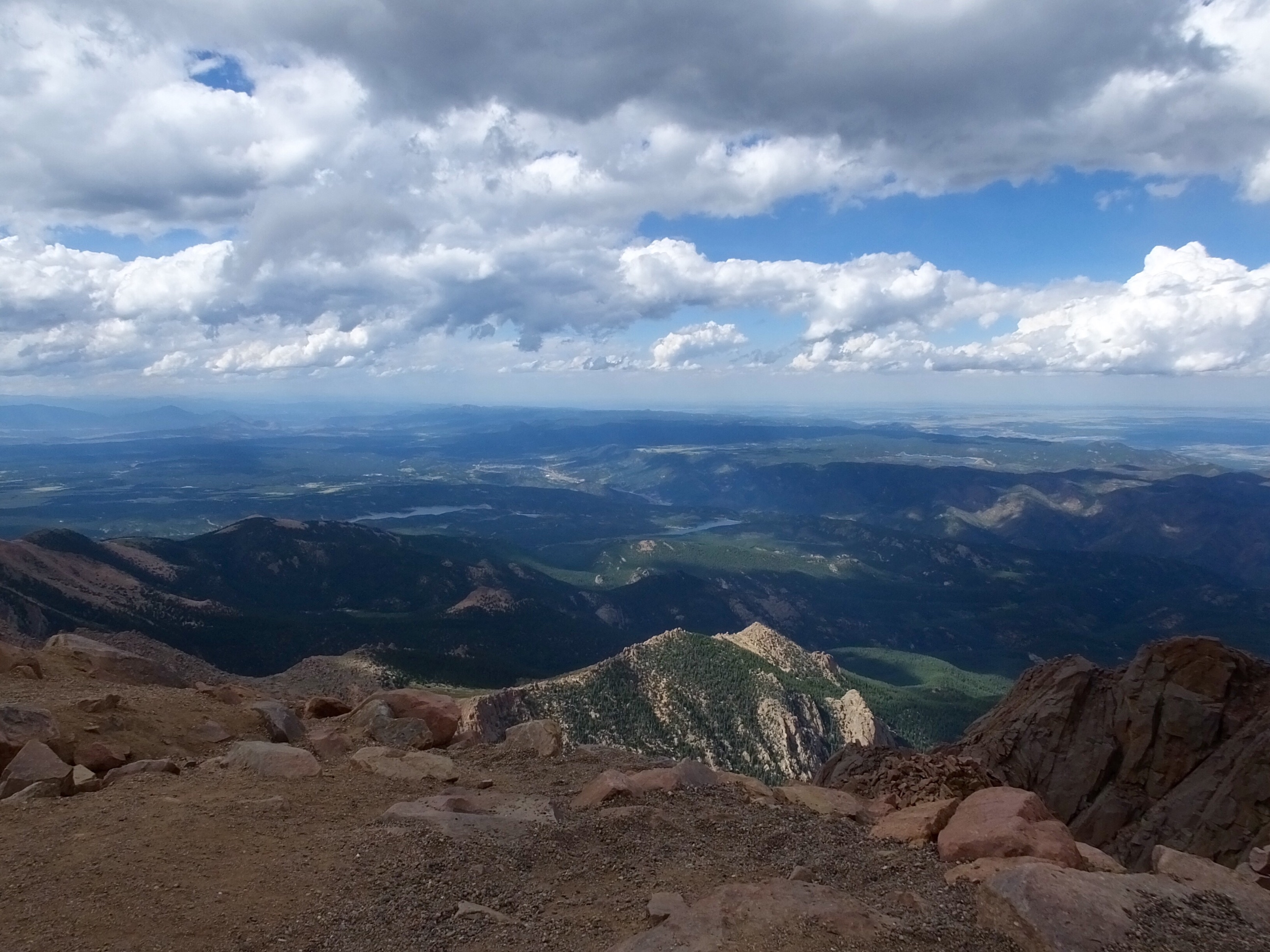 I never tired in four weeks of waking up to them, riding through them, stopping to drink them in and trying to understand them from both a scientific and an emotional perspective. There’s an old saying that if a biker has to tell you why he (or she) rides a Harley, you wouldn’t understand anyway. Maybe that’s the way it is with mountains. If you can see them, be in them, hike through them, ride through them and still don’t understand why they’re special, nothing I could write or say or photograph would really help you understand.
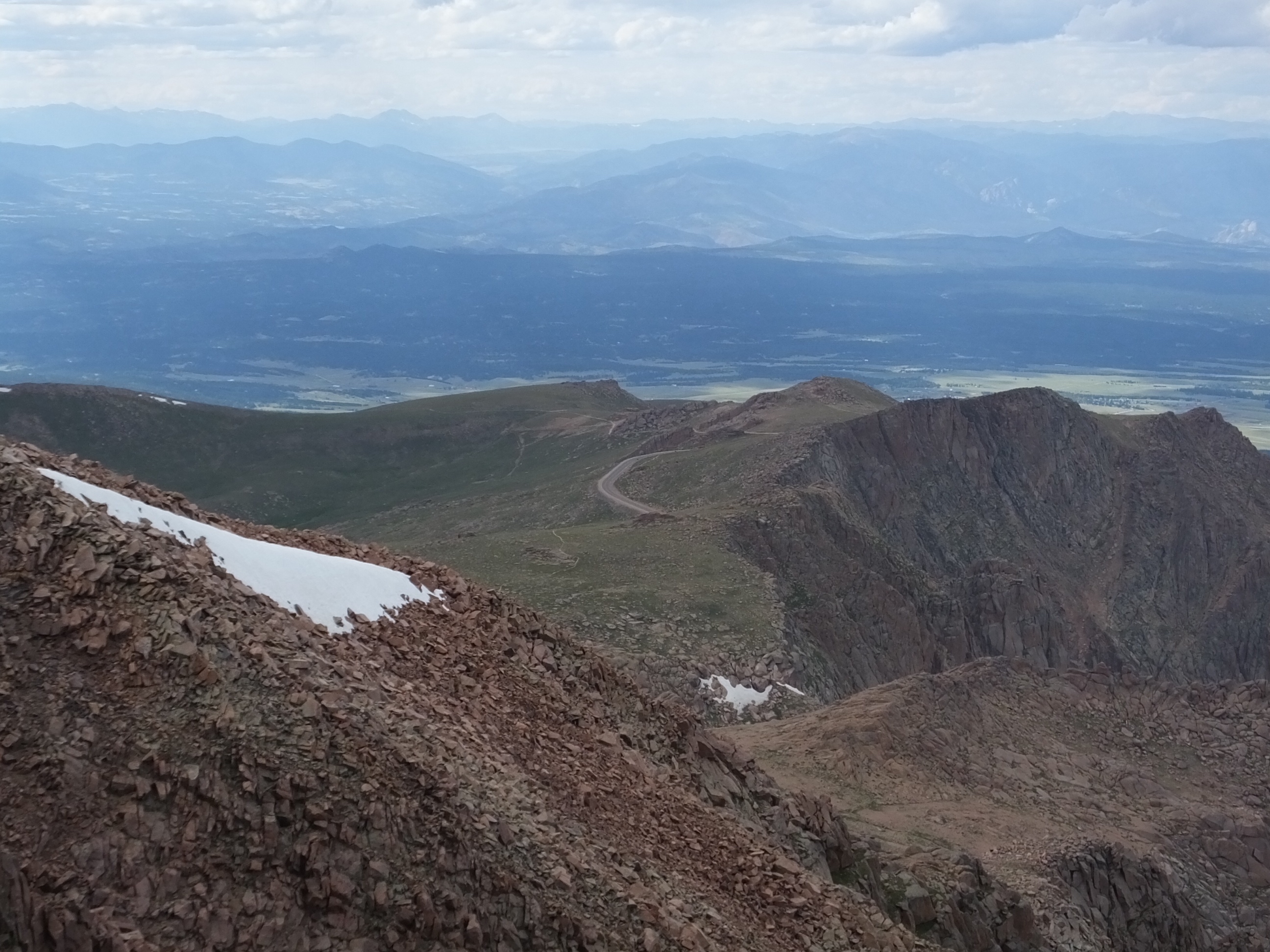 I had initially thought about taking a quicker route today involving considerable Interstate riding. But this morning, when I realized this was my last day in the mountains (for a while), I turned off the GPS route I had pre-loaded and just headed south from Linda’s ranch in Laramie. I had a vague idea where I would be going, so I mainly just kept my eye on my compass and rode mostly south with some east/west roads thrown in as needed. The result was that I rode on roads I’ve not been on before and just sat back and cruised through curves and the ups and downs enjoying the view and my additional few hours in the mountains.
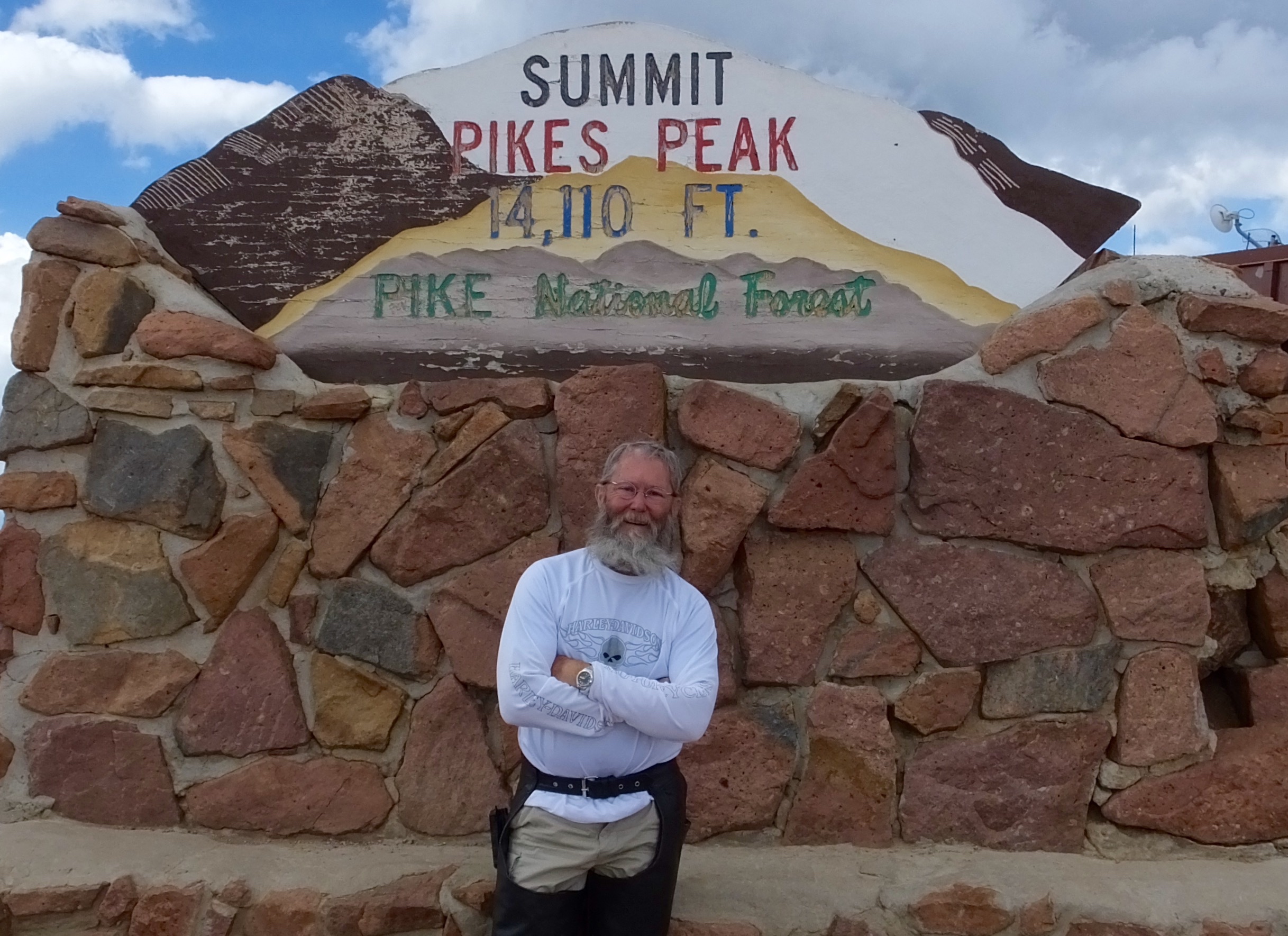 The only stop I had planned for today, and the only place I took pictures was Pike’s Peak, about 50 miles from my Pueblo destination. The road is now fully paved and doesn’t offer the challenges it once did when drivers risked life and limb on gravel and rock much of the way to the top. But the dozens of hairpin turns with no guardrails and near vertical drops of hundreds of feet still keep your attention as you climb from about 6,000 feet to over 14,000 feet. Unfortunately, like many other places I’ve been on this adventure, there were too many people. And many of those people don’t understand that they shouldn’t stop on an 8% grade coming out of a hairpin turn when there’s a motorcycle behind them. Or not to stop in the middle of the road to look at wildlife because there was no room for any shoulder. I made it to the top with no accidents (motorcycling is safer than fishing, after all) but I did express myself bluntly to a couple drivers who should have stayed on flat ground.
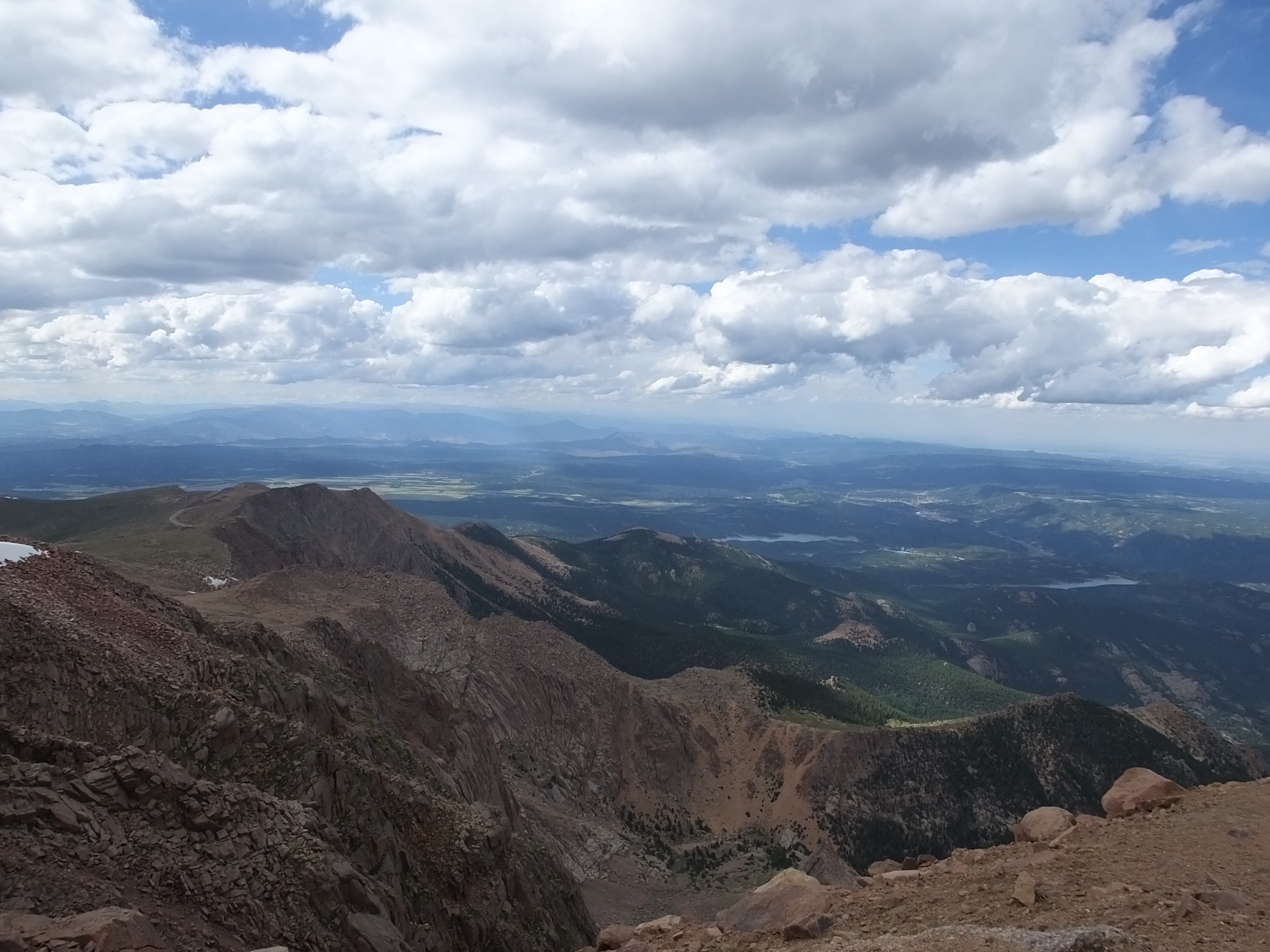 Three years ago I rode to the top of Mt. Evans in Colorado, the highest paved road in the United States. The ride was more challenging and there were a lot fewer people at the top. The view was pretty much the same (damned awesome) and I guess I’d recommend the Mt. Evans ride over Pike’s Peak. In either case, be prepared for a temperature drop of about 50 degrees. It was about 93 in Colorado Springs and about 43 at the top of Pikes Peak.
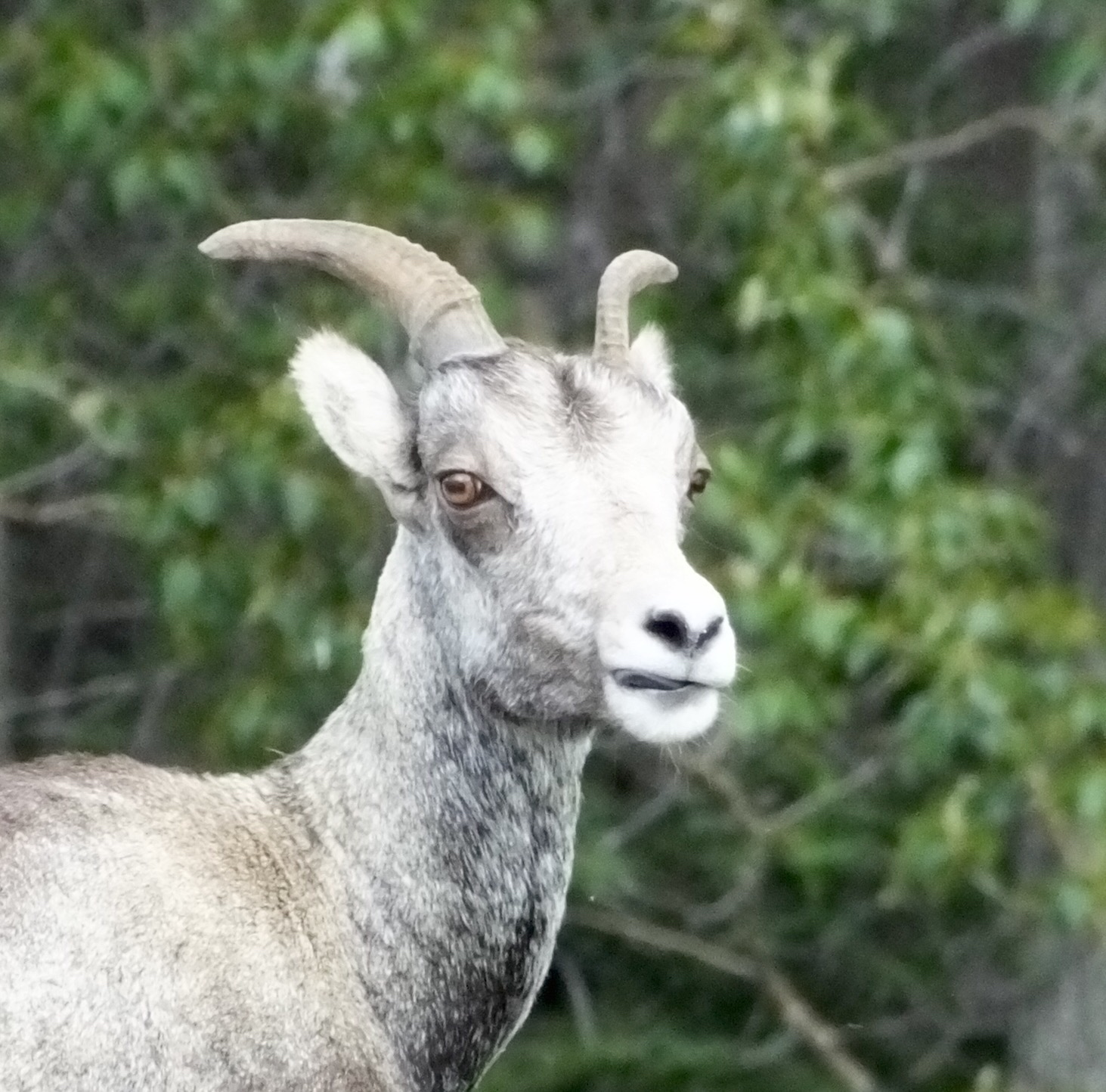
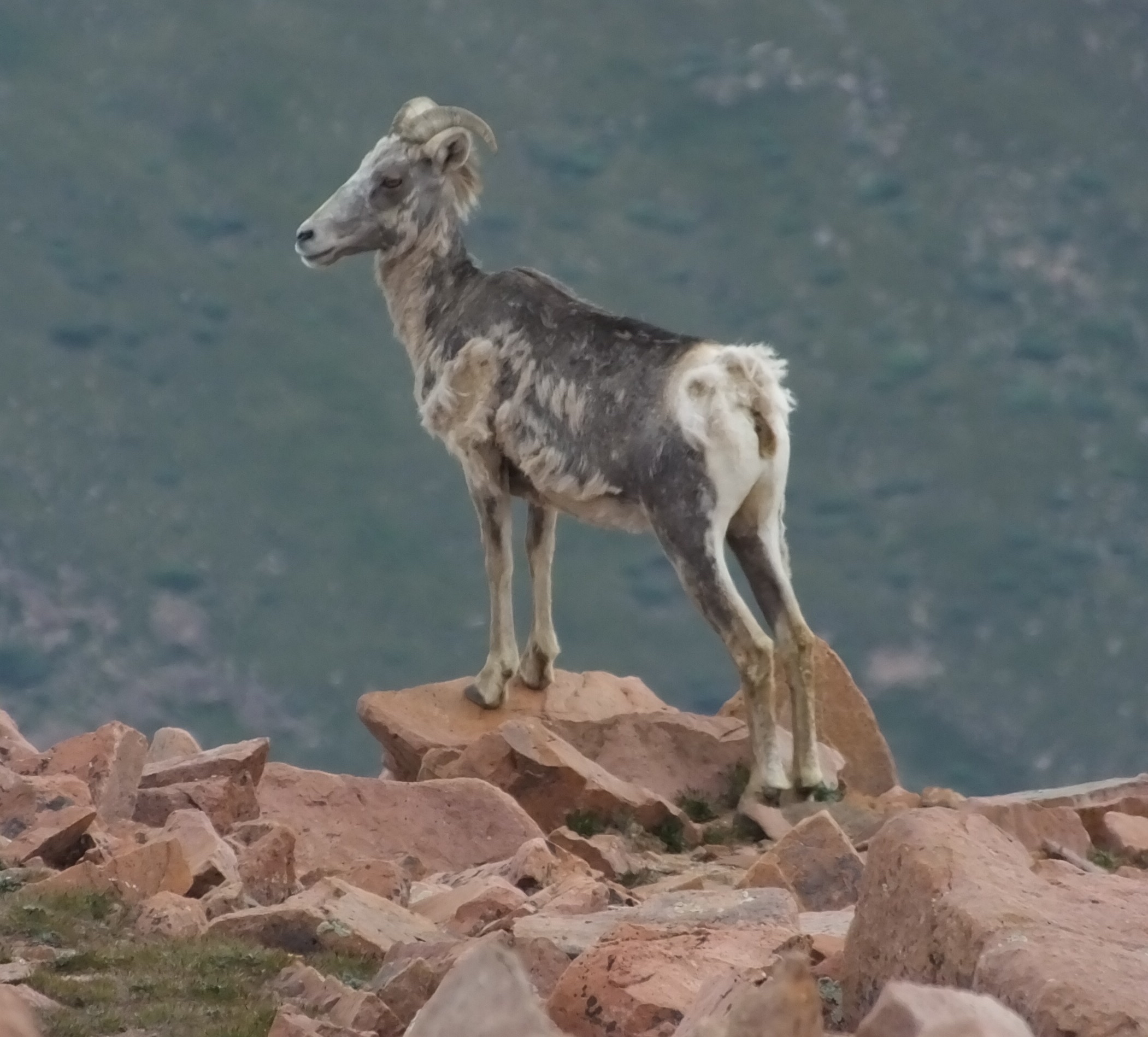 I hadn’t planned on doing any wildlife shooting today, but since a hearty band of Big Horn Sheep made the 14,000 foot climb to the top, I took a couple shots of some ewes that were nearby. The ewes, with their shorter, slender horns don’t make for dramatic photographs the way the males do. I heard several people refer to the “mountain goats” but I decided not to correct their errant identification. If they want them to be goats, let them be goats.
Tomorrow I turn my back to the mountains and travel across one of the flattest states in the union on my way to another family visit in Wichita. But, after I’ve travelled several more days, I’ll be back in the mountains of Western North Carolina, and those will do just fine. I’m going to keep writing everyday until this Adventure ends when I roll down my driveway in Maggie Valley, so keep checking in to see where I am and what I’m up to.
GRMA Day 33: Typical Day at the Ranch
You never know what’s going to happen at Linda’s Ranch.
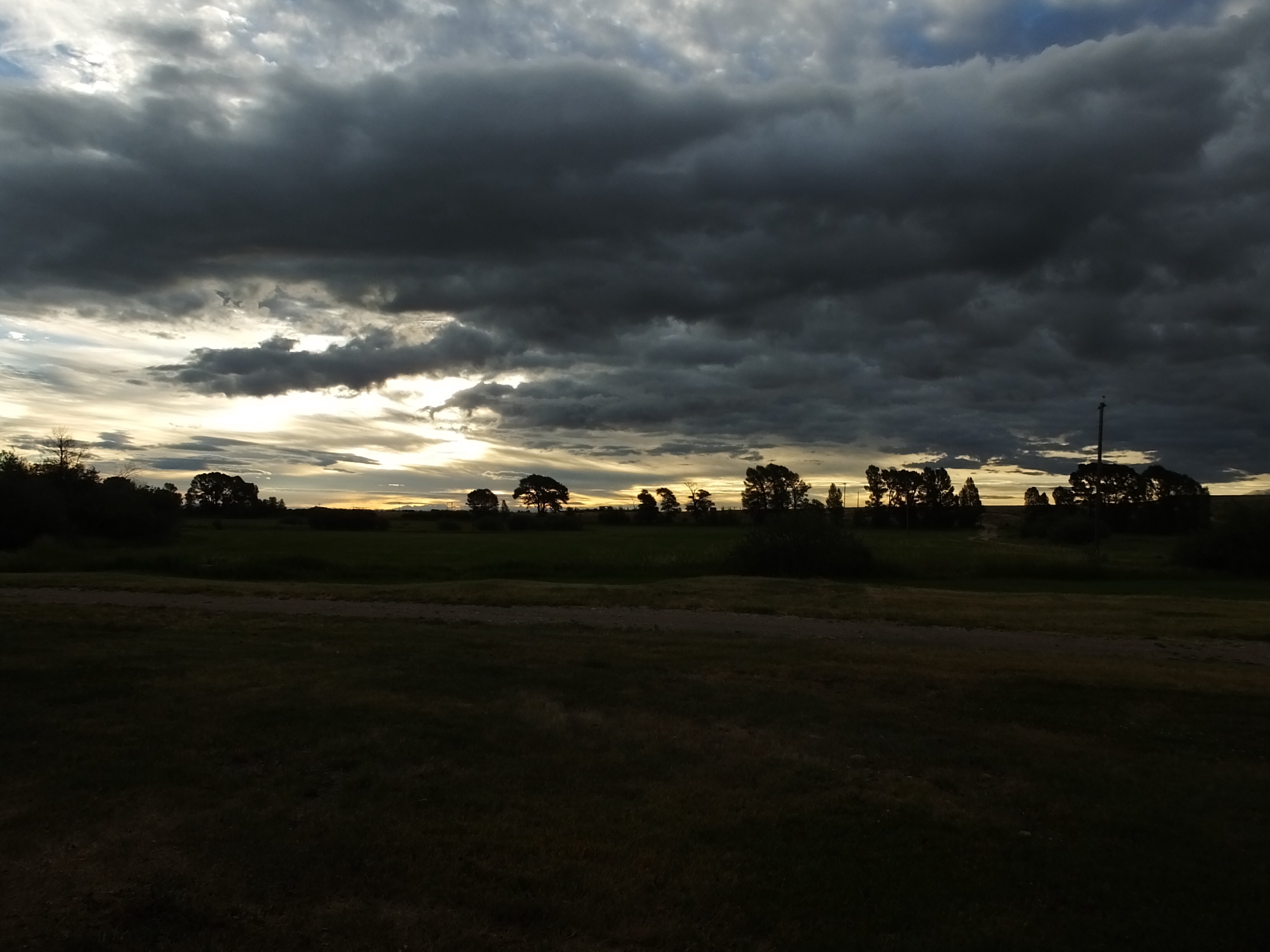 I watched a dramatic sunrise today as the sun struggled to break through the early morning clouds and drew in deep, long breaths of clean, mountain air. It was a great way to start the day.
Linda had intended to buy a welder last night but other developments postponed that trip until first thing this morning when we drove 20 miles to pick up a used portable gas welder on a specially made trailer that can be taken to the fields when something breaks (and something always breaks out there). If she doesn’t exactly know how to use a gas welder, she’ll figure it out.
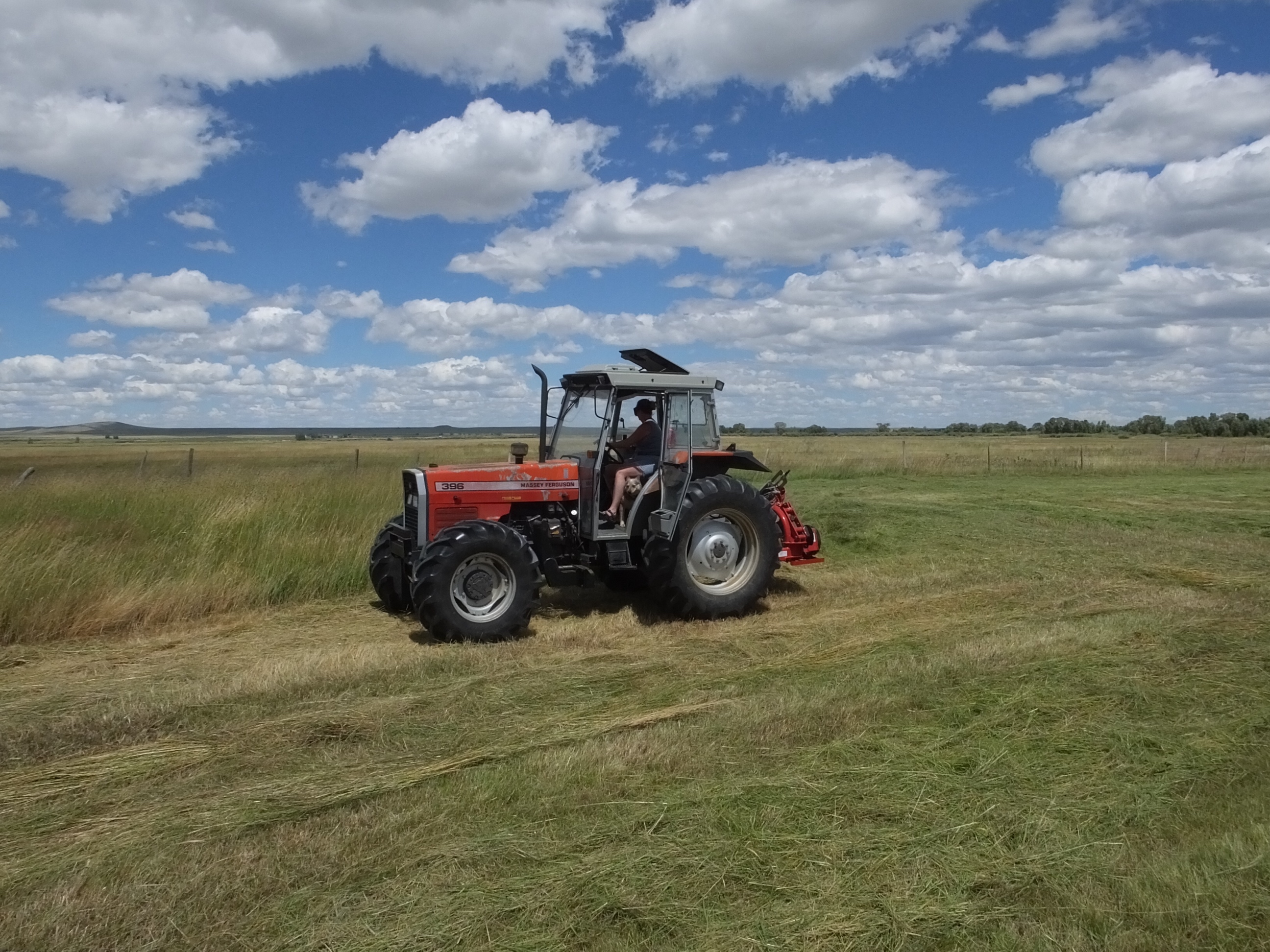 Haying operations are ahead of schedule at the ranch because of a very dry last three weeks, which meant Linda could mow, rake and bale her small square bales destined for horse stalls throughout Colorado and Wyoming more quickly than in the past. So all she needed to do today was mow part of one small meadow.
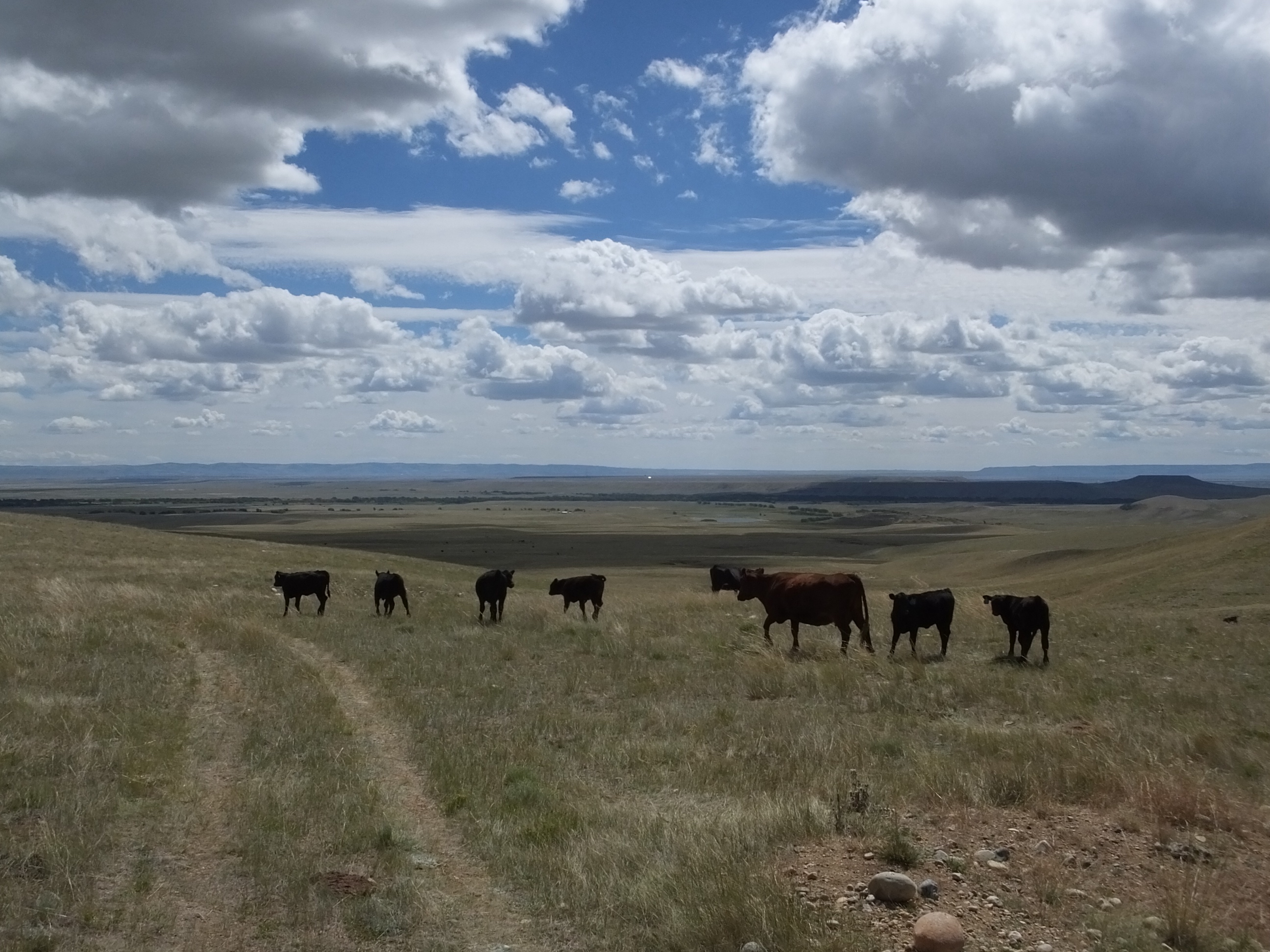 In the meantime, her friend Brad and I took off in Brad’s truck to deliver salt blocks to the 600 pairs of cattle currently grazing in a 5,000 acre pasture on the ranch. The pasture starts near the river that runs behind Linda’s house and goes to the top of the mountain where her property boundary is. And there were no real roads, just a barely discernible two-track trail across the rocky plains and up the mountain side. But Brad knew the way (they’re his cattle, mostly), so off we went, bouncing along and keeping an eye out for wildlife.
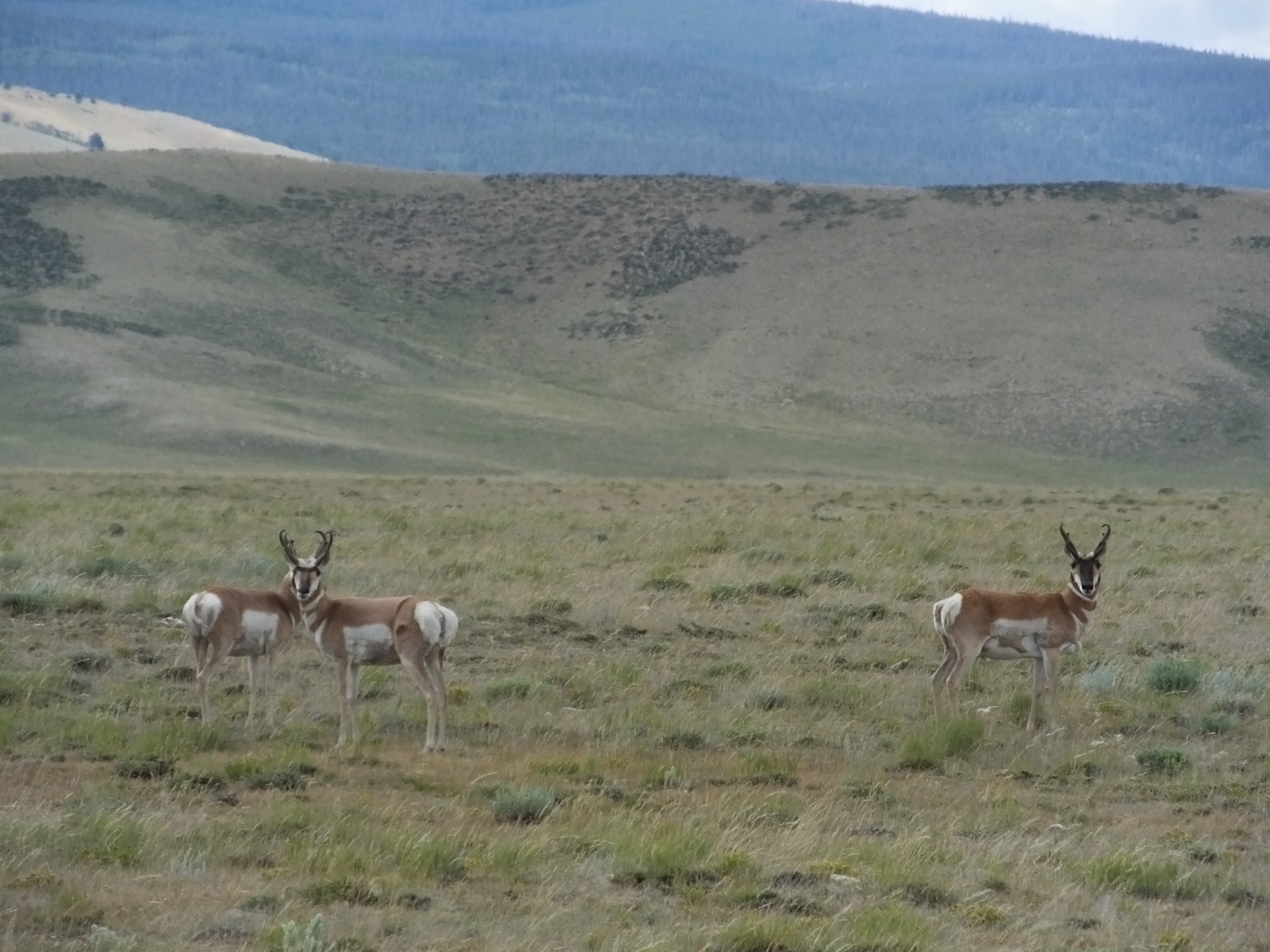 In addition to the cattle occupying the pasture, dozens of white-rumped pronghorn antelope also graze there and, fleet-footed trespassers that they are, quickly run off when we approached them in the truck. But I managed to get a few shots, mostly of their rapidly diminishing backsides.
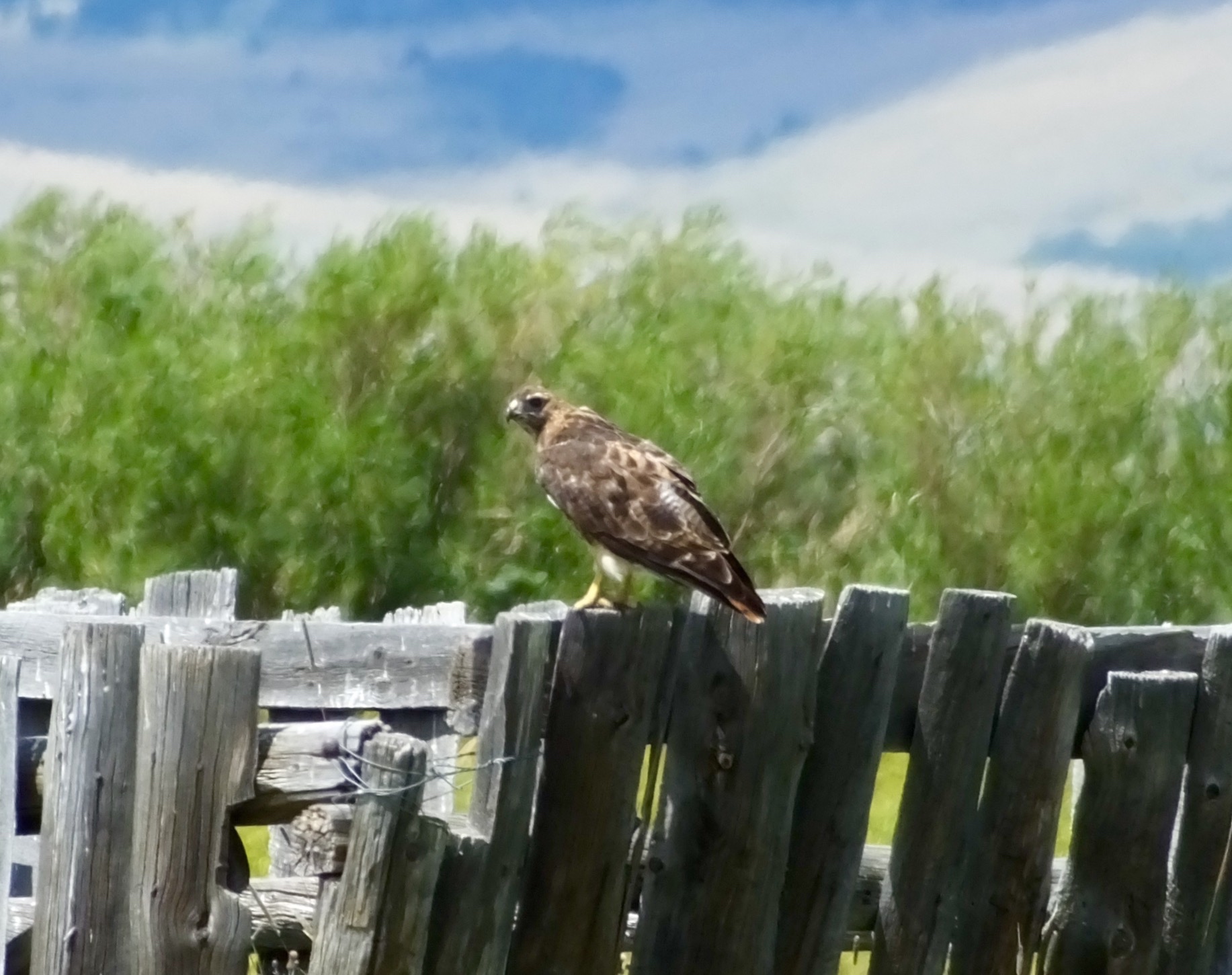 We spotted a red-tailed hawk, but I had to shoot from a pretty good distance because they’re skittish and take to the air quickly when anything moves toward them. I had hoped to spot a pair of bald eagles that call the area home and while we did see them later in the afternoon on the wing, I never had a chance to shoot their portraits on a perch.
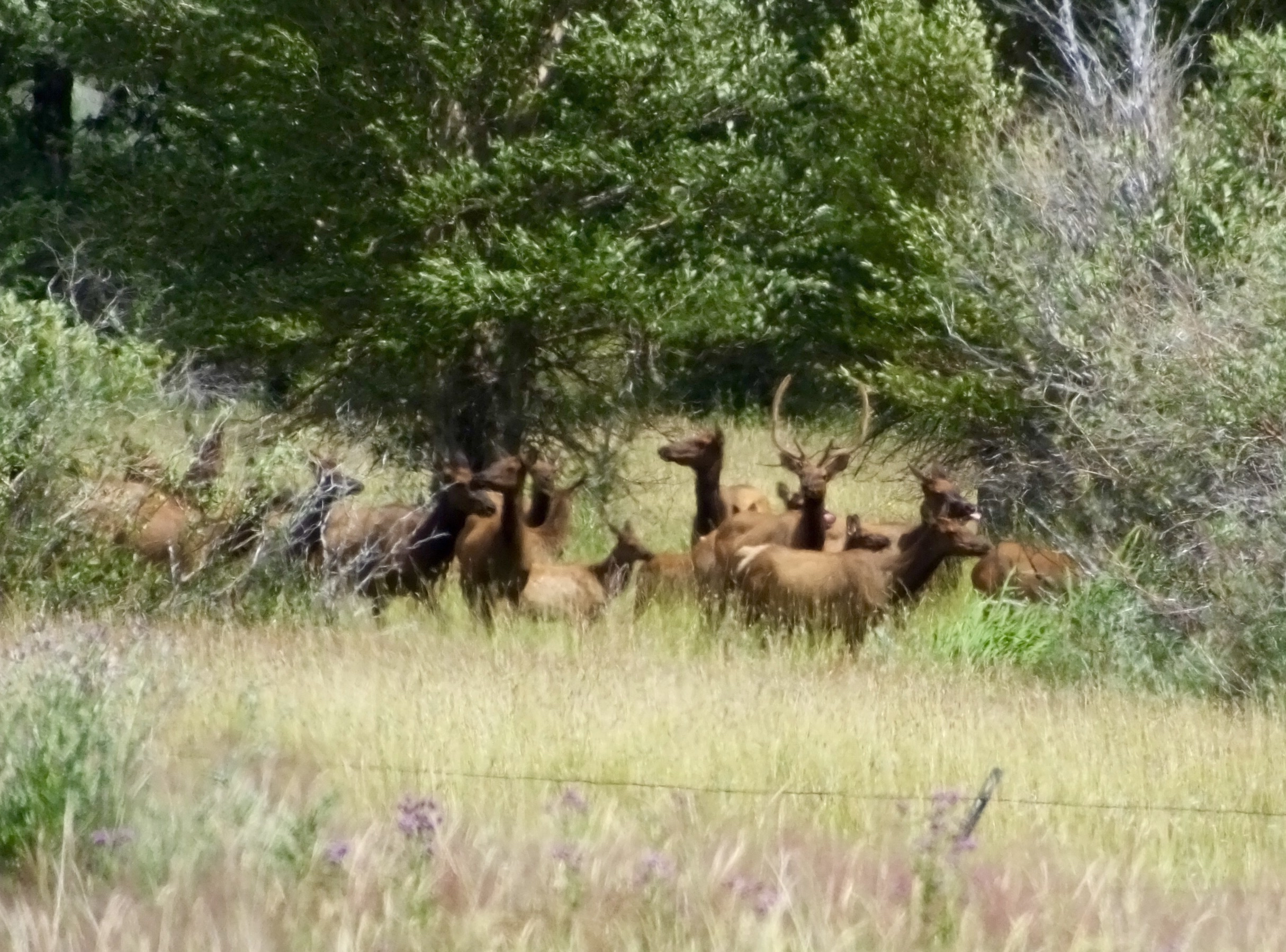 We did, however, spot part of the 150-member elk herd that is the bane of Linda’s haying ops, and I was able to get a couple long-distance shots before they moved on to trample her neighbor’s meadow. He will no doubt chase them back to her land. In one more week, elk hunting season begins and the herd will head to the mountains and hope for safety from the hunters, ending Linda’s elk problem for the year.
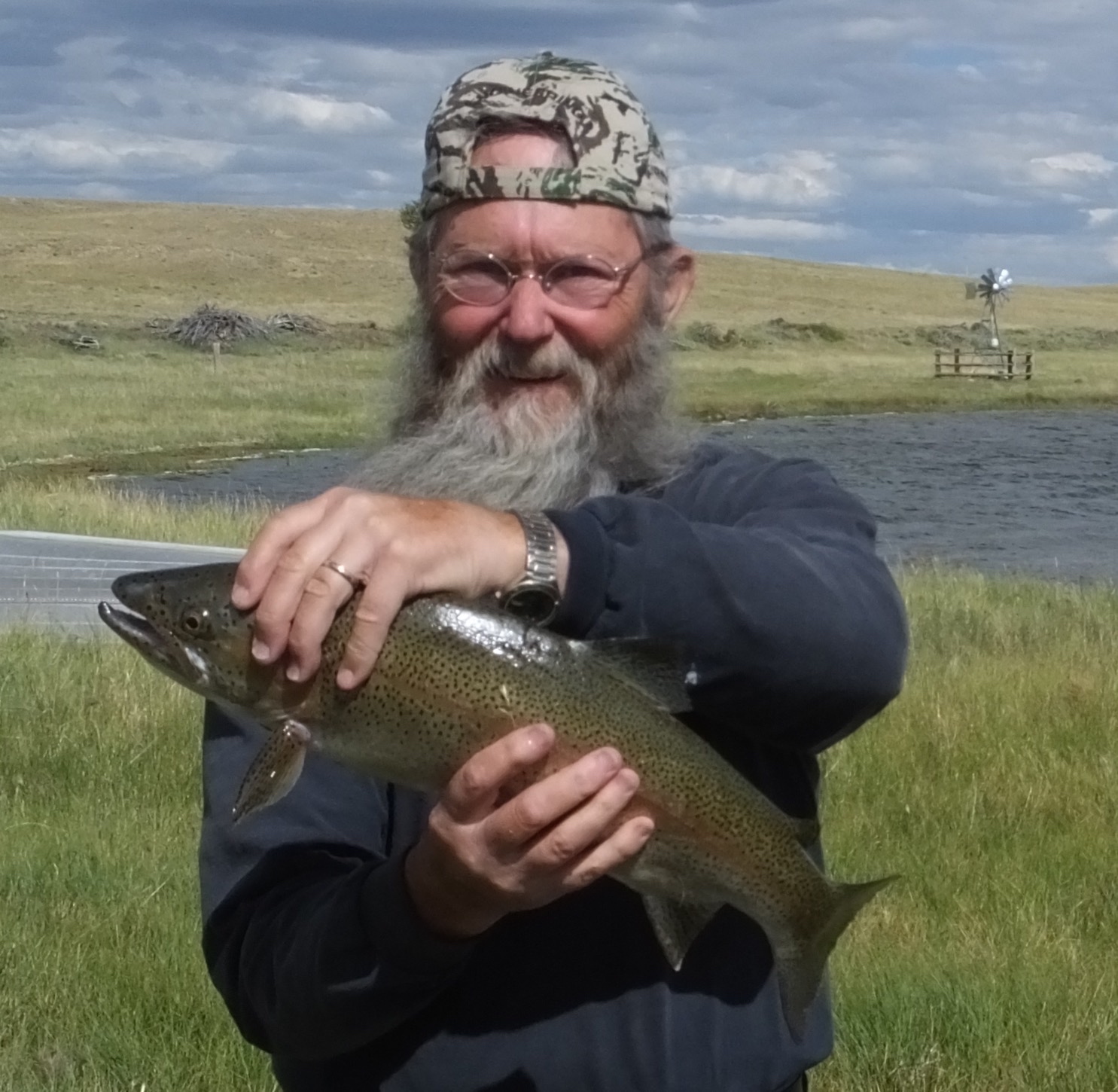 With the mowing done and the cattle taken care of, Brad asked if I wanted to go fishing. I jumped at the chance and while Linda cleaned up from her morning mowing, Brad and I headed to a neighbor’s small lake to try our luck. I hooked a 7 lb rainbow trout after only about 20 minutes and, following a quick photo, the fish was back where he had come from. The wind was blowing hard across the lake and we weren’t have much luck where we were so we went to the other side of the water where Brad quickly landed another 7-8 pounder, which was also returned to his fishy friends.
 I hooked another nice one–probably 7-8 pound range, but he unhooked himself just before I was about to land him. Brad said if you try to land them too aggressively they can sometimes rip their mouths and escape. I had learned my lesson. About 15 minutes later a third big trout had attached himself to the end of the line attached to the rod I was holding. I wasn’t going to lose this one. So I reeled him slowly, letting the drag play out as the fish tore off in the opposite direction I was trying to coax him to go. Slowly, I brought him closer and he started to go parallel to the rocky shore. I began to walk his direction to reduce the tension on the line. And then the real adventure began.
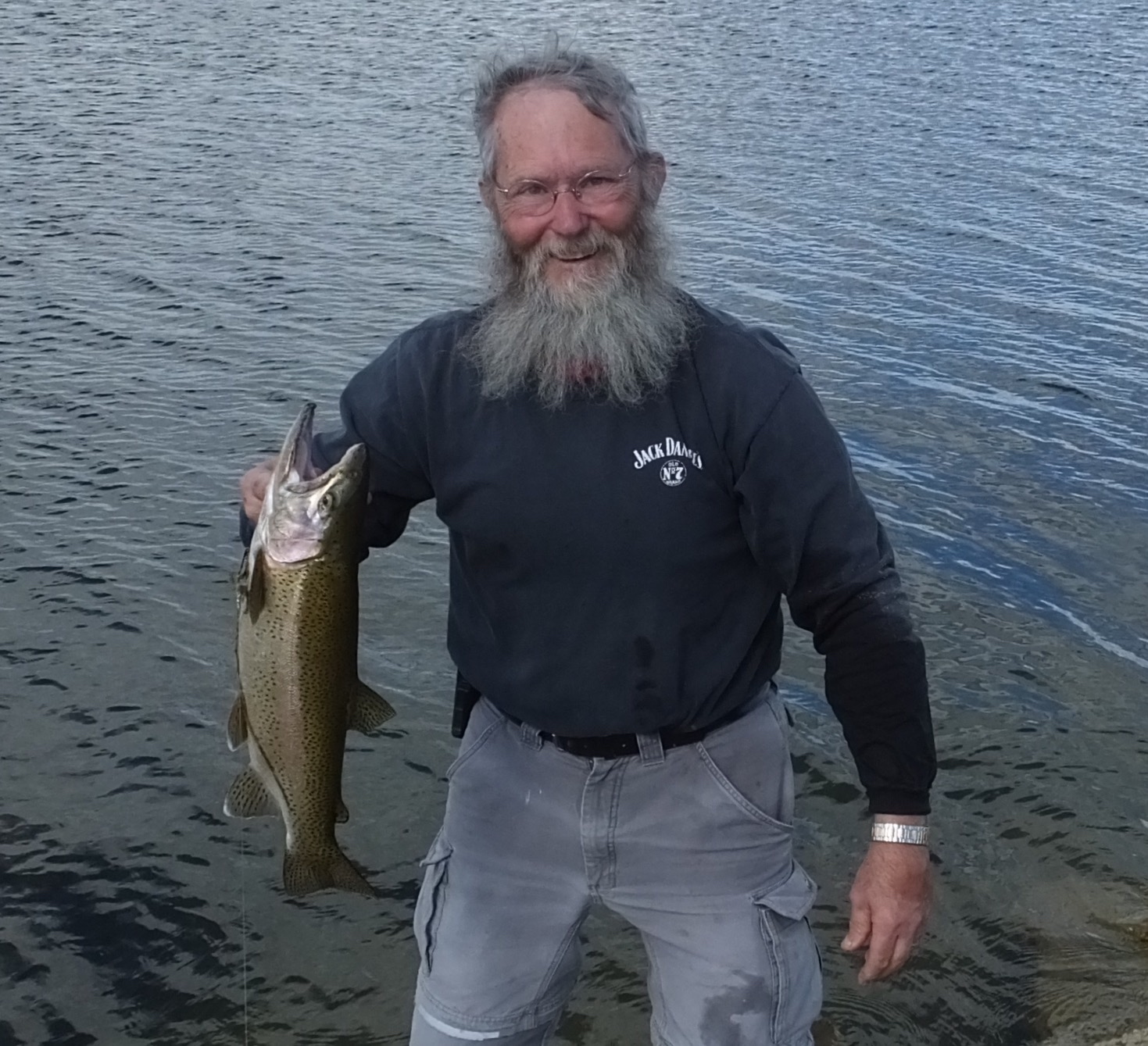 I tripped on a rock while I was watching the fish. I caught my balance, lost my balance, caught my balance and lost it again in what must have looked like a very awkward ballet. Backwards I fell, splitting my head open on the rocks and dropping the rod in the water. Slightly rattled and feeling no small amount of pain from my throbbing head, I stood up and saw blood dripping on the rocks. But I also saw that the rod (Brad’s rod) was in the water with the fish still attached. I reached into the water and probed until I had a firm grasp on the Zebco 33. Brad said he’d take the rod if I wanted to take care of my head, but I was determined to land the fish that, aside from my own clumsiness, had caused my current embarrassment. A few minutes later, as my Coumadin-thinned blood ran down my head, behind my ear and into my beard, the fish was on the rocks with me; the epic battle had ended and I was the woozy victor. Bloodied but not beaten. Fishing is a tough sport.
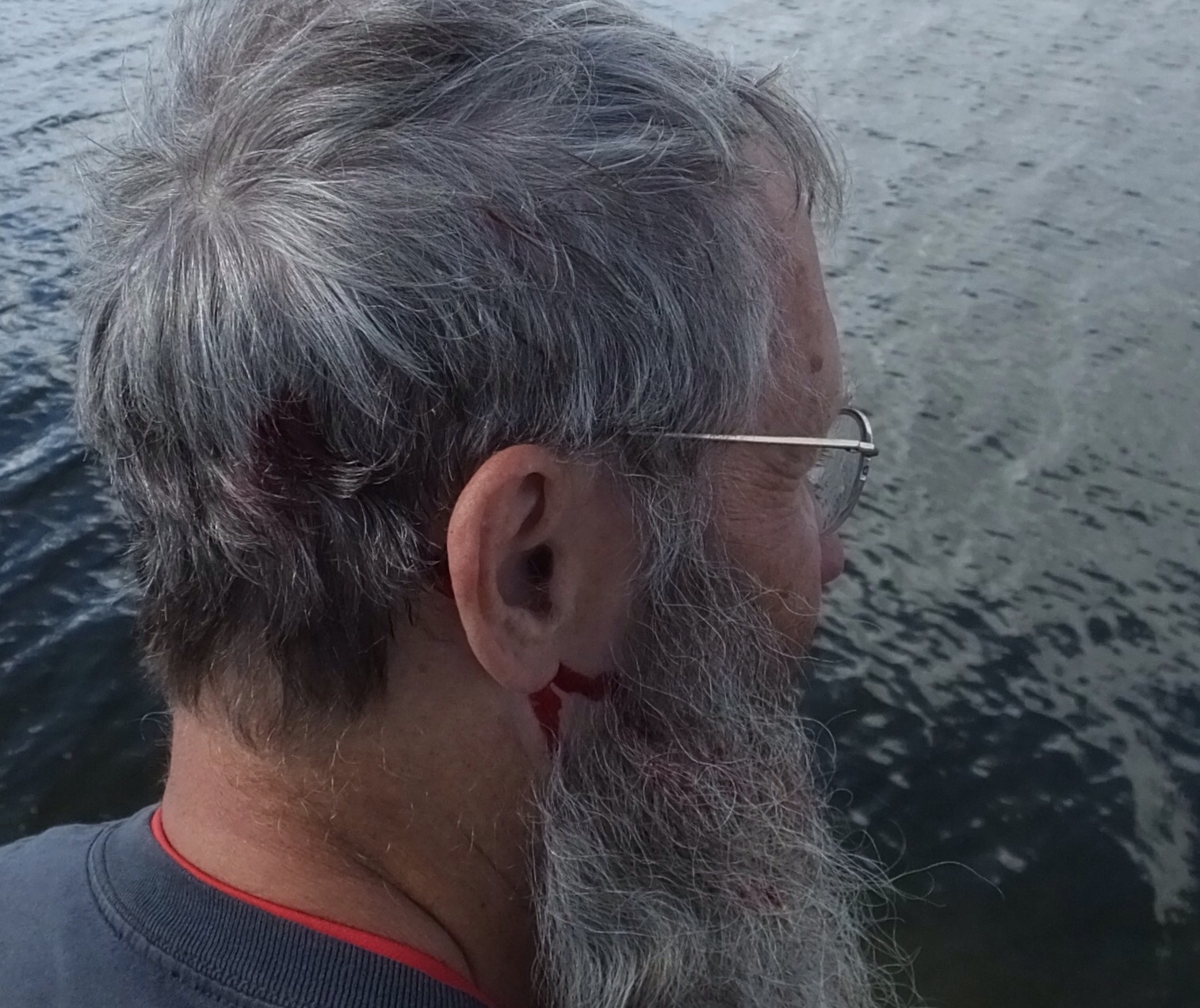 After the obligatory picture of me and my defeated foe, the fish was returned to to the cold water of Rex Lake. I needed to stop the flow that was now getting on my clothes as well as my beard. I found an old paper towel in the truck, blotted my wound a couple times, folded the paper towel to form a small square, then cinched my CSX camouflage hat a notch or two tighter to press the paper towel to my head to attempt to staunch the stream of blood and I commenced fishing again. By now it was late afternoon. Brad caught one more and I went scoreless for the rest of the day, even though I think I was still casting into the water.
I knew yesterday that a day on Linda’s Ranch would bring adventure. I was right.
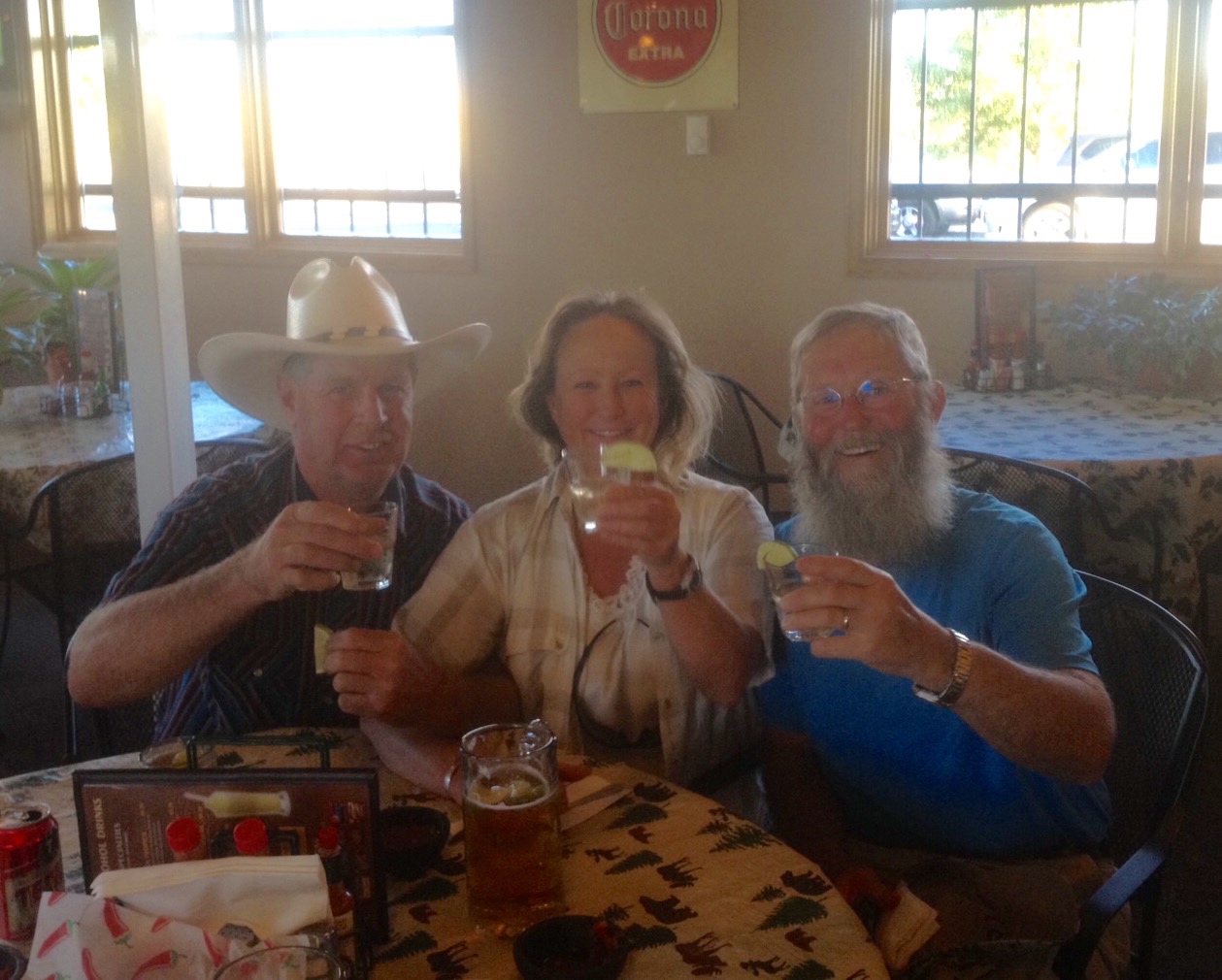
With my make-shift pressure bandage squeezing the flow to a mere trickle, we finished our day at one of the best Mexican restaurants in Laramie, a favorite place we always go and where we always honor our tradition of downing tequila shots while drinking very large Coronas. It was a convivial end to an adventuresome day.
Tomorrow I leave one of my favorite stops on this trip and head for Pike’s Peak and Pueblo where I will complete my 6,000+ mile loop of the Rocky Mountains.
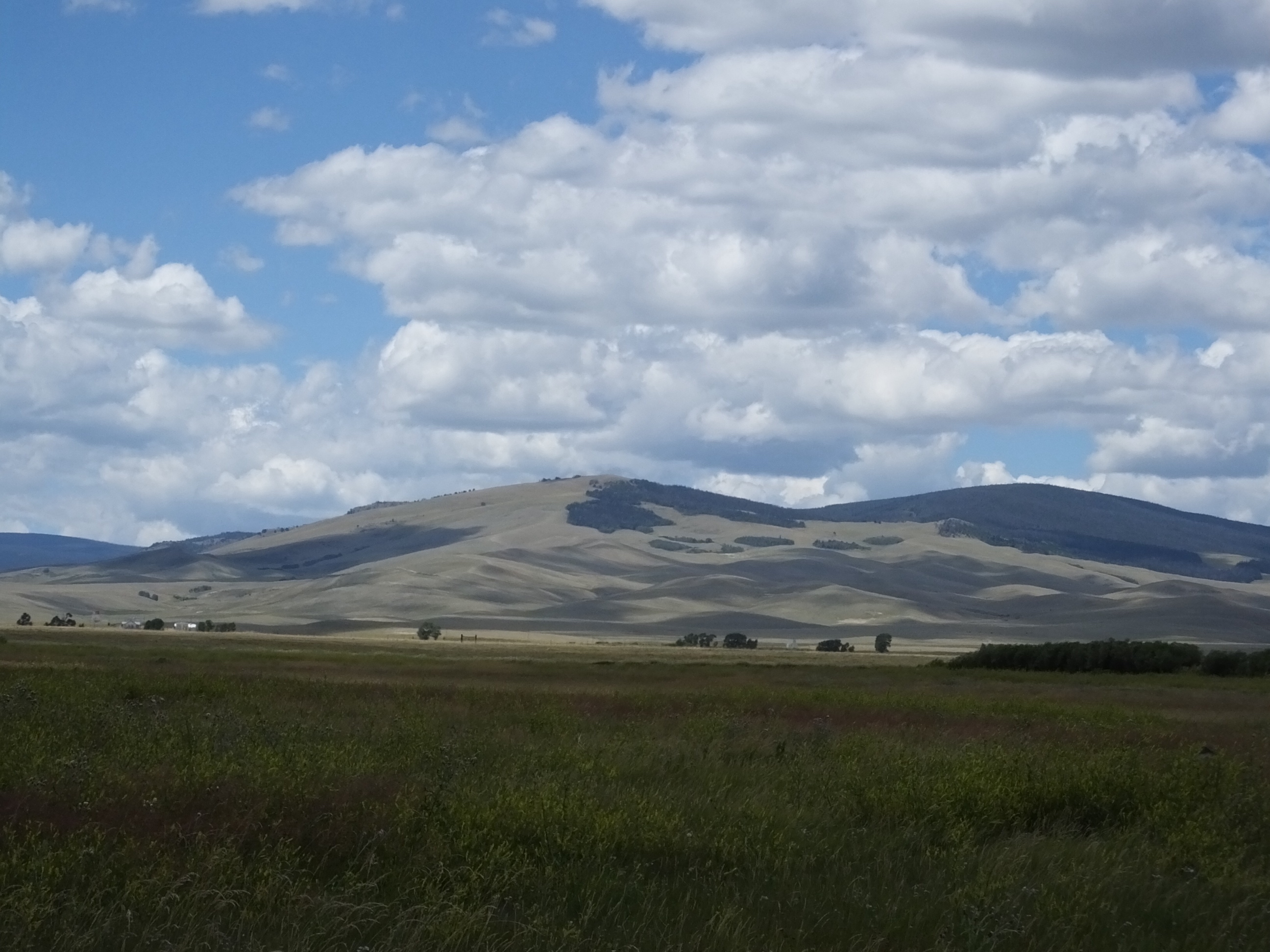
Other shots I liked today:

GRMA Day 32: At Linda’s Ranch
One of the high points of any trip I take out west is a stop at Linda’s ranch outside Laramie. For those who don’t know, Linda is a friend from our Wyoming days in the 1980s and a unique person Marilyn and I admire and enjoy very much. Linda runs an 8,000 acre ranch by herself and I’m convinced can do any job a ranch requires.
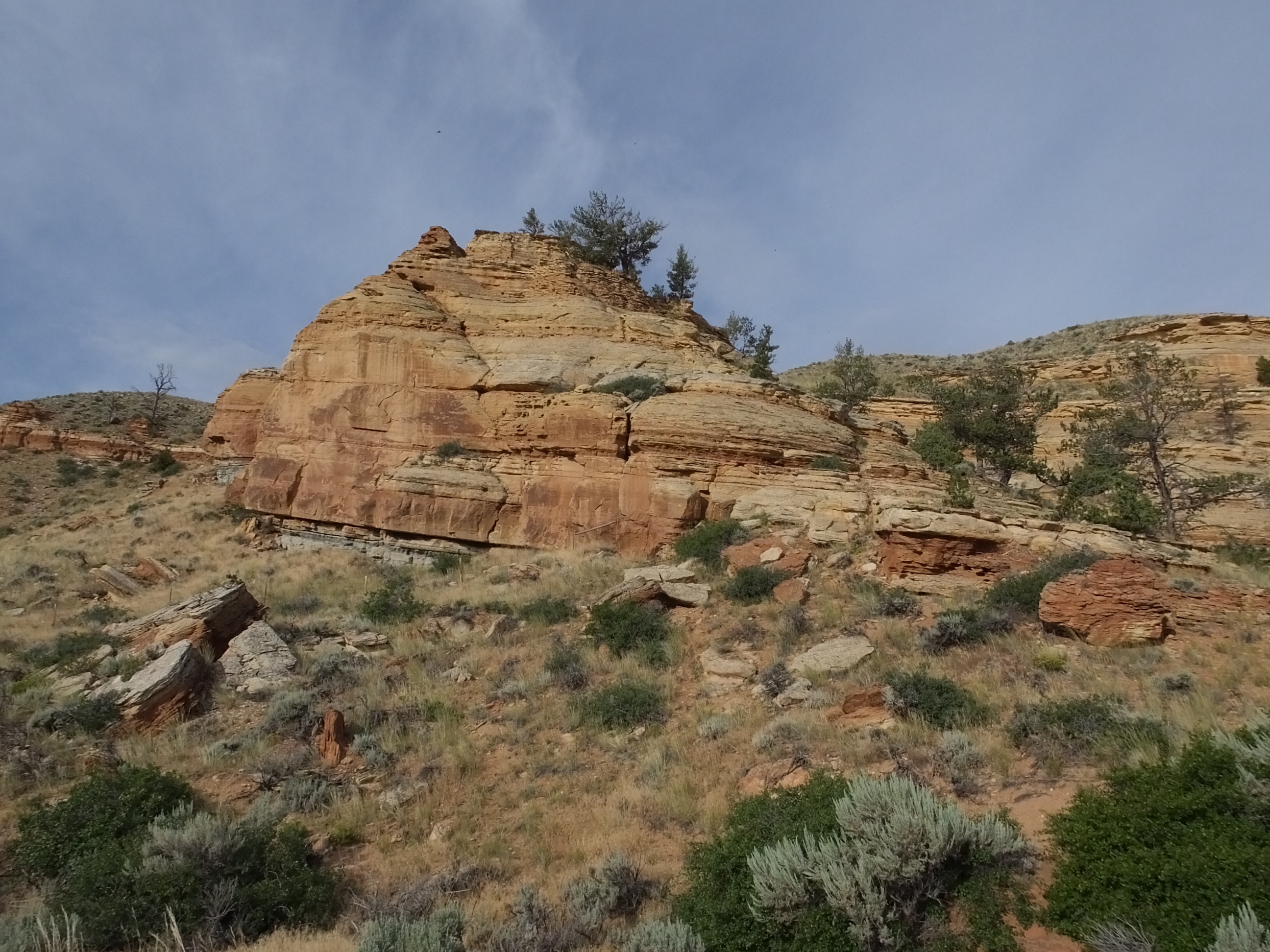 The trip to Laramie from Dubois was a trip back through time as I rode on highways that I got to know pretty well in the four years I spent in Wyoming from 1986-1990. Crowheart, Ethete, Lander, Jeffrey City, Rawlins, Elk Mountain–these were all recognizable names and scenery and not much has changed. The land seems empty except for the occasional isolated ranch and the ubiquitous historical markers reminding today’s travelers that this was the land of pioneers and covered wagons and Indian wars. The area I went though today was traveled by hundreds of thousands of pioneers in covered wagons headed west because these high plains (6,600) feet were the best pass through the Rockies.
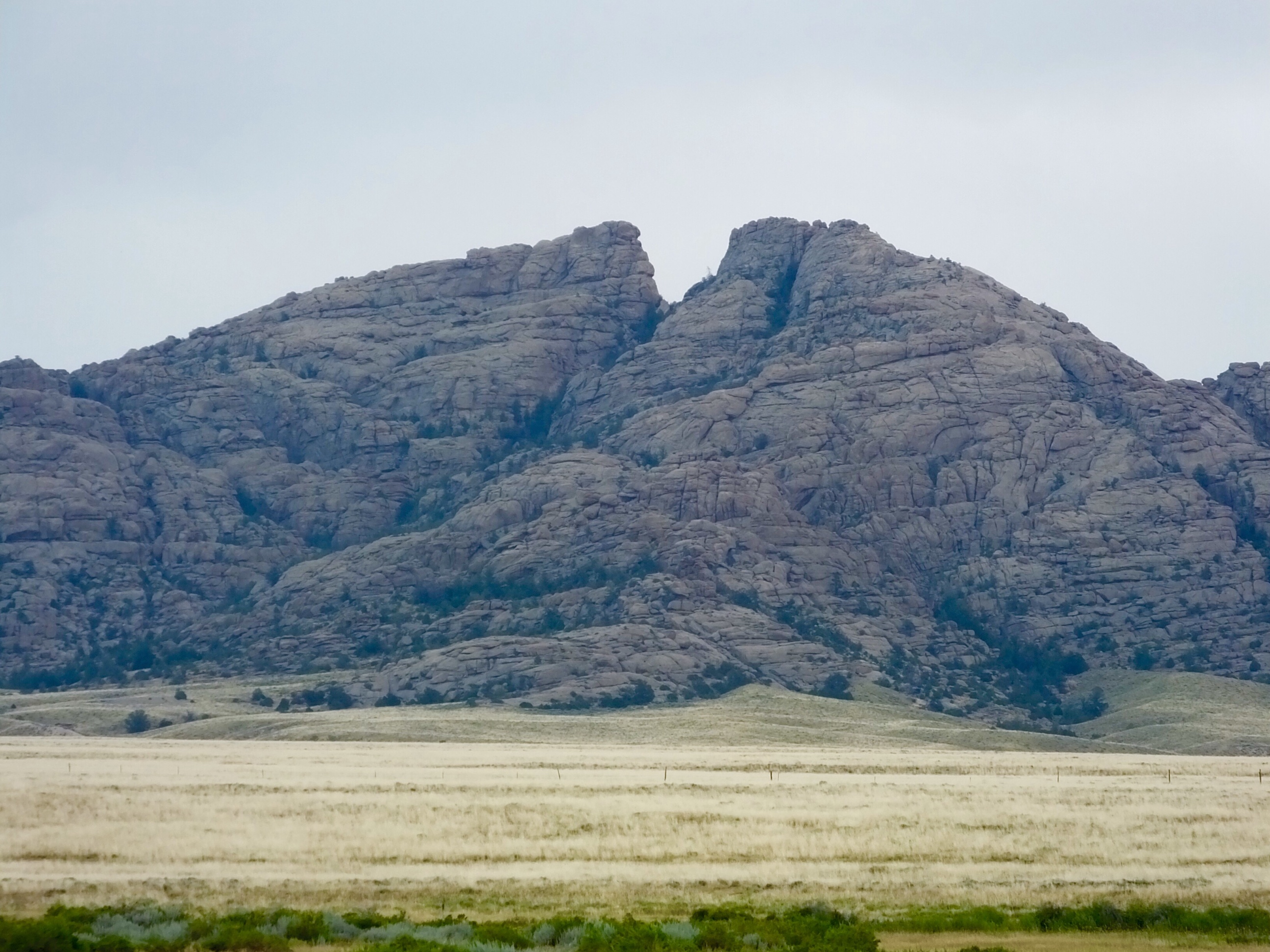
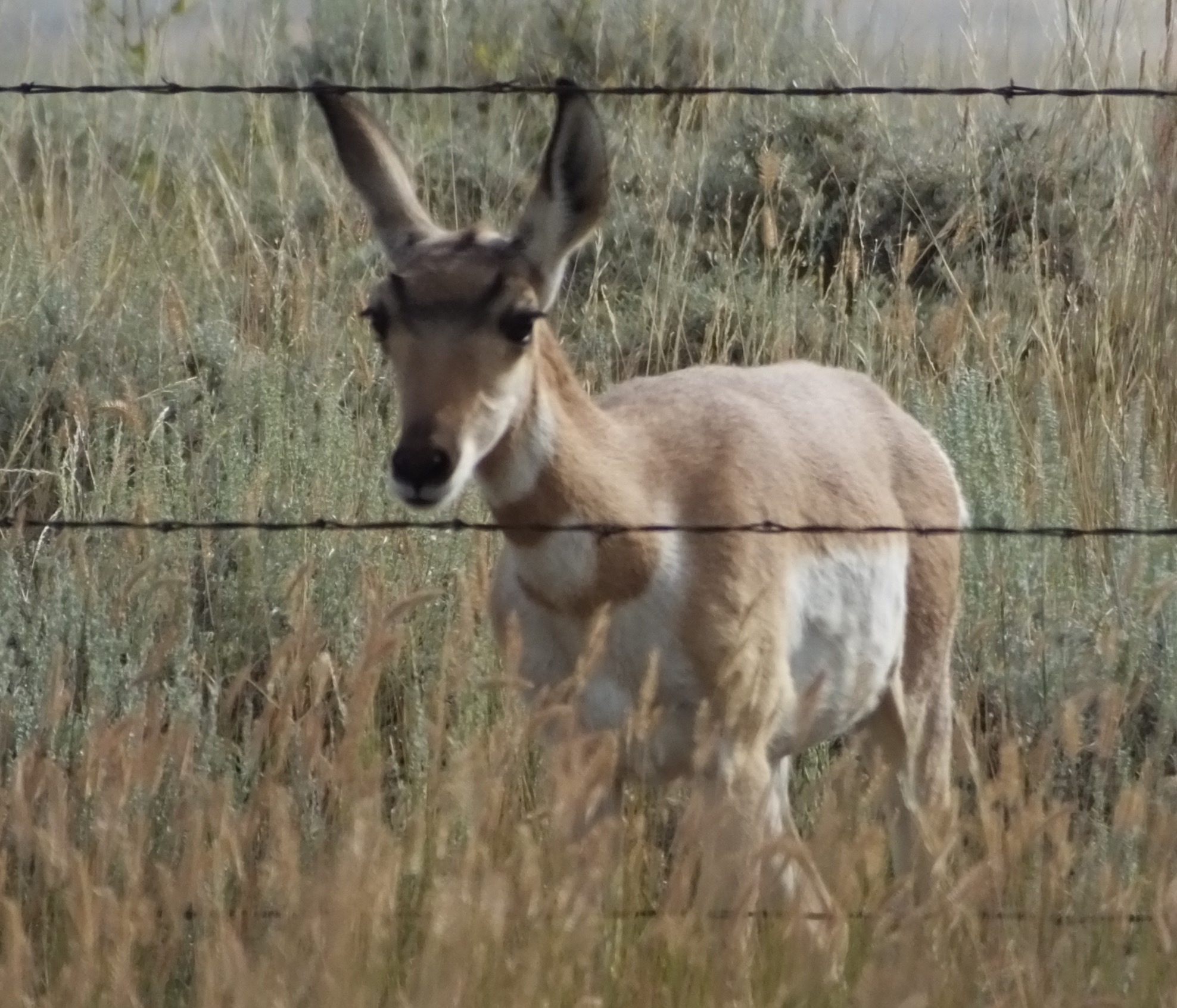
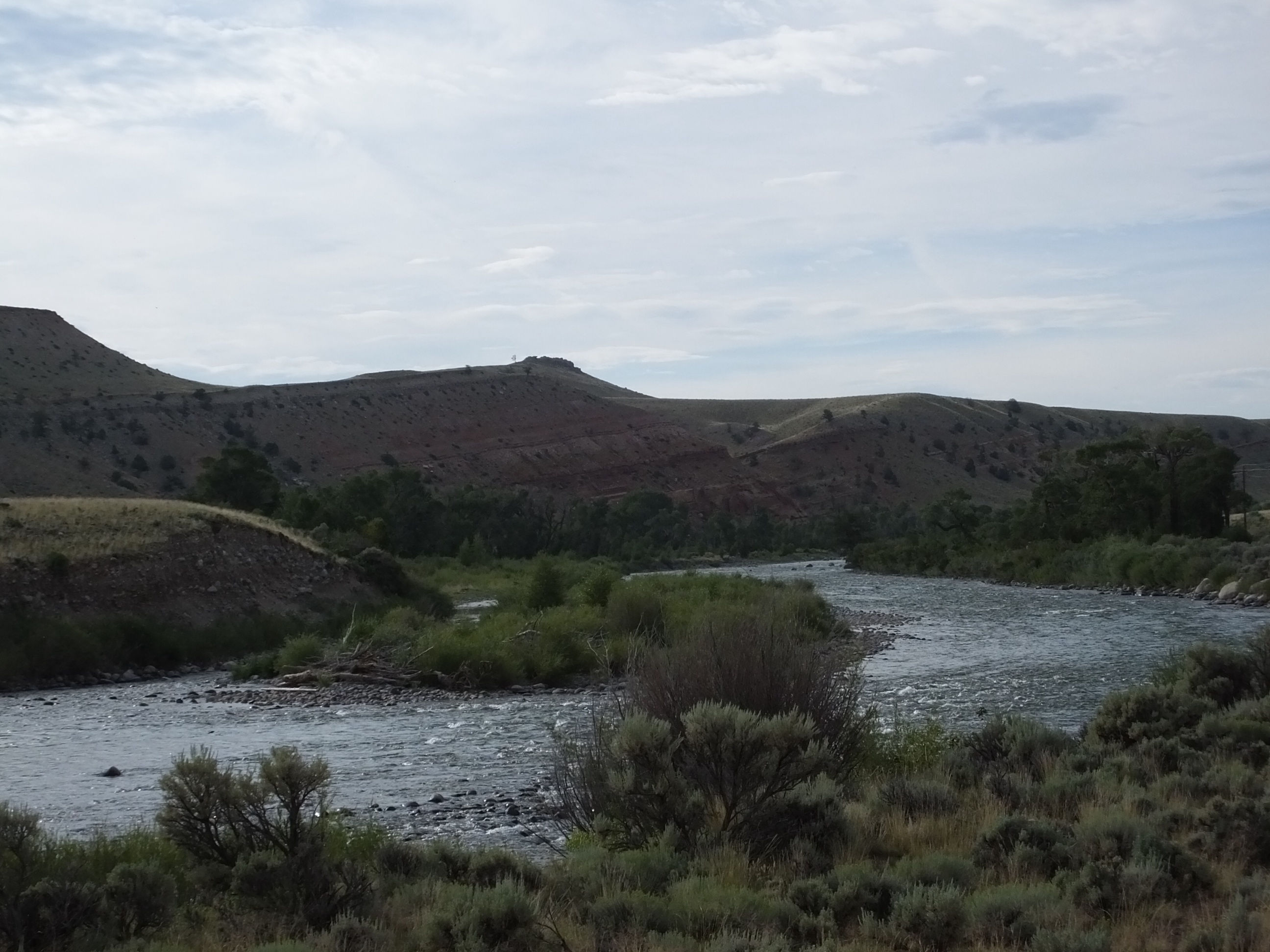
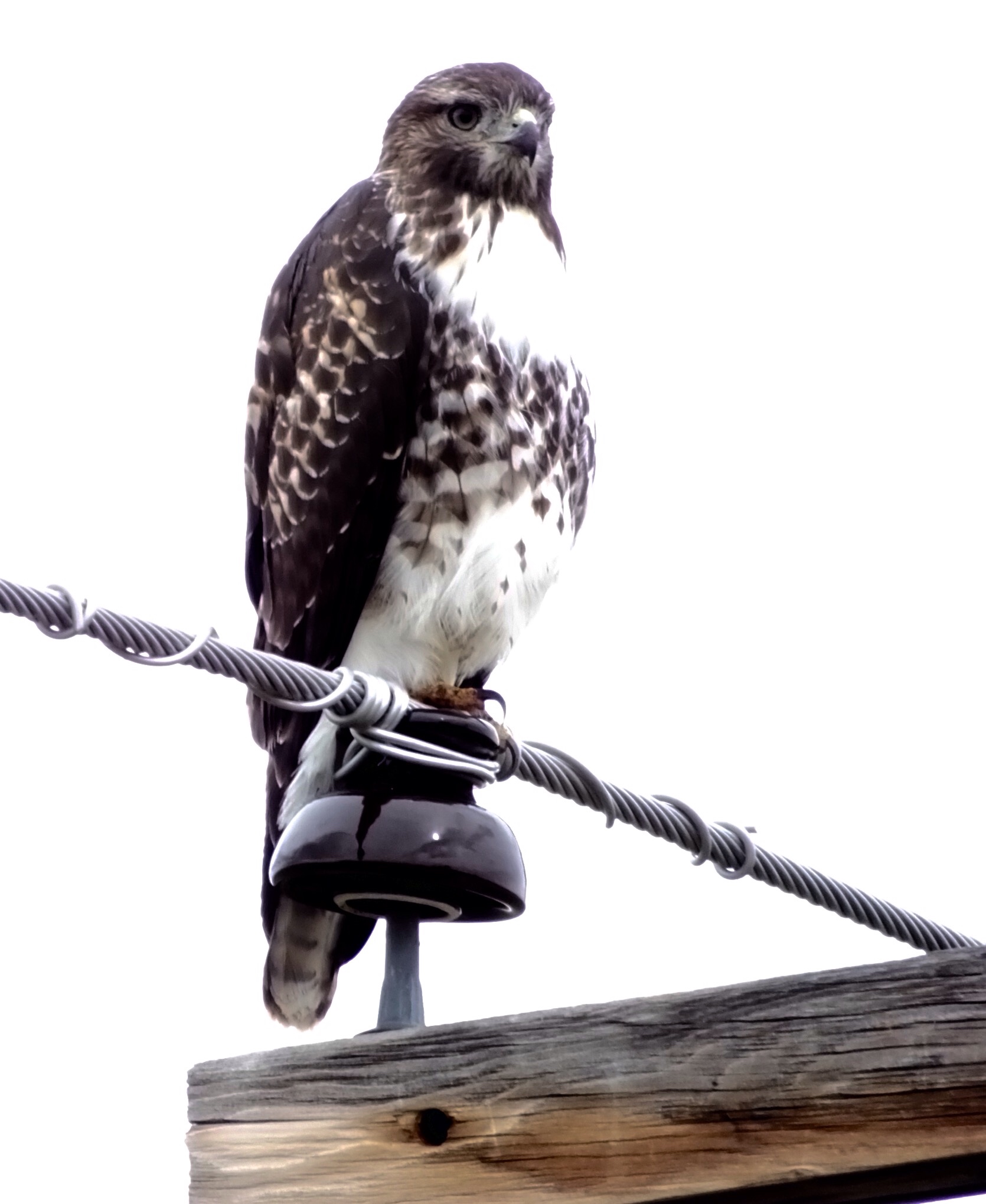 I took time to take a few photographs of the multi-colored landscape, the Wind River, Split Rock (an easily seen landmark for native Americans and westward travelers), some antelope and a hawk. The hawk shot was made a little more difficult by a ranch dog who came to meet me in a rather unfriendly manner but who finally decided I wasn’t a threat to whatever it was he was protecting. I’m also learning that hawks are hard to photograph. The first two times I tried to shoot a hawk today, they flew off before I could even get my camera out of the tour pack.
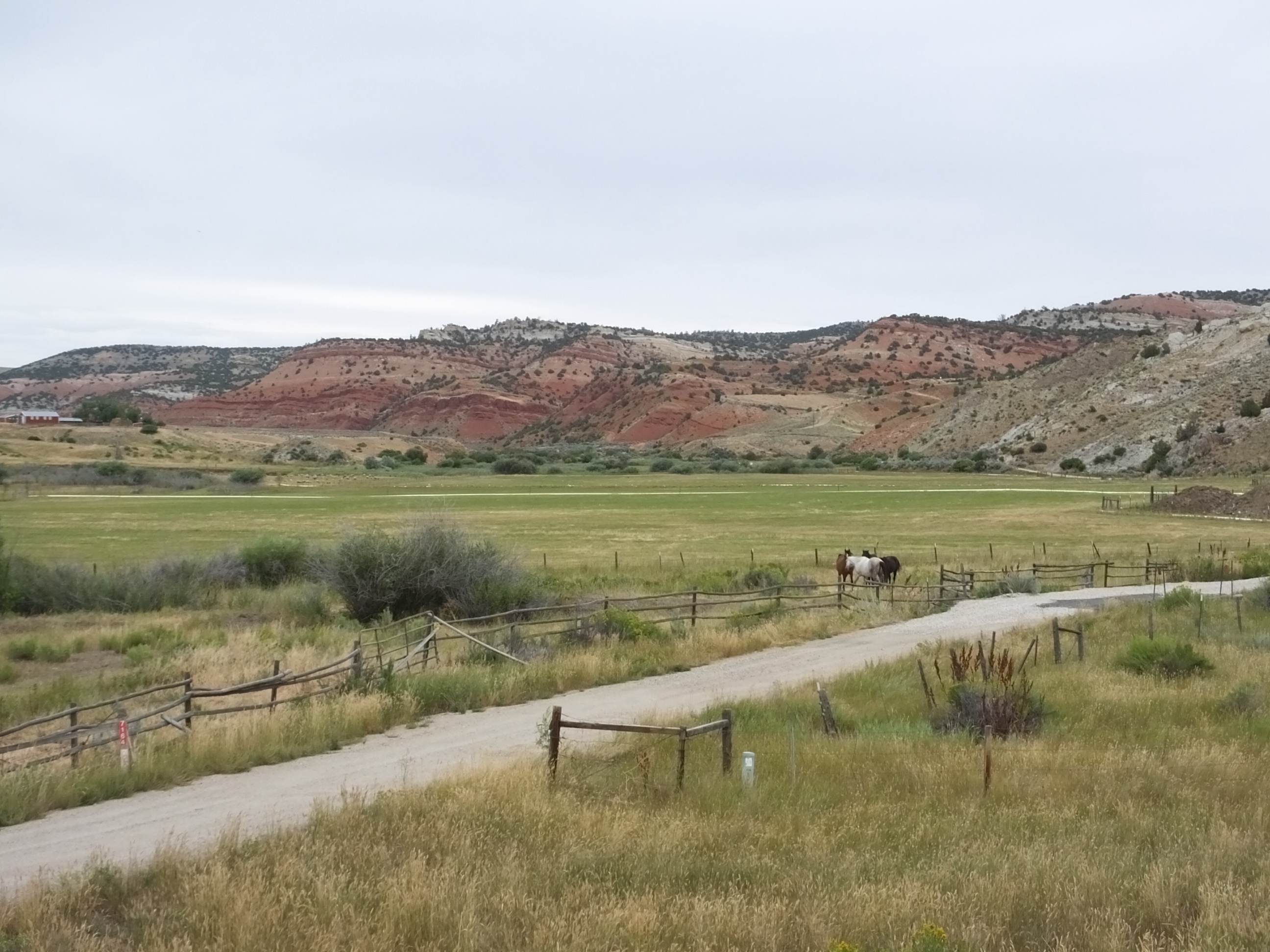 I arrived at the ranch a little after 4 p.m. and Linda and her friend Brad had stopped work for the day and were going to look at a welder but postponed that chore until tomorrow morning. She showed me some of the changes that have been made since the last time I was here (two years ago): New equipment shed, new hay shed, and a new bunkhouse (an RV). She never stops working at the ranch. A couple beers, a little wine, some Jack, great grilled ribs and plenty of new Linda stories occupied the remainder of the evening.
 I thought my 10,000 mile Great Rocky Mountain Adventure was an adventure until Linda begins relating stories about her daily life on the ranch. A mountain lion scarred her heavy duty RAM truck with scratches on the hood, the window and the top of the cab. A moose camped out in her yard for a day and then charged her in her own front yard as she was heading for the barn. Not one, not two but three mountain lions set up shop in her hay barn and strolled through her yard like they owned it. 150 elk trampled her pasture and she had to run them off. But the best part of all these adventures is hearing her tell it in her own Linda way. I really think she could make a living touring and telling hilarious stories of life on the ranch.
As I sit writing, the Little Laramie River gurgles peacefully outside my window, the last light is fading in the west, and everyone is going to bed early because the sun comes up early at the ranch and that’s when work begins.
Who knows what tomorrow will bring, but on the ranch it’s going to be interesting. Of that I’m sure.
Other pictures I liked from today:
GRMA Day 31: Return trip to Beartooth Highway
Note: This will likely be the last post until Sunday night. For the next two nights I’ll be at a Wyoming ranch that has no Internet service. I’ll write both days I’m there and post Friday, Saturday and Sunday blogs at the same time.
Note 2: Weak wifi tonight so I’ll just post reduced size pictures.
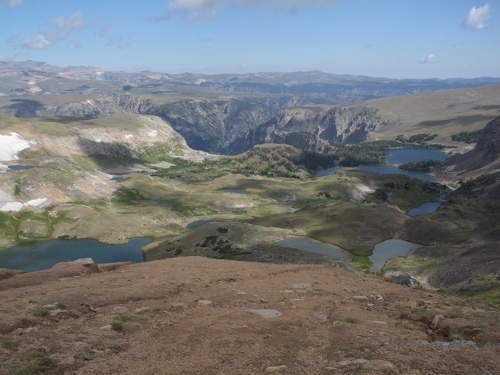
Getting an early start this morning from Cody paid off as I raced up the Chief Joseph Scenic Byway largely unimpeded by traffic. The Beartooth Highway also had much less traffic than yesterday, at least until I turned around near Red Bank to retrace yesterday’s route. Going east on the Beartooth without stopping to sight see and take pictures and at a pace considerably quicker than yesterday, I ran the 43 miles in a little under an hour. That sounds slow until you count the number of curves marked 20 mph; they usually slowed me down to 30 mph. There was some traffic going my direction, but they either realized I was faster than they were and pulled over or I went around them. Reversing direction and retracing the eastward run, there was more traffic because all the bikers who stayed in Red Lodge were getting on the road. Many of them were sightseers and pulled off to take a look at the scenery or they got passed. I wasn’t too aggressive but did make about a half dozen double yellow line passes. I made the two-way run today faster than I made the one-direction run yesterday. Yeah, it was fun and the adreniline rush made up for the missed second cup of coffee this morning.
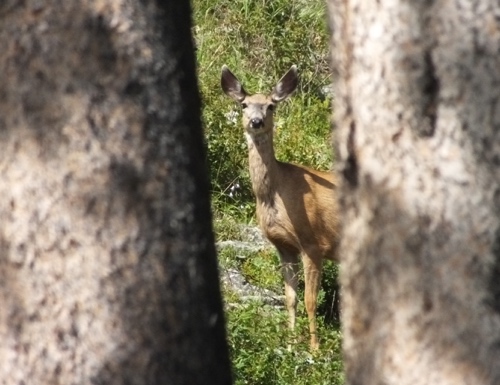
Once I returned to the part of the road I hadn’t traveled, I slowed down to sightseeing speed. One of the results of that was that I spotted a doe on a hillside and was able to stop, walk back, and get a shot. As you can see, I got her right between the trees. The rest of the ride through Cooke City and to Yellowstone National Park was uneventful. Then I encountered my first traffic jam.
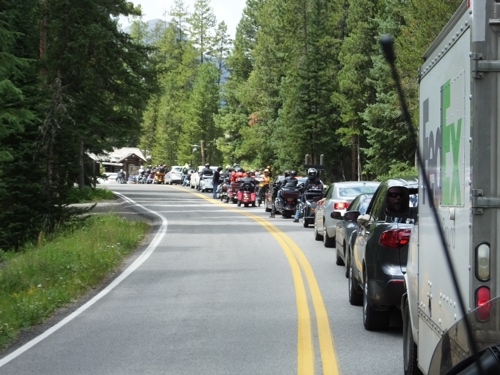
Approaching the Park east entrance, traffic had come to a dead stop. Wreck? Bear? Bison? Nope. Toll booth. Traffic was backed up for more than half a mile and I waited in line for about 45 minutes before I finally got into the Park. There was only one toll booth open and there were a lot of unhappy people in that line. And, of course, once inside the park, there were additional traffic backups every time a bison was near the road, or there was a waterfall to see. Yellowstone has some of the most fascinating and beautiful sights and scenery and animals of any park anywhere, but the number of people and cars is killing the place. I seriously think they should consider the same approach they’ve taken at Denali in Alaska. The only way to get into and see Denali is on buses. Cars are left in a parking lot. It seems to me buses at Yellowstone could be like shuttles. You wouldn’t have to stay on the same bus all the time. Just a thought. But I think they’re going to have to do something. Raising the fees to $30 per car/$25 per motorcycle didn’t seem to have any effect. (I got in free because I have a $10 lifetime senior pass.)
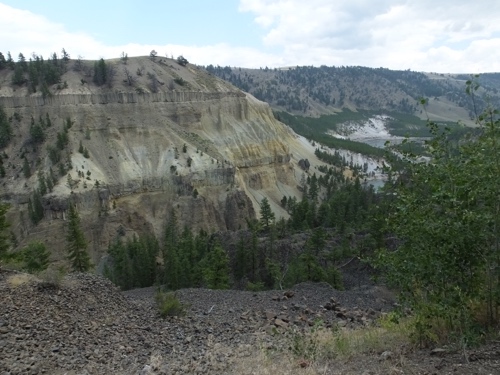
I had hoped to see the tremendous Tetons in all their glory today, but once again a haze obscured the view. I could see shapes that I knew were mountains but the snowy, rocky details were left to the imagination. I’m pretty sure the problem continues to be smoke from wildfires. The haze isn’t bad enough to cause any breathing problems, even for people with compromised lungs. But it sure does spoil the view. The Tetons ares so spectacular because they’re young and haven’t had time to get rounded off by weathering and erosion. In fact, they’re still growing. While the rest of the Rockies are 50-70 million years old, the Tetons are only about 9 million years old and still considered part of the Rockies.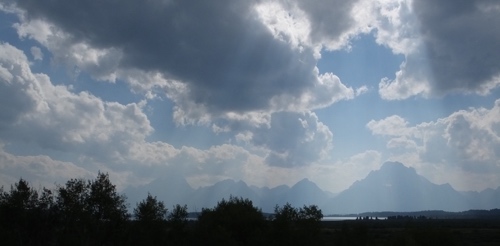
The odometer on my bike rolled over 60,000 miles today. But, hey, it’s 2 1/2 years old. so I guess that’s about where it ought to be. I figure it will notch 62,000 miles before I get home. I’ll probably keep riding it until it’s got 100,000 miles and then sell it cheap to one of my brothers. Or I may just keep it and see how many miles I can put on it.
I’ll keep writing even though I may not post until Sunday. Looking forward to time on the Croonberg Ranch with friend Linda.
More pictures from today I liked:
GRMA Day 30: Great Mountain Roads
 The Beartooth Highway between Red Lodge, Montana, and Yellowstone National Park has a reputation as a great motorcycle road. The reputation is well-deserved. After riding on I-90 for two boring hours following my departure from Bozeman, then cruising along an average high plains highway with cows and sagebush, I came to Red Lodge and discovered that half the bikers who had gone to the Sturgis Motorcycle Rally had come to Red Lodge for lunch. OK, so I exaggerate. But there were still a thousand bikers or more in Red Lodge who had either come from or were going to Sturgis. And, like me, they had come to Red Lodge to ride the Beartooth Highway.
Lunch at the Red Lodge Cafe took a while because the eatery was short-staffed, as the “Help Wanted” sign in the window suggested. But I had time, so I waited patiently. A guy with a group of 15 Australian riders found seats for all 15, but not one for himself, so I offered him a seat at my table. Turns out Brian was their “guide,” a retired California fire fighter who picks up a couple guiding gigs a year to make a little extra cash and ride a motorcycle at the same time. Sounds like a good idea to me. He gave me one of the comapny’s business cards and I may contact the owner to see what’s up with guiding.
 Lunch over, I proceeded to the main business of the day: The Beartooth Highway. Imagine a very tall modern rollercoaster that keeps going up and up and up. And up. And then it turns you loose into screaming downhill corkscrews and loops and g-force curves that leave you with butt-cheek clench cramps. Yeah, that pretty much sums up the Beartooth Highway. Oh, and throw in some absolutely breathtaking scenery so beautiful that it’s hard to take yours eyes off even though you know you should be focused on the yellow and white lines that define your very narrow margin of safety. And just for kicks, add some 25 mph winds at the top of the coaster with gusts that move a fully loaded 900 pound motorcycle back and forth across the road. Today’s ride was so much fun I’m going to ride the coaster again tomorrow, even though it will add about 80 miles to my riding day. Maybe if I get to the Beartooth early enough the blurry-eyed Sturgis gang will still be nursing hangovers and won’t be on the road.
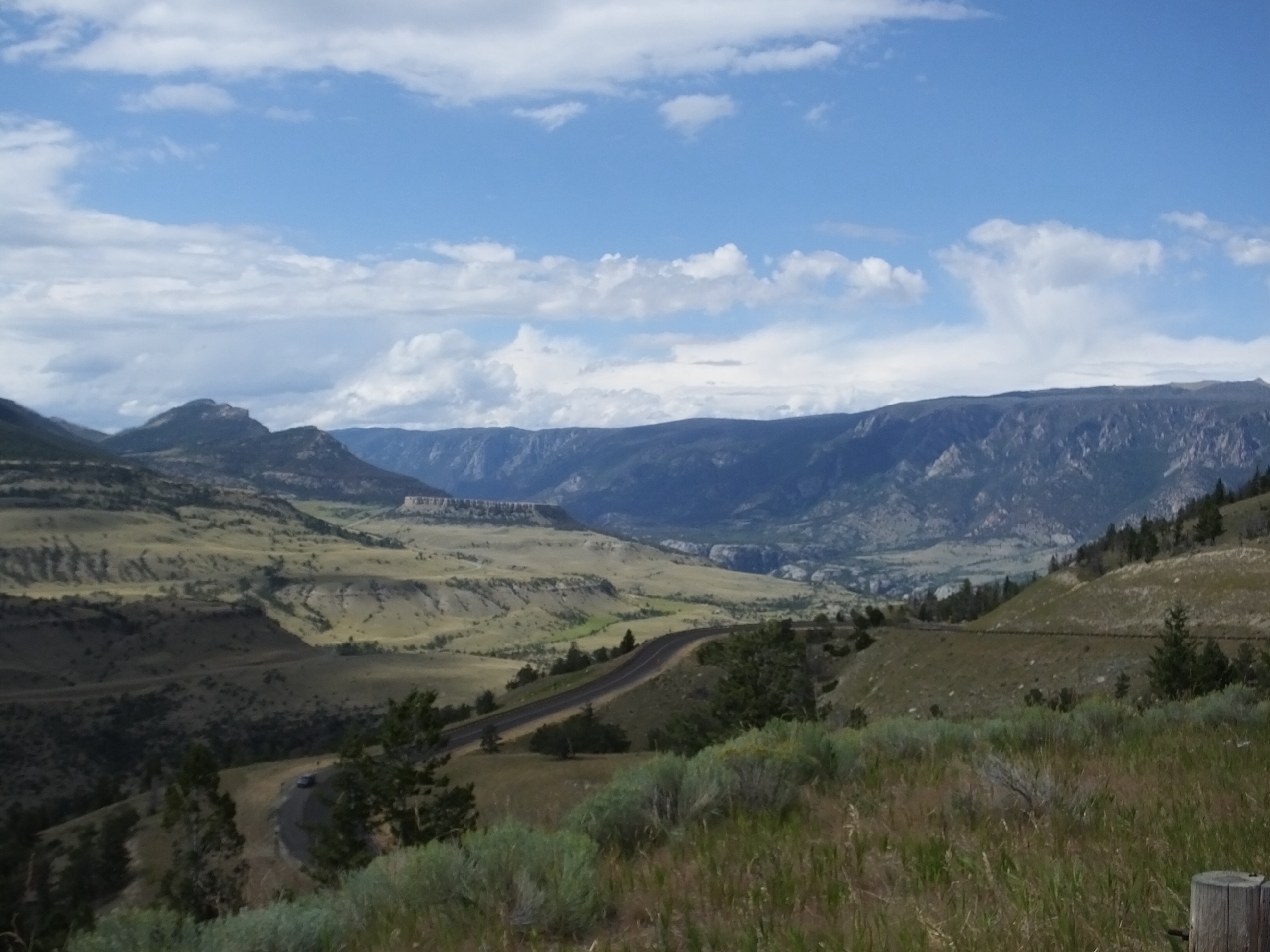 In addition to the Beartooth Highway, I also rode the Chief Joseph Scenic Byway from the Beartooth into Cody, Wyoming, where I’m spending the night. The Chief Joseph Highway (named after the Nez Perce chief who led the failed attempt to escape from the U.S. Cavalry in 1877) lacked the 11,000 foot drama and scenery I had just experienced, but it too was a great ride with some floorboard scraping twisties and views that certainly qualify it as a “Scenic Byway.” The good news is that to get back to the Beartooth tomorrow morning, I have to make a return visit to the Chief Joseph as well.
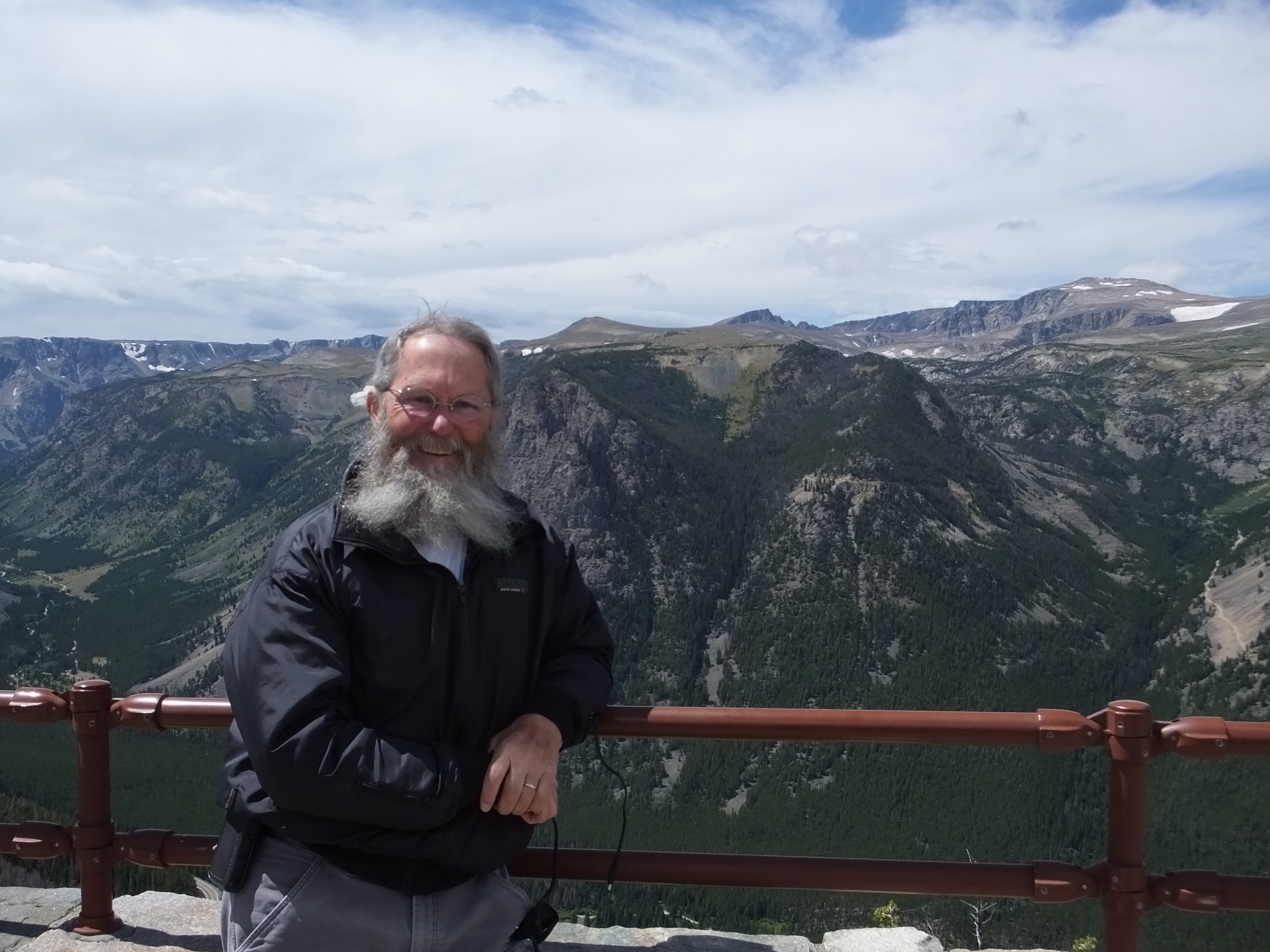 Tomorrow’s ride will be different, though, because I plan to ride it just for the ride. They’ll be no stopping to take pictures this time. After I’ve re-ridden both of those great roads, I’ll go through Yellowstone National Park, which has some pretty amazing scenery of its own. The scenery there is easier to see because traffic usually crawls along at a “look-at-all-the-buffalo-get-a-picher-Mildred” pace led by a man wearing plaid shorts and black socks and driving a rented RV oblivious to the 25 cars backed up behind him. I guess after running the Chief Joseph and the Beartooth, I may not mind catching my breath at a little slower pace.
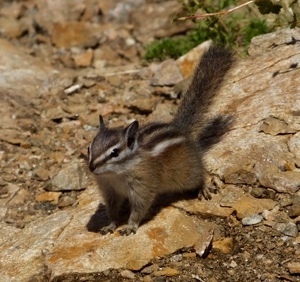 Not much in the way of critters to take pictures of today, other than the always ferocious attacking ground squirrel (grizzlius chipmunkus). The one I took a picture of was clearly about to pounce and take me down but, recognizing his malevolent intent, I deftly avoided his deadly assault. I think I know why he singled me out: I carry a little bag of salted peanuts to munch on when I’m on the road and it was clear that he had his beady eyes on my nut sack.
Tomorrow will take me to the iconic Tetons and to Dubois, a nice little town I remember from my years in Wyoming.
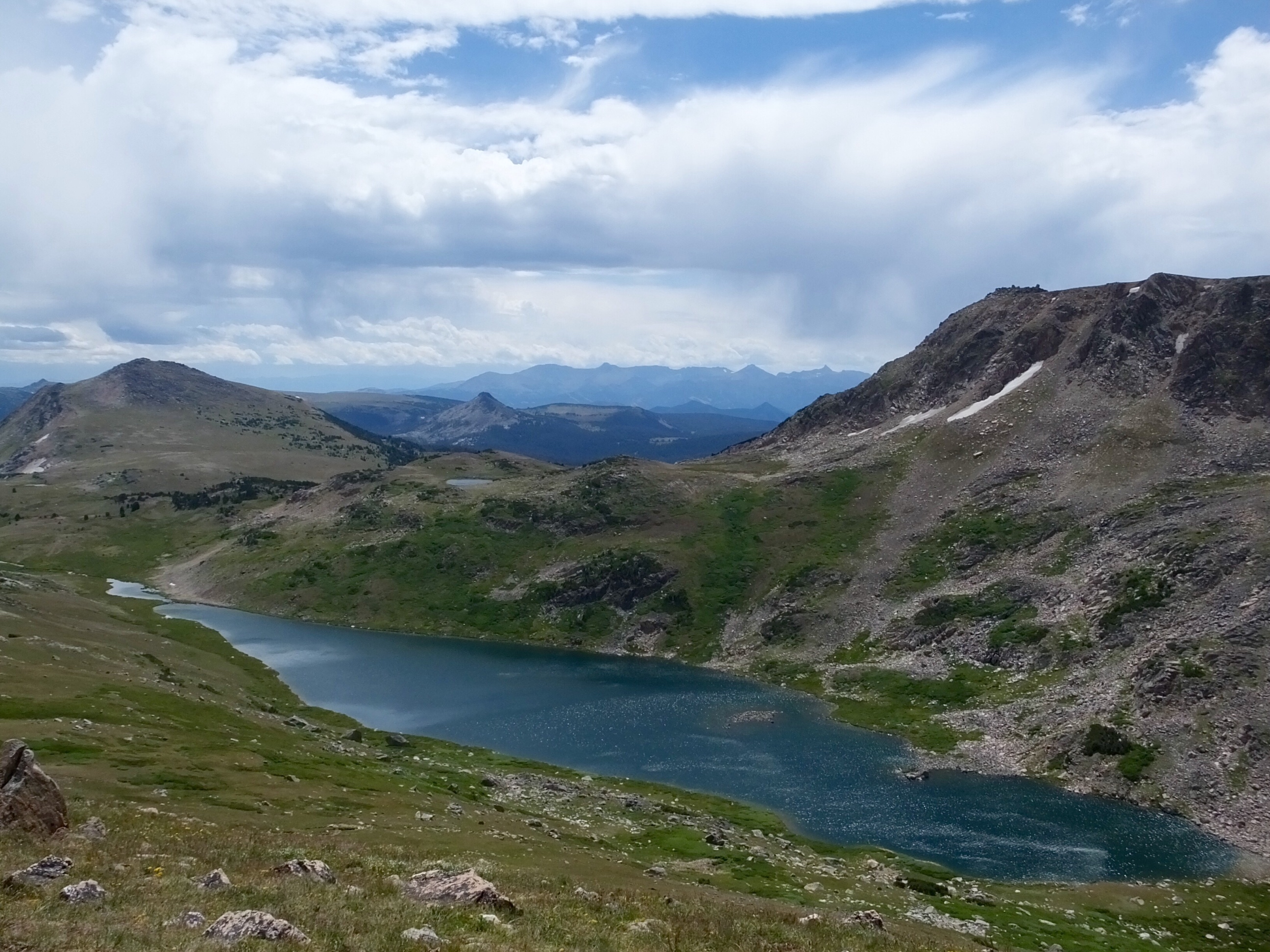
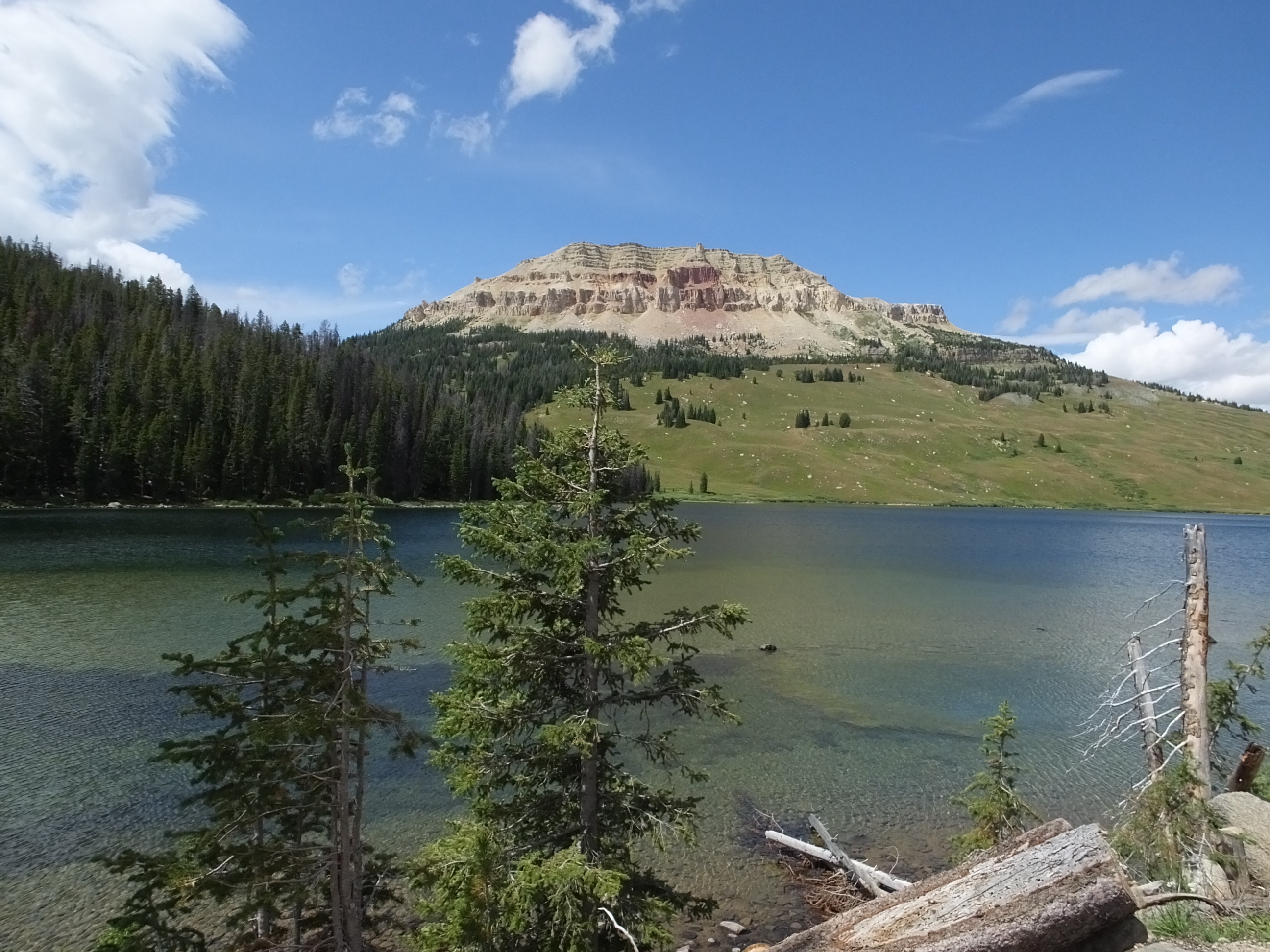
A few more pictures I like from today.
GRMA Day 29: Crossing Lewis & Clark’s Path Again
Four weeks ago today I left Maggie Valley on the start of the Great Rocky Mountain Adventure. During those four weeks I’ve covered 8,000 solitude-filled miles in 13 wonderful states, two amazing Canadian provinces and one isolated Canadian territory. And I still want more. I believe I’ve found my calling.
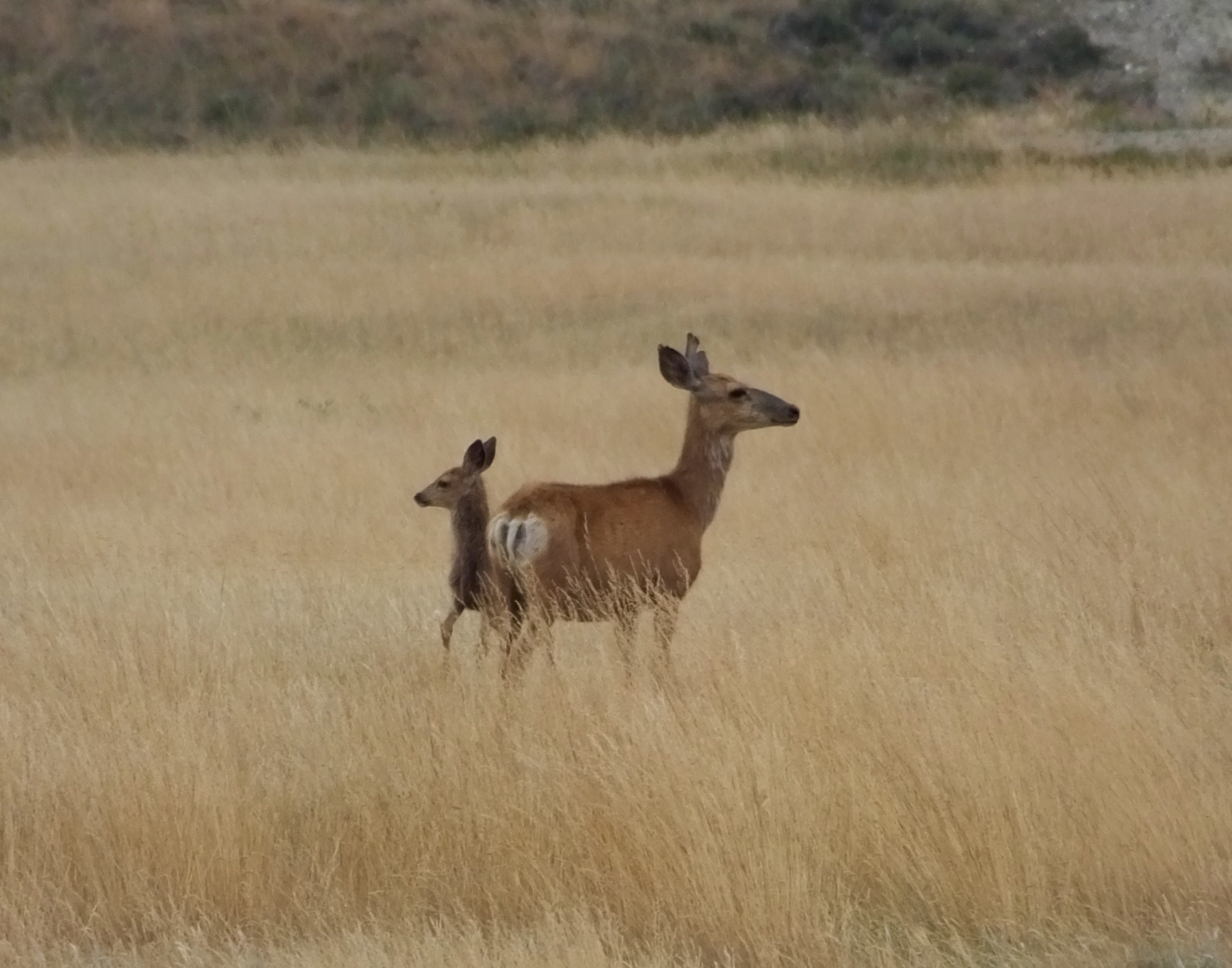
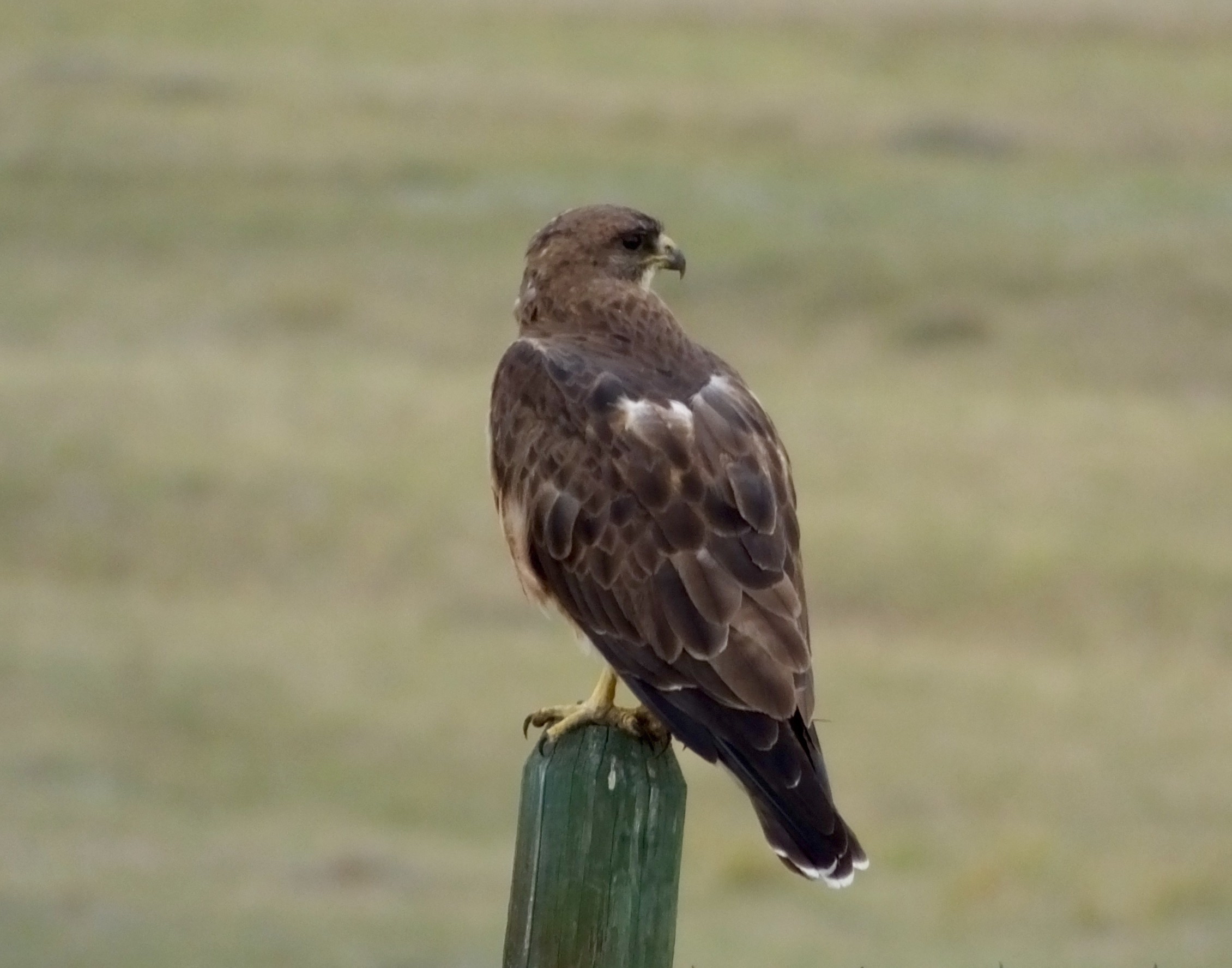 When I left East Glacier Village this morning the smoky haze responsible for my sneezing and sniffling still lingered and I saw it and smelled it most of the day. I think the Glacier National Park fire is responsible for most of the smoke, but there may be smaller fires burning and contributing to the air pollution. Montana, like all of the northwestern U.S., is very dry, and fires seem to be popping up everywhere there are drought conditions. For the first 150 miles or so I was out of the mountains and in Montana ranching country, with vast fields of baled hay and odiferous feed lots providing much of my scenery. I took time to shoot a doe and a fawn (note the notch in the doe’s ear) and a hawk, which I believe is a Swainson’s Hawk. Not much other wildlife, but lots of cows and horses. I think I may try to shoot more hawks in the next couple days, but I’m going to try to use a tripod to get a clearer image.
 When I plotted today’s route I knew I wanted to stop at the U.S. Forest Service’s Lewis & Clark Interpretive Center in Great Falls and thought that two hours would be enough to see everything. As usual, I underestimated the time I needed to spend there to do it justice. The facility is relatively new and very well done. In a series of professional exhibits, the explorers’ route is traced from near St. Louis, up the Missouri, through the Rockies and down the Columbia to the Pacific. And back again. Having a little familiarity with the expedition made it easier to learn even more. The Great Falls site marked the first time Lewis and Clark realized they would not get to the Pacific and back in one year. They expected to make a one-day portage over one set of falls but discovered there were five different falls over the space of about seven miles on the Missouri River; their portage covered 18 miles and took 11 days. The feat is even more impressive when the amount of material that had to be moved and the size of their boats is taken into account. The exhibit does a great job of driving that home.
If I ever decide to ride the Lewis and Clark National Historic Trail, I’ll definitely plan for a full day stop in Great Falls.
 After spending a couple of hours at the Interpretive Center, my route took me through the Little Belt and Big Belt mountain ranges of the Central Montana Range, which is an outlier of (but still part of) the Rocky Mountain Range. They were higher than I expected, with the tallest peak measuring more than 9,400 feet and the pass I went over topped out at 7,300 feet. The Little Belt range includes the Lewis and Clark National Forest, so I was surrounded by the sweet smell of pine trees for much of the afternoon. The final run toward Bozeman sent me careening through Bridger Canyon on mostly dry roads. Other than a 30-minute wind-filled thunder storm late in the afternoon, it was a nice post meridian ride.
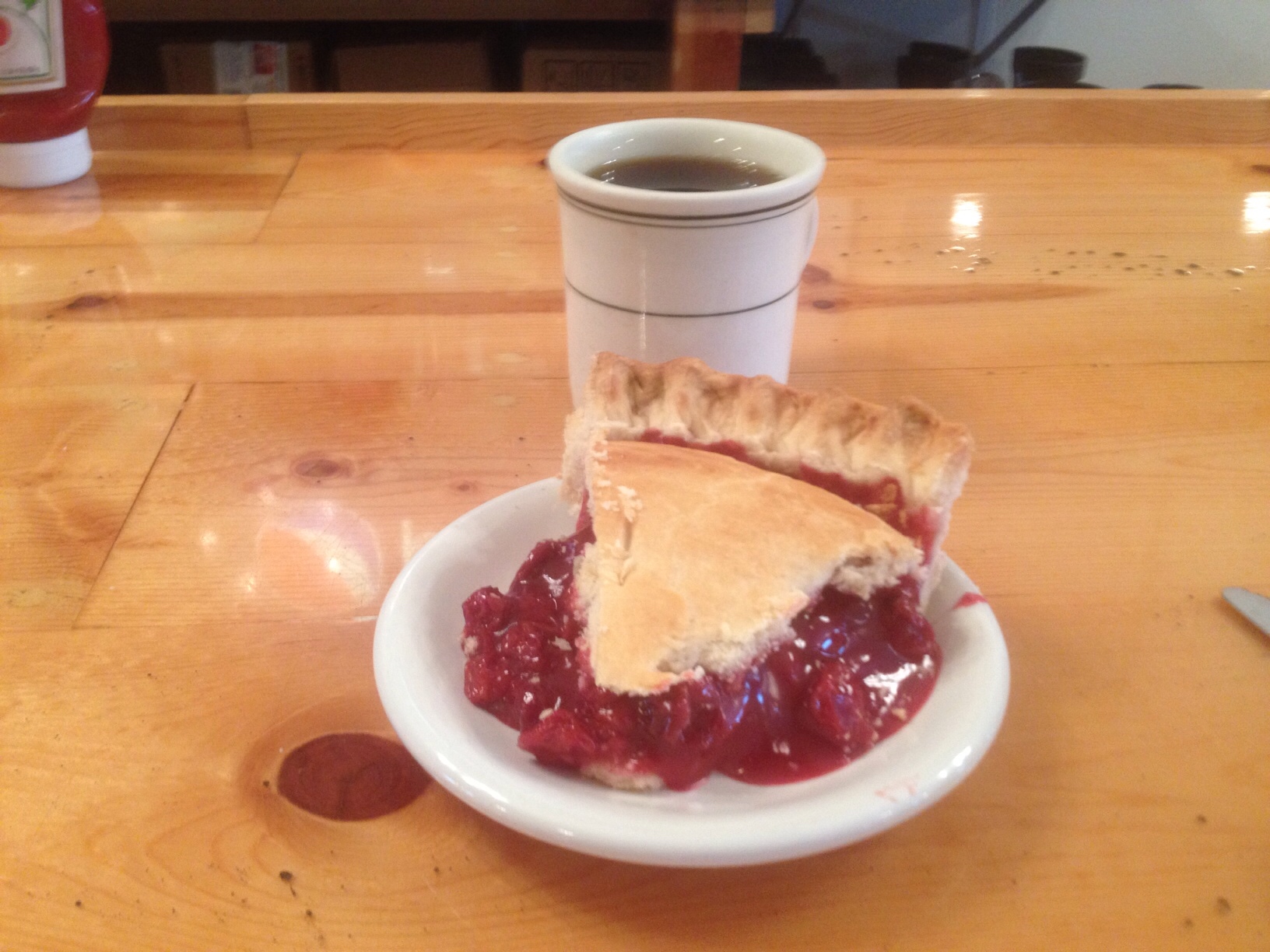 Concern has been expressed regarding my dearth of pie reports lately, so I’ll give a brief pastry update. When in Canada, I had pie when the opportunity arose (including a new species called the Saskatoon Berry), but when only one or two restaurants service a town and towns are few and far between, finding pie would have cut into my big game hunting which turned out to be a lot of fun and seemed to spark interest among readers. Today, knowing I was trading a lunch stop for a museum stop, I had a mid-morning pie break on the plains of Montana where I found a home-made cherry pie at the Cozy Corner Cafe in Fairview. Trust me, I continue to consume more than my fair share of pie on the road.
 The weather is predicted to be good tomorrow, which pleases me because I’m going to ride two roads I’ve heard much about but have not been on myself: The Beartooth Highway in Montana and Wyoming and the Chief Joseph Highway in Wyoming. I’m looking forward to some butt-cheek-clenching twisties.
Once again, thanks for being out there and coming along for the ride.
GRMA Day 28: Back in the USA
(Pictures on today’s blog can be enlarged by clicking on them.)
In many ways I really hated to watch Canada recede in my rearview mirror after I crossed the border at the Chief Mountain checkpoint about 3 p.m. The scenery and the people there are absolutely first rate. But I have to admit its nice to be back where I don’t have to convert everything: money, temperature, measurements. Uh, 77.6% of $23.78 = ??? Uh, 19 degrees centigrade is something times something plus (or minus?) 32 = something Fahrenheit. (Heck with it, it’s cold enough for heated gear) Uh, 90 kph x 1.6 = 144 mph (Sorry officer). I’m only 65 clicks from where I’m headed. Wait, is a click the same as a tap? No that’s converting Windows to iPad. ARRRRGGGHH! But I will miss Canada and its people and I will return again someday.
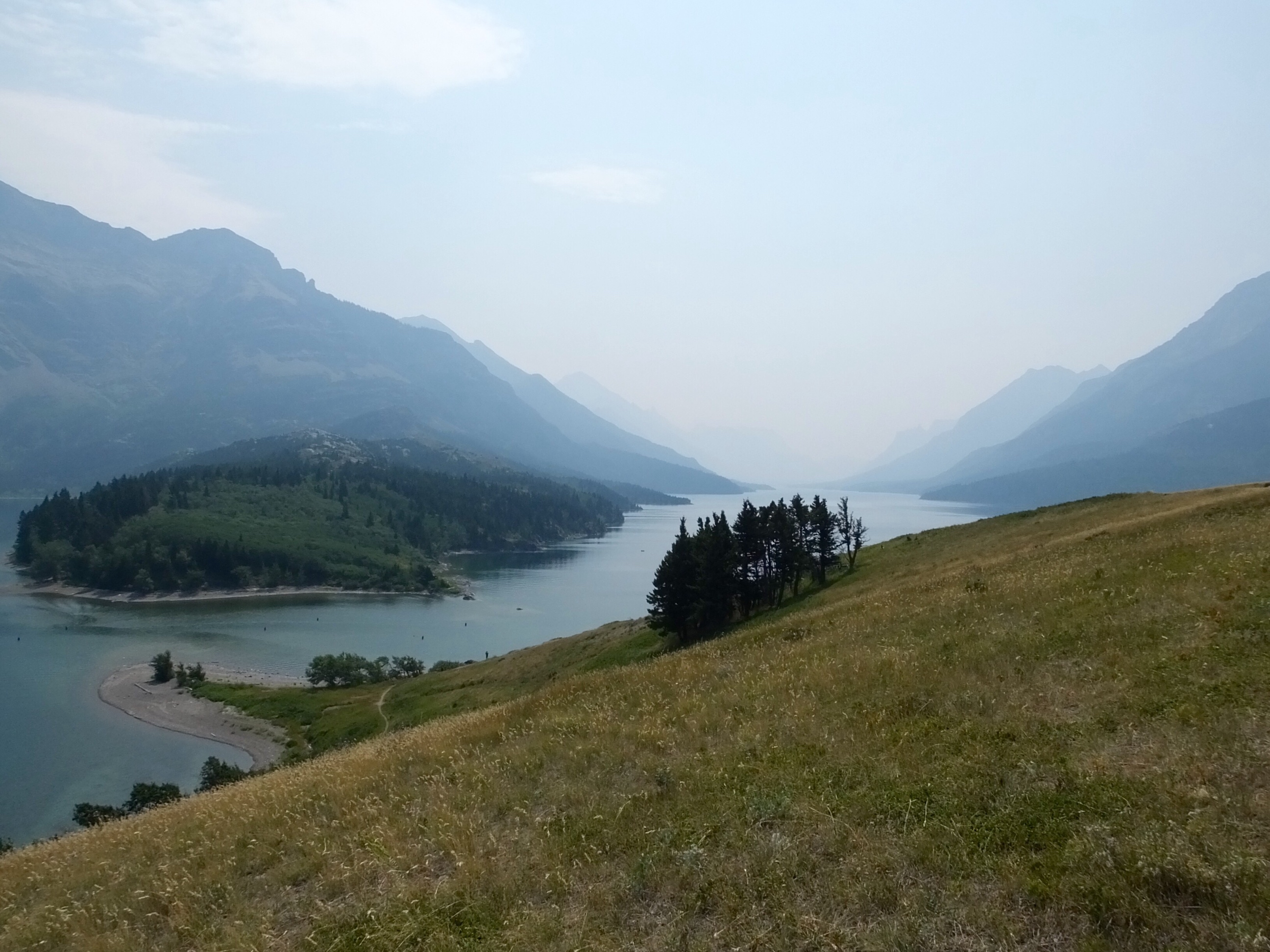 My last day in Canada on this trip found me at Waterton Lakes National Park, which is right across the border from Glacier National Park. Glacier was my original destination for the day because I wanted a repeat run on the indescribably beautiful Going to the Sun Highway. But a forest fire has closed that road, so I opted for the Canadian end of the international Peace Park. Smoke from the Glacier NP fire 50 miles away obscured much of the long-range views in Waterton Lakes, but what I could see was beautiful, though not as dramatic as the higher peaks a little further south. But the smoke didn’t keep the hoardes of people away.
Like many beautiful national parks (Great Smoky Mountains, Yellowstone, Jasper and Banff), the inordinate beauty of Waterton Lakes attracts tourists like ants at a picnic. People were everywhere: The streets in the little town were clogged; the roads in the park teemed with SUVs and rental cars filled with familes from all over the world; even some of the trails were jammed with people to the point where I decided to blow off a hike I had planned to take to aan amazing canyon carved in some remarkable red rocks.
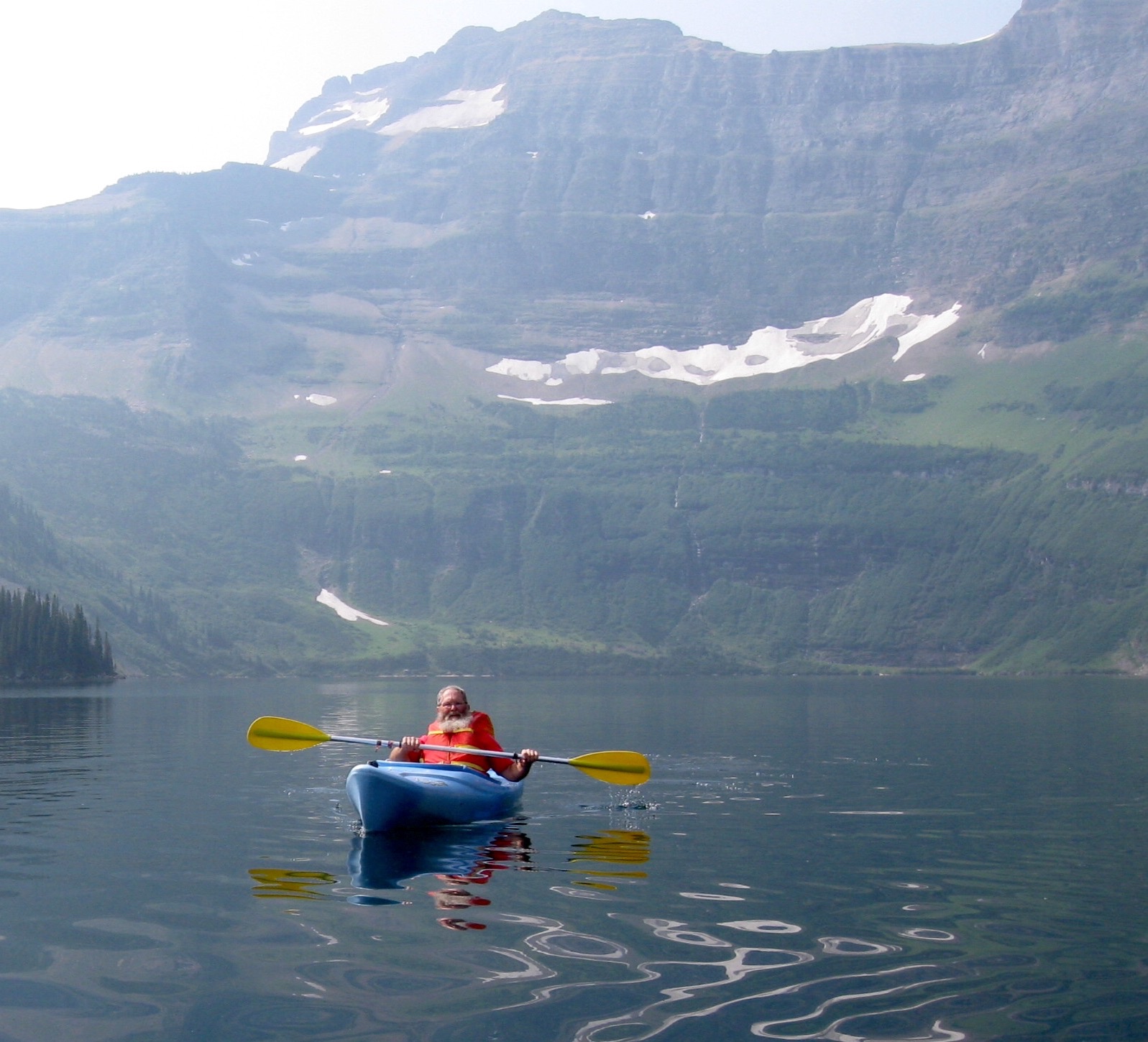
 Fortunately, I arrived in the park by 9 a.m. and some tourists either hadn’t arrived or hadn’t woken up, so the first couple of hours weren’t too bad. There are two spur roads in the park They call them parkways but the condition of the roads makes that a gross overstatement. I selected the furthest south of the two to explore first and, to my delight, that road ended at a small lake. Even more delightful, there was a concessionaire renting kayaks. Readers who followed my Newfoundland blog may see a trend developing. While there were no icebergs on the lake, I spent a pleasant couple hours paddling around the lake, spying a doe drinking at the shore and looking up at the hazy peaks that surrounded the lake. A couple in a rowboat agreed to take my picture with my old (expendable) camera but there wasn’t much we could do about the smoke that hazed the mountain I wanted for my backdrop. You take what you can get.
I also found another couple desperately trying to avoid going in circles in their canoe but usually failing who also took pictures of me. They were a nice couple, but listening to their conversation echoing across the lake was comical: “Paddle right. No, you paddle right. OK. Now left. No, back up. No the other side. No I’ll go right you go left. I’m not going to do anything. You paddle. We’re still going in a circle.” Eventually they made it back to the dock, no doubt exhausted and poorer by the amount of time they spent going in circles x $35 an hour.
I spotted a really nice black bear and a mountain goat while riding the spur roads, but the narrow roads had no shoulders and there was no place to stop, so I missed out on those photo ops. The bear really would have been nice because he was big, dark black with a brown nose. It was fun, though, watching him wander through the thick brush for a few seconds as I drove slowly by.
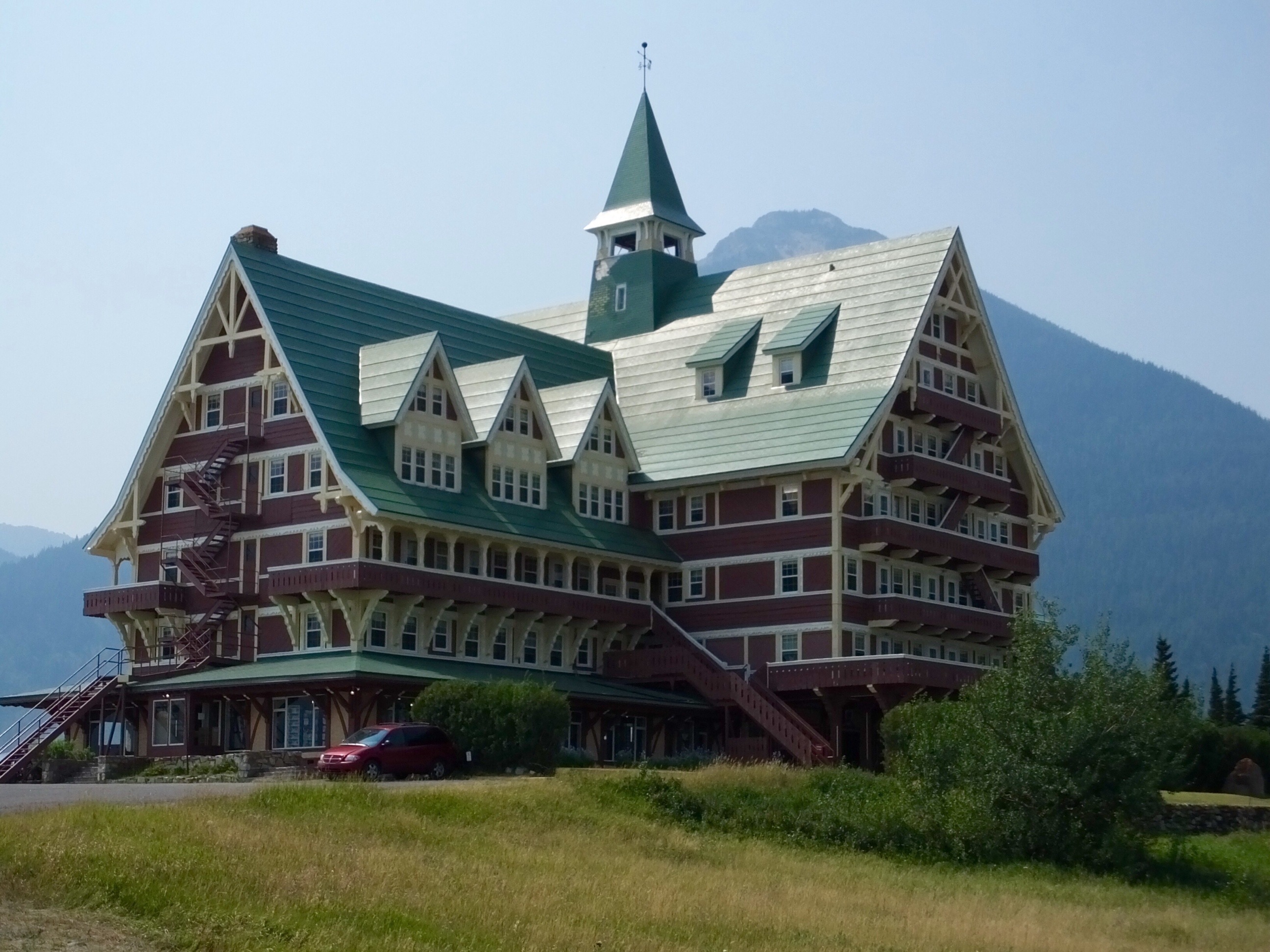 A huge hotel dominates the small town of Waterton in the park, one of the old-style resort hotels that catered to the better class of tourists when the seven-story, French-inspired hotel was built in the 1920s. I had heard about the Prince of Whales hotel from several people I had met and wondered what the connection was to the ocean, which lies so far away from Alberta. Turns out it was Wales, not Whales. Big difference.
Well, another tip of the cap to visitor-center-Heather who recommended this national park as my alternative to Going-to-the-Sun Highway.
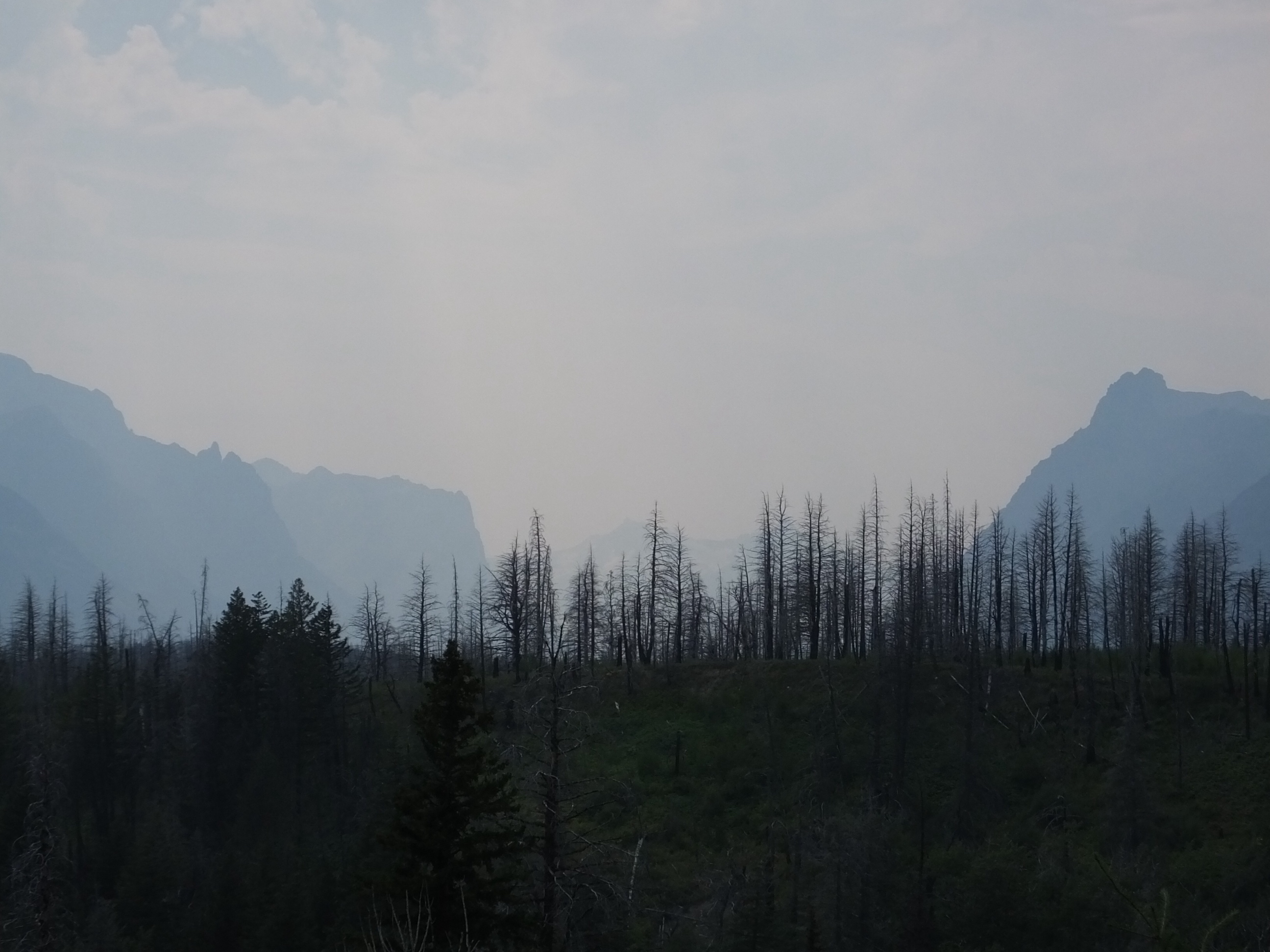 When I passed the entrance to Going to the Sun Highway an hour after re-entering the U.S. I looked up the valley where the road would go. I couldn’t see much of anything because of all the smoke hanging in the air, choking off the beauty of one of America’s great natural resources. It’s a shame. Unfortunately, as the climate continues to change, these kinds of fires, as we are already seeing, will be one of the costs.
Tomorrow I’ll head for Bozeman and try to leave the smoke behind me.
More pictures I liked from today:
GRMA Day 27: The Mountain that Moves
I had several specific places I wanted to see during the Great Rocky Mountain Adventure, and today I checked off another one. More on that in a minute.
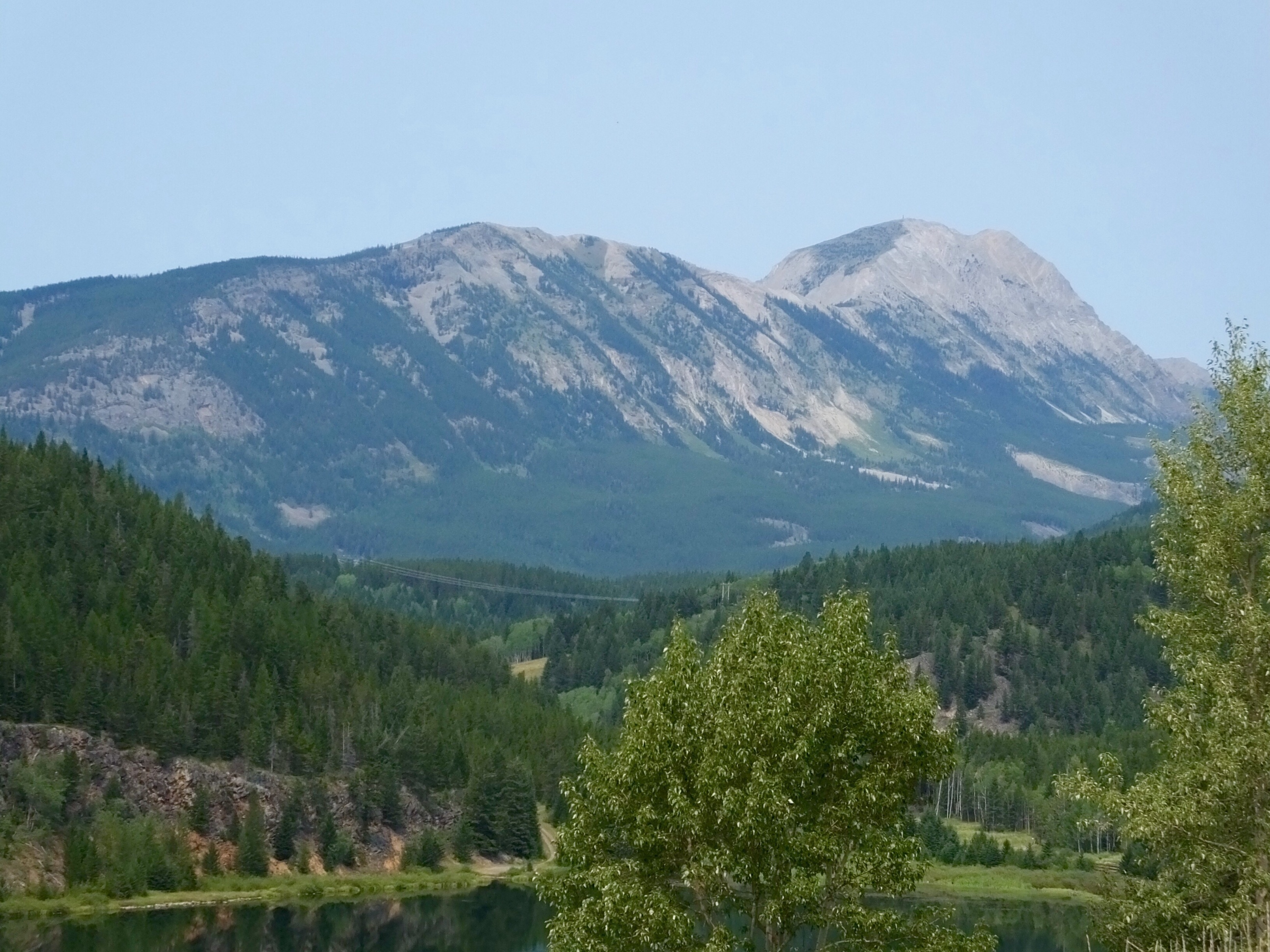 Skies were clear as I left Radium Hot Springs headed south this morning about 9 a.m. But within 50 miles I noticed a light haze in front of me and detected a faint hint of smoke in the air. The haze grew darker as I continued southward and even when I made a planned turn to the east, I still smelled the smoke. While I never saw any fires and never even saw any heavy smoke, the haze was enough to make picture taking problematic by reducing the contrast. I took some pictures of the mountains, but there were no critters to be seen today so the camera didn’t get much of a workout. Heather, a helpful staffer at the Crowsnest Visitor Center just over the border into Alberta, said she heard there were forest fires in British Columbia and that the smoke we could see was probably a good distance from its source.
Speaking of fires, one of my favorite motorcycle roads and part of tomorrow’s planned itinerary is closed. Going to the Sun Road in Glacier National Park has been closed as a through road for more than two weeks as fire crews battle the still-growing Reynolds Creek Fire. I was looking forward to that ride again, but it’s not to be. At least not on this trip. I had thought about backtracking from here and going south into Montana from British Columbia, but Heather the helpful expert on this area recommended I spend time going through Waterton National Park in Alberta. Waterton and Glacier National Park border each other at the international boundary and together form what is sometimes called Peace Park. There is no through road in Waterton, but she said there are two interior roads that would fill up several hours of motorcycle time and provide stunning scenery. So, taking her at her word, tomorrow I’m headed for Waterton and then into Montana through Alberta.
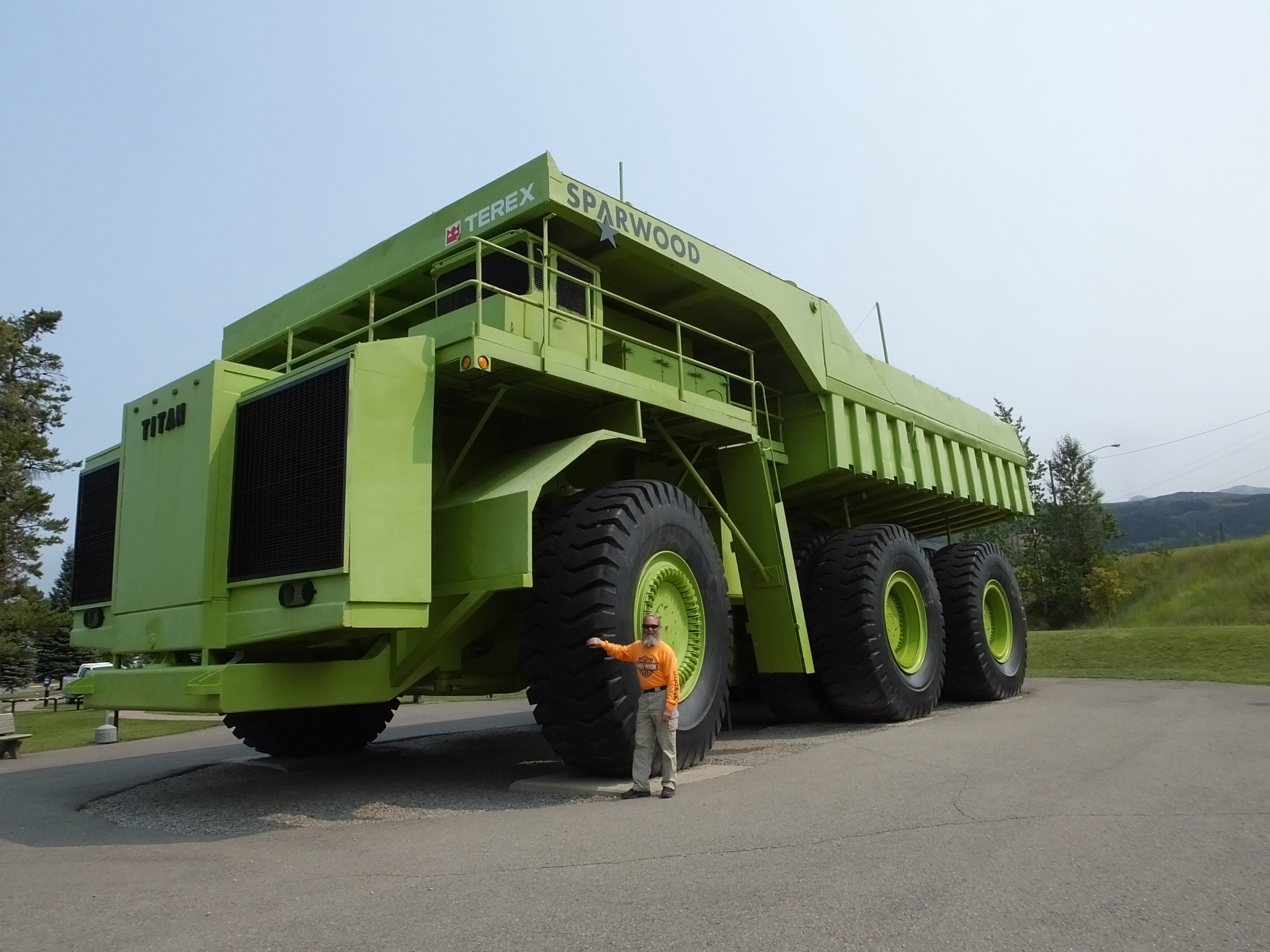 I’ve been thinking about getting a truck. This green one I found in Sparwood would probably work fine. I could carry all my gear in the back. And my motorcyle. And Marilyn’s motorcycle. And our cars. And at least one of our houses. This is advertised as the “World’s Biggest Truck” and was once used in nearby mining operations.
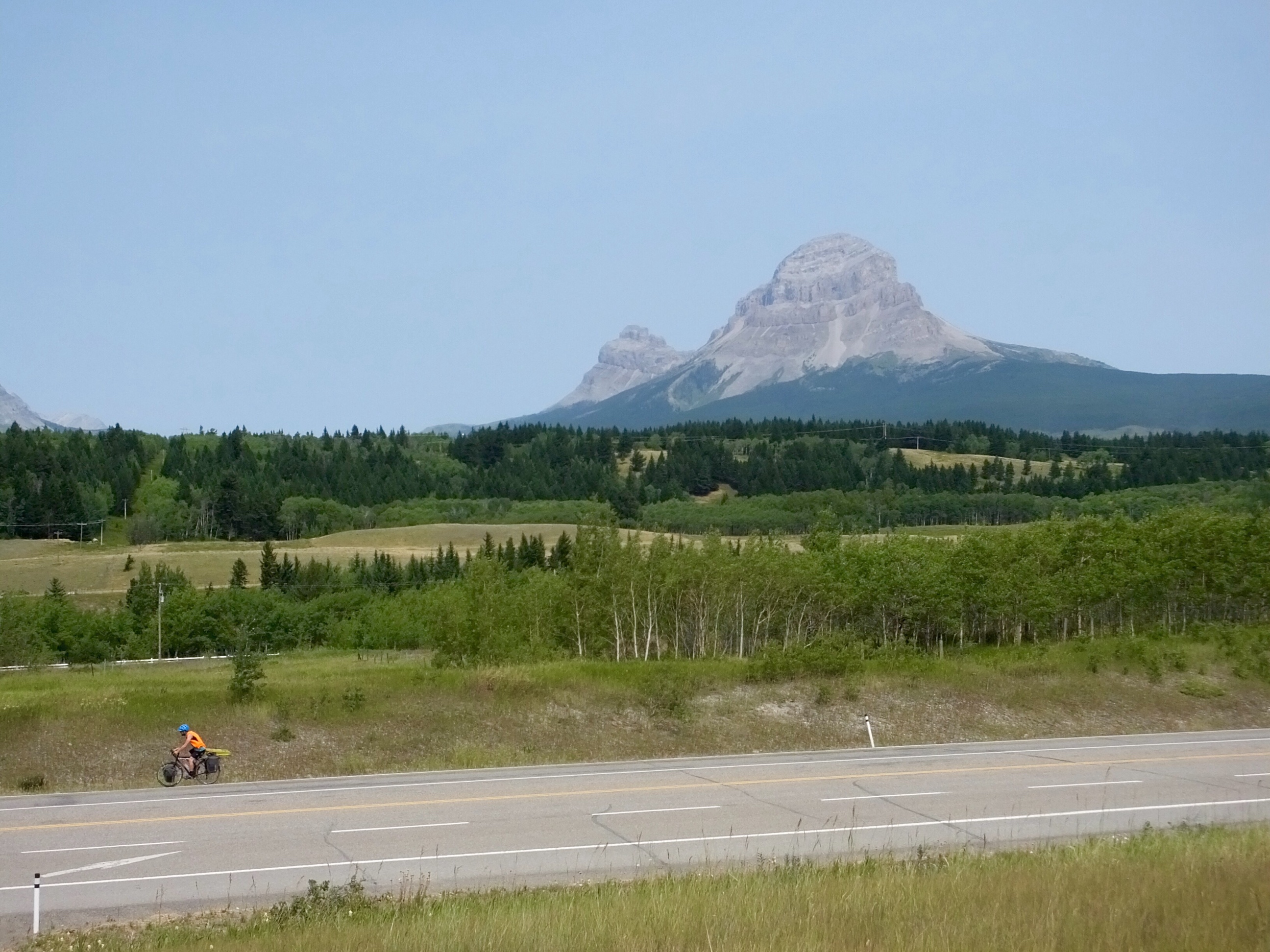 I crossed from B.C. to Alberta on the Crowsnest Highway (Highway 3) over Crowsnest Pass and along Crowsnest Lake and Crowsnest Mountain, past which flows the Crowsnest River. Tonight I’m staying in one of the five towns that make up the Municipality of Crowsnest. I added this stop to the GRMA because of a significant historical and geological event that occurred April 29, 1903. A little after 4 a.m. that morning, the limestone north side of Turtle Mountain gave way, sending a river of rocks a half-mile wide crashing down on part of the town of Frank and killing 90 of the 600 people who lived there, most of them coal miners and their families. The rockslide tore across the valley, stopping only when it reached the other side about two minutes later, more than a mile away. The event became known as The Frank Slide. (The wide picture is a 180 degree panorama; the other pictures are still shots.)
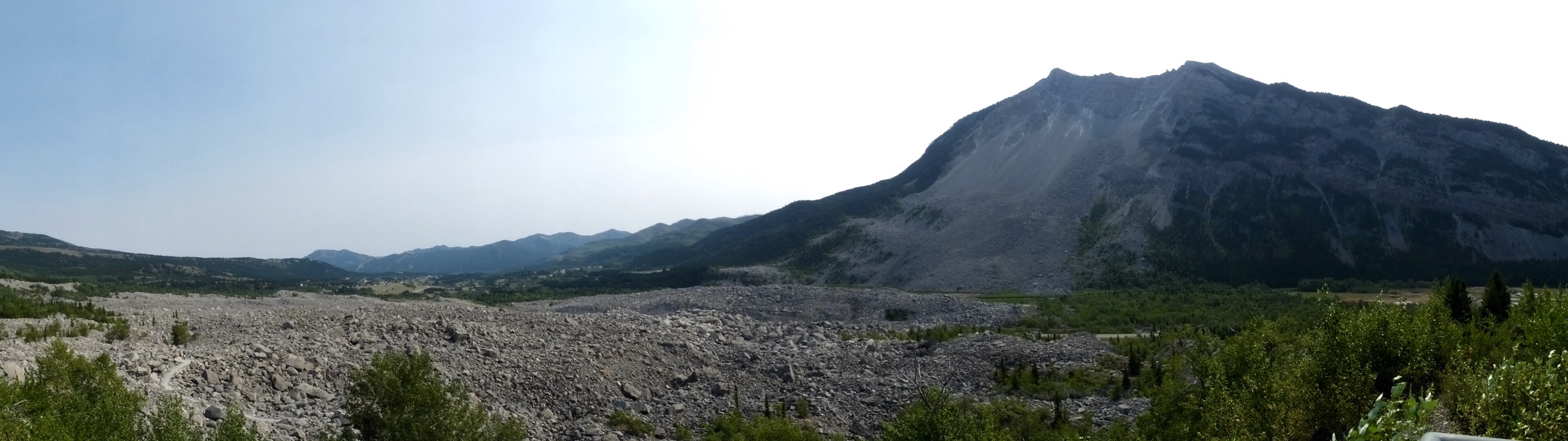
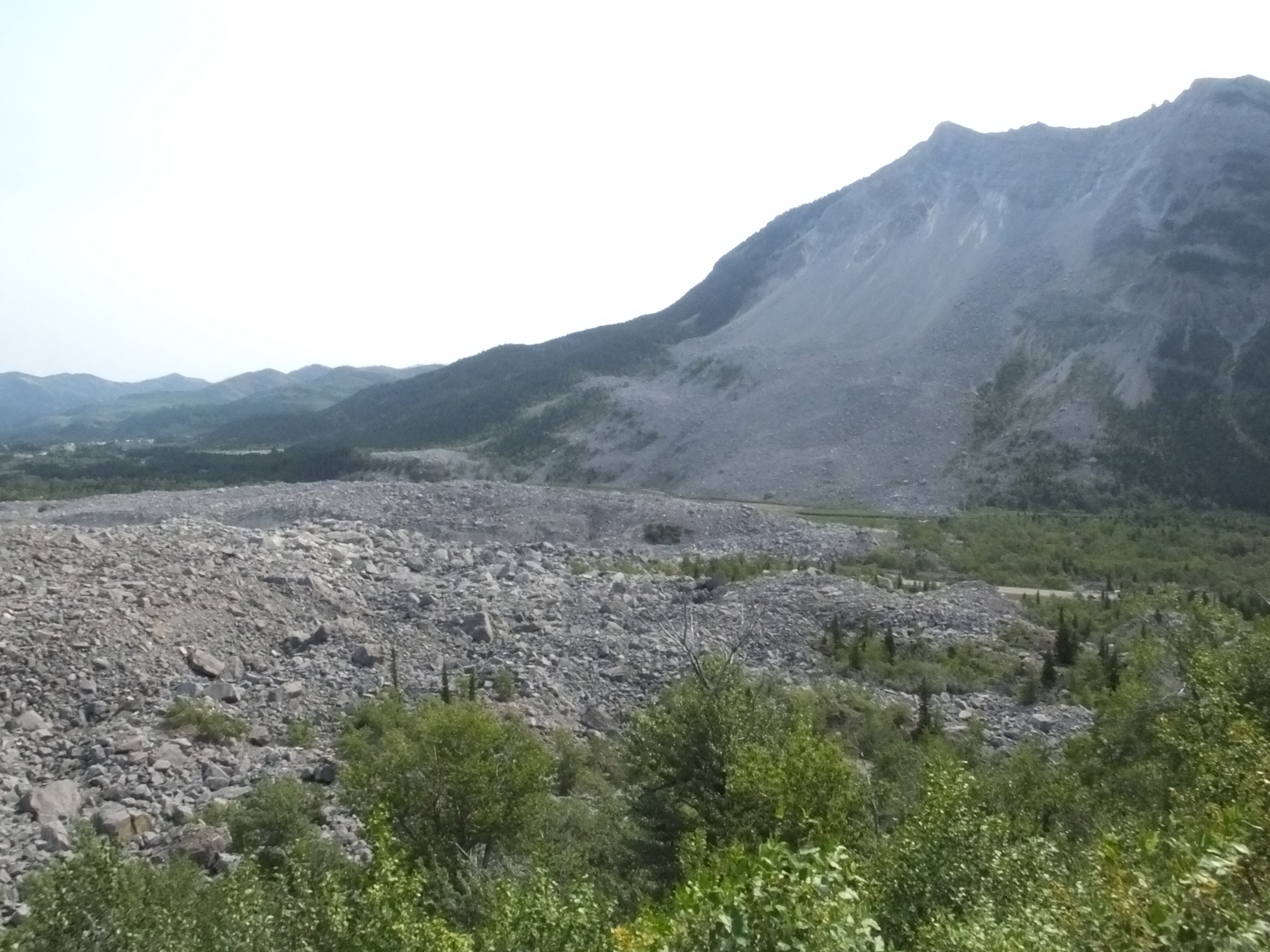 The disaster was millions of years in the making (I will spare you the details) involving tectonic plates, continent building, fold and thrust faults, weathering, and finally, a coal mine tunneled in the base of Turtle Mountain which probably helped caused the collapse by weakening the support that the top of the mountain had precariously relied on for millions of years. Even before the slide, Indians in the area refused to camp at the base of the mountain, calling it “The Mountain that Moves.” What little I know about the event and the geology behind it is thanks to an outstanding, state-of-the-art interpretive center operated by the Province of Alberta.
 The rail line in the path of the slide was up and running 11 days after being buried under 30-40 feet of rock. (Railroad engineering crews were amazing even then.) The mine was reopened after a few months, though it finally closed down 15 years later. Highway 3 today goes through the middle of the deadly rubble field, with massive piles of stones and boulders still standing where they came to rest 112 years ago. Currently, geologists are monitoring the mountain with more than two dozen sensors planted on it; their prediction is that the mountain will move again–they just don’t know when.
Only 11 years later, a few miles down the road from Frank, the town of Hillcrest Mines witnessed the worst coal mining disaster in Canadian history when a horrific fire and explosion killed 189 miners, about 1/2 of the mine’s workforce. That disaster has been memorialized in song, including by the Men of the Deeps (singing coal miners) that I was privileged to see and hear last year when I rode to Newfoundland. Small world again.
I added a day to this Adventure to make sure I stopped at the Frank Slide. I’m glad I did.
Other pictures I liked today:
 hdriderblog