
GAFA Day 5: Halibut Hunt
When I planned the Great Alaska Fishing Adventure, I tried to include a variety of fishing options, e.g. Sockeye on the river, Silvers on a fly-out, fly fishing for trout and open water fishing for the fabuous fleshy flat fish lurking at the bottom of Cook Inlet. In part this plan would allow us to have a variety of fish to bring back, but more importantly it would allow us to have a variety of Alaska fishing experiences.
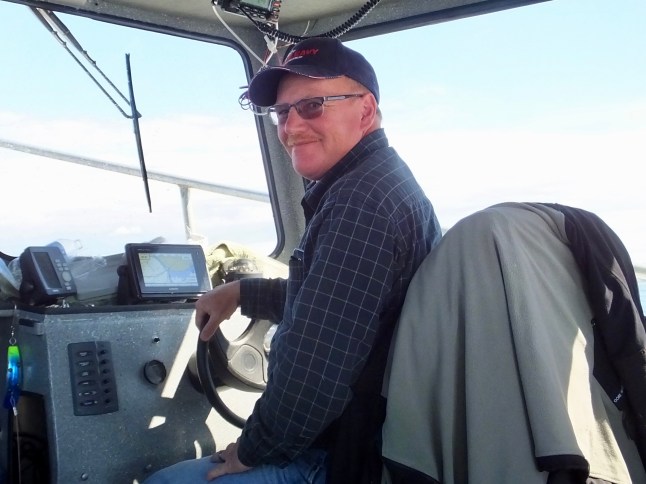
Today was halibut day. So, after getting to sleep at 11:30 last night, we were up at 3:30 this morning (for the math challenged that’s four hours of sleep) to get ready to drive more than 60 dark miles on a moose infested road so we could fulfill our 6:30 angling assignation. At 6:15 we pulled into the Anchor Point State Recreation Area parking lot, just behind our newfound Texas friends Brian and son Travis, and waited for Captain Wally to arrive with our aquatic transportation for the day. At 6:30, he towed his worn but worthy eight-passenger aluminum charter boat to the launch ramp and, as the morning sun began to ease carefully through wispy clounds and climb slowly over the mountainous horizon to the east, the Halibut Adventure got underway
Besides Brian and Travis, two other angling adventurers–Florida-based Jason and Georgia-based Austin–had booked the charter for the day. All six of us met Wally and mate Ethan and climbed aboard the Carrie Ann. The trailer was hooked to a retired logging skidder (a great big tractor) and backed into the sea until the boat floated free and the trailer was returned to the beach. We were off.

A 45-minute full-power blast south in the Inlet gave us breathtaking views of the volcanic mountains to the west, including the landscape-dominating Mt. Redoubt. Beautiful weather, fantastic views, and a smooth ride across the uncommonly still water of the Inlet and we were soon at our first anchorage of the day.
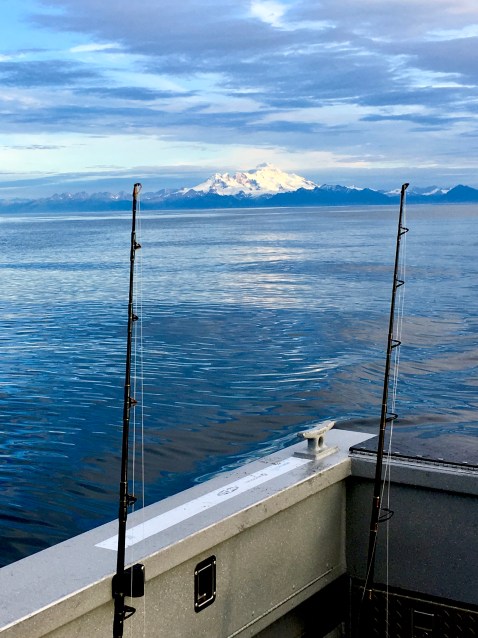
Captain Wally explained the limits to us–two fish per person per day, one of which had to be 26-28 inches in length (8-10 pounds) and the other could be any size, up to and above 400 pounds. That’s a big fish and no really expected or wanted to reel in a bottom dwelling behemoth, but we were all hoping to boat something in the 40-70 pound range.
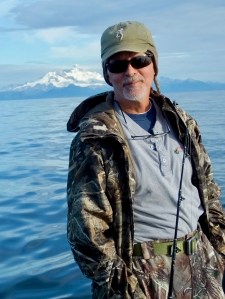
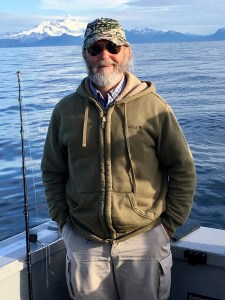
Our initial stop put us above a feeding ground 180 feet below that teemed with younger halibut that would meet the 26-28″ requirement. Wally and Ethan began baiting hooks. John took the first rod available and dropped his line, weighted with a four-pound lead sinker, into the clear, dark water. Within minutes after his weight touched the bottom John had hooked into the first fish of the day and after a three or four minute John West-powered ride to the surface, the initial halibut was in the fish well.
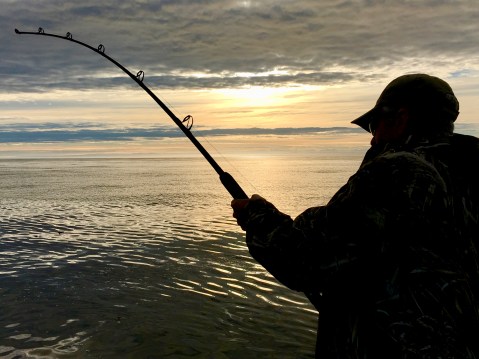
In rapid succession, the amateur fishing crew reeled in several small halibut at or near the size range required by Alaska statute. If they were too small, they were returned to the sea from whence they had come. If they were larger than 28″ but not large enough to satisfy anyone’s desire for a “big” fish–say 15 pounds or so, those fish also got a break and were released. In about an hour, we had six “good fish” in the well, properly marked so we knew which fish belonged to which halibut hunter. I caught one that was too small by 1/2 inchand one that was too big by about two inches, but the third fish my quickly tiring arms reeled in was a perfect 27 1/2 inches. Although no one kept track, we probably boated about 15 fish and released nine of them before we had what we needed.
Captain Wally fired up the twin 150 hp Yamaha engines and our band of merry men was underway again, on course for a deeper location–about 250 feet– where the older, larger and much scarcer halibut tend to hang out. Instead of 10-15 minute workouts between hits, now we waited 30-45-60 minutes for the lunkers to interest themselves in our baited offerings. Unfortunately the halibut weren’t the only fish feeding at the bottom and during the course of the day we reeled in a half dozen small dog sharks (I got one of those) and three or four skates which Wally and Ethan had to remove from the often tangled lines at some peril.
Travis, one of our fishing mates from yesterday on the Kustatan, seemed to hold the hot rod at this location, landing two fish before anyone else had landed his first. But they were smallish–25 pounds–and he opted to release them so he could continue his quest for a halibeast. John and I decided we would keep one of his returns as a hedge against getting skunked. So, we had one in the well. A couple 25-30 pound fish were caught and kept before Floridian Jason boated the biggest fish of the day to that point at about 40-45 pounds. It’s important to remember that these unhappily hooked halibut had to be reeled 250 feet to the surface, resisting with all their strength all the way. At times that resistance paid off and they were able to escape. That final fight between fish and fisherman comes after 20-30 minutes of “jigging” or continually lifting the four-pound weight several feet off the ocean floor and then letting it drop again. Lift, drop, repeat. This monotonous technique puts considerable strain on arms young and old.
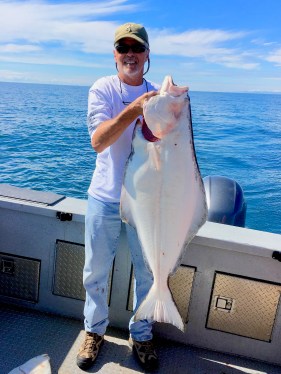 About two hours after we started looking for “big” fish, John’s rod dipped sharply and it was “fish on.” As he began reeling his reluctant foe to the surface, it was clear this was a big fish. Although the boat had no scales, Wally and Ethan estimated John’s catch at 45-50 pounds, making it the largest halibeast of the day.
Unfortunately my only catch at the second location was a small shark, and I ended the day with three halibut, two of which I returned to the sea. But John and I, like the other four halibut hopefuls, reached our two-person limit of four fish, weighing in the neighborhood of 85 pounds.
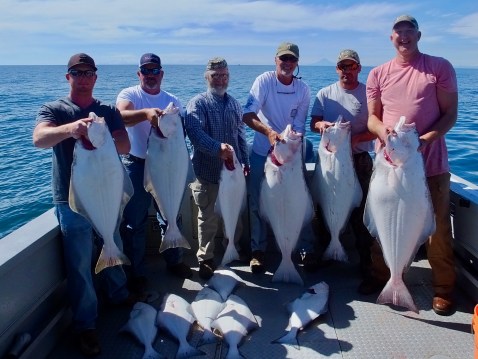
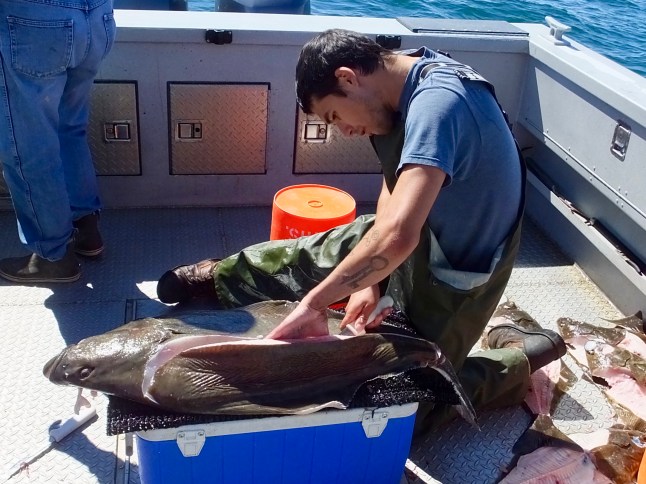
After the final keeper was in the well, we paused briefly for pictures proudly displaying our catch. Then Captain Wally fired up the powerful Yamahas once more and headed back to the rocky beach and the waiting trailer while Ethan, being the low man on the boat’s two-man totem pole, began filleting the 12 fish in the well, making sure to bag the three teams’ fish separately so we could deliver them to a fish processor for vacuum bagging and freezing for the plane ride home. Our filleted fish at the processor tipped the scales at a respectable 39 pounds that will be added to the roughly 43 pounds of flash-frozen salmon already awaiting our Monday pickup.
Tomorrow we try our hands at catch-and-release trout fishing in the Kenai River Canyon about 30 miles from here. That will be our last fishing outing for this trip. If it’s as much fun as the other three, tomorrow will be a great day.
NOTE: Friends, family and other followers: Please feel free to add your thoughts to the blog via the COMMENTS button. John and I would love to know what you think about this adventure.
GAFA Day 4: Silvers on the Kustatan
After yesterday’s fly-out rain-out, today’s afternoon flight to fish for Silver Salmon (aka Coho) on the Kustatan River was much anticipated. And, as adventures go, today didn’t disappoint. as we added several tales to our store of stories with which we’ll regale friends and family left behind.
 Our float plane taxied across the small pond at the Alaska West Air home base and into the clear air several minutes early as both John and I and the five-member Henderson-family party from Texas were anxious to get lines in the water and start hooking these fantastic fighting salmon.
 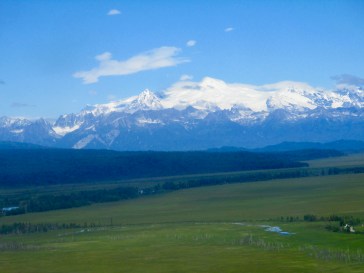 The short flight across Cook Inlet under mostly clear blue skies gave us a great view of the soaring snow-covered volcanic mountains on the Inlet’s western flank.
When we landed on the Kustatan 20 minutes later, we met our guide for the day–Danny V, a high school science teacher in the City of Kenai and the head guide for Alaska West Air fishing charters. We loaded our gear into the AWA-owned boat and headed down river to join other anglers on the banks, in boats and in the water.
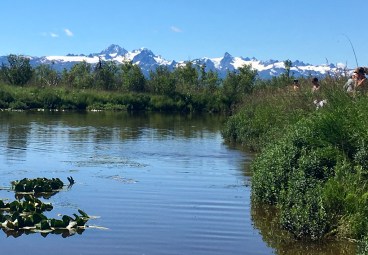
The view at our first location. Note that Jennifer on the far right has hooked one.
Danny V picked a spot that allowed us to fish from the banks, and within 15 minutes one of the Hendersons had landed the first salmon of the day.
John and I fished from the back of the moored boat to begin with. John scored first, landing a nice silver after about 30 minutes. About 15 minutes later I had one in the net and the day looked promising. When strikes from the waters behind the boat slowed down, I walked down the bank to where the others had stationed themselves and were hooking salmon about every 10 minutes and started fishing. Soon, I hooked a nice fish and started the exciting process of reeling it in as twisted and sliced through the water trying to escape. And then it was gone. I thought it had flipped off, but when I finished reeling in I discovered my hook and leader were missing–the line had broken. So I headed back to the boat so Danny could repair my tackle and I could resume my quest. And then the first day’s adventure began.
The shore is pocked with holes of various depths and widths caused by the water’s ebb and flow. I knew there were several that had to be navigated, and in attempting to cross the biggest one, I landed on the edge and fell backwards into the hole and into the water. Although I had waders on, when you land on your back in the water, they fill quickly, as mine did. I scrambled out as quickly as I could but my clothes were soaked. And so was my new small camera purchased for this trip. At present it appears to be non-functioning, though I’ll try it again tomorrow. All the rest of the pictures I got today were taken with my cell phone that was damp, but not soaked and is in working order.
I made it to the boat, removed my waders so my clothes could begin to dry and fished for a while from there. When my shirts and pants were mostly dry–about 30 minutes–, I put the waders back on and resumed fishing from the shore, but the silvers had begun to go, as the guides say, “lockjaw,” meaning they’ve quit biting. I did hook into one nice fish and reeled it all the way to the shore but after two tries at netting it, it flipped itself off and I missed what would have been my limit at the end of the day. By then, Mike, the patriarch of the Henderson clan, had already caught his three-fish limit and each of the others in their party had one or two fish.
Danny V decided to move us to another place in the river, but the new location proved to be a bust. Thirty minutes of fishing passed and no one got a strike. So we moved again, this time up river where we had another 30 minute dry spell before heading back down river to near where we had been before and where others were catching fish earlier. After only about 10 minutes, one of the Hendersons landed another fish and John followed suit a few minutes later. Then I hooked into and landed my second salmon for the day and it looked like we might all catch our limit, even though we only had about an hour left to fish before the plane returned to ferry us back across Cook Inlet.
With only an hour remaining in the fishing day, Danny V had to start cleaning and filleting today’s catch, which by then amounted to about 17 or 18 salmon for the group. We off loaded his filleting board and the cooler full of salmon. He told us to keep fishing and he was about to start the cleaning process when . . .
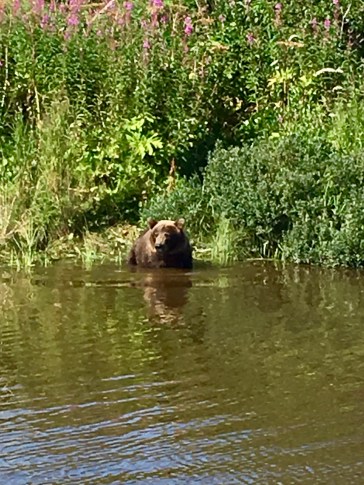 BEAR!!!
Across the small slough near the river’s main channel–about 25-30 yards from where we were fishing a mature Grizzly (aka Brown) bear, emerged from the brush and walked along the bank and into the water directly across from us. Grizzlies are a serious threat and Danny V started to hustle everyone and all the gear into the boat, all the while huffing loudly at the bear to try to convince it to stay on the other side.
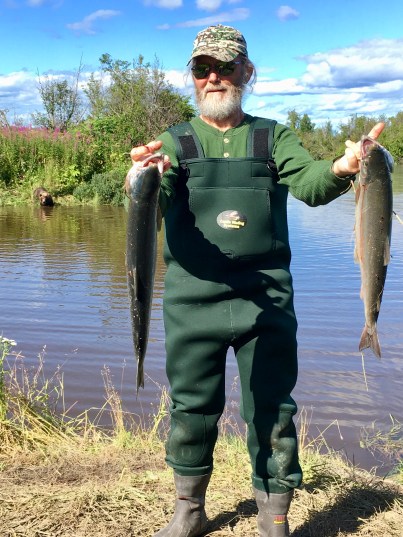
Note the visitor on the far bank behind me eyeing what he thought might be dinner.
I took a moment, though, to get a picture with today’s catch before Danny sliced and diced it and then joined the others in the boat.
About that time, the bear swam across the river away from the slough where we fishing and moved further downstream. So we unloaded the boat again and started fishing while Danny started working.
“Bear’s coming back across,” John warned everyone as he quickly reeled in, and once again we bugged out and loaded the boat. This time, knowing the bear was on our side of the river but not where he was, Danny backed the craft into the channel and headed a good distance downriver to a mid-river sandbar so he could finish the fish cleaning he already started twice.
 Several of us tried to fish for the remaining time while today’s catch was being finished off but then, once again, “BEAR.” The same bear had moved the same distance we had though we’re not sure if it was intentional or coincidental. But this time he never got as close to us as he had been earlier and Jennifer Henderson (mom) kept a wary eye on the unwelcome visitor while Danny finally finished his work, bagged the fillets and we loaded the gear and returned to the plane’s landing site on the river to meet our ride home at 6 p.m.
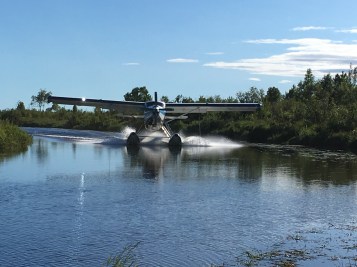 About 10 minutes after we arrived, the plane’s drone could be heard and a few minutes later the pilot touched down. We loaded all the gear and fish into the plane and covered the return distance across the Inlet in about 20 minutes.
Back at the AWA home base, we bid our guide and some of the Henderson clan adieu, but tomorrow we will fish again with Brian (father) and Travis (son) when we meet Captain Wally at Anchor Point and head to sea in search of tasty Halibut. Adventures tomorrow? Probably, but I wouldn’t even try to guess what kind.
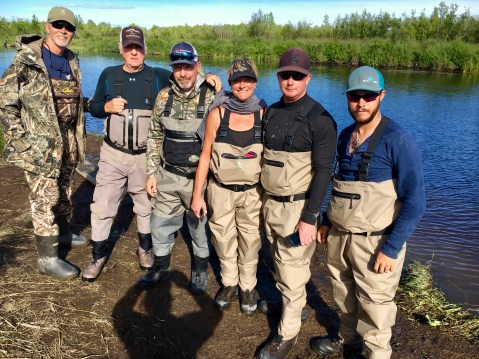
GAFA Day 4: Rain & Fog Rule
We knew when we went to bed last night that rain was forecast today, but we still anticipated flying to Bachatna Creek on the west side of Cook Inlet to seek our three-fish limit of Silver (Coho) salmon. Up early again (but not as early as yesterday) and fortified by Moose Is Loose apple fritters and pecan rolls and steaming cups of java, we made the 45 minute drive to Alaska West Air in Nikiski, north of the City of Kenai, and arrived comfortably before our scheduled 7:30 arrival time. When we walked in, the office/waiting area was filled with dozens of hopeful but anxious anglers still waiting for their 7 a.m. departure flights. Shortly before 8 a.m. that group received the bad news that their trips had all been cancelled. Dejected, they trudged back to their cars, leaving about a dozen of us still on the bubble for our 8 a.m. departures. But at 8:40, AWA staff announced that heavy fog, especially in our landing area, meant our trip was scratched also. It’s likely that none of the dozen or so scheduled fly-outs today left the ground, and a lucky group of spawn-ready Coho salmon avoided a swim through a gauntlet of hooks in various rivers.
(As I sit here writing, I just got a call from the indefatigable Sherri Brush at EZ Limit Guide Service with the great news that she booked us on another fly-out tomorrow afternoon at 1 p.m. So, instead of sight-seeing, we’ll be back on the water looking for cooperative Cohos. Yeah!)
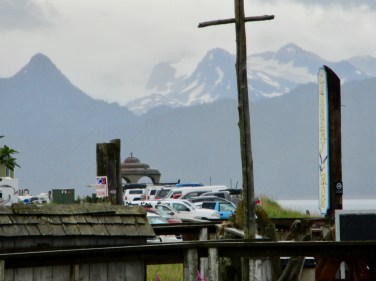 We decided to use the remainder of the day to do a little sight-seeing (not much given the rain and fog) and go to Homer to look around and search out a museum I had read about. The drive south to Homer took us past Anchor Point, which is where we’ll launch the halibut phase of this GAFA on Saturday, so we took a short detour to the meet-up point to make sure we wouldn’t have any difficulty finding it in the dark two mornings from now.
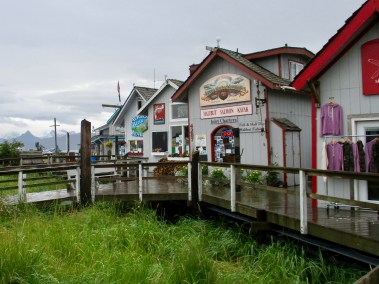 We got to Homer about 11 and drove out on the Homer Spit, which I learned today was created as a terminal moraine by a retreating glacier thousands of years ago that deposited its load of dirt and gravel at the end of Kachemak Bay. Although the spit sunk about 6 feet March 27, 1964, as a result of the record-setting 9.2 earthquake, Homerians decided to add thousands of tons of rocks to the spit, bringing it up to today’s level and allowing shops, docks and fueling facilities to be rebuilt. Given the cold wind and rain today, a hot bowl of clam chowder was in order, and we found a small place on the Spit that served up a good bowl of it.
Following lunch and a couple of short visits in some Spit shops (that sounds disgusting), we headed back to the mainland to find the Pratt Museum I had read about. With only one U-turn, we found the Museum and I was surprised to see, instead of a typical local history museum, a large, relatively new building. Inside, it offered professionally designed and built museum exhibits that covered natural and human history, marine life, and an art gallery. John and I spent more than an hour going through the museum and both of us came away edified and intellectually satisfied, having learned several important things about settlers, coal miners, fox farmers, crabbers and fishermen; about the Kenaitze indigenous people; about the Exxon Valdez oil spill; and about the endless trials and tribulations of surviving a harsh and unforgiving environment. Once again, our time and our $10 entry fee at a local museum were well spent.
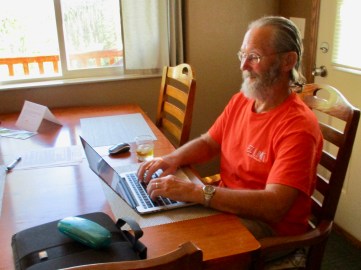 Now we’re enjoying our evening libations, relaxing or writing a blog, and looking forward to another GAFA day on the water tomorrow.
With any luck, the next blog entry will include pictures of a successful fishing outing on the Kustatan River where Mark Stevens and I had a soggy but wonderful fishing adventure two years ago.
GAFA Day 3: Fish On!
We came to Alaska to fish. And today we fished. No, let me try that again.
TODAY WE FISHED. Much better.
Our GAFA itinerary called for a 5 a.m. departure from the Stewart’s Landing boat ramp in Soldotna, so we set our alarms for 3:30 to ensure a timely arrival. Both of us were as wide awake at 3 a.m. as kids on Christmas morning, and we had plenty of time for coffee and Moose Is Loose delectable pastries to get the day started right. We left our Stillwaters chalet in the POS Focus a little before 4:30 and arrived at the boat ramp at 4:40 a.m. The gate to the privately owned ramp was locked and no one else was there. So we waited. About 10 minutes later the owner of the property emerged from her little house next to the gate, unlocked the chain that impeded our progress to the boat ramp and parking area, and collected our $10 parking fee. Several sets of headlights pierced the softly glowing dawn behind us as we headed down the drive to the ramp. Fishing tourists like ourselves piled out of cars and three pickups towing boats added to the growing crowd. We donned our chest waders (yes, my newly purchased non-felt soled Caddis waders), gathered our supplies for the day, and stood ready to fish.
The first pickup in line and the first boat in the water belonged to EZ Limit Guide Service and both were piloted by our guide for the day, Kenny. During the non-fishing season, Kenny is a high school science teacher, and though he has fished in Alaska for many years, this is his first summer as a guide. We introduced ourselves to today’s fishing partners, Minnesotans Julie and Ryan, listened half-heartedly to the obligatory safety instructions from Kenny (life jackets, fire extinguisher, man overboard, etc.) and backed slowly into the smoothly flowing Kenai River, Alaska’s superhighway for millions of salmon swimming inland to spawn and die.
We headed upstream to a spot Kenny had picked out, but by the time we arrived boats that launched with their fishing crews from other ramps at 4:30 already lined the bank. No problem Kenny said. Other places on the river were just good also, so we reversed course and pointed the bow downstream for about 10 minutes until we came to a less crowded shore line.
Kenny prepared our fly rods, gave us quick but professional three-minute instructions on how to catch sockeye salmon using EZ Limits’ outstanding tackle, and we climbed out of the anchored boat into the water that had started its journey to the sea in distant glaciers.
I know that many blog followers come to hdriderblog not for the literary gems that glimmer on its pages but for the pictures. OK. So here’s what you really came for, at the end of which I’ll continue my narrative until my glass no longer contains Jack Daniels.
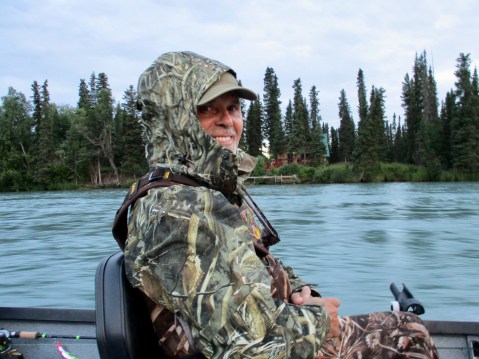
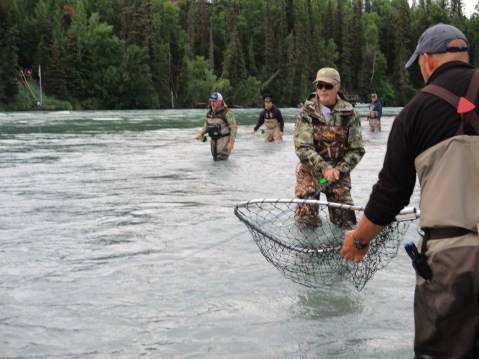

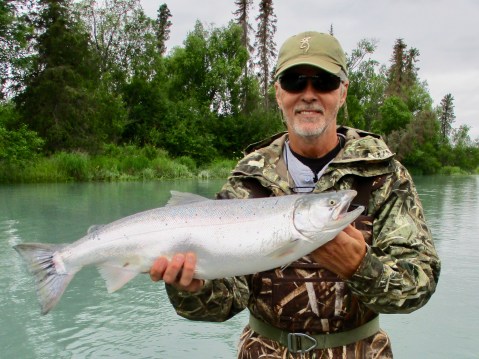
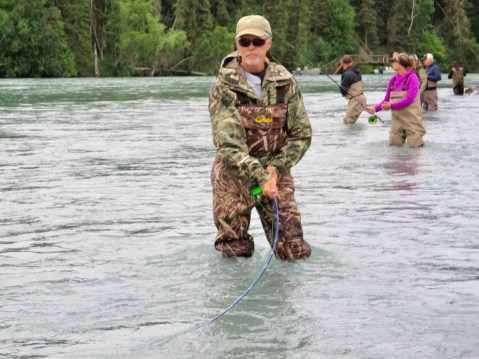

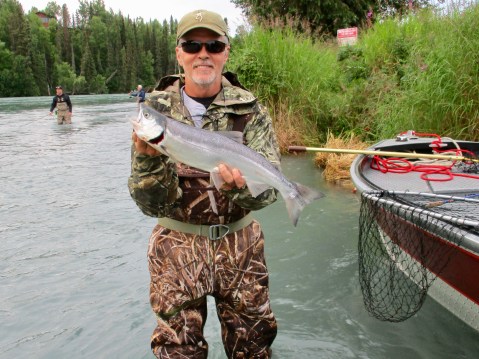
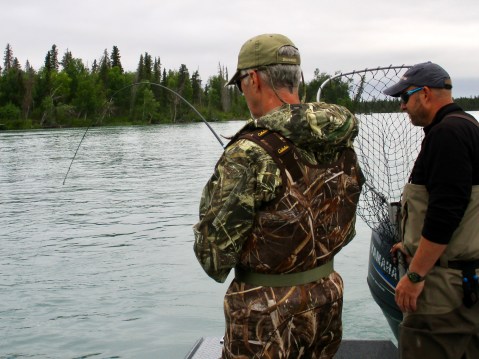
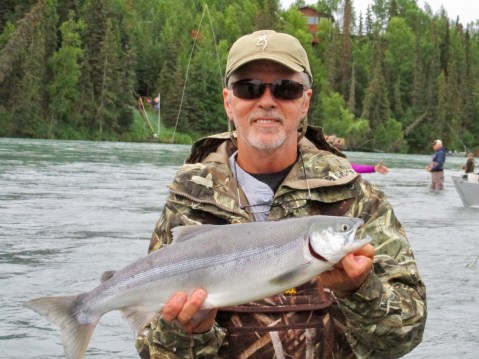
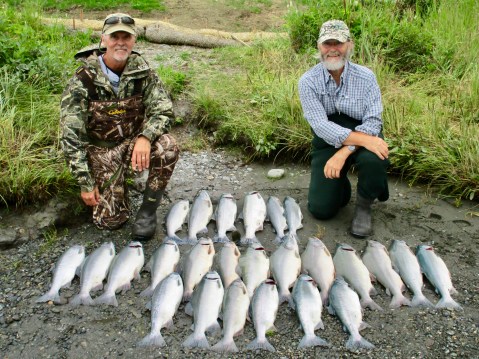
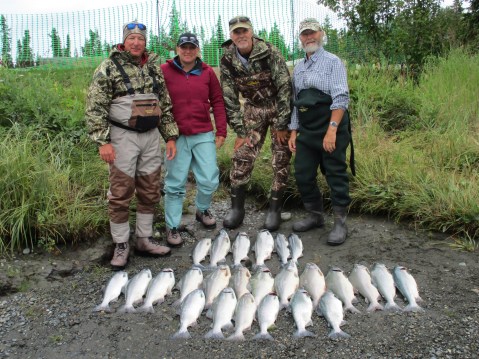
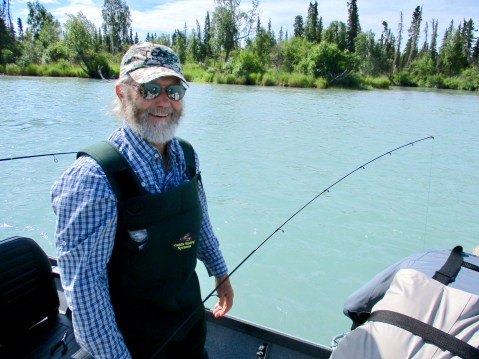
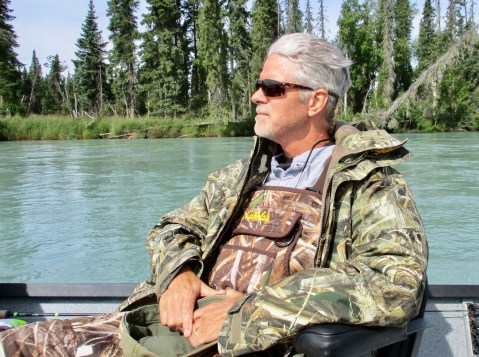
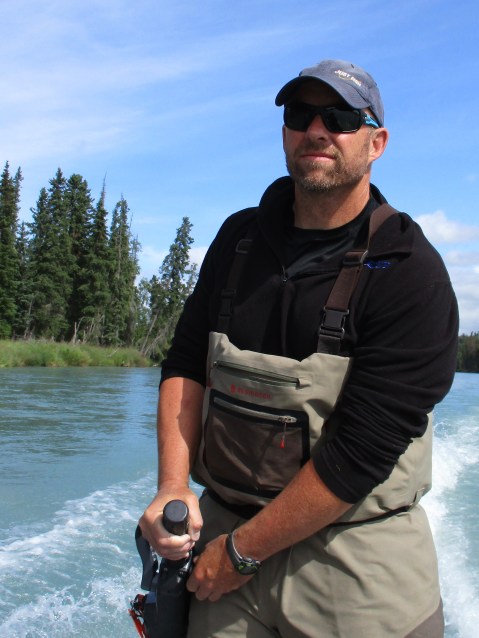
I took many more photos during today’s fishing frolic, but you get the picture.
While fishing at our first location, Kenny got a call from another guide who let him know that a spot had opened up at his first choice, so we climbed back into the boat and motored upstream again. That spot at a bend in the river was where we all caught our single-fish limit of Sockeye, aka Red Salmon. A few weeks ago the limit had been three Sockeye per person per day, but the run this year is not as plentiful as in the past, so Game and Fish reduced the limit to one fish per person per day.
John and I were both surprised at the odd method used to catch Sockeye on the Kenai. Apparently this species of salmon is so intently focused on spawning and dying that they don’t bother to eat as they swim upstream. Consequently, using any kind of bait would be pointless. Over the years, though, Alaska anglers figured out that Reds swim upstream with the mouths open so water can run over their gills and keep them oxygenated. So, we learned, the best way to catch them is to drag an unbaited hook across their open mouth and snag them in the jaw. It’s known as the “Kenai Flip.” But if you snag one anywhere but the mouth, that’s known as “foul hook” and you have to release any fish caught that way. All of us “foul hooked” a salmon today and all of us dutifully released said fish to continue its final journey.
So, you may be asking, if we could only keep one sockeye each, why are there so many fish laying on the beach in the picture above? Because the Pink Salmon (aka Humpies) are in great abundance, which allows everyone with an Alaska Fishing License to catch a total of six salmon per day. Hence, we could each catch one Sockeye and five Pinks. Or, as John discovered, you can also catch up to two Silver (aka Coho) Salmon each day as part of your six-fish limit. John was the only one in our group who hit the trifecta today: Sockeye, Silver and Pink, and the strike and ensuing battle for the Silver was the highlight of his day. “Phenomenal” I believe he said.
All of us caught our limits by 10:30 and Kenny parked the craft in the middle of the river so he could fillet all the fish in the boat’s fish well for us to take home. While he worked diligently with his filleting knife, the rest of us continued to fish and in the hour and a half it took him to fillet the fish, we caught (and released) about 18 more Pinks using spinner baits.
Each of our two-person groups kept the fish we caught today and delivered them to a fish processor to be packaged and flash frozen and to be picked up on the final day of our Alaska Adventures. John and I ended up with nearly 40 pounds of filleted fish which we divvied up between us.
Today’s weather was perfect. Today’s guide service was outstanding. Today’s fishing partners were friendly, helpful and a pleasure to fish with. And today’s fishing was . . .well it was about as much fun as anyone had a right to expect and a great start to the GAFA.
Tomorrow, weather permitting (it’s supposed to rain all day), we’ll fly in a small plane across Cook Inlet and land in Bachatna Creek in search of a three-fish (?) limit of Silver (Coho) Salmon. At least we get to sleep in since we don’t have to be at the Alaska West airport until 7:30 a.m. But we’ll probably wake up at 3 a.m. again, anxious to see what the GAFA has in store for us.
GAFA: Day 2
After yesterday’s 21 hour day that ended at 11:30 p.m Alaska time and 3:30 a.m. East Coast time, I expected to sleep in this morning. But at 4 a.m., after a good 4 1/2 hours sleep, my North Carolina body said “Hey! Wake the hell up. It’s 8 a.m.” I laid in bed for another hour, unable to go back to sleep, and finally got up a little after 5 a.m. Time changes are much easier to deal with on a motorcycle when they only come one time zone every 3-4 days.
John was also up early and we had a leisurely pre-breakfast snack of delicious pastry before heading into town for a big breakfast sandwich at Odies. Following our second breakfast, we went to a sporting goods store to pick up a couple items for tomorrow’s fishing trip and to the grocery store for lunch supplies and snacks to take with us on the water.
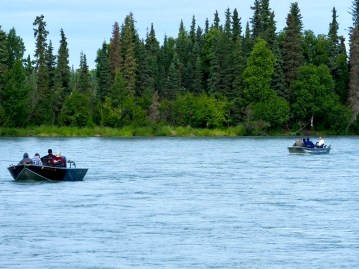 Following an uneventful shopping outing we headed to the meet-up point for tomorrow’s first fishing foray just to make sure we knew how to get there. The Kenia River had plenty of boats zooming both directions looking for the perfect fishing location, and fisher persons lined the shore on this the last day to catch the much sought after King (Chinook) Salmon. The boats usually carried four anglers and a guide, which is how we expect to fish tomorrow. We didn’t see anyone catch anything, but we only stayed for a few minutes.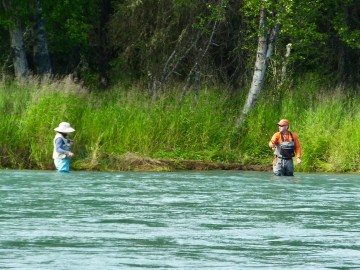
One of the Soldotna locations I missed in my first two trips here was the local history museum, and, after reading several good reviews regarding the information provided by local volunteers, I wanted to make sure I visited the museum this trip. So John and I headed for the Soldotna Historical Society and Museum.
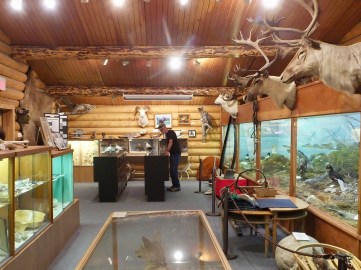 The first building we entered (there were six on the property) was the natural history building. Taxidermy specimens, native Alaskan artifacts, and historical artifacts lined the walls, hung from the ceilings and crowded the floors.
 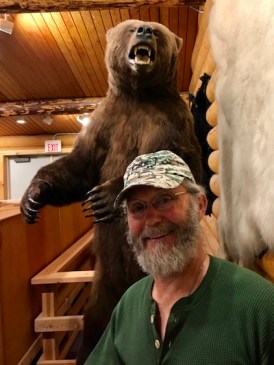 All very interesting, but to my chagrin no local docent appeared to help explain and expand on Soldotna’s history. We enjoyed ourselves but were on our own to understand what we were seeing.
 We wandered on to the next building and discovered that’s where we should have started because that’s where the museum volunteers were located. (There were no signs so we went to the first building we came to.) At the second building we met Carol, whose family had been in Soldotna since the early 1950s when they homesteaded 160 acres and laid claim to their small part of the Kenai Peninsula.
 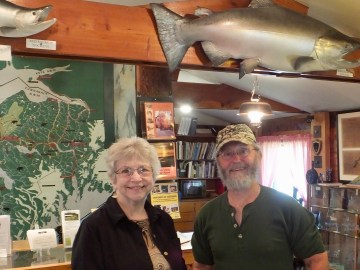 Carol, an articulate political science major turned florist (now retired), imparted a wealth of information that educated us on the area history. She regaled us for more than 30 minutes, and John said as we left the museum grounds that her stories and explanations were the equivalent of a college history class. Carol, as it turns out, was the historical treasure I had come to the museum to find. Some parts of the Kenai Peninsula, she told us, have been inhabited for thousands of years. But Soldotna’s history really dates only from the post-WWII period when returning veterans were given a chance to easily claim 160 acres of Alaska land under relaxed homesteading rules. Carol clearly understood Soldotna’s place in the history of Alaska and the Kenai Peninsula and John and I both enjoyed our visit with her. Frankly, we were glad when several other visitors declined her offer to join our private history symposium.
There was one other stop in Soldotna I suggested we make today and that was the Kenai National Wildlife Refuge Visitor Center. About a mile from the Museum we had just left, the modern Visitor Center promised to be another rich vein of local and natural history for us to mine. But just minutes after arriving, as I was reading exhibit text on various efforts to preserve and protect Alaska’s flora and fauna, I was surprised to learn that felt-soled waders are illegal when fishing in Alaska waters because gubmint experts determined the felted soles trap seeds and spawn of invasive species which can then be transferred to other waters. Surprised, that is, because before leaving North Carolina I proudly purchased a new set of waders WITH FELT SOLES which I had planned to launch on their inaugural wade tomorrow! After a brief conversation about the anti-felt law with one of the Center’s employees, John and I headed back to our lodging to determine a plan of action to remedy my potentially felonious fishing trip. My first thought (Plan A) was to just buy another pair of chest waders; that would easily allay my legal jeopardy. But no, that would be too easy.
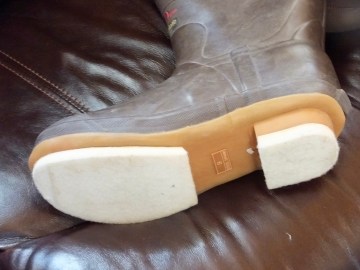 At the chalet, I decided I would remove the felonious felt from the boot bottoms (Plan B). Easy-Peasy. Of course, if I had wanted the soles to remain attached as I waded through Alaska’s beautiful rivers, the glued-on felt would have no doubt washed away at the first drop of moisture and the first scrape along the rocky river bottom. But, these soles, naturally, had been attached months ago in secret Chinese workshop with military-grade, super-permanent, sub-atomic particle strength adhesive. They were not coming off. So… I decided to cut them off (Plan B, sub-part 1). No easy task, but after selecting the sharpest serrated knife in our kitchen’s Walmart-grade cutlery collection and sawing until I sweated profusely, I managed to remove the two felt-covered heel pieces and a felt sole and began sawing through the final felt.
 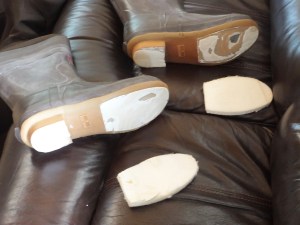 As I neared the finish of my soleful project, woe! I discovered I not only had sliced through the felt but had penetrated the crucial rubber skin of the boot itself and opened a critical, if not fatal, wound. Perhaps, I ruminated, I could dress the wound with a high-tech rubbery chemical compound purchased at a local hardware/sporting goods store and thus plug the offending gash. (Plan B sub-part 2). So we jumped into the POS Focus and off we went to the hardware/sporting emporium.
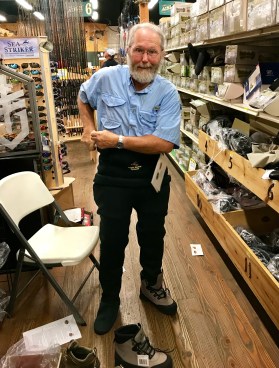 Of course the store didn’t have the exact compound I was looking for and, after I selected a tube of what would have been an inferior alternative and headed for the check out, John suggested looking at waders in the sporting goods half of the store. (Yes, careful reader, back to Plan A). The peak fishing season has passed and prices had been reduced by $50 on waders, so, for less than the price I paid for the new but now mortally wounded waders, I purchased a better pair which I will baptize tomorrow in the cold waters of the Kenai River as we seek our first salmon limit.
Today’s lesson: Always remember that Adventures are called Adventures for a reason. Nothing is ever easy.
The Great Alaska Fishing Adventure: Day 1
The Great Alaska Fishing Adventure (aka GAFA) has officially begun. John and I left his farm in Walterboro, South Carolina at 8:30 this morning (actually yesterday morning, but more about that later) and headed for Savannah, GA, where we caught a short flight to Atlanta where we caught a much longer flight to Anchorage. As I sit here in Soldotna on the beautiful Kenai Peninsula sipping a sweaty glass of Jack Daniels, it is now 11 p.m. and it’s still light outside. But if it’s 11 p.m. here it’s 3 a.m. where John and I started this morning and I only picked up about an hour of sleep on the plane. Consequently, you may blame any literary blunders in this first post either on the Jack or on the 21 hour day I’m working on.
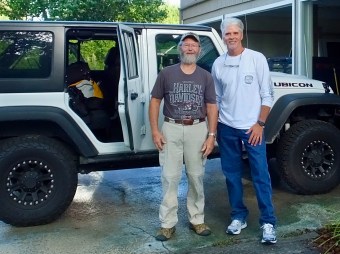 Since we spent most of the day driving to airports, sitting in airports, flying in big shiny planes or driving three hours from our final airport to our current lodgings, there isn’t much to write about. Nevertheless, the thousands (hundreds?) (tens?) of fans of hdriderblog deserve something so here’s my offering.
At the Savannah Airport I noticed a young man wearing Delta gear who reminded me a lot of Doogie Howser from the 1990s TV show featuring a teen-aged surgeon. But then he walked down the jetway to our plane and I realized he was one of the crew. Maybe a trainee, I thought. But when the Captain made his introductory welcome-aboard comments, he also noted that Doogie, the first officer, was going to be flying the plane to Atlanta. But just as TV Doogie worked through his weekly crisis, so too did flying Doogie and we landed safely, on time, at Atlanta’s Hartsfield-Jackon International Airport.
As we went from one concourse to another, John and I both commented on how big that airport is. I looked up some statistics to pad what I expect to be a rather bland blog posting. The Atlanta airport is the busiest in the world, serving more than 250,000 passengers a day. More than 60,000 people work at the airport, making it the largest employer in Georgia with 12 times more employees than my current city of residence (Soldotna) has people (5,000). It would take more than 50 cities the size of Soldotna to fill the planes that fly out of Hartsfield-Jackson International Airport every day.
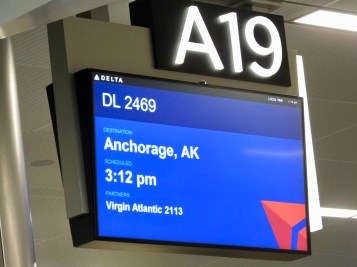 We sat nearly three hours at Gate A19 in Concourse A waiting for our flight to Alaska since even our first-class tickets didn’t entitle us to the Sky Miles lounge reserved for the Rich and Famous. Watching the people hurry by on their multiple ways to somewhere else was like watching the world hurriedly rushing by. All colors. All shapes. All ages. All cultures. I wouldn’t want to do it everyday, but it was interesting to be immersed in the traveling United Nations.
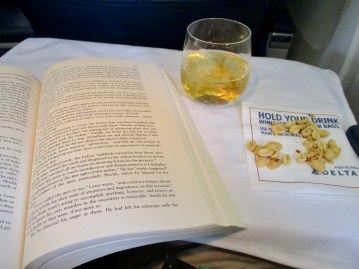 Because John is taller than average, he prefers the extra leg room afforded to first-class passengers to biting on his knees in coach. So, for only the second time in my flying life, I flew first class. I have to admit, it does have its perks. Hot food, lots of munchies, wider seats, and, of course, Jack Daniels on demand. I only demanded three during the flight. But at nearly eight hours in the air, it was a long flight. I read a little history. I tried with little success to nap. The Jack helped make the flight tolerable.
My previous three trips to Alaska all occurred on two wheels, so the view from 40,000 feet was a new experience. Most of the flight we were looking down on various hues of square farm fields in Minnesota, North Dakota, Saskatchewan, and Alberta. But as we passed over British Columbia, the Yukon Territory and into Alaska air space, I got an entirely different view of the flowing glaciers and snow-clad mountains I had seen before at ground level. The window on the plane wouldn’t roll down, so I had to shoot pictures through several layers of plexiglass distortion. Still, they offer a hint of the awe-inspiring sight of the soaring mountains of the northern Rockies and the Alaska Range. For the sheer adventure, I still prefer two wheels, but the view from on high ranks near the top of “incredible scenes.”
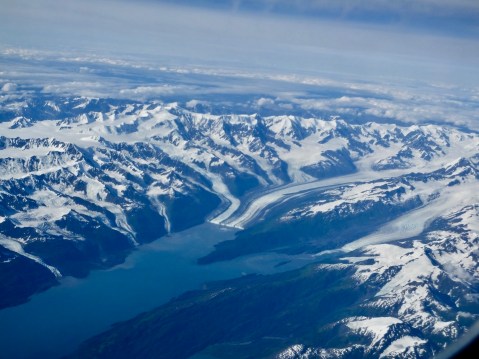
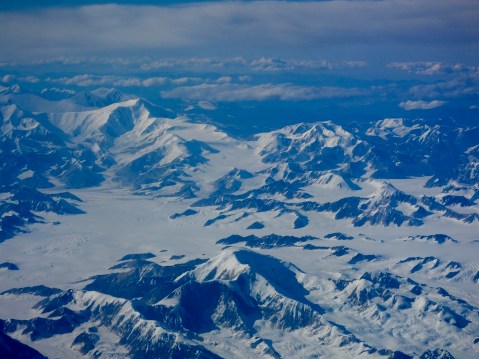
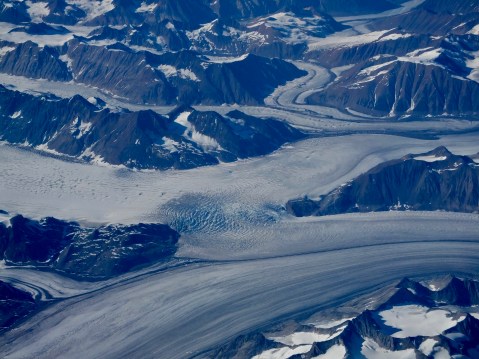
As we landed at the Anchorage Airport, we were greeted by a galloping cow moose running parallel to our runway. If only she had been carrying a sign that said “Welcome Dennis and John.” Another perk of first class was being first off the plane and first to watch our luggage tumble down the revolving baggage carousel which I grabbed while John saw to our rental Ford Focus POS that will transport us for the next week. 14 hours after we left John’s house, we still had a three-hour drive ahead of us as we skirted Turnagin Arm and drove across the Kenai Peninsula to our lodging at the Stillwater Chalet in Soldotna, which has a really nice view from the back deck.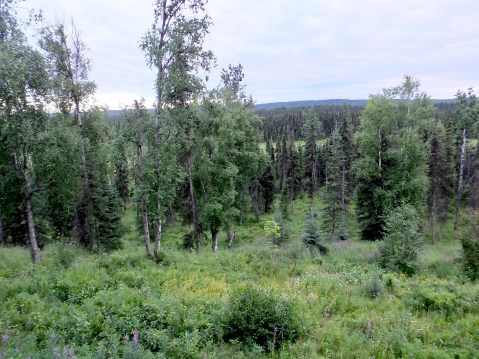
It’s now 11:30 p.m./3:30 a.m. and the light is just about gone. And so am I. Tomorrow, we’ll tour the Soldotna area and set up our first fishing day on Wednesday.
F&F Day 20: End of the Road (For Now)
After two full days with John and Sue, I said my goodbyes and gave them my heartfelt thanks for being part of this year’s F&F tour. Then I fired up the V-Twin and hit the road for home. Most days on this trip were warm enough to border on hot, but today, the final day on the road, I wore leather for the first time since leaving the mountains almost three weeks ago. It wasn’t cold–temperatures rose to the mid 60s–but at 75 miles per hour the air feels about 10-15degrees colder and my well-worn, 13-year old, scruffy motorcycle jacket warded off the fall chill in the air.
As I cruised contentedly along the asphalt for the final four hours and 260 miles of this year’s journey, I thought about who I had seen and what I had done. By the numbers, it looks like this:
- 2 daughters and 1 son-in-law
- 5 granddaughters
- 2 brothers and 1 sister-in-law
- 2 nieces
- 13 friends
- 3,920 miles on a 4-year-old Harley-Davidson with more than 85,000 miles on it
- 1 motorcycle museum with 400 motorcycles in it
- 1 civil war battlefield with 13,000 monuments on it
- 2 worn-out motorcycle tires that will have to be replaced soon
- too many smiles and laughs to count
- about 75 solitary hours in the saddle
By just about any set of metrics, this was another good ride.
I had thought about skipping a long ride this year after booking the Grand European River Cruise for two weeks in July. I’m glad I didn’t. I haven’t spent enough time watching my grands grow up, and this helped make up for that neglect. I don’t spend enough time talking to my girls, and this provided special communicative opportunities. And I’ve lost touch with too many once-dear friends over the years not to take time to visit people who have helped make my life special when I can. So here’s a shout-out to all the wonderful people who contributed this year to my memorable motorcycle meanderings: THANKS!!
While I’m already planning a 7,000 mile trip to explore the adventures of Lewis and Clark in 1804 during the summer of 2019 and a 10,000 mile ride in 2020 stretching across Canada from St. Johns, Newfoundland, on the eastern-most reach to Victoria on Vancouver Island where the sun sets each day on Canada, I don’t have a ride planned for next year though I do have an Alaska fishing outing in the works. It will be hard to keep me out of the saddle, I think, and it’s likely I’ll find a reason to go somewhere. Maybe it will be F&F again. Maybe it will be history related. Or maybe I’ll just make a pointless peregrination with no destination in mind. There are still a lot of roads out there I haven’t ridden that deserve my two-wheel attention. At any rate, to all those who followed along again this year, thanks for joining me. I hope you’ll come back for the next ride.
F&F Day 19: Fire Breaks and Ditch Work
Day two at John and Sue’s place provided all the activity I needed and time to relax as well. As I noted yesterday, bush hogging was the primary activity for this morning and I was like a kid with a new Tonka toy driving that tractor, dragging the bush hog and even learning to use the grabber thingy (that’s as technical as I get with farm equipment) on the front of the tractor. Following the last hurricane, there were a couple of trees down on the fire breaks I was mowing and I had to move the logs off the road. Up, down, forward, back, down, up, back, forward, grab, move, dump the log in the woods. Lot’s of fun for a city boy. After about two hours of bush hogging and planting, we headed back to the house for a little lunch and a rejuvenating nap.
More work in the afternoon as we worked on a ditch and culvert that had been washing out for several years and was beginning to encroach on the entrance road to an area where John grows trees and hunts. It wasn’t a big job, but it needed to be done before the erosion got worse, so we both felt as though we had accomplished something with our afternoon.
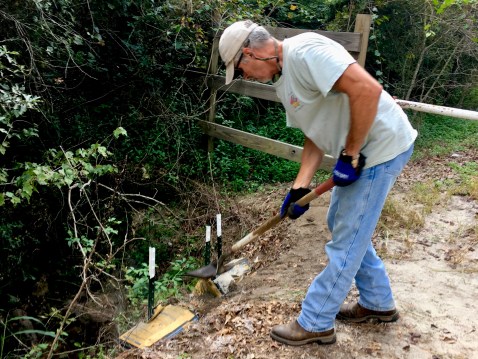
John finishes up the ditch/culvert repair after driving about six stakes into the ground, adding some rock and about 300 lbs of concrete. That ought to stabilize it for a few years.
Meanwhile, back at the ranch, Sue tended to her livestock, making sure that Aragon and Ruger stayed cool in the late fall heat and had plenty of hay in their clean stalls.
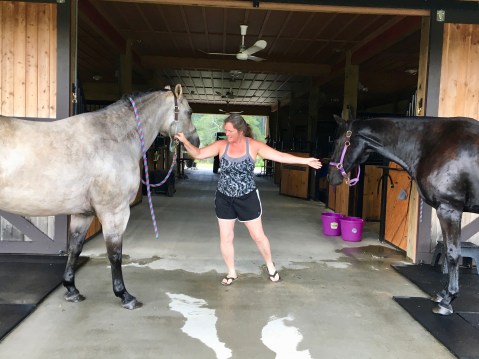
We showered, grabbed a couple of books and settled down to read for an hour or so before dinner, but, work for the day wasn’t done. A friend of John’s called and said he could come pick up a sprayer attachment for his tractor and twenty, 60-pound bags of corn, so we hooked up the trailer, drove over and loaded up what he had. Then finally the work day was over.
I really love coming to John and Sue’s retirement place in South Carolina. The work isn’t hard (even at my advanced age) but it’s rewarding, and time spent with John and Sue is always good.
Tomorrow morning early I’m headed back to Maggie Valley. I’ve been gone three weeks and covered nearly 4,000 miles. I’m ready to see the mountains and Marilyn again.
F&F Day 18: Working My Way Home
I’m finishing day one of a two-day stay with special friends John and Sue just outside Walterboro, SC. They’ve gone to the barn to feed the “boys,” Sue’s two beautiful horses, Aragon and Ruger, so I’m going to take a few minutes to write a short blog post.
Like many (most?) of my friends these days, the friendship with John and Sue started with a common love for riding Harley-Davidson motorcycles, but grew to be much more and much more important than that. They have now retired to a beautiful farm in South Carolina, though I think retirement for them involves far more work than most people who hold a paying job do during a day.
Fortunately for me, John lets me share the work when I visit. I don’t think I could keep up with John full-time, but there is always something to do on the farm and I always enjoy working here. I’ve trapped coyotes and other varmints, I’ve cleared brush, I’ve helped with minor repairs, and today John and I put out some corn for the resident deer and then he planted a small field and mowed the pasture while I went rode around on a small tractor bush hogging fire roads. Not terribly hard work, but at the end of the day I was both satisfied with my productive output and ready for a small glass of Mr. Daniel’s extraordinary Tennessee elixir. Tomorrow, more bush hogging is on the schedule and whatever else John will let me do to help out.
Like our new home in Maggie Valley, John and Sue’s place in South Carolina is peaceful. Even when I’m working here or there, I seem to be relaxing. There is no pressure, no boss, no deadlines, no quotas, no performance reviews. Work without stress is the best way to retire. And, if you get tired of working, you can always go for a motorcycle ride. Or read a book. Or fish in Alaska. Or hike in the woods. Or enjoy music with friends. Or any one of thousands of pleasant diversions. I’m glad most working people don’t know how good retirement is, because they’d all quit and nothing would get done. Hmmmm. Maybe that’s not such a bad idea, either. Sometimes nothing is better than something.
Visits with friends like John and Sue, in addition to the family contacts along the way have made this short ride (hey, I haven’t even gone 4,000 miles yet) a great trip. I didn’t get to see all my friends scattered about and missed a couple of family members, but there will be other rides and I can go 1,000 miles out of way for a visit if I need to.
I’ll try to make one more post tomorrow night and then a wrap-up on Saturday after I get back to Maggie Valley.
F&F Day 16: Florida Memories
When we decided to move full time from Florida to North Carolina this year, there were a few reasons why the move was difficult. It wasn’t the beach; we’re not beach people. It wasn’t the weather; too damn hot. It wasn’t our house; it was just average. No, it was leaving friends behind. Here are five of the reasons why the move wasn’t easy:
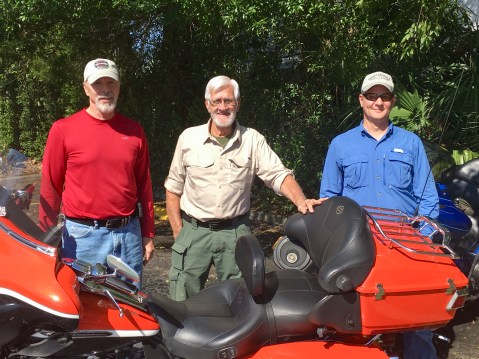
Mark, Ski, Brian
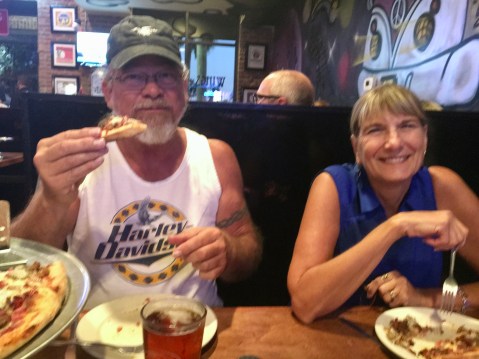
Steve and Ruth
All five of these folks, as most readers know and everyone else has guessed are motorcycle friends. I’ve ridden with them since I got my first Harley in 2003. In fact, I’ve probably ridden more than 100,000 miles with them, about half the miles I’ve put on all my bikes in the past 14 years. In each case, I’ve ridden not just short, lunch rides with these folks (though we’ve done plenty of that, too), but long, multi-thousand mile rides. You get to know folks when you spend that much time on the road. And I like these folks.
Yesterday, a ride to eat at an old haunt in St. Augustine, turned into a 4 1/2 hour lunch that helped everyone catch up with each other, to reminisce about rides past and layout future plans. We left vowing to do it again. Will we actually get the group together? Who knows. But it would be nice to make it an annual event so we don’t lose touch. I expect our paths will cross again.
My two-day stay in Jacksonville is over and I don’t know when I’ll get back again. All my friends here know the door to our house in Maggie Valley is open to them; I hope they take the opportunity to visit. Soon.
 hdriderblog