
Day 4 CCR: In Canada, eh?
After riding about 1,400 miles north out of Maggie Valley, today we crossed into Canada at St. Stephens, New Brunswick from northern Maine. The entry process was easier than I expected, in part because we had completed the online forms known as ArriveCan related to Covid and had submitted our passport information and copies of our Covid vaccination cards through the app. Our first stop after going through the border check was to a bank to convert American dollars into Canadian ones at a rate of $1 USD to 1.225 CAD. That exchange rate helps make Canada’s high prices for gas and lodging a little more palatable.
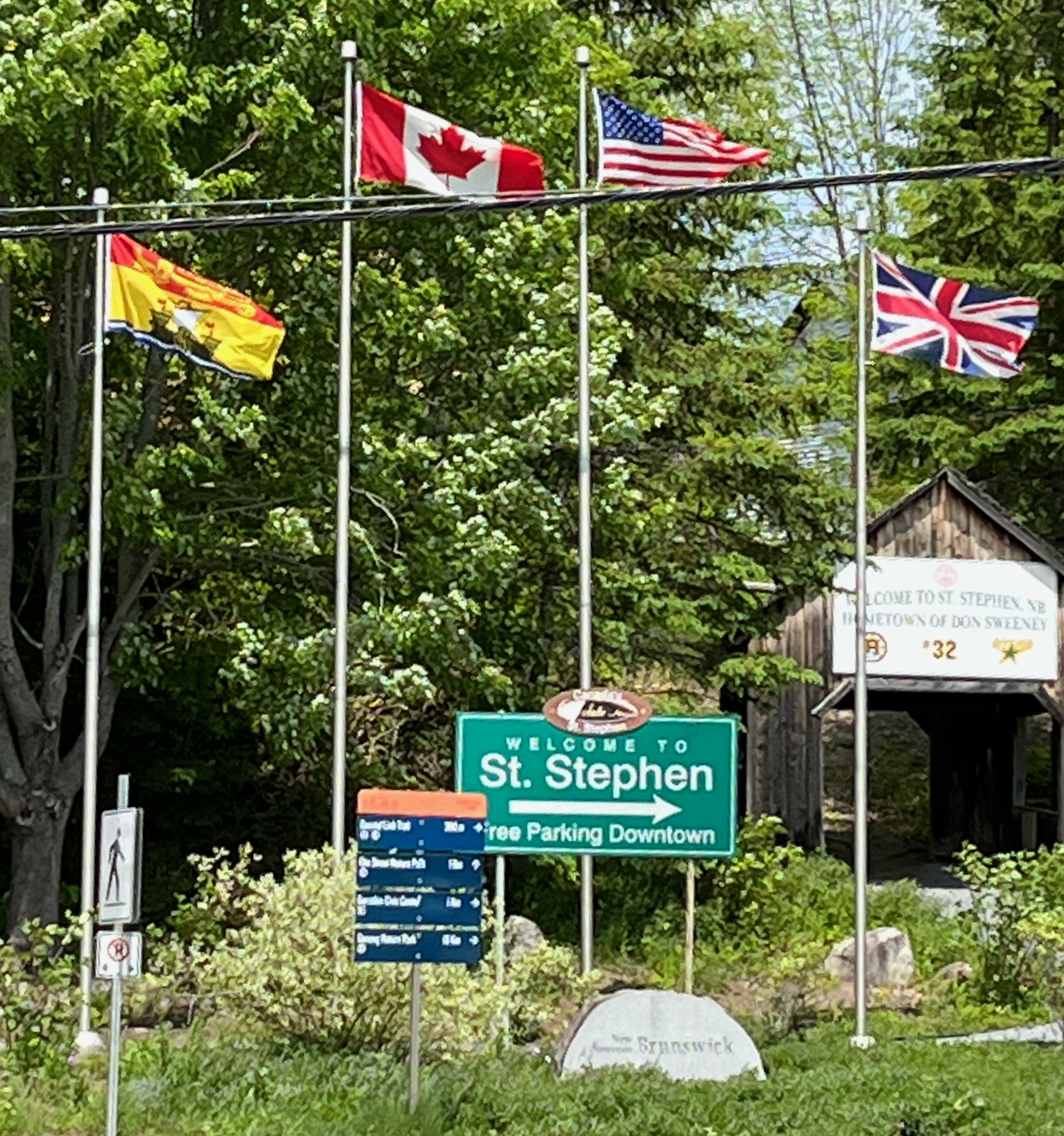
The only hitch of note today was that I hadn’t considered that New Brunswick might be in another time zone, which it is. As we headed north out of New Hampshire and through Maine, I figured I had an hour’s cushion to make my 2:00 p.m. appointment at the border. But that chronology cushion disappeared completely when I discovered New Brunswick, as well as Nova Scotia, is in the Atlantic Time Zone, which is an hour ahead of EST. Consequently, there were no stops along the way except for gas, and I went through the check point at 2:02 Atlantic Time, leaving my non-existent one-hour cushion in Maine.
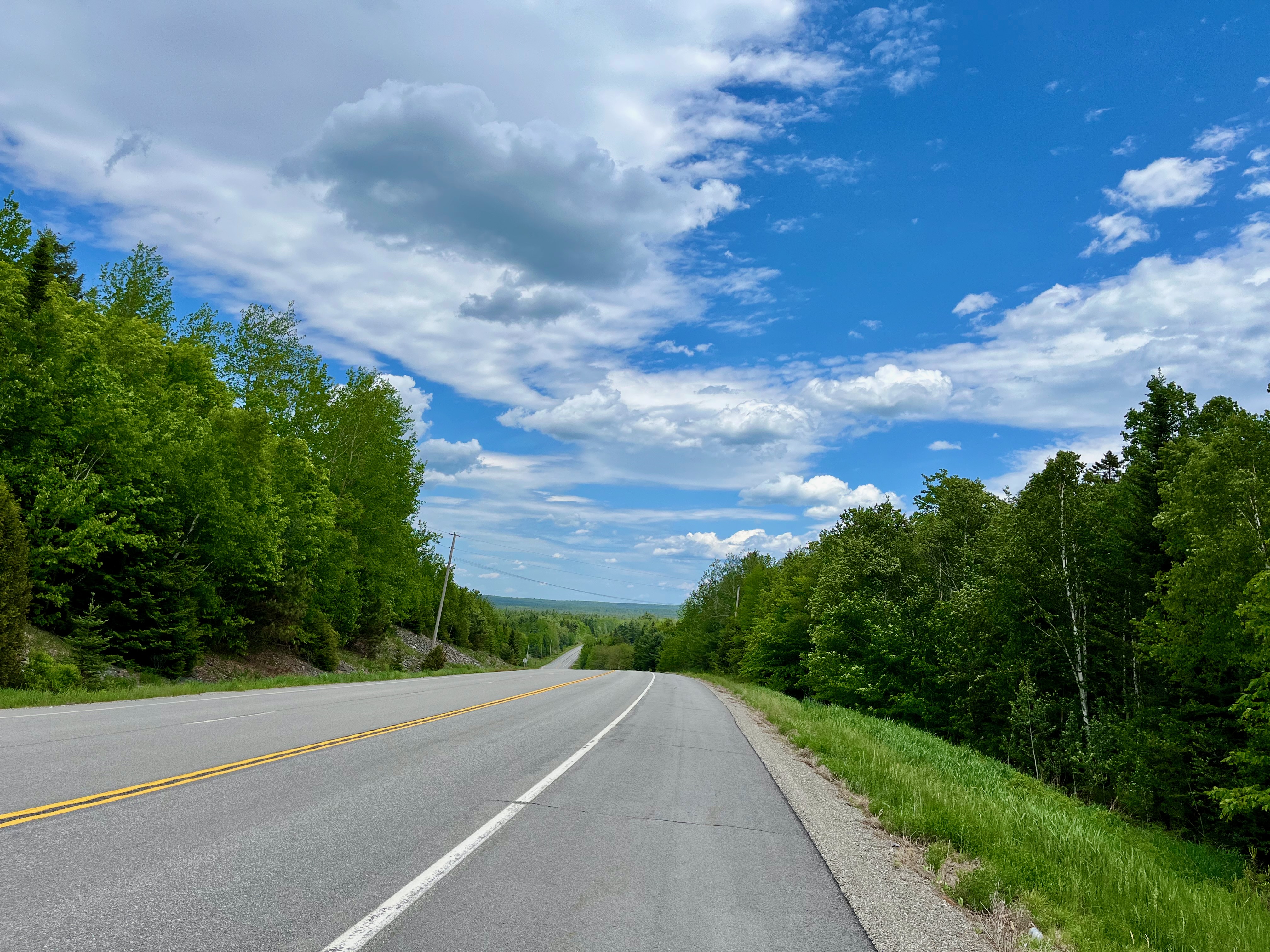
Fortunately, the ride through upstate Maine didn’t require any extensive stops to appreciate the beauty of that heavily forested wild county. The state highway north out Bangor is well maintained with plenty of passing lanes to deal with the occasional slow truck or Mainers going about their business. The weather was pleasant through New Hampshire and Maine, but temperatures dropped almost immediately after we entered Canada and rode east. There the cold ocean air moves inland and the temperature probably dropped 10 degrees in a mile or two. But we only had 110 kilometers (about 70 miles) to ride to our destination in St. John, New Brunswick, and we didn’t stop to add any more gear.
I’ve been asked by several people why I chose a Cross Canada Ride for this 2022 adventure and the answer is pretty simple: I like Canadians and the beautiful land they inhabit. I’ve ridden in Canada a half dozen times and my experience with the people here has been overwhelmingly positive. They’re polite. They’re thoughtful. They’re smart. In fact, Canadians are the most educated people in the world. More than 50% of adults in Canada hold a college degree, a higher percentage than any other country. As a former college teacher, I’m pleased and impressed with that fact. I also like the fact that they’re a little quirky. For example, Canadians use both metric and imperial measuring systems. Distance and speed are measured in meters and kilometers, but a person’s height in marked off in feet. They also use both centigrade and Fahrenheit, the former when talking about air temperatures but the latter when cooking in the kitchen. Here’s one more fact that should stick with you: Canada produces 80% of the world’s maple syrup. Sweet.
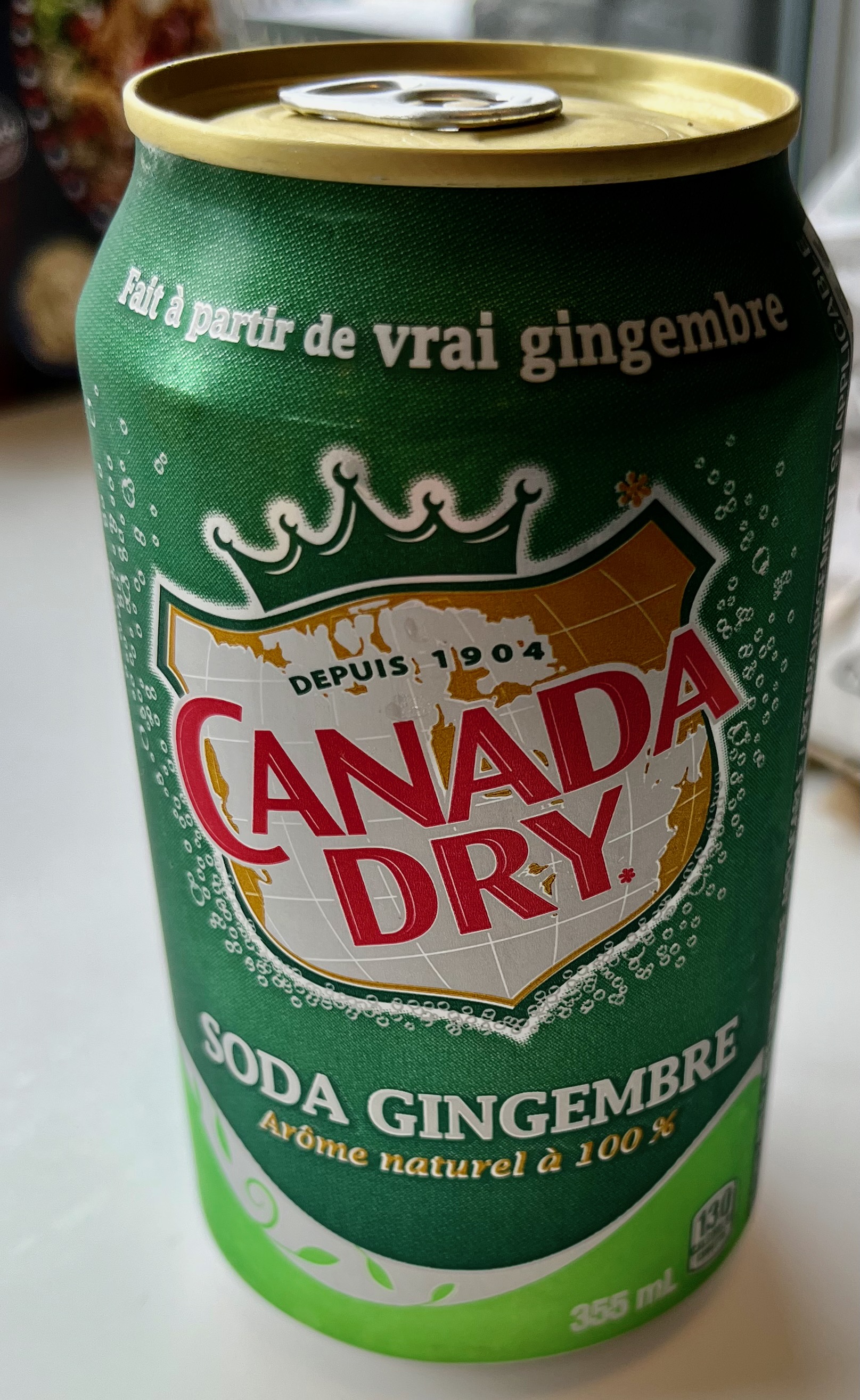
While many Americans know that the official language of Quebec is French, few know that New Brunswick is the only province boasting two official languages: French and English. Consequently, all road signs, official notices, and even license plates include both French and English, requiring me to read twice as much when I’m speeding by at over 100 kilometers per hour. One final New Brunswick tidbit: A year after the 13 British colonies to the south officially gained their independence and began trying to form a more perfect union, New Brunswick was named to honor King George III, who also held the title of Duke of Brunswick.
After spending less than a day in this province, we leave New Brunswick tomorrow morning to visit Nova Scotia, Newfoundland and Labrador, and Prince Edward Island. But we’ll be back in New Brunswick in about ten days after we’ve made our U-turn in St Johns, NL, and motor west for the remainder of the CCR.
Day 3 CCR: Getting through NYC
Today was going to be an easy ride from Bethlehem to Hampton, New Hampshire, one final step closer to Canada. But for some reason, nothing is ever easy.
I routed the ride on the Google Map GPS using a round-about track that kept us well west and north of Newark and New York City. It was a few miles longer, but avoided whatever city traffic would be out on a Sunday holiday weekend and had fewer tolls. I didn’t really need to see the NYC skyline, which I’ld seen before on a ride that took me through downtown NYC.
So, I dutifully followed the arrow on my Google map app as we left Bethlehem and headed east. But we kept going east beyond what I expected. I thought to myself, “shouldn’t we be going north somewhere along this route,” but the arrow kept taking us east. OK, I thought, “Google GPS knows the route better than I do,” and I was also keeping my eye on the traffic, which continued to build as we went further east through Pennsylvania and into New Jersey. When I saw signs for Newark, the Lincoln Tunnel and the George Washington Bridge, I was pretty sure that we weren’t on the route I expected to be on.
Google Maps apparently thinks it knows what I want better than I do and decided to show me a shorter route, almost into the heart of NYC. On the map image below, the BLUE line is the route I wanted to go. The GRAY line is the route Google Maps imperiously decided we should take instead.
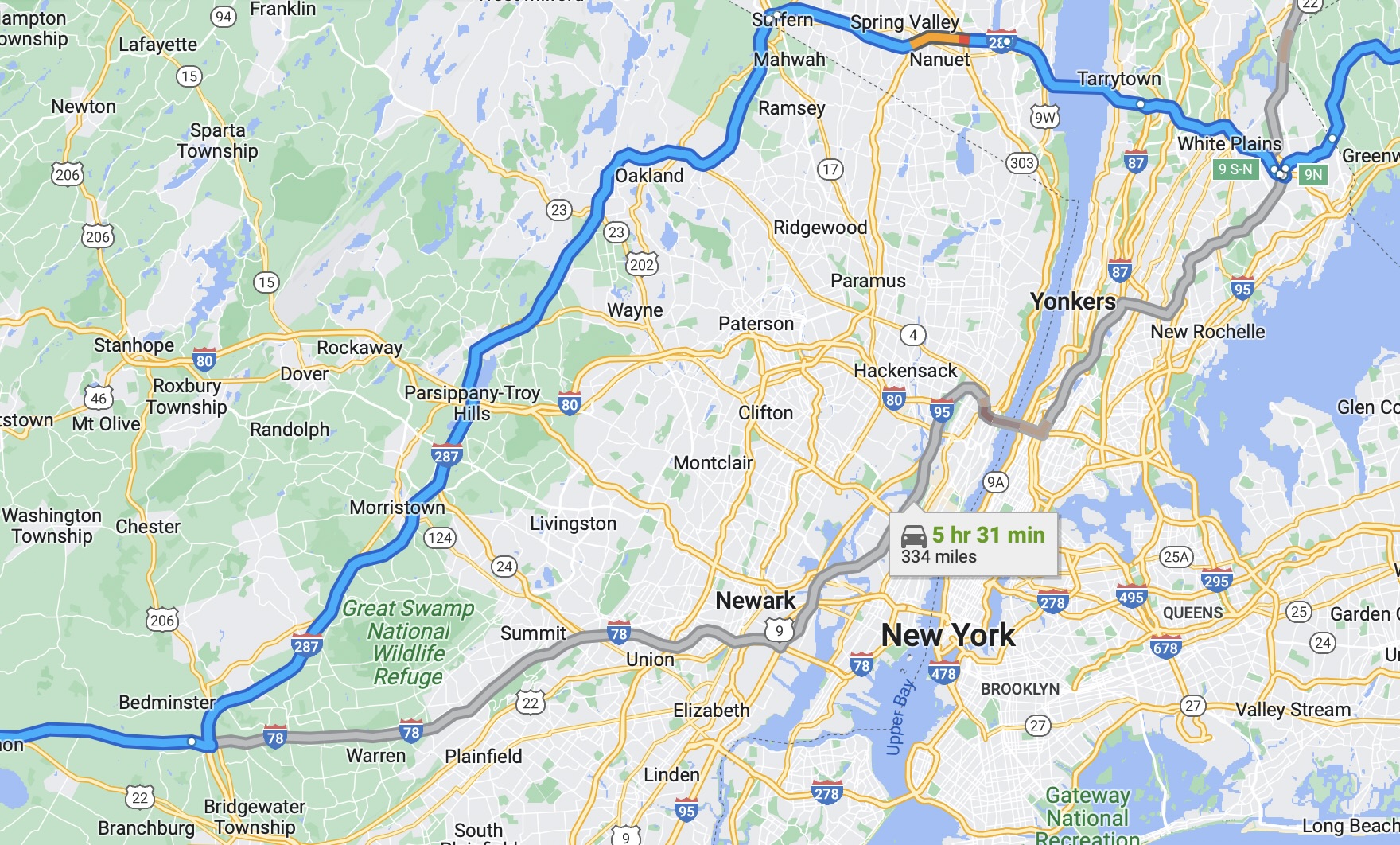
Although it would have been worse if Google had decided to take me into the Lincoln Tunnel instead of over the double-decker George Washington Bridge (of Bridgegate fame a few years ago), we still saw a lot more of NYC and its kamikaze drivers than I expected to see. Steve stayed glued to my tail as I tried to pick the correct lanes that accorded with the ever-updating GPS map on my handlebar-mounted iPhone, even though picking the appropriate lane sometimes meant crossing several other lanes quickly while avoiding swarming drivers bound for various Memorial Day Weekend barbecues, picnics, pig roasts or whatever festivity they had planned. Of course, by the time I got to the New York side of the Hudson River, I knew that, while not lost, I was at least a little confused. Still, I followed the moving arrow, believing that ultimately Google and its smirking, know-it-all, shortcut-seeking engineers would ultimately get us where I wanted to spend the night.
Once the GRAY line joined the BLUE line on the map above I was back in semi-familiar territory and we enjoyed a beautiful ride through the Connecticut countryside on the Merritt Parkway (US 15) before heading into Massachusetts (skirting Boston) and arriving in New Hampshire, butt-puckered from our brush with NYC but safe and sound.
One of the problems with riding Interstates and parkways all day is that there are no good places to pull off and meet goat-hiking women or take pictures of beautiful scenery. There was beautiful scenery in the New England countyside today, but, unfortunately, no pictures.
Our rooms tonight are in Hampton, NH, just south of Portsmouth, in an older but adequate motel on US 1, the main north-south highway from Maine to Florida before the construction of the Interstate 95. The best part about being away from the Interstate is the chance to find local eateries rather than choosing unenthusiastically among cookie-cutter chain restaurants. Tonight we found a local brick-fired pizza restaurant (The Community Oven) with a large craft beer selection. I had a couple of Maine-brewed stouts to wash down one of the best pizzas I’ve ever had, due to the fire-roasted tomatoes and carmelized onions that nicely balanced the spicy sausage. Macy, our server, said it was a good pizza and she was right. Thanks Macy.
Tomorrow we’ll ride the final section of our initial U.S.-based leg of the CCR and cross into Canada at Saint Stephen, New Brunswick. I had hoped for some sight-seeing on the beautiful Maine coast along the way, but Canada has a Covid-related program that requires visitors to pre-set a time to enter the country and I don’t want to be late for our 2:00 p.m. date with the Canadian border authorities.
So, on Memorial Day we’ll enter Canada where we’ll spend the next 30 days figuring out kilometers and kilograms, eh?
Day 2 CCR: O’ Little Town of . . .
Why, yes. Yes I am. In Bethlehem.
Pennsylvania.
Today brought some surprises, like most days on the road on a motorcycle. Some good. Some not so good. And away we go …
As you’ll see from the addition of pictures to this post, I made today’s first order of business getting a dongle to transfer photo files from my camera’s SD card to my laptop. That was good. But because I’m on the road and couldn’t choose from the dozens of inexpensive options on Jeff Bezo’s website, I had to take what I could find at the local Walmart in Staunton at 7:00 a.m. I found only one item that met my needs. And it was twice as expensive as online options. But I have it and it works, so there’s that.
I promised pictures from yesterday’s ride, but since they’re a day old, I’m only going to post two. These two:
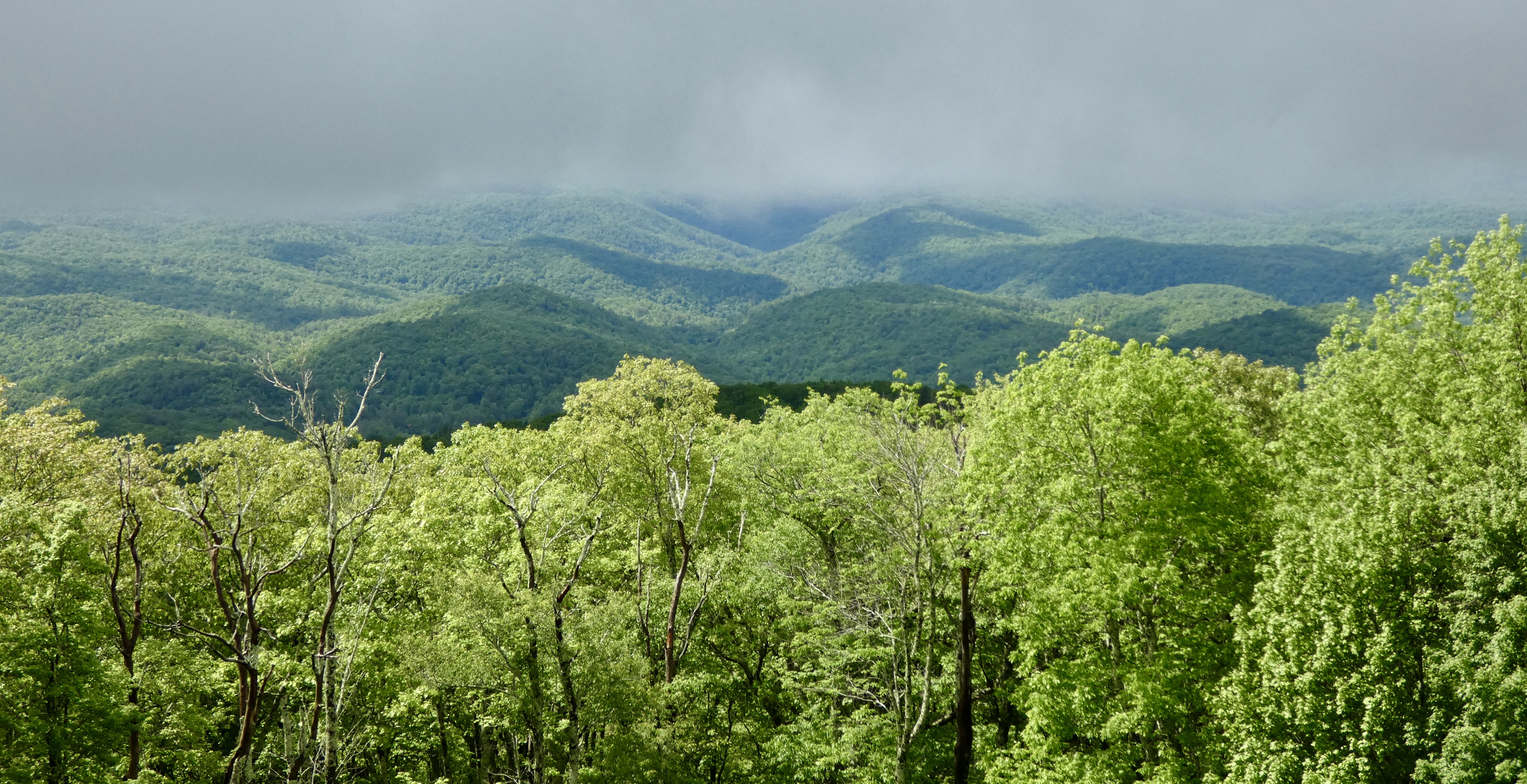

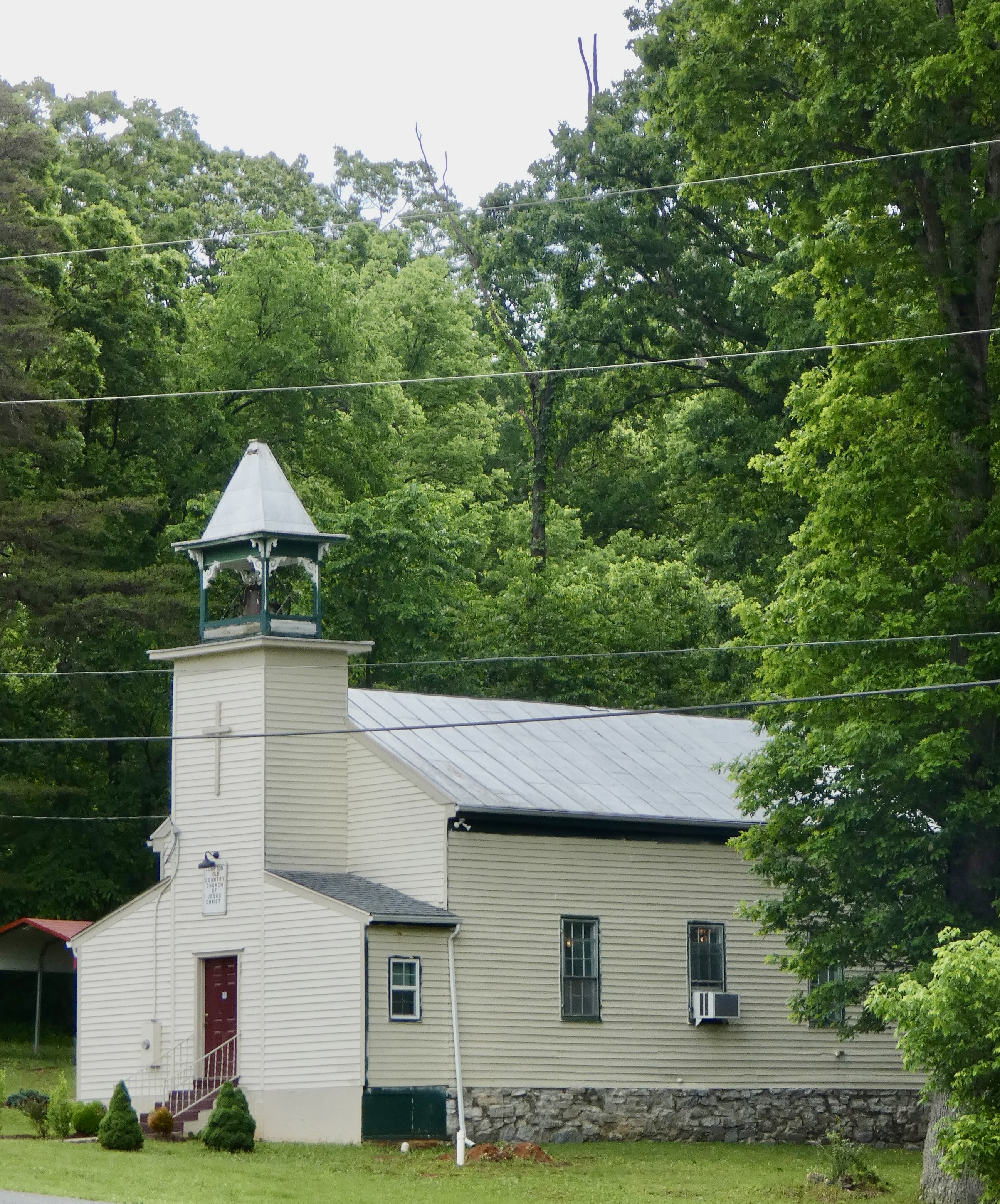
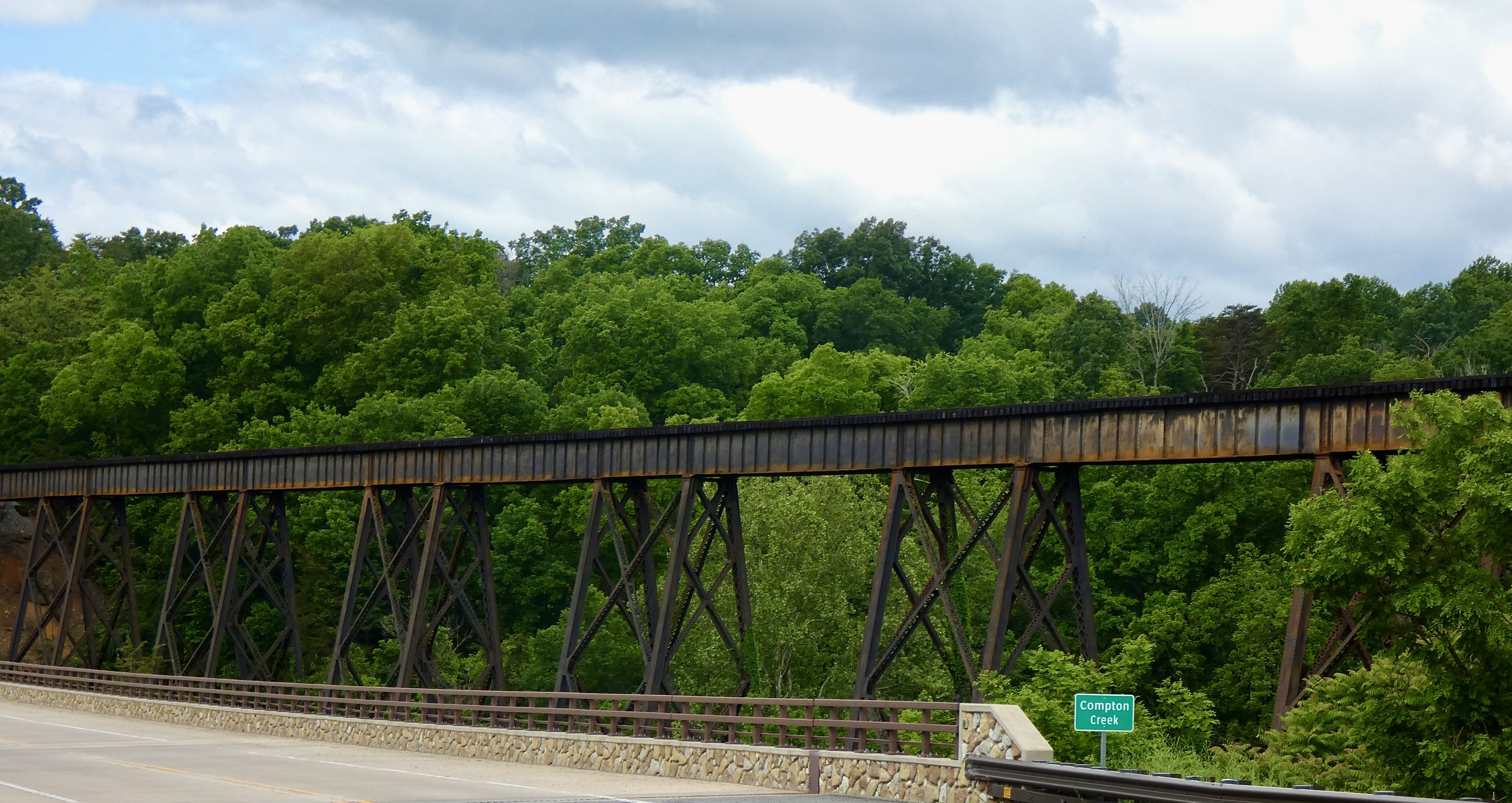
Like yesterday, I decided to route this morning’s ride off the Interstate and follow state and U.S. highways north, even though that added a couple hours to today’s ride. From Staunton, we went east until we came to a road leading down (north) the beautiful Shenandoah Valley, a road I have ridden several times before because it’s bucolic and scenic and just fun to ride. Motoring up that wide, fecund valley, it’s easy to see why the United States Army fought so hard in the early 1860s to wrest it from Confederate rebels using its agrarian bounty to prolong the rebellion against the government. Named the Stonewall Jackson Highway, the valley road passes through miles of well-tended farmland, as well as past historic buildings and railroad bridges that attest to its age and the activities it has hosted for northern Virginia families for more than two centuries.
As we got to Harper’s Ferry, West Virginia, where the Shenandoah River and the Potomac River join together and where John Brown tried unsuccessfully in 1859 to seize the U.S. Armory and begin an armed uprising of enslaved persons against their enslavers, I tried to reset the GPS mapping program on my phone. My brand new iPhone 13. My brand new expensive iPhone 13. My brand new expensive iPhone 13 that is supposed to guide me across 7,000 miles of Canada. What I got instead of a GPS reset was the Black Screen of Death. Then my face shield fogged up as steam poured out of my ears. (Just kidding about the face shield. Not about the Black Screen of Death.) Being well beyond my teen years, I had no clue what to do about the BSD, and I was more than a little concerned I had somehow fried my phone, my pocket-sized link to the civilized world. But I also suspected that deep within the bowels of the Internet there might be a solution. So, we continued up the highway until we came to a fast food establishment (which shall remain nameless) where I could get something to eat while I mooched their McWifi. Sure enough, I wasn’t the only iPhone user to experience the BSD and the fix turned out to be fairly easy, lowering my no-doubt elevated blood pressure expeditiously. (Write this down: Quickly press the up volume button, followed by a quick press of the down volume button, followed by pressing and holding the power on/off button. The phone resets and comes back to life. Easy peasy.) It’s working fine now and the rejuvenated GPS guided us to our Bethlehem lodging like a modern star in the east.
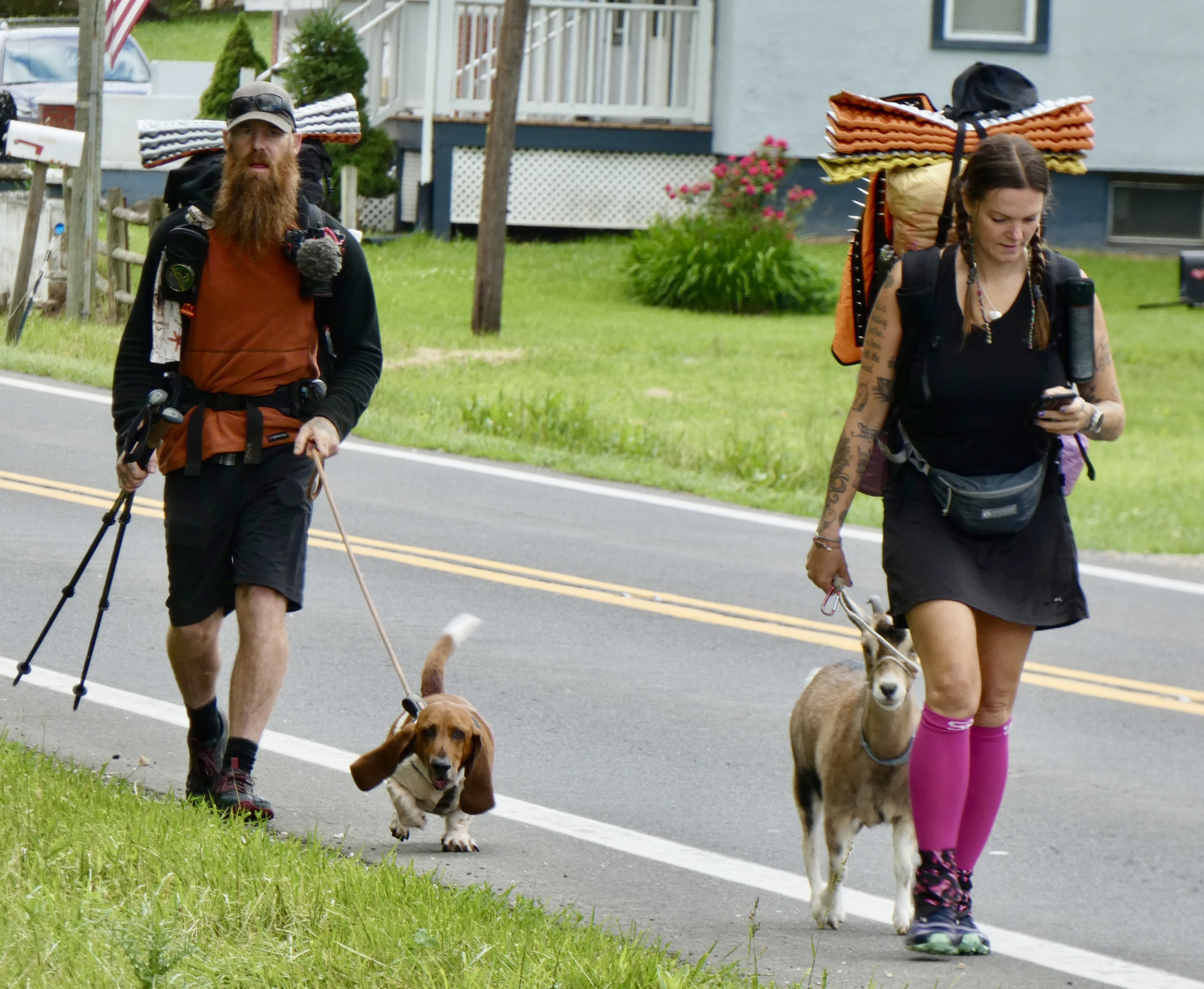
I’ve said many times that good rides are best measured by unexpected meetings of unusual people. Today included an unexpected meeting of a very unusual person. It’s not often you run across a tattooed woman hiking across America with a goat. In fact, in 74 years I can’t recall that ever happening to me. When I saw a woman wearing bright pink knee-high socks hiking with a goat accompanied by a bearded man hiking with a basset hound, well, I just had to stop to investigate. Here’s the story I learned from her and from her YouTube channel: Three years ago she sold her house, built a tiny house on wheels and set out to hike the major trails in America. While building the tiny house, she lived on a goat ranch, where she rescued a sickly newborn goat she named Little Leaf, who survived against incredible odds with her support and is now a healthy hiking companion. She heartily congratulated us on our planned CCR, saying, “that’s what life is all about.” She’s right. If you want to learn more, check out her YouTube channel at Kate Cloud.
Between the BSD and a hiking goat, it’s been quite a day. Tomorrow probably won’t be as exciting.
Sure.
Day 1 Cross-Canada Ride (hereinafter CCR)
While the bulk of this blog will describe daily rides in Canada and various adventures and misadventures along the way, first I have to get to Canada, and that requires three and a half days of riding through various states between North Carolina and New Brunswick. Today’s ride went from North Carolina into Virginia and tomorrow’s effort will wind up in Pennsylvania.

I had planned to sleep late and be well rested for today’s ride. But, naturally, I woke at 4:30 and spent the next hour trying to think of things I had forgotten to do or to pack. Eventually I got up earlier than planned, ate a reasonably healthy breakfast, and Steve and I had the bikes packed and ready to go by 8:00. Everything was going smoothly. Dishes washed and put away–check. Lights in the house off–check. Doors locked–check. Bikes out of the garage–check. Packs firmly strapped to the bikes–check. The only thing that remained to be done was to move the cars around so that both Miatas are in the garage and the truck is in the driveway. Uncover the outdoor Miata, get in, turn the key. Nothing. Nada. Zip. Zilch. Dead battery. Of course, because NOTHING is ever easy or goes as planned. Undeterred and with a slight chuckle, I unpacked my jumper cables. But Steve had a power pack battery jumper he hooked up to the dead battery instead. Except he put in on backwards and may have fried his unit. Back to the jumper cables and finally the little red Miata turned over. Drive the now-running Miata into the garage and park it–check. And we’re FINALLY ready to get on the road. My “to do” list at the end of the CCR now includes “put a new battery in the Miata.”
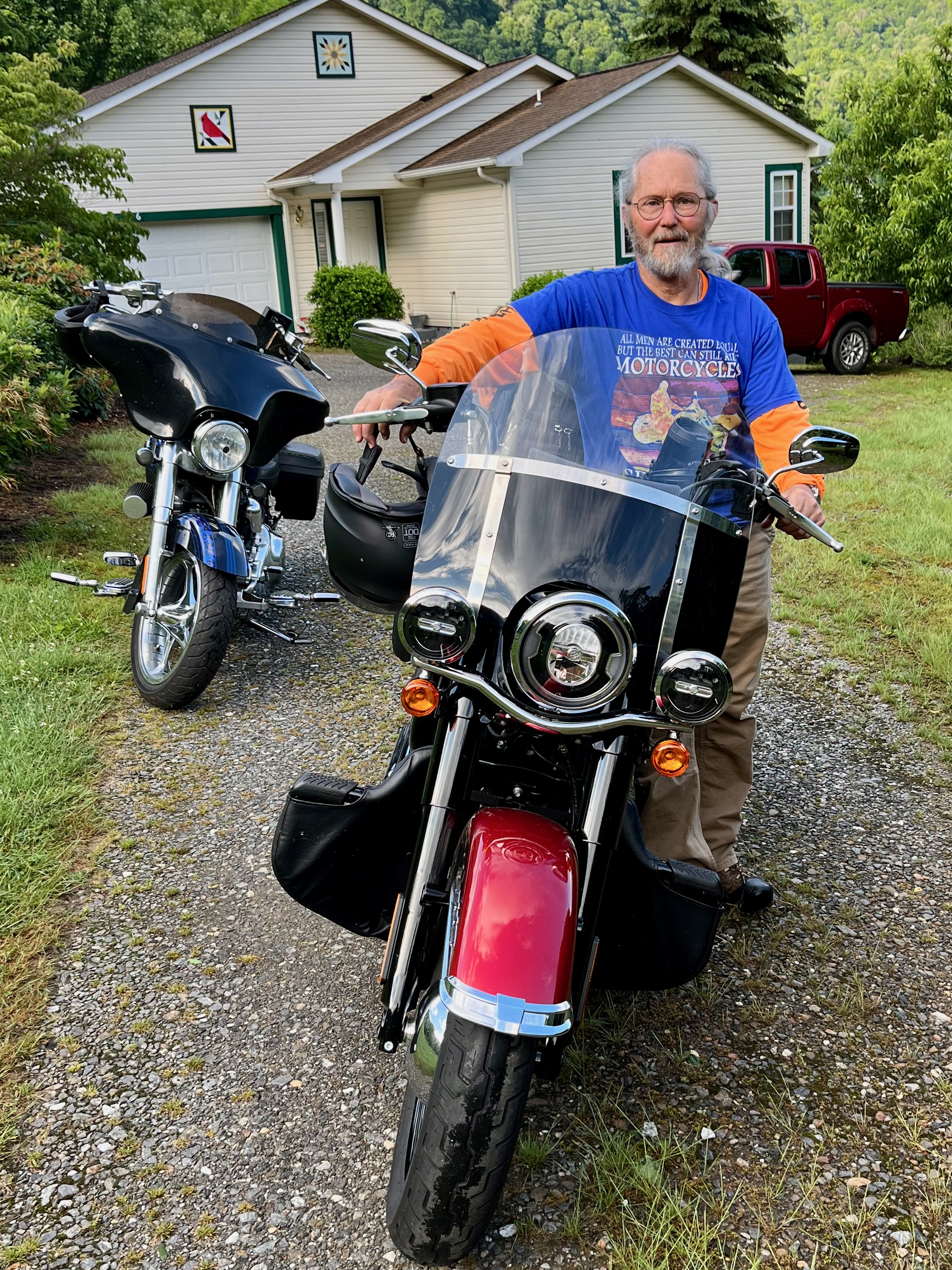
We could have made today’s ride to Staunton, Virginia, in about five and a half hours if I wanted to spend the entire time on the concrete slab known as the Interstate Highway. But I wanted one more twisting ride through the beautiful Western North Carolina mountains. Consequently, we spent the entire morning on various North Carolina backroads, including several stretches on the iconic Blue Ridge Parkway, and on miles of scenic Virginia roads with wonderful views of neatly organized farms and hundreds of acres of geometrically perfect evergreen nurseries. The sights along the way were well worth the extra two and a half hours of riding time.
But, one might ask, if I went through such great scenery, where are the pictures? Well, they’re still in the camera because my new Panasonic Lumix stores image files on an SD card and my new MacBook Air doesn’t have a slot for an SD card like my old MacBook Pro. I think I knew that as I was planning this trip but failed to buy the appropriate dongle to enable photo transfers to the laptop which is currently in my lap. I hope to remedy that issue in the next few days. In the meantime, I’ll make do with what I can capture using my iPhone.
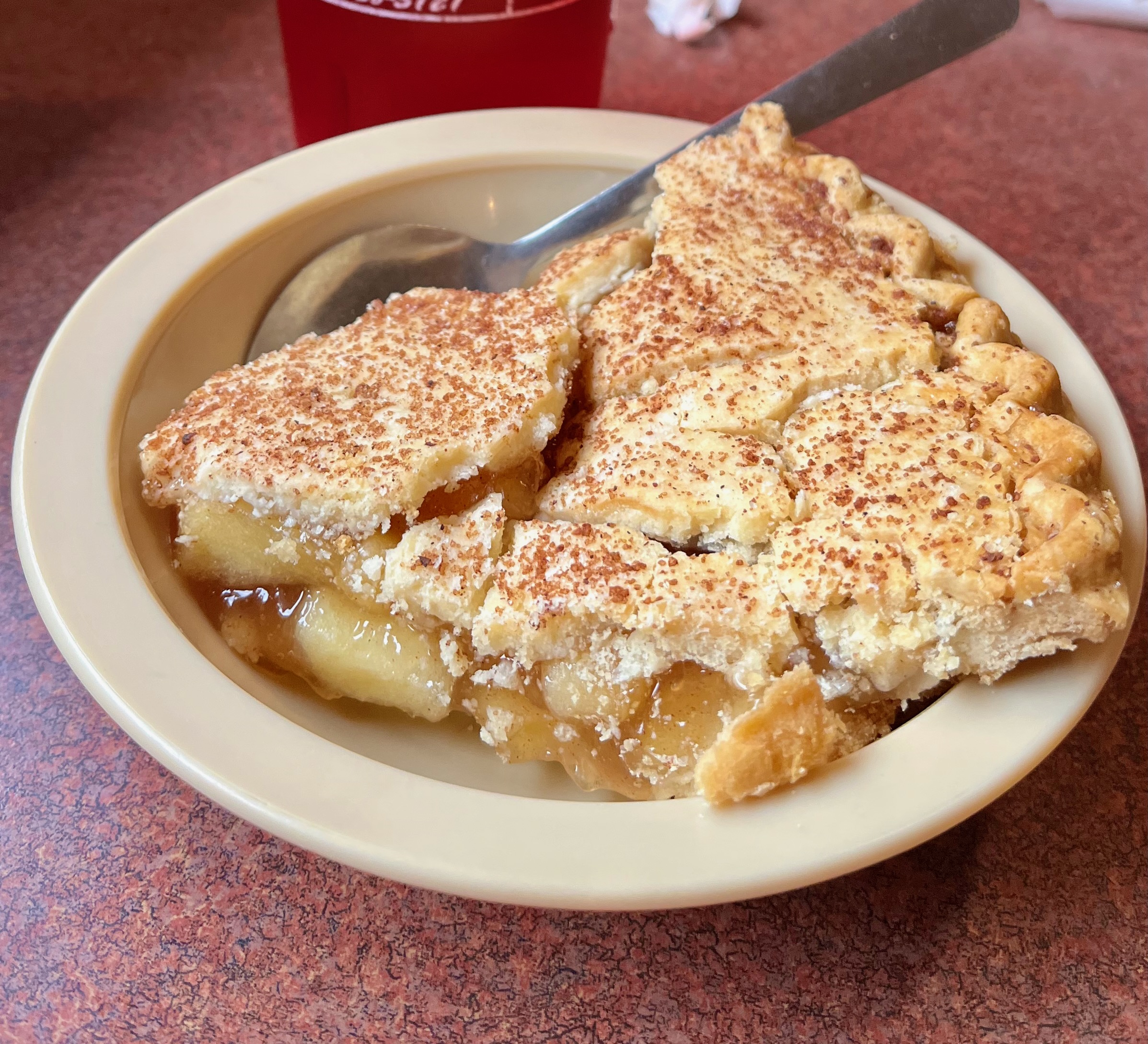
There are readers who come to hdriderblog.com not to learn of my adventures or to be enlightened about the fascinating places I visit, but, rather, to discover what kind of pie I had each day. For those not familiar with the pie saga, I spent several rides, it seems, living largely on pies of as many varieties as I could find. I still like pie. I still plan to eat pie on this trip. But at the risk of offending pie-crazed followers of the blog, I’m probably not going to make it a daily habit this time. It’s getting harder and harder to keep the pounds off, especially if all I’m doing is sitting on a motorcycle. Nevertheless, at Grayson’s Restaurant in Wytheville, Virginia, I ordered apple pie for desert, which I ate before I ate the outstanding cheeseburger I also ordered. Here it is:
One final chore this evening after arriving at our less-than-luxious Best Western motel was to go online and make sure I had satisfied all the Canadian covid-related requirements to enter the country. I had worked on the ArriveCan app several weeks ago and found the website frustrating, to say the least. Tonight’s experience was also frustrating but I managed to cross all their T’s and dot all their I’s and they sent me a QR code that, upon presentation Monday to the appropriate border authority in Saint Stephen, New Brunswick, should speed my entry into all of Canada. We’ll see.
All-in-all it was a good day. Stayed dry. Had pie. Drank a small glass of Jack Daniels. Have a bed with clean sheets. Hard to ask for much more than that.
On The Road Again
Tomorrow, with the raspy-voiced Willie Nelson crooning through my bluetooth helmet speakers, I’ll navigate down my driveway and onto roads that wind through the Western North Carolina mountains. I’ll be “on the road again.” It’s been three years since I saddled up for a long motorcycle ride, and I’m ready to go. Really ready.
This year’s adventure will be a butt-numbing, bugs-in-my-teeth, wind-in-my-face, six-week celebration of my 75th trip around the sun. And, of course, it’s going to be another fantastic opportunity to investigate new places, meet interesting people, and create indelible memories of singular scenery. I appreciate how fortunate I am to still be able to add another 11,000 miles of asphalt to the nearly 300,000 miles I’ve logged on two wheels in the past 20 years. And, I’m anxious to again share this year’s adventure through daily blog posts for all who want to follow along.
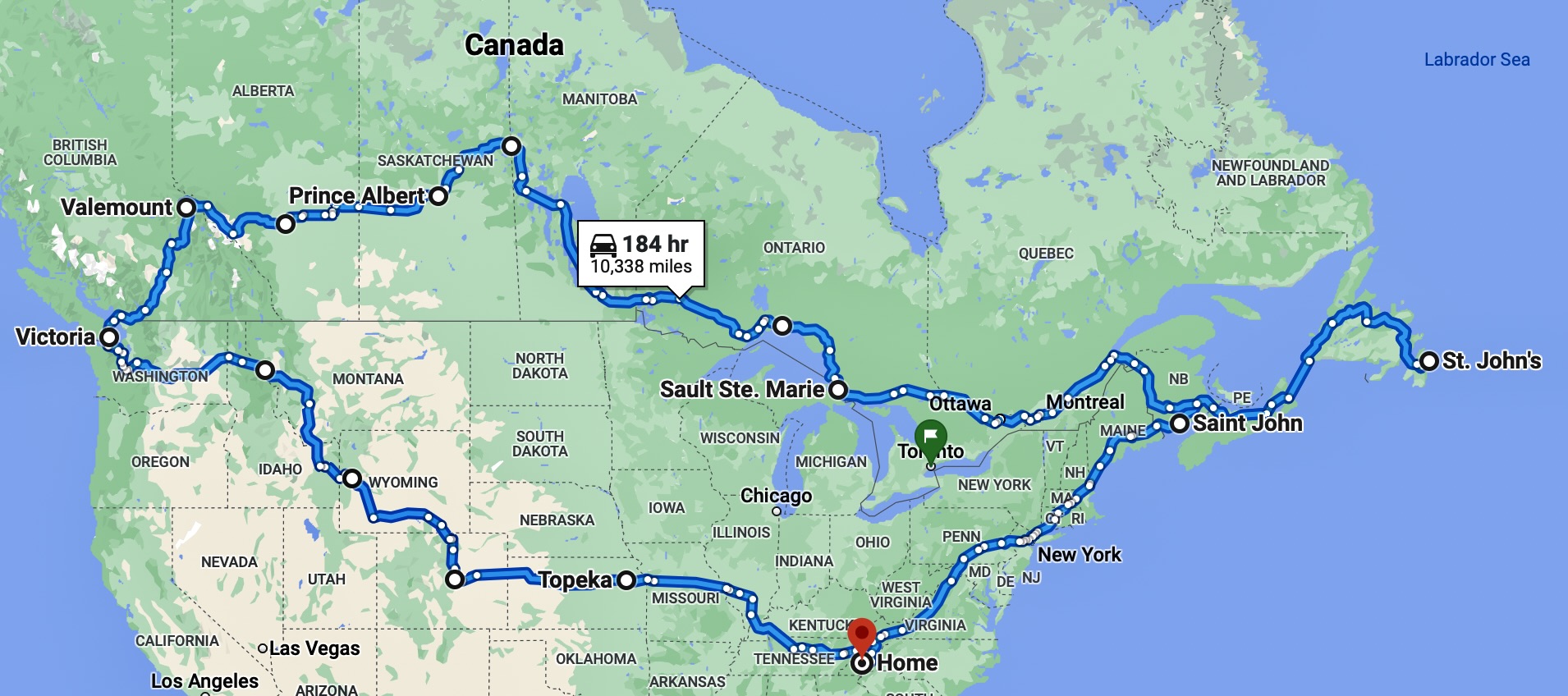
This year’s route will take me to Canada. Again. I’ve ridden in all ten Canadian provinces (and one territory) during the past two decades, but I’ve never explored all ten in a single trip. That’s this year’s goal: To watch a golden sunrise bless the Atlantic Ocean at the eastern most point of North America near St. John’s, Newfoundland and Labrador, and, after following a circuitous route through the expansive Canadian interior, watch Sol sink slowly into the Pacific waters from the rocky shores of Vancouver Island, British Columbia.
Over the years, I’ve ridden solo; I’ve ridden with a partner; I’ve ridden with a crew of a dozen twisted but very talented riding fools. In the early planning stage, this cross-Canada trek was designed as a solo adventure. But a long-time riding buddy expressed an interest in this year’s outing; I immediately accepted his offer to join me.
Steve Lee and I met through a Harley Owner’s Group (HOG) chapter in Jacksonville 20 years ago and he and wife Ruth have been good riding partners and even better friends ever since. We’ve enjoyed week-long adventures cruising the Appalachian mountains and navigating along Atlantic beaches searching for great roads, unusual lighthouses and unique eateries. Steve and Ruth are retired U. S. Air Force veterans, and last year they both finally retired from their post-military civilian jobs. Now they’re ready to ride like retirees should ride.
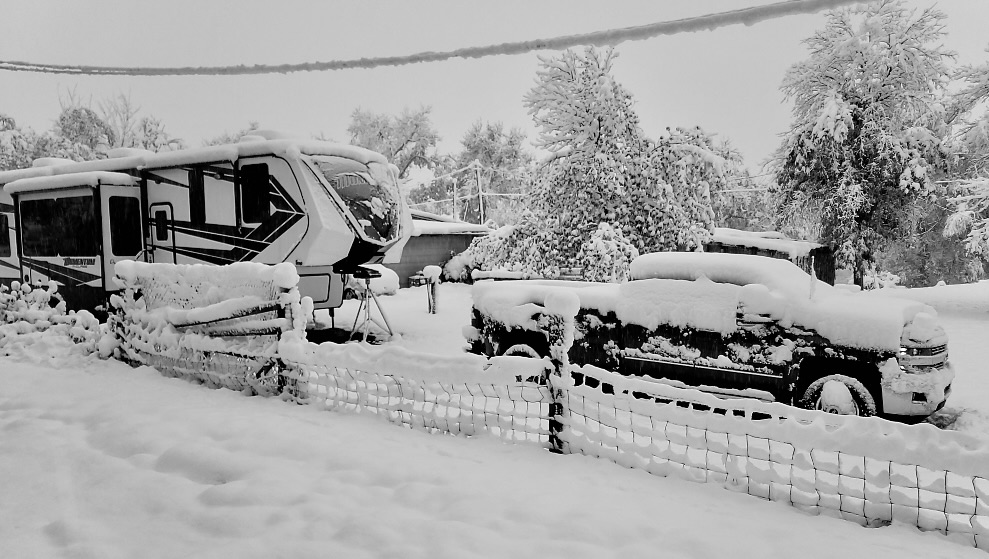
Steve’s plans to join me in Maggie Valley for tomorrow’s departure were nearly derailed by a late spring storm that dumped ten inches of heavy snow on his RV home base near Colorado Springs last Friday. Fortunately, the snow melted nearly as fast as it came down, and by Sunday he headed east to North Carolina despite temperatures in the upper 30s.
While I have a general idea where I’m going during this incredible iron horse rodeo and approximately when I’ll be there, nothing is set in stone. I expect detours, delays and downtimes along the way. I not only expect them, I want them. Serendipitous surprises, after all, convert a jejune sight-seeing vacation into a blog-worthy, two-wheel adventure. If this ride is anything like multiple trips to Alaska, a circumnavigation of the Rocky Mountains, a journey in the footsteps of Lewis and Clark, an extended exploration of Newfoundland and Labrador, a tour of Civil War battlefields, and roaring through canyons and passes in the southern Rockies and the Sierra Nevada mountains, it will be as enjoyable and as memorable.
This trip will differ from my previous motorcycle trips in several ways. In the past, 500+ miles a day was not unusual as I too often hurried from point A to point B to point C to ….. Not this time. Going a little slower and usually covering only 300-350 miles a day, I’ll take time to appreciate more deeply the ever-changing scenery that is my 360-degree view from the saddle. I’ll go fewer miles each day, giving these aging bones a chance to rest a little in the afternoon while exploring that day’s destination. I expect to learn more about Canada and the province I’m in each day, making this an educational trip of sorts that I’ll share on the blog. I hope to wander frequently through city streets and small town museums, absorbing the sights, sounds and tastes our northern neighbor has to offer.
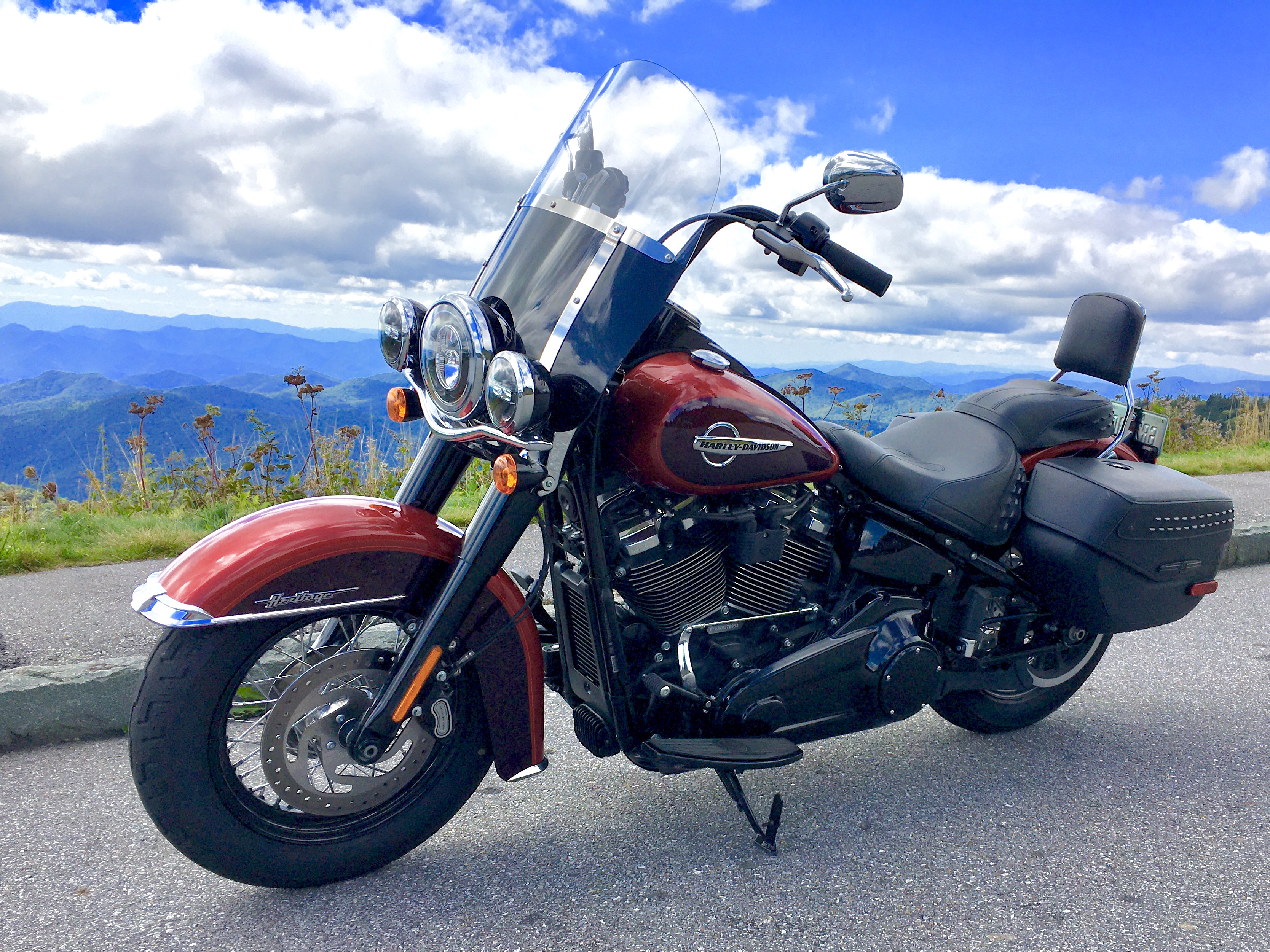
One more change, for those who have followed along earlier rides, is a different bike. For most of my two-wheel tours during the past 15 years, I straddled a Harley-Davidson Ultra Classic, complete with large, wind-diverting fairing, built in radio/CD/CB, large saddlebags and a tour pack for extra gear. I had three Ultras (2007, 2010, 2013) and two of them carried me 100,000 miles each while the third logged nearly 50,000 miles. Last fall, I traded in my aging black 2013 Ultra Classic and bought a 2019 Harley Softail Heritage Classic with only 500 miles on the odometer. It sports an upgraded transmission and larger motor, but because it lacks many accoutrements found on the Ultra, it weighs 200 pounds less, tipping the scales at slightly more than 700 pounds. It may be a little less comfortable as the miles roll by each day and a little more open to the elements, but if I happen to lay it down, I’m far more likely to be able to get it upright again.
I’m packed, probably with more gear than I need. The bike is ready, including a new dose of synthetic oil and a couple of added accessories. Steve and his bike are also ready. Another great adventure is about to begin. Thanks for coming along on this year’s celebratory circuit. I hope I can make the blog as interesting and exciting as the ride will no doubt be in person. As always, please feel free to use the blog’s comment feature. It’ll be nice to know that someone other than Marilyn and Ruth is joining us—at least in spirit.
I really can’t wait to get on the road again.
MHT Days 36 & 37: End of the Tour
The 2019 Magical History Tour is over. Yesterday I rode the remaining 650 miles in one day instead of two, covering the route from Conway, Arkansas, to Maggie Valley in about 11 hours in 90+° heat. My conclusion was not unlike that of the 1804-1806 Corps of Discovery, whose exhausted members paddled harder and with more determination as they neared the end of their incredible journey, even foregoing hunting and eating only what remaining supplies they had and fruit they found for the final several days.
I covered 8,540 miles, according to my trip odometer, on a very dirty motorcycle that had more than 96,000 miles on it when I drove up my driveway five weeks after I pulled out.


Meriwether Lewis, William Clark and the unsung members of the Corps of Discovery explored unknown territory recently added to the young United States; discovered new species of plants and animals for eager scientists to study, catalog and classify; mapped previously unmapped lands and rivers; and encountered industrious people whose roots in those lands went back thousands of years. They did, in short, most of what they set out to do. They did not, of course, find an easy water-route connecting the eastern part of the continent with the Pacific Ocean because there wasn’t one.
What about me. Did I do what I set out to do? I think so. I spent hundreds of thoughtful hours contentedly cruising endless asphalt on a Harley-Davidson enjoying incredible and varied scenery offered everywhere by the bountiful country. I greatly expanded my historical understanding about a vital piece of American history and, through my daily journal entries, perhaps expanded others’ knowledge as well. I identified new outlets for my insatiable wanderlust that will return me to ground already covered and offer new roads to explore. I met, as I always do, scores of people who were kind, cordial, helpful, sharing, engaging, interesting–in short the civil, caring and humane people who make this country and the world worth living in despite the trials that challenge us on a daily basis. And finally, my brief but important contact with friends and family rewarded me with love, laughter and life-lessons.
Each motorcycle adventure I take provides serendipitous encounters, unanticipated meetings and unexpected pleasures. Sometimes they come in the form of people I meet along the way who surprise me with their kindness or a unique perspective. Sometimes they come in the form of a sunset or sunrise or mountain view or common cuisine that stops me in my tracks and make me truly appreciate my aging senses. Sometimes they come in the form of a long-sought accomplishment that helps complete my life. The blog’s daily posts can’t always capture the joy I experience as each day unfolds and the chapters of my journey are penned, but know that these encounters, meetings and pleasures fill me with wonder and delight.
This trip is done. The bike is in the garage waiting to be washed. The final words of the final post are about to be written. But the memories from this trip–people, places, scenes–will stay with me and, years from now, make me smile as they creep for an instant into my consciousness.
MHT Days 33, 34 & 35: Family Matters
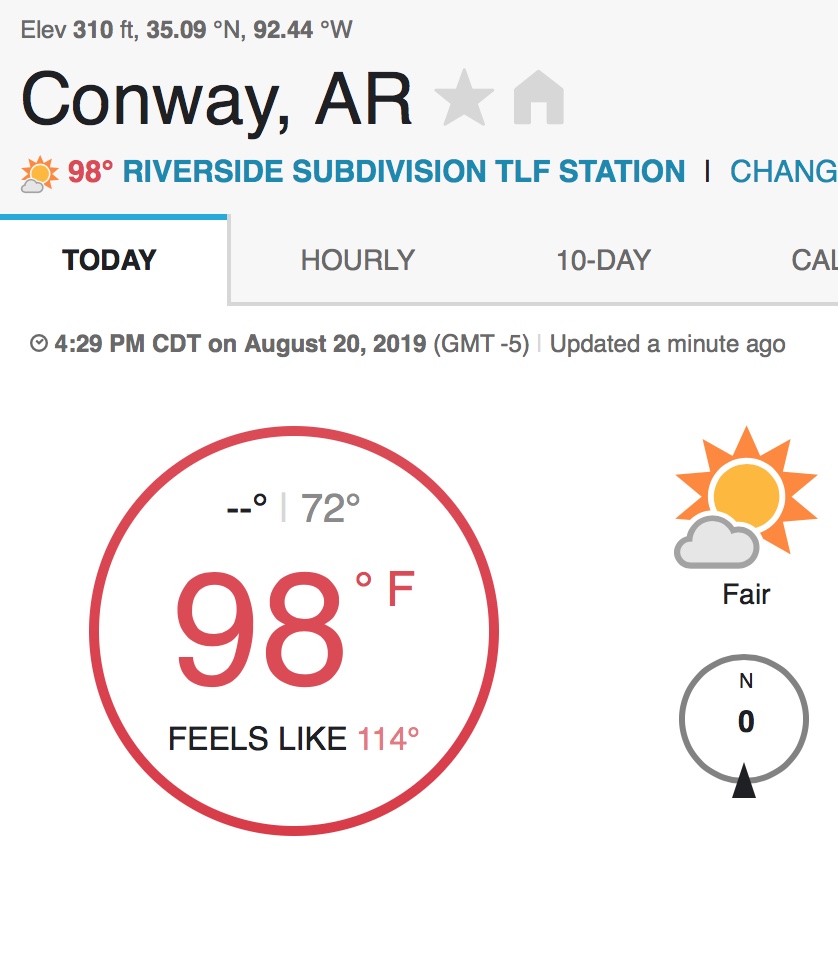 I left brother Jon’s house early this morning to avoid riding in some of the worst heat of this trip. It didn’t work. For most of the afternoon, temperatures hovered around the century mark, and several times today I saw readings of 102° with a heat index of 120°. I almost think I’d rather ride in the rain.
The three days spent at Jon’s were good but bittersweet. Ulla was diagnosed with cancer about a year and a half ago and has fought the disease courageously since then. But she and Jon knew when the diagnosis was made that her time was limited. Although she is still smiling, laughing, and active, even to the point of driving her car and enjoying her favorite pastime at a local casino, she is often fatigued and in the care of hospice professionals who visit her at home, monitor her condition and do what they can to make her as comfortable as possible.
Her best friend from her childhood in Germany, Petra, was visiting while I was there, as was her brother Axel. Unfortunately, Axel suffered a heart condition a few days ago and was recovering in the hospital in Andover (near Wichita), adding stress to Ulla’s life at a time when she needed it least. He will stay until his scheduled return September 2 and then look for cardiac care in Germany. Despite all the health issues, everyone’s attitude was upbeat, and the days I spent there were as normal as possible under the circumstances. Ulla, Petra, Axel and Janice (Ulla and Jon’s daughter), had most of their conversations in German, and I sat there pretending to know what they were saying and laughing about, adding my “Ja” and nodding my head. They all speak English too, but it was interesting being the foreigner for a while.
 Jon was doing repair work on his garage siding and I helped with that. The work only took a couple hours a day to finish up, but, even when we started working before 8 a.m., in only a few hours we were drenched with sweat. Still, we got all the siding up, and all that remains for Jon to finish is replacing the trim and doing some caulking. And then he’ll be off to another building or yard project, which he enjoys despite the fact that, as with me, such work seems to get harder each year.
When I left this morning I hugged Ulla, told her we loved her and said my final goodbye. She is a great addition to our family and we will miss her.
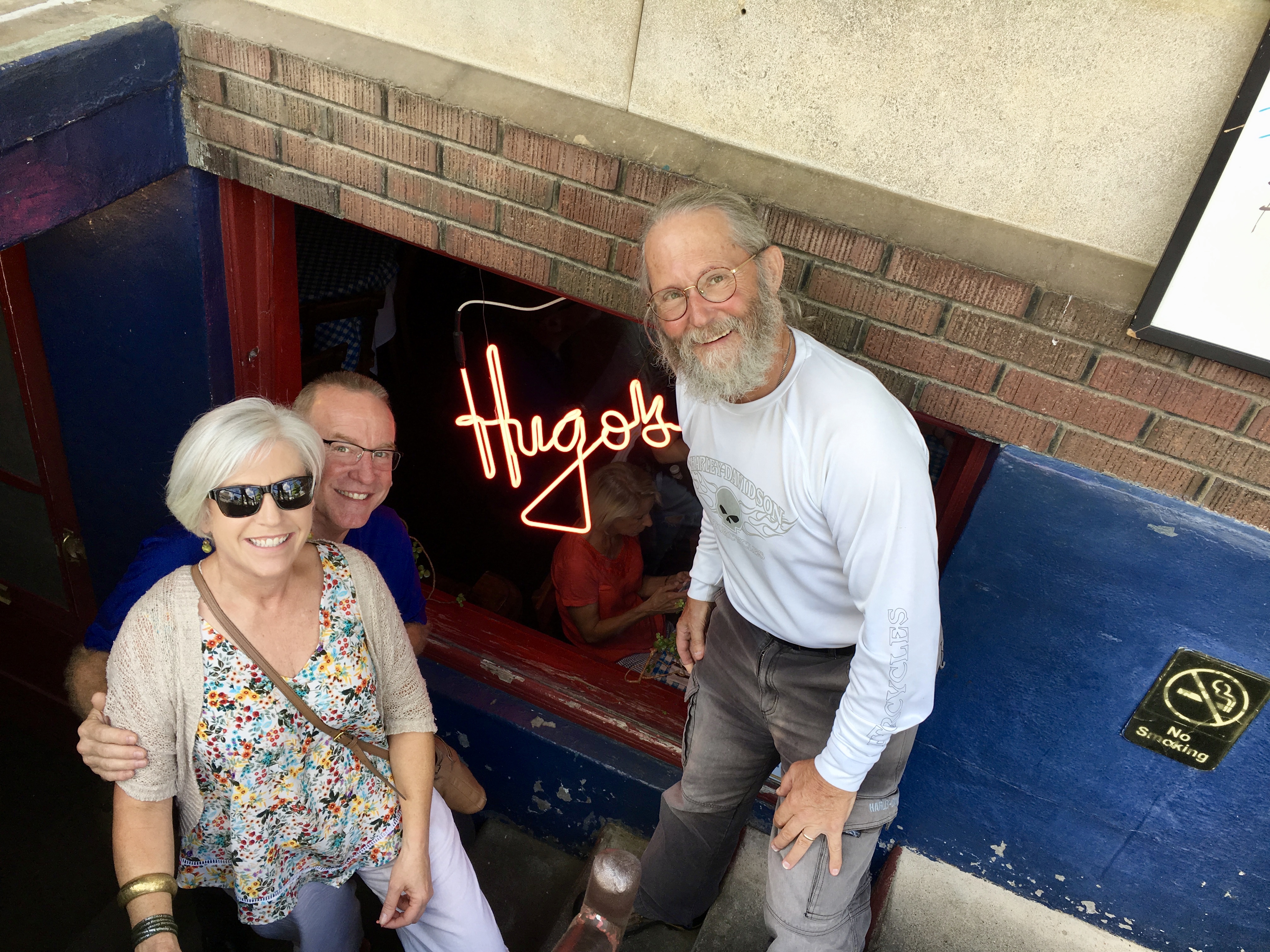 As I passed through Arkansas on my way home today, I stopped for lunch with Mike and Dianne at Hugo’s, a Fayetteville hangout popular with Razorbacks. They were our best friends from our Tullahoma days, and Mike and Hilary and I spent many hours chasing little white balls on local golf courses. We only had an hour together, but once again it was fun to reminisce and remember good times past and to be updated on their grandparenting lives today.
These motorcycle trips, which always involve long distance riding to new and interesting places, also involve visits with dear friends and family. More and more I find these trips give me time to think about the past and the future, to consider what’s important in life, to say things I should have said but hadn’t or to repeat things that weren’t said often enough. The too-short time spent with friends and family make these trips more than just motorcycle adventures; it makes them a vital part of my life.
Tomorrow will be my penultimate day on the road for this trip. Another day riding in the heat with perhaps some afternoon thundershowers thrown in just for fun. There probably won’t be much worth writing about tomorrow, but when I return to Maggie Valley in two days I’ll add a summary post to wrap up this year’s Magical History Tour blog.
MHT Day 32: Back in Kansas Again
After leaving Linda’s ranch Thursday, I drove out of Wyoming, into Colorado, and today into Kansas. For the next couple days I’ll visit with my brother Jon and sister-in-law Ulla, catching up on family matters and telling lies about out two other brothers who aren’t here. Jon and Ulla also have company from Germany–her best friend from childhood, Petra, and her brother Axel. So it’s a houseful but we’ll all manage for a day or two.
When I leave here in a few days, I’ll write a summary post like I did for my visit to Croonberg Ranch. Then I’ll head back to North Carolina with a few notes along the way and a final wrap-up post when I’m back in Maggie Valley.
The Magical History Tour, it seems, is coming to an end.
MHT Days 28-31: Hay There
Before I get to my activity for the past three days, I’ll quickly finish up the Corps of Discovery’s final days on the Missouri River. Clark and his party, having emerged from the Yellowstone River, waited several days on the Missouri for Lewis and his group to rejoin them, which happened on August 12, 1806. Once all members of the expedition reunited, reaching St. Louis was in sight. Two days later, moving quickly downstream, they again met Hidatsa and Mandan Indians near present-day Mandan, N.D. They stayed several days, attempting to persuade some chiefs to join them and go to Washington, D.C. to meet President Jefferson, but had little success.
While at the Mandan Villages, the permanent party of 33 people and one dog began to break up. John Colter, who had been with the expedition since 1803, requested and was given permission to be discharged at that point so he could return up the Yellowstone River to trap beaver. Colter would be the first European-American to see the natural wonders of what is now Yellowstone Park, though no one believed his incredible tales of shooting geysers and boiling mud for several years until additional reports confirmed his fantastic descriptions. The other members of the party who left at this point were the interpreter Toussaint Charbonneau, Sacagawea, and their son Jean Baptiste, aka Pompey, who returned to the Hidatsa village they lived in before Charbonneau signed on in 1805. Clark offered to take Pompey back to St. Louis and raise him and have him educated, but his offer was declined. Years later, Clark did help raise Pompey.
The remainder of the trip to St. Louis was relatively unremarkable. They met several large parties of traders and trappers coming from St. Louis, proof that the country they just explored would be explored and exploited without their remarkable trip. Nevertheless, it was their incredible journey that solidified the United State’s hold on the Louisiana Purchase and gave weight to the American claim to the northwest territory between the Rocky Mountains and the Pacific Ocean.
The Corps reached St. Louis September 23, 1806, more than 28 months after leaving it, covering the distance from the Mandan Villages to St. Louis in a little more than a month, five times faster than the upriver voyage in 1804. As they approached St. Louis and once there, countrymen welcomed them with surprise and celebration–most people thought they had perished in the wilderness because there had been no communication from them since they left the Mandan Villages 18 months earlier.

Sunrise at the Croonberg Ranch outside Laramie, Wyoming. Time to go to work.
Linda Croonberg has been a great friend of ours since she and Marilyn met in an accounting class at the University of Wyoming in 1988. She currently lives on and operates an 8,000-acre ranch south of Laramie that has been in her family for more than a century. Linda is the epitome of a Wyoming native: independent, proud, land-conscious and hard-working. But she is also fun, daring, adventuresome and maybe just a little nuts That pretty much describes Linda.
She runs about 250 pairs of cattle (mother and calf) scattered across the ranch, fattening on the thin grass that grows on the hills and mountain sides. Cattle are important, but the raison d’être of the ranch right now is hay, and she has about 250 acres of it to mow, rake, bale and store. I arrived at her place Tuesday just in time for the start of haying season, and when you visit Linda during haying season, you pitch in and do what you can.
For years Linda sold hay mainly to horse owners, producing and selling 5,000 “small square” bales. This year, however, marks a change in strategy. With the purchase of several pieces of computer-assisted haying equipment, she has started to bale “large-square” bales.
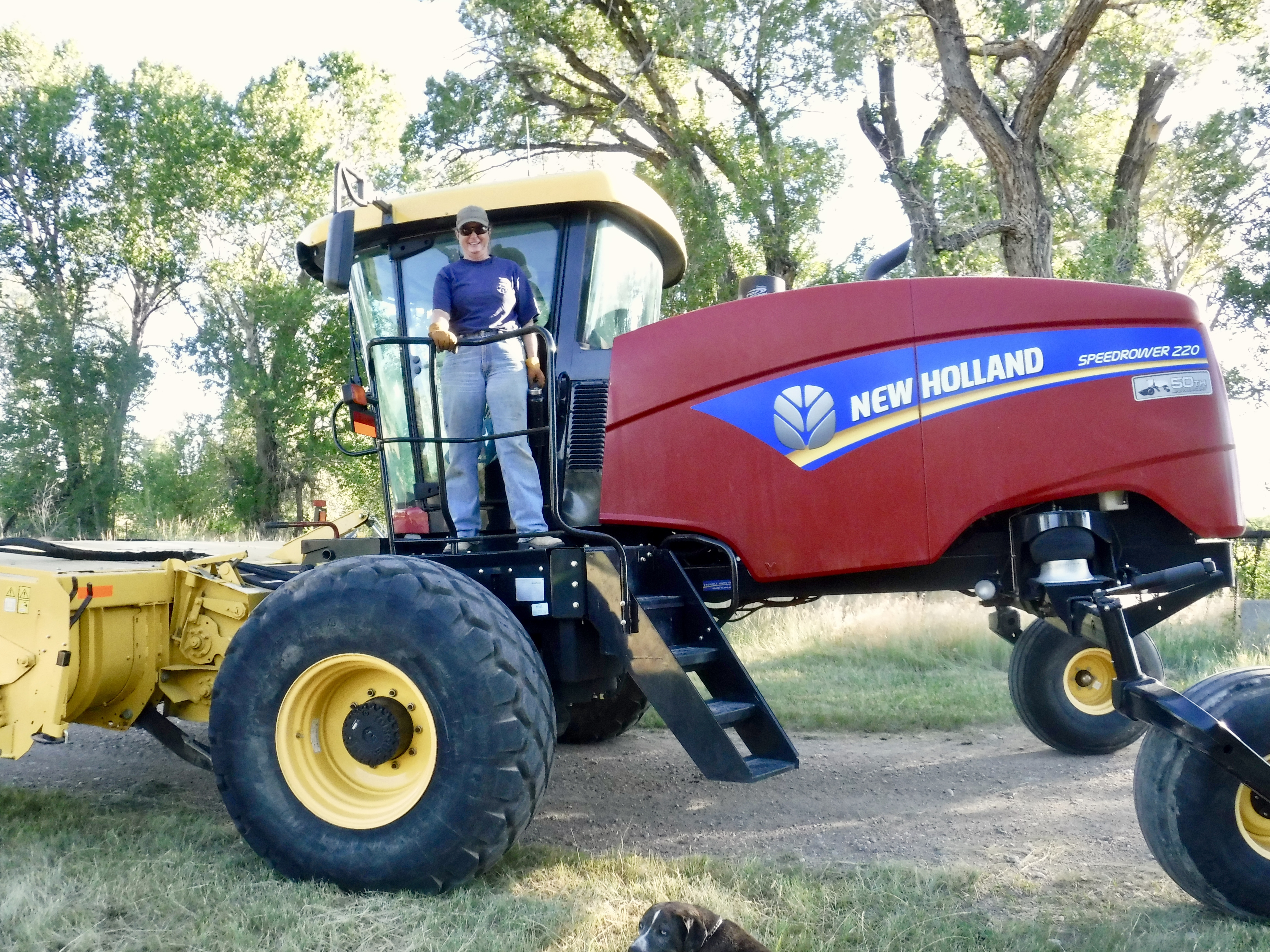
Linda prepares to mow one of her large meadows with the recently-purchased New Holland mower. This New Holland cuts hay twice as fast as her tractor mounted side-cut mower. The front of the mower is to the left.
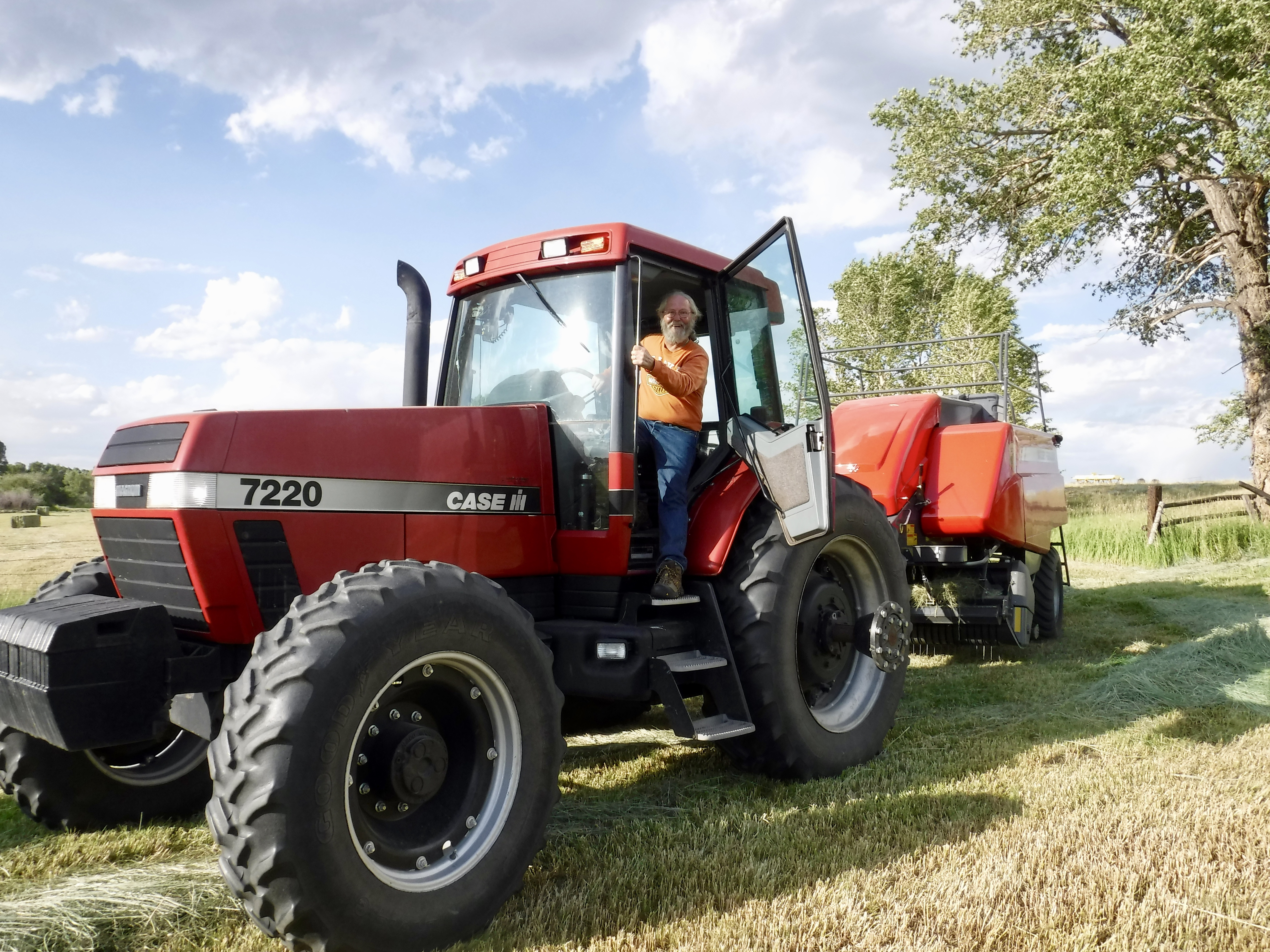
I climbed in but did not operate Linda’s Case IH tractor, which is pulling her brand new Massey Ferguson large square baler.
I arrived at Croonberg Ranch Tuesday afternoon following a five-mile ride down a gravel road to reach her two-mile long driveway, aptly named Croonberg Trail. Getting to her house via the rocky, two-track Croonberg Trail, balancing a large, fully-loaded motorcycle is an adventure I try to take only twice each visit–once coming in and once going out. Linda had already mowed a couple small meadows, but the real production would start the following day with the delivery of her New Holland self-propelled mower that looks like it once performed in one of the Star Wars movies and the final setup of her new Massey Ferguson baler. And the weather gods were smiling on her–only a 10-20% chance of rain for the next couple days.
She gave me a tour of the place to show me the changes that had been made since my last visit in 2016 on a return trip from Alaska. A new ranch house she and some friends built, several new pieces of equipment in addition to the big ones already mentioned and a new dog rounded out the tour. There were significant changes since 2016, but nothing to compare with the changes she’s made since she first started operating the ranch by herself 25 years ago. A little bit at a time and now it’s a first-class operation.
We turned in early; work on a ranch during haying season starts shortly after sunup and often continues for the next 12-14 hours. First thing Wednesday morning, Linda gave me a short tutorial on operating her 1950s vintage Ford tractor with a side-delivery rake. She drove the old but reliable tractor through a thin-hay, dry-land, 12-acre meadow with my butt precariously-perched on the animated steel tractor fender to demonstrate how to operate the ancient two-piece setup. then turned me loose for several hours while she took a bigger tractor with a newer rotary rake to rake windrows in another freshly-mowed meadow. I bounced along on the suspension-challenged little Ford, trying to get my windrows lined up and looking neat, only to watch the Wyoming wind and the occasional hay devil (first cousin to the dust devil) spread my work across the field.

My first effort as a hayer. I’m not sure which was older–the operator or the equipment.
Just when I’d think I’d gotten the hang of the raking thing, I’d look behind me and discover I turned the wrong direction or swung too wide, creating a windrow on the wrong side of where I wanted it to be and then have to make two more passes to put it where I wanted it in the first place. It quickly became clear why my very perceptive friend gave me a small, thin-hay meadow to make my bones on. Still, by noon, I was a full-fledged, Croonberg-certified, Ford-tractor-operating hay raker.
By then, the New Holland self-propelled mower had been delivered from across the state on a big flatbed truck by a friend of Linda’s and driven to the ranch yard. The mower attachment had been too big to take on some roads, so it had been removed and delivered on a separate trailer. After only a little trouble getting the mower unit off the trailer (it took a tractor and a skidster lifting from both sides to lift it so the trailer could be driven out from under it), the two units were reassembled and the monster mower was ready to take on the biggest hay meadows at Croonberg Ranch.
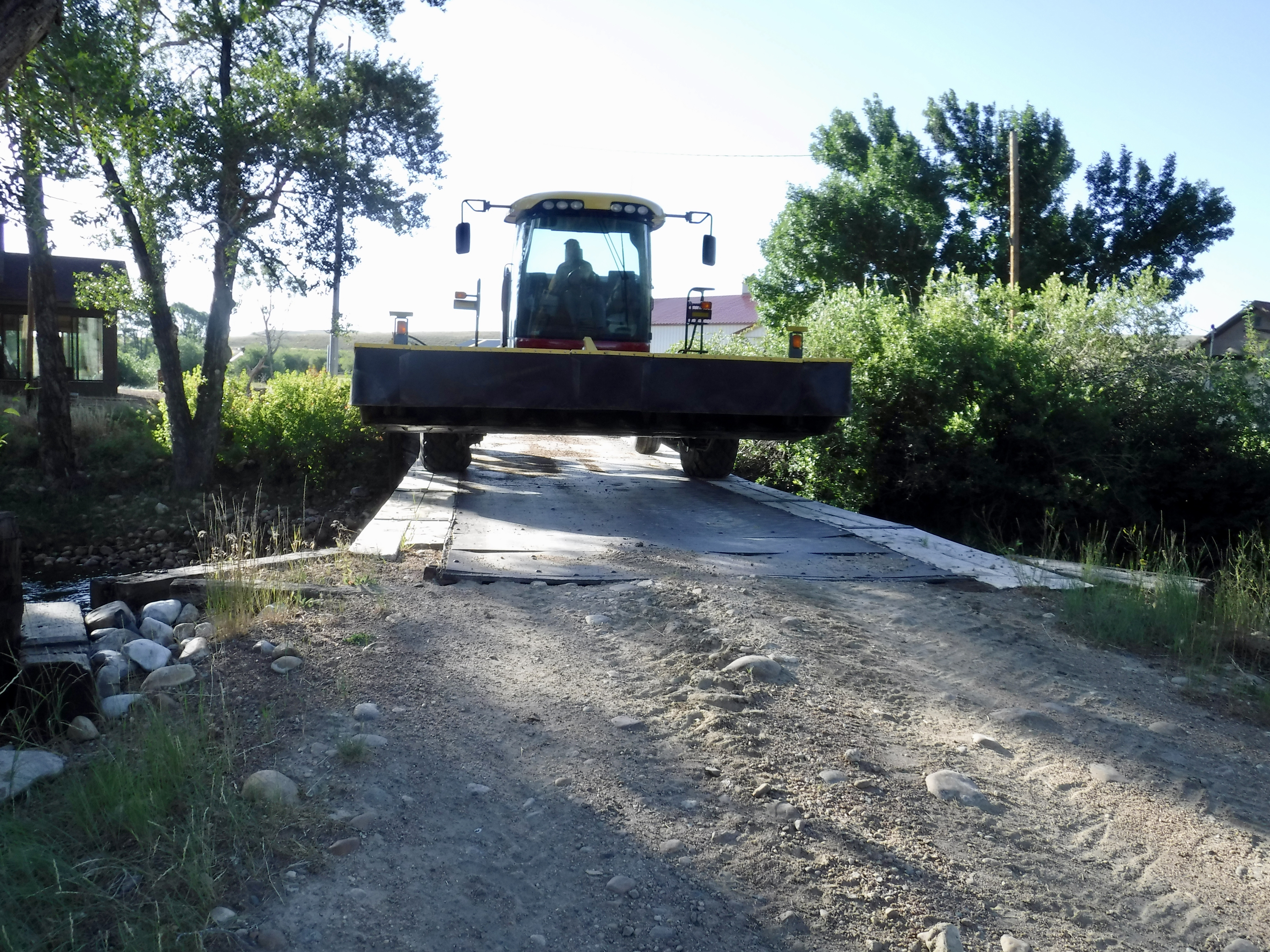
Big mower, small bridge. 5″ to spare on either side. No problem.
Now it was time to finish assembling the new baler, which was stored with its tractor in her large Morton building. I wanted to help with the final assembly, but, since I know nothing about balers or machinery more complicated than a 1949 Dodge sedan, I was probably just in the way. But Linda’s friend Brad and his helper were understanding and found things for me to do that usually required me getting something from the other side of the building, giving them the opportunity to do their work. Other than a couple of missing bolts and the consequent inability to attach the (apparently not crucial) guide wheels, the assembly was finished by about 4 p.m., time enough for Linda to get her first lesson operating the computer-assisted Massey Ferguson large-square baler (remember, she doesn’t even have Internet at her ranch).
She and Brad climbed aboard the large tractor, and began picking up windrows in the meadow directly in front of the new ranch house. And it picked that row of loose hay right up, slick as whistle. And down the windrow they went. And then the first bale came out of the baler, down the rollers, and broke apart ignominiously as soon as it hit the ground. Brad and Linda got out of the tractor, engaged in a discussion next to the untwined pile of hay, and got back in the tractor. Off they went again. And the next bale came out. And stayed together. But they stopped again and got out with a tape measure which they applied to the bale. More discussion. Back into the cab of the tractor and off they go again. Another bale. Another measurement. Another bale. Another measurement.
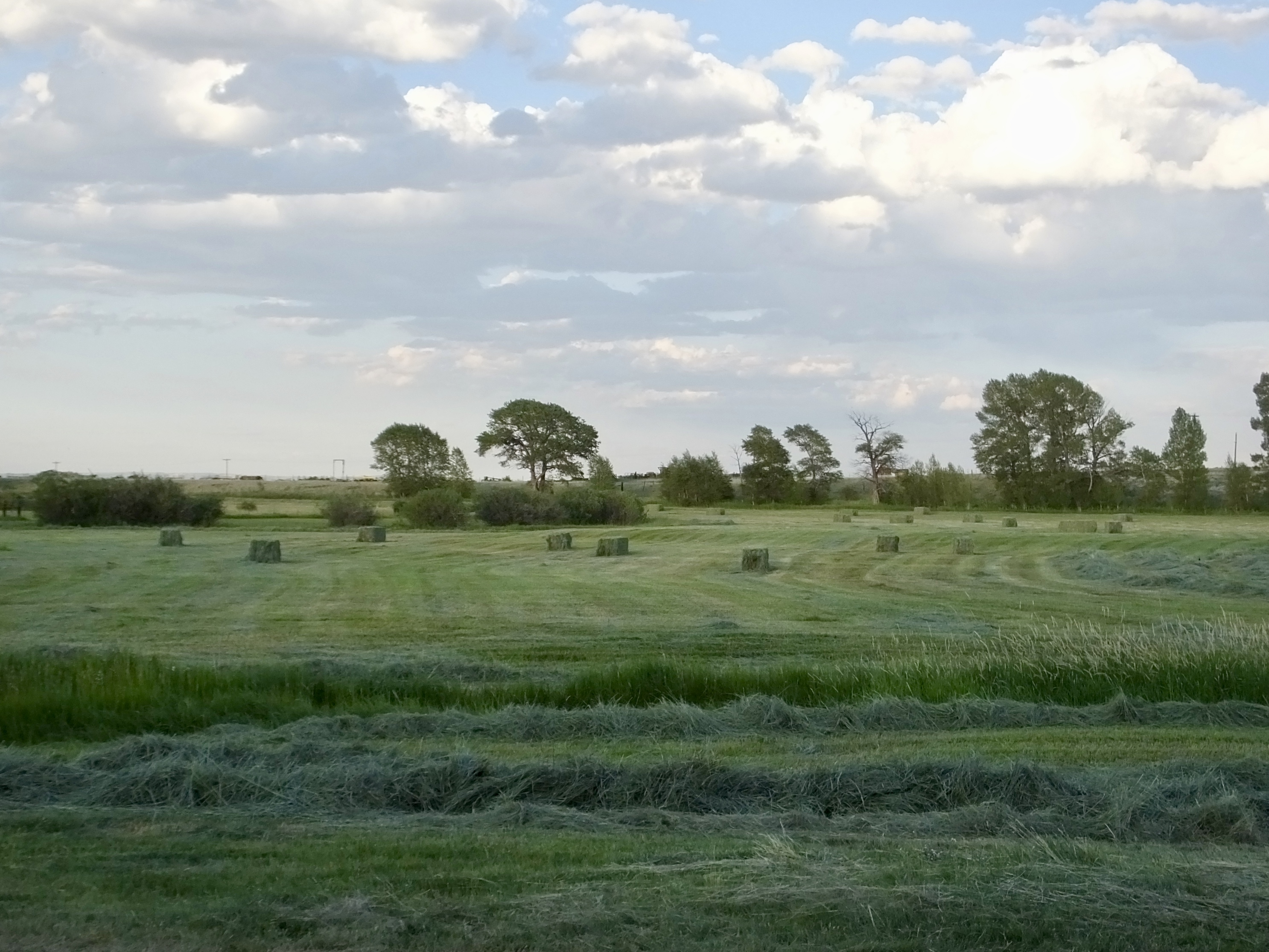
At close of business on Wednesday, the front meadow was full of perfectly-formed, 600-pound hay bales. Note the same meadow in the sunrise picture above.
Being an uninitiated hayer, I assumed there were problems. Not so. First bales, apparently, don’t always get tied properly. And, I learned later, large-square bales can be made in various lengths. Linda wanted eight-foot bales and the new Massey Ferguson was spitting out 10 foot bales. Not a problem, since the computer mounted in the tractor cab can make many adjustments to the baler, including the length of the bale. Once adjusted, the baler dropped 3 x 3 x 8 bales onto the meadow just like it should. In an hour, the meadow was scattered with glimpses of Linda’s future. Time for a beer and a dinner of lambs ribs and potatoes. Then time to hit the hay, so to speak, and an early bed time since Thursday’s work would start again just after sunrise.
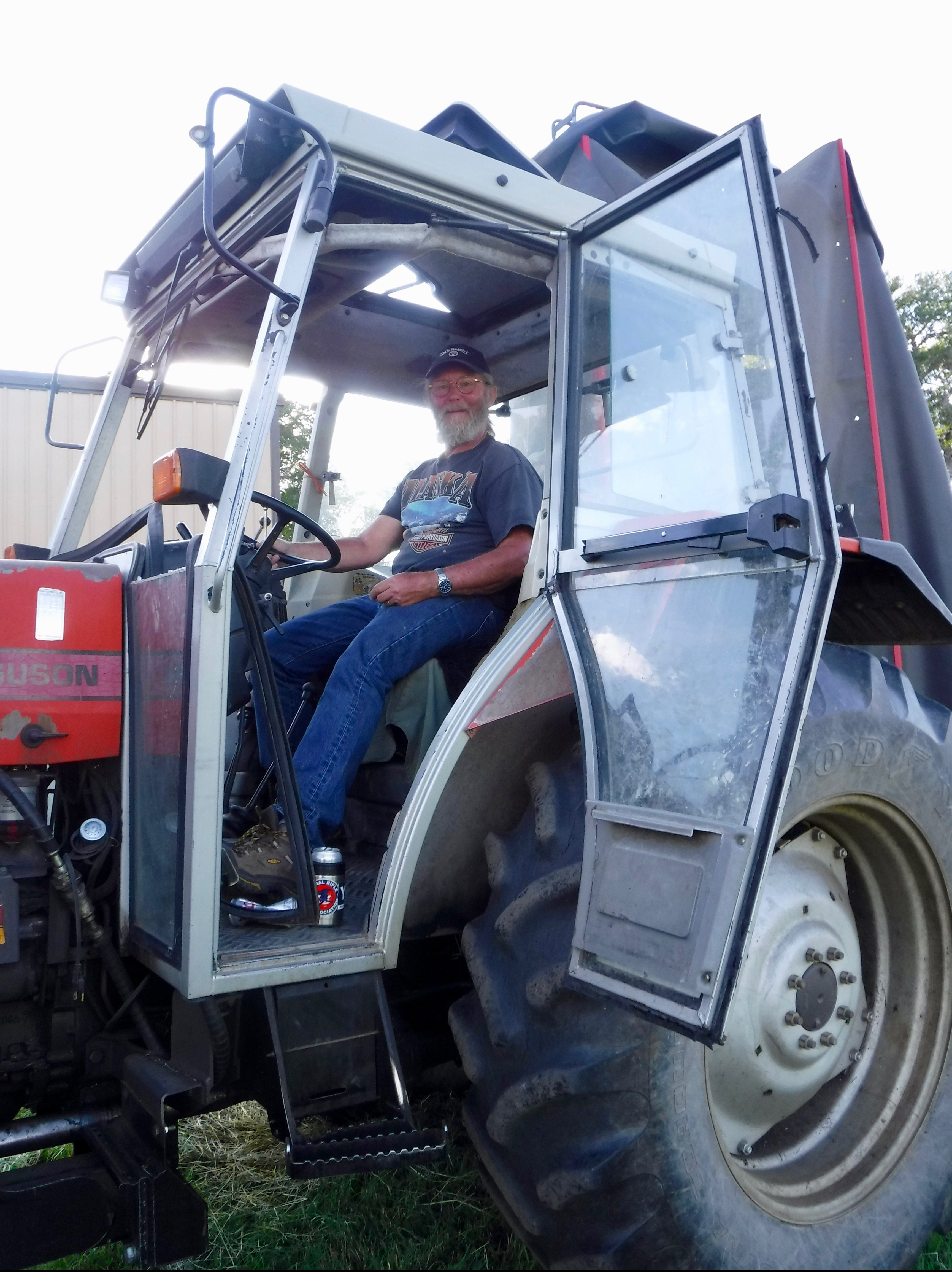
The ancient Ford wasn’t my only ride. I’m Croonberg-certified on one of her Massey Ferguson’s, too.
What, Linda must have thought Thursday morning over a cup of hot coffee and cold oatmeal, can I give him to do that (1) won’t seriously impede the haying operation, (2) would be hard to screw up, and (3) isn’t liable to result in serious damage to him or my equipment. After some serious pondering, she ultimately decided I should fuel up all the tractors and add hydraulic fluid to one of her favorites that had a pesky leak. So that was my first job Thursday. And I managed it with no serious problems, narrowly avoiding adding gas to the radiator of the little Ford tractor and spilling some hydraulic fluid on the ground as my aged muscles struggled to lift a full five-gallon can of hydraulic fluid high enough to pour into a small funnel that I couldn’t see. But the work got done and the tractors were ready when needed.
What next? Another, bigger, more hay-rich meadow needed raking to prepare it for the digestive process of the new baler, which feeds loose hay into the front and drops compact bales out its rear end. My orders, from Linda who was about to learn how to use her New Holland mower, were to take the little Ford and the side-delivery and begin raking. Off I went, bouncing through cattle pens and uneven fields until I reached the East Meadow where the hay had been cut and needed raking. I was just the hayer to do it. Calling on my extensive knowledge of raking picked up the day before, I developed a plan, sectioned off a triangular section of the meadow and went to work. I had just finished raking that section and had made two passes around the much bigger portion of the meadow when Linda, fresh from a successful mowing of a large meadow across the river, showed up on her larger tractor equipped with a rotary rake.
“Are you ready for this one?”
“Uh. Yeah. I guess.”
I listened carefully to another five-minute lesson about levers and gears and clutches and up-and-down and other tractory-rakey things and we changed mounts. No sweat, I said to myself. I’ve got this. And I did. As long as I was going in a long straight line. But when I got to the end of a windrow all hay hell would break loose. Hay would fly in a thousand different directions as I tried to turn the damn tractor, raise the whatcha-macallit, semi-clutch it, and start another row. I’d like to say I got better. Maybe I did by about the 20th windrow. But not by much. Later, when I asked Linda for a brutally honest appraisal of my work, she gave me one. And then she placed her hand on my head and forgave my raking sins.
“Have you ever use a skid steer?”
“Uh. No.”
“Time to learn.”
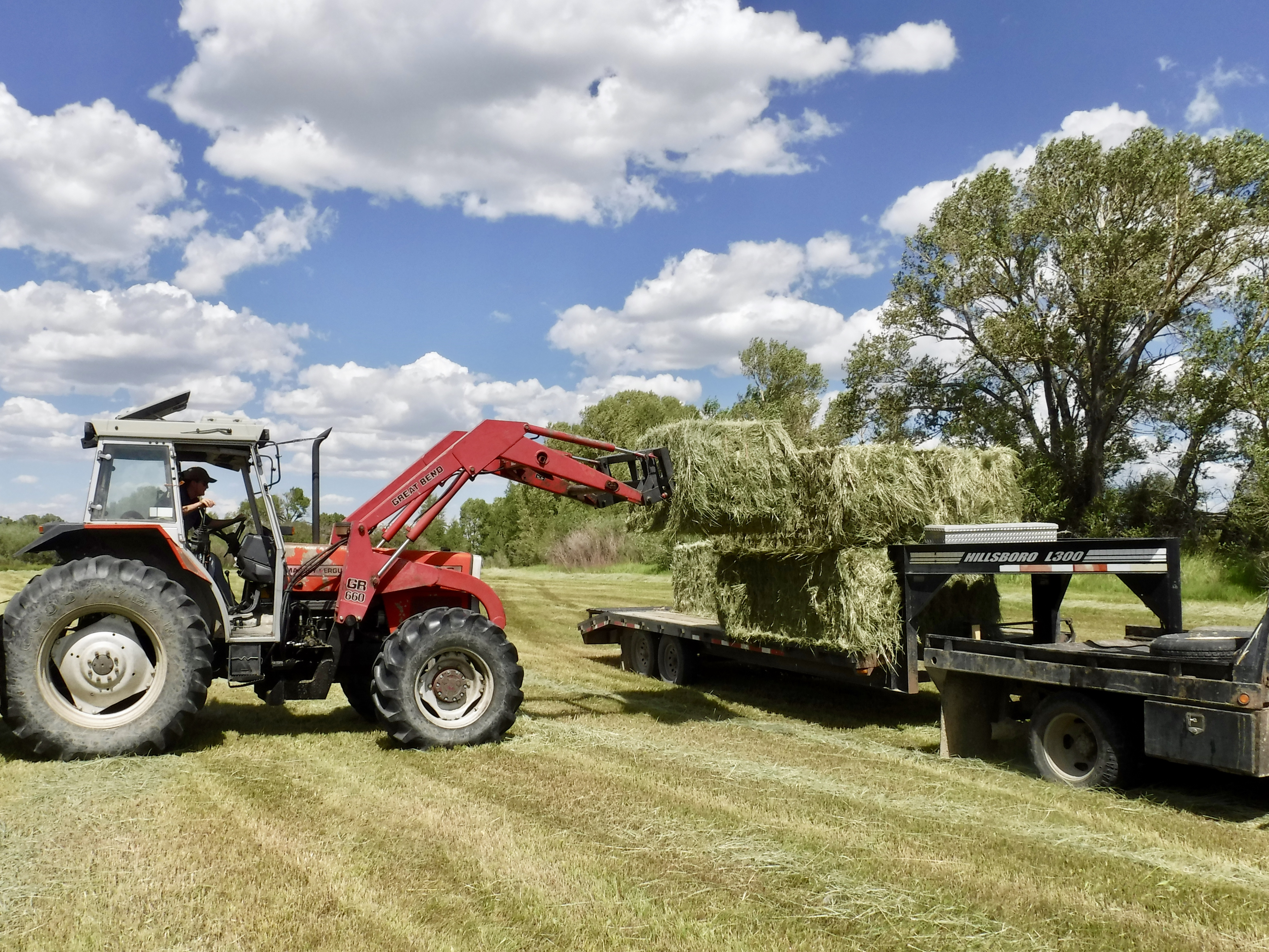
Linda loads big bales on her big trailer.
And I got a third five-minute operating tutorial. My next job was to pick up and move the bales scattered around the front meadow and line them up so a truck and trailer could drive up to them and load them quickly. After a couple of chiropractic-quality jerks and nearly tipping the thing over in a small ditch which I didn’t see because it was covered with grass, I got into the meadow and began spearing the 3 x 3 x 8 bales with the bale-picker-upper attachment and lining them up with the precision of a drunken sailor. But eventually they got properly aligned in time for Linda to come by with her truck and trailer and load them with one of her big tractors. Then it was off to the 50 x 100 foot hay shed to unload.
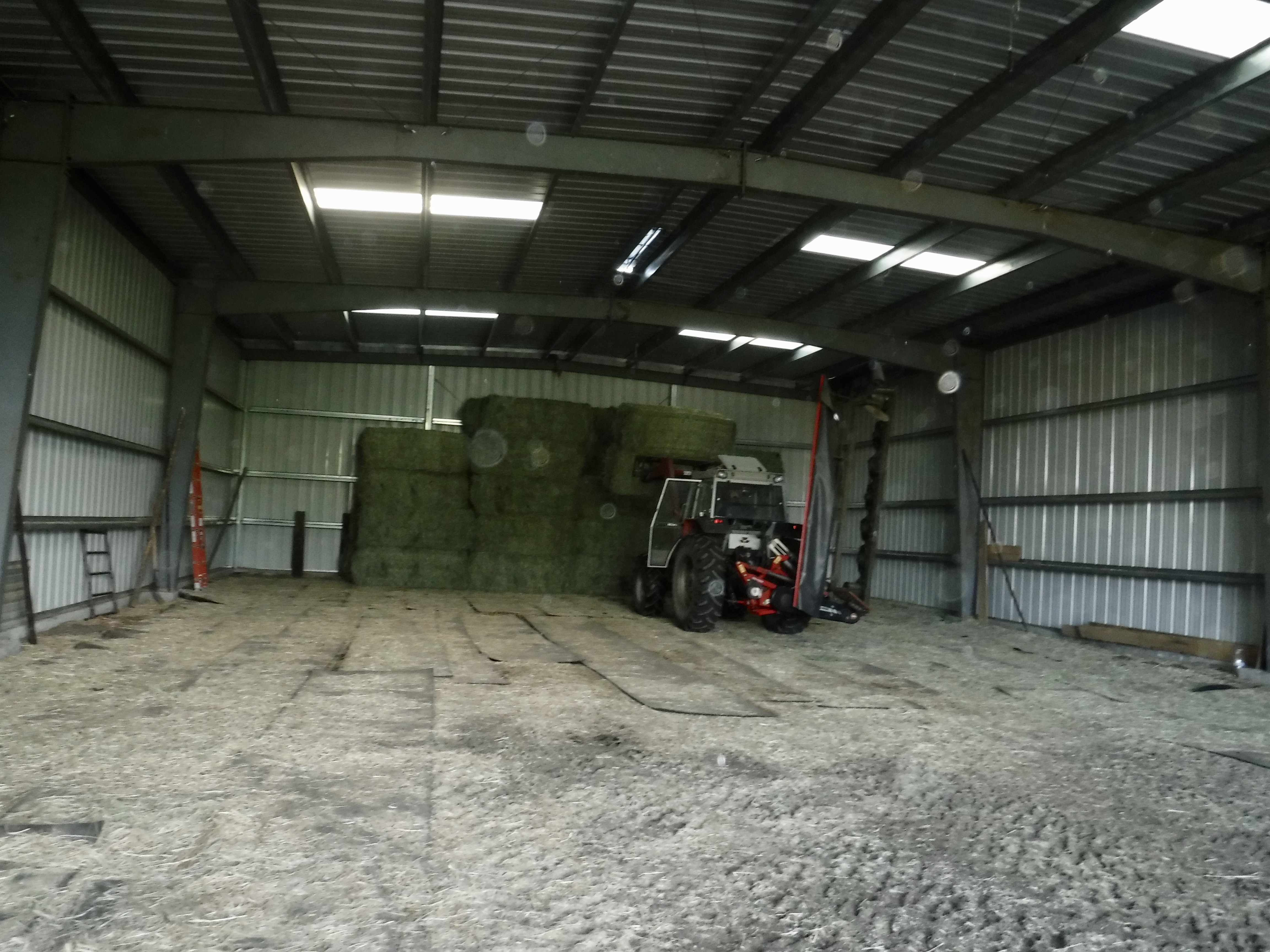
This was just the beginning of a five to six week long effort that will result in around 750 bales stored here, waiting for the right buyer.
Linda thinks a great deal of her hay shed, which she built. She unloaded and stacked all the bales without my help.
The shed remains mostly empty, but Thursday we moved only a small part of what’s been baled and only about 20% of the meadows have been cut. There’s a lot more left to do and Linda, with help from a young man trying to start his own cattle-raising, hay-baling career, will get it all done, weather-gods permitting, in about five to six more weeks. She’ll have to do it without me, though, since my planned three-day stay was almost over.
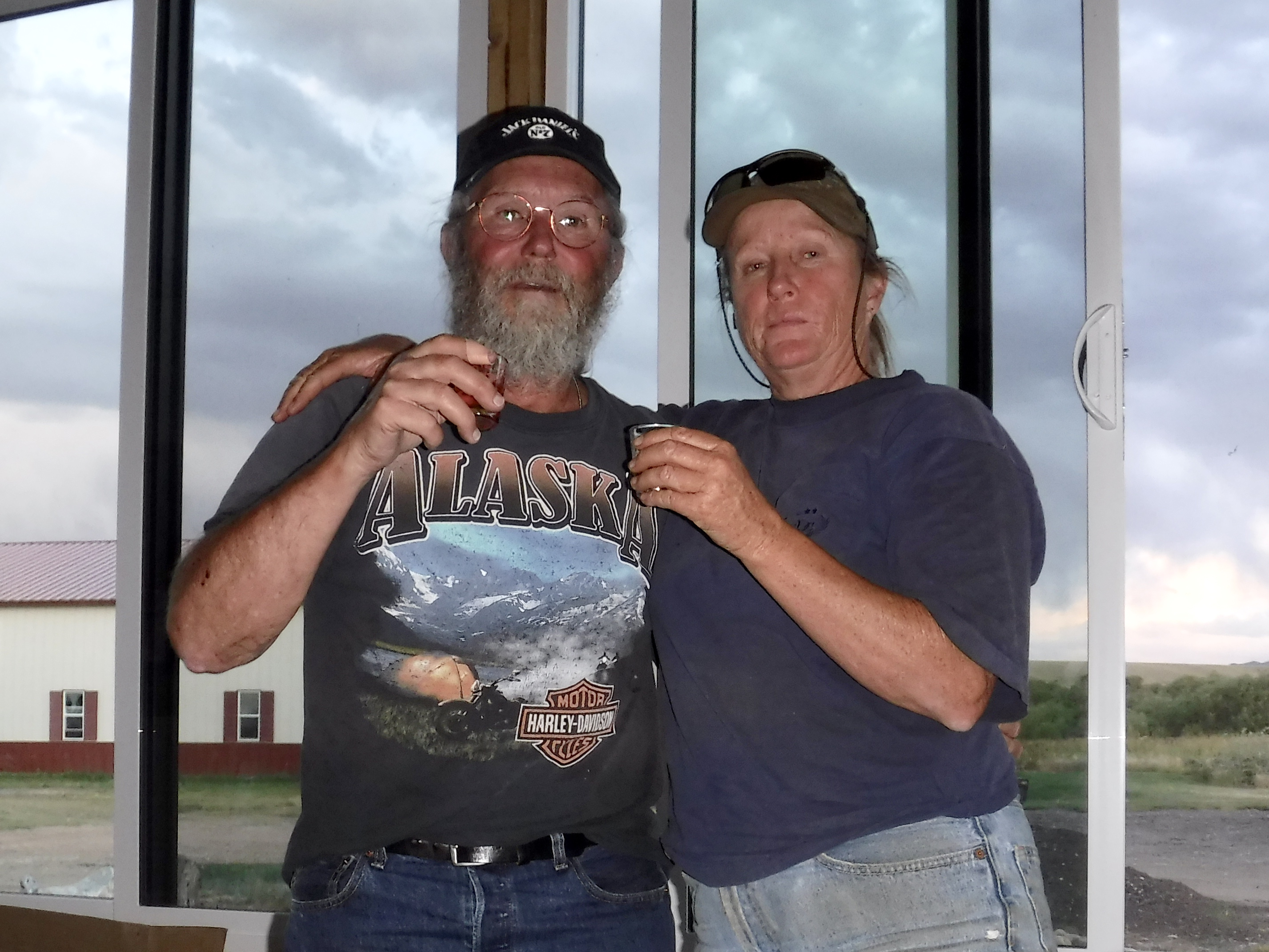
We had one more tradition that had to be taken care of. Since 1990, for reasons I don’t remember, Linda and I toast tequila shots when we’re together. Whether it’s during one of my rides and I’m passing through or she’s visiting Marilyn and me or even at my baby girl’s wedding reception, it’s a tradition that must be honored. So last night, we duly celebrated our time together with a tequila toast. And another. And another. And I lost count. It was a good thing she had to get up early again today because it meant a short toasting night.
This morning, we said our goodbyes with plans to visit again soon, and I bounced down Croonberg trail to the gravel road to the asphalt road and closer to home.
MHT Day 27: Completing the Loop
On July 13, 1806, Captain Clark and 12 others, including his slave York, the interpreter Charbonneau, Sacagawea, and their 18 month-old son Jean Baptiste, left Three Forks heading east to find and travel down the Yellowstone River to the Missouri. Two days and about 50 miles later he and his party found the river that has its beginnings in Yellowstone Park and empties into the Missouri at roughly the Montana–North Dakota border. It is currently the longest free-flowing river in the lower 48 states.
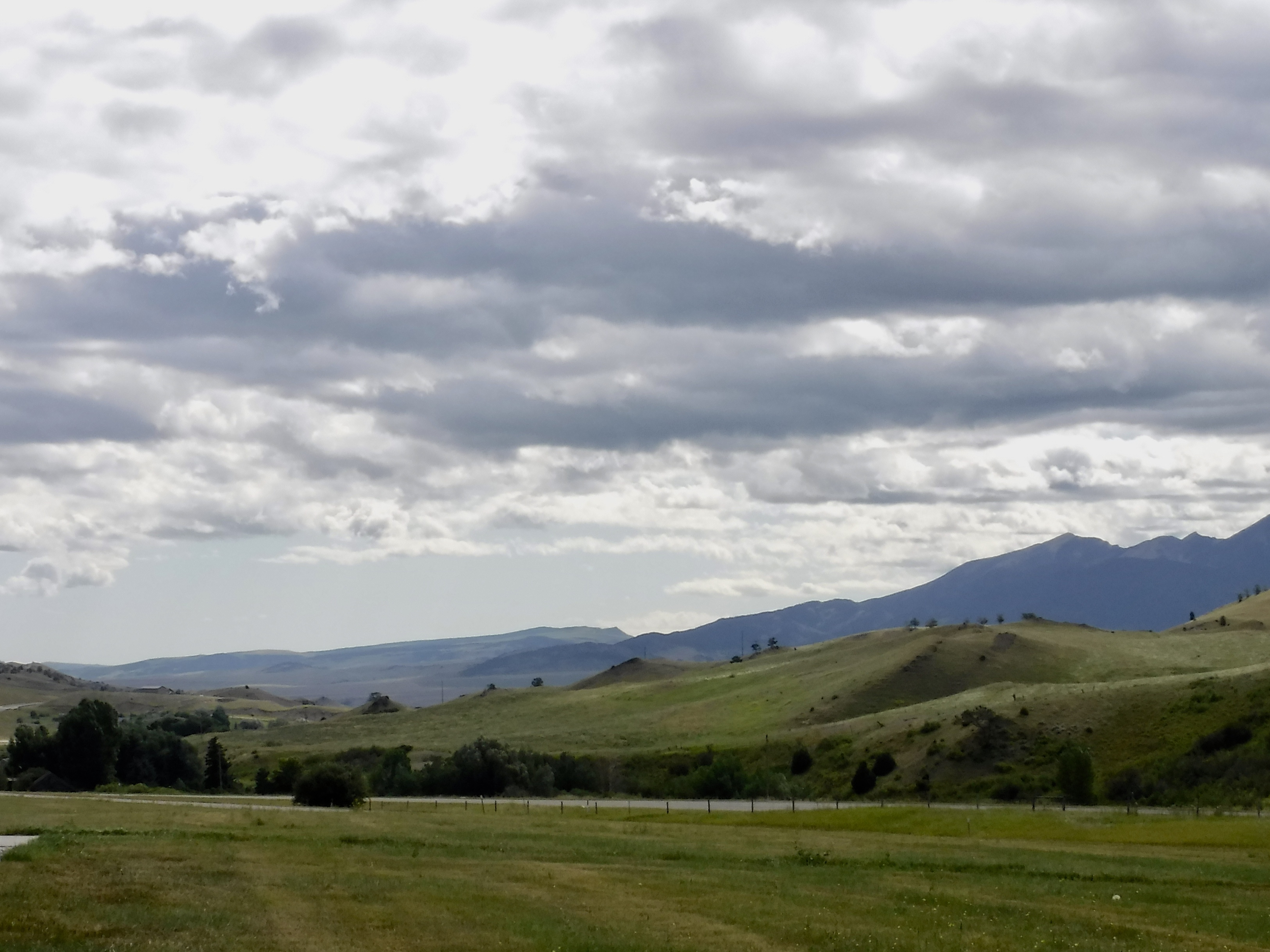
This photo was taken near the spot where Clark crossed into the Yellowstone watershed. The right to left slope in the foreground marks the valley into which he descended to locate the Yellowstone River, about 10 miles away. At this point, he was about 40 miles north of Yellowstone Park at the Wyoming/Montana border.
Interstate 90 generally follows the route Clark took from Three Forks to Billings, a few miles from Pompey’s Pillar, where I stopped a little more than two weeks ago on my way west. During the past three weeks I have covered Clark’s1806 return route from Traveller’s Rest, but I ended up doing it on three separate days, twice going the wrong direction. Nevertheless, today’s ride from Three Forks to Billings completed the loop I wanted to make of the expedition’s entire 1804-1806 travels, with three exceptions: the Missouri Breaks where I had hoped to canoe, the dirt/gravel road at Lemhi Pass, and Lewis’s 1806 diversion into Blackfoot country following the Marias River while Clark was on the Yellowstone.
Clark’s group traveled by foot for three days along the Yellowstone before he found cottonwood trees big enough to make dugout canoes. From July 20 through July 24 he and his party halted to make two small canoes, which they lashed together to provide greater stability. As Clark pushed off in his canoes, he split his party again, sending a sergeant and 3 men with the remaining horses overland to try to reach the Mandan villages before the rest of the expedition regrouped and arrived there.
Two days after the men with the horse sset off, Indians stole the herd and the four men were forced to return to the river, construct buffalo-hide covered bull boats and attempt to catch Clark in his canoes. They eventually did, but not until Clark had reached the Missouri river on August 3, three weeks after he left Three Forks, and was waiting for Lewis.
Lewis, meanwhile, after his escape from the rightly irritated Blackfeet, slowly made his way down the Missouri with the rest of the party, nearly a week behind Clark. On August 11, while Clark waited patiently at a camp on the Missouri, Lewis and one other man, who happened to be blind in one eye and terribly nearsighted in the other, went ashore to hunt elk. Lewis, dressed in buckskin, apparently looked like an elk to the visually challenged hunter, who mistakenly shot Lewis, sending a ball through both buttocks. Lewis at first thought they were being attacked by Indians, but they soon discovered the mishap was a friendly fire incident.
The next day, Lewis’s party caught up with Clark’s group and the expedition–all 33 persons and a dog–were once again united and continued their journey, though Lewis was in considerable pain and could not walk or sit, forcing him to ride face down in one of the large pirogues for more than a week.
At Billings, Interstate 90 turns south toward Wyoming, and I followed its path. My connection to the Lewis and Clark Trail is now severed, though I’ll continue over the next couple of postings to track them until they reach St. Louis. As I exited Montana and entered Wyoming, the Big Horn Mountains, still with traces of snow at the highest elevations, rose on my right side. I can still see them from my location this evening in Buffalo, Wyoming.
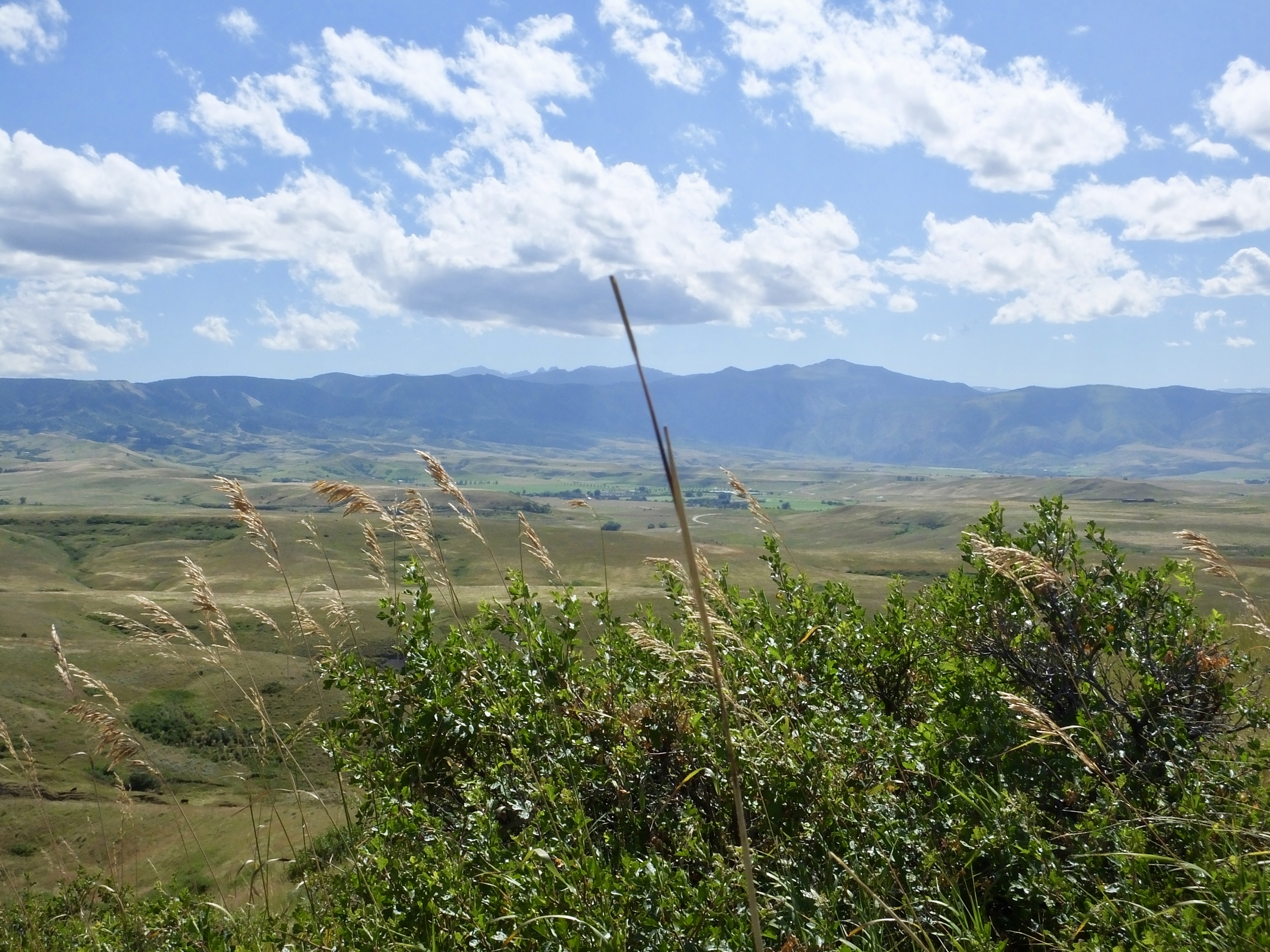
The Big Horn Mountains rise in the distance.
Tomorrow I’ll reach a friend’s ranch just outside Laramie and stay there until Friday. Linda, who owns and operates an 8,000 acre ranch by herself, does not yet have internet or cell service at her beautiful but isolated house. I’ll keep writing while I’m there and will post those pieces Friday after I return to the 21st century. I’ll continue to write and post until I return to Maggie Valley in about 11 days.
In the meantime, here’s another link to the map I started this blog with for those who to try to make geographic sense of their and my trips.
ROUTE MAP: Click here for a PDF map of the entire Corps of Discover route. This map opens in a new window.
 hdriderblog