
GRMA Day 6: Flat and Hot
Click here for the GPS Tracking Map.
Following a three-day family hiatus, I’m back “on the road again” and today, after six days and more than 1, 600 miles I finally got to see the Rockies, where I’ll spend the next four glorious weeks. Tomorrow I’ll ride roads that go into and up and down the southern part of the range. I’m looking forward to new views and new pavement.
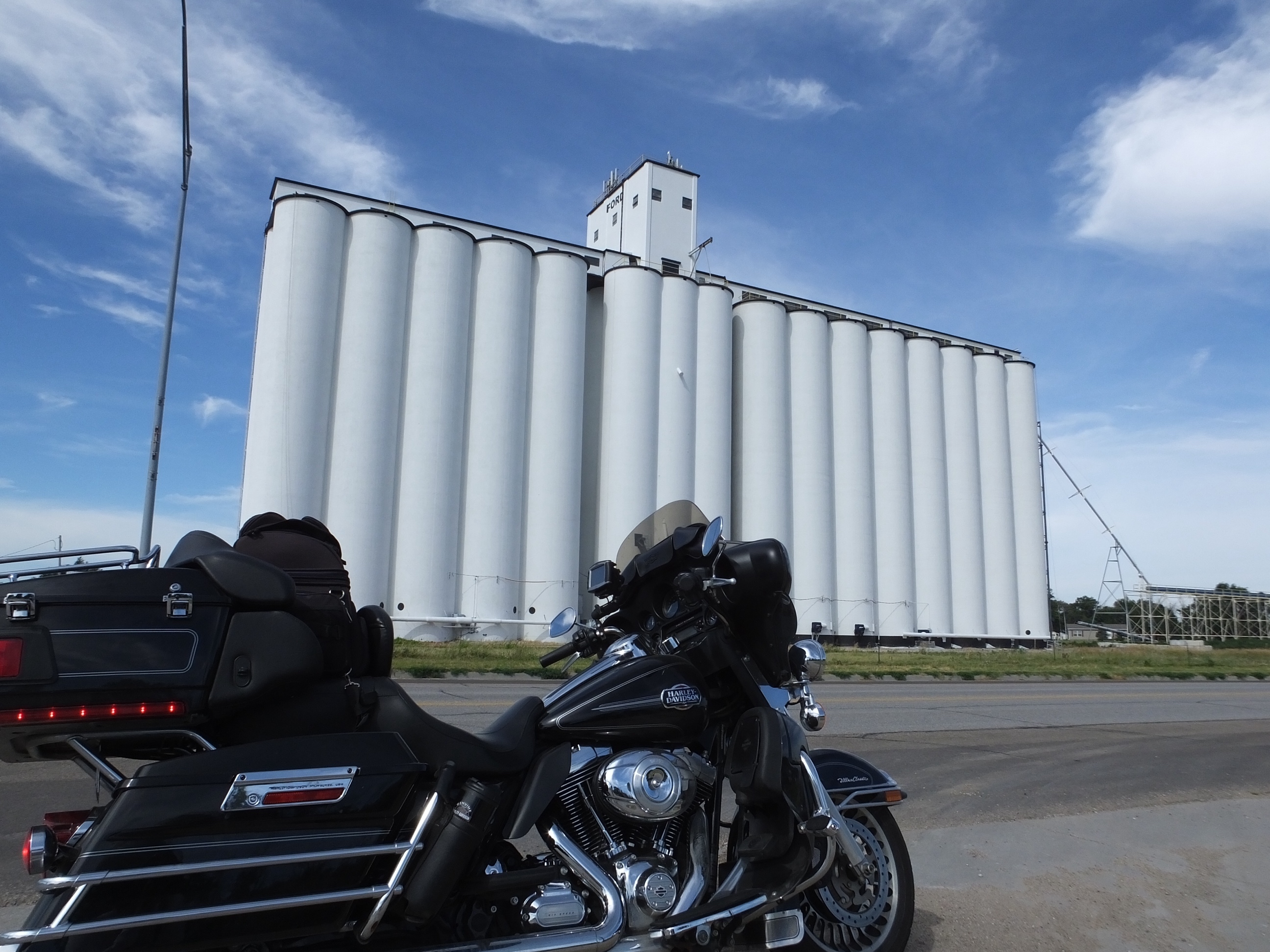
Grain elevators are the sky scrapers of the plains. They break the horizon everywhere in western Kansas.
I suppose I should be kinder to the state where I grew up, but Kansas is boring. Straight roads and endless fields planted with various crops (wheat, corn, alfalfa, beans, etc.). And a plethora of pungent feed lots where witless cattle stuff themselves in final preparation for their McDonalds destination.
There’s no other way to describe today’s ride besides flat. Mile after mile I could see harvested and unharvested fields and the shimmering ribbon of road stretching out endlessly in front of me. Yet despite its apparent flatness, I climbed more than 3,000 feet today and find myself at about 4,800 feet in Pueblo which lies at the foot of the Rockies.

In Lamar, Colorado, just after leaving Kansas.
The other descriptor for today’s ride is hot. No, make that HOT. The morning ride wasn’t bad but by noon the temperature had climbed above 90, and as I crossed from Kansas to Colorado I saw temperature signs in triple digits. I wore my new, long-sleeve, white shirt today, and I think it helped. It evaporates moisture quickly for better cooling and reflects the sun well. Anyone doing long distance riding in the heat should consider one. I also drank about three times as much water as I usually do. But I was still pretty beat when I rolled up to my abode for the night.
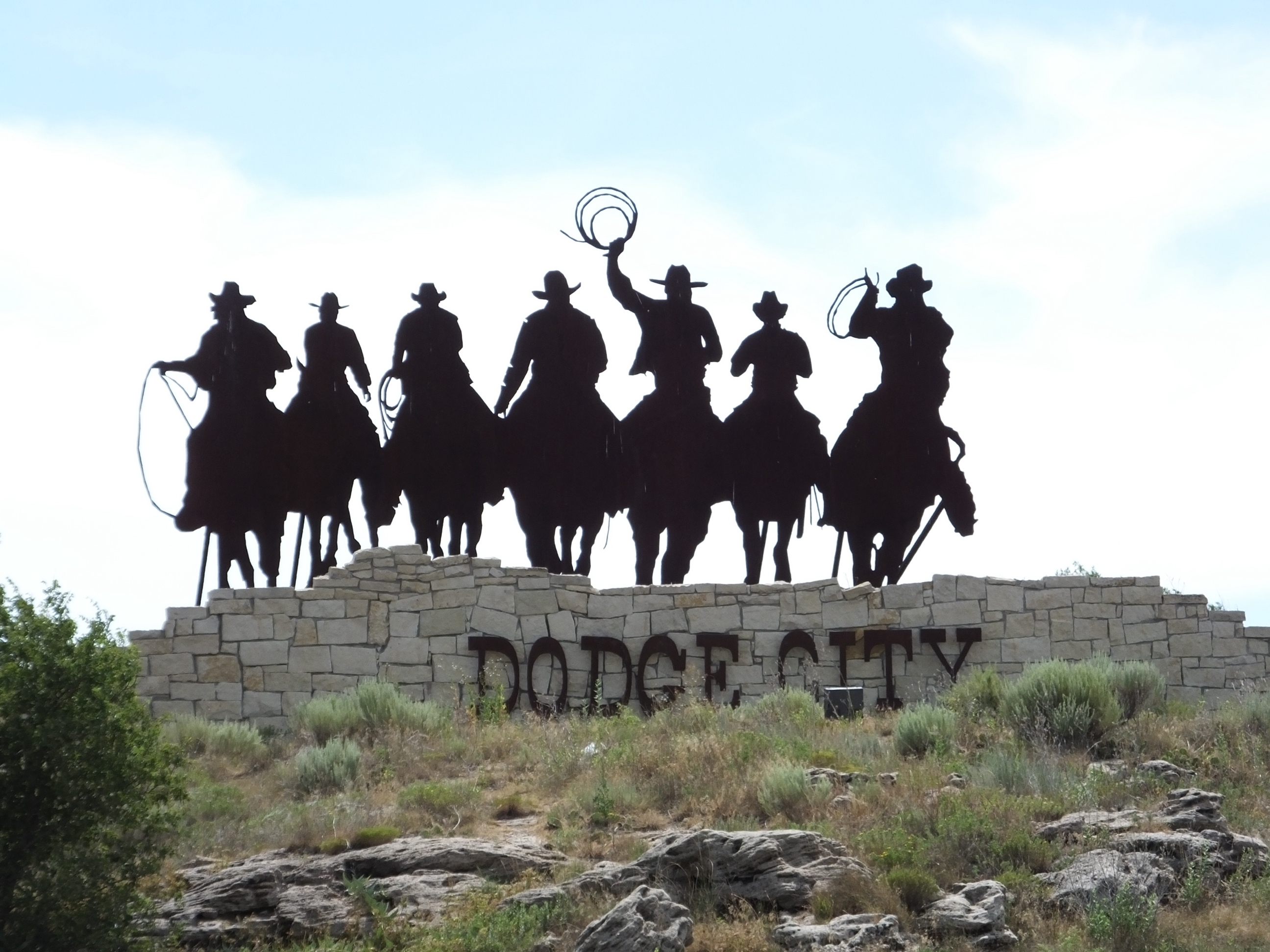
My Harley’s slow, but I could outrun these guys.
I spotted several small museums and historic sites along the way that I would have stopped to visit had they been open, but all of them were closed on Sunday. At historic Fort Dodge, about 12 miles east of Dodge City, I stopped and walked around briefly but none of the public buildings were open. Initially an outpost on the Santa Fe Trail, the government converted the post in 1890 to the Kansas Soldier’s Home, providing living quarters for retired veterans with limited resources and often no family. Many of the old buildings built when it was 19th century outpost are still used today, and most of them are named for former generals and admirals (e.g. Grant, Custer, Eisenhower, Nimitz, Halsey). I would liked to have spent an hour perusing their museum and walking around learning more about this forgotten piece of history. I think some of the old vets would have stories to tell. Maybe another time.

Good pie, good food, friendly service. I liked the Ranchito Cafe.
After two misfires looking for pie, I found a delightful piece of Oreo Pie made by the owner of the Ranchito Cafe in Lakin, Kansas. And the pie was so good I ordered the Sunday special for lunch after I ate the pie. Lunch was also very good. An ice-water refill for my water bottle and I was on my way again headed out of Kansas.
Tomorrow I should end up in Las Vegas, New Mexico, and the weather looks good. Mountains at last.
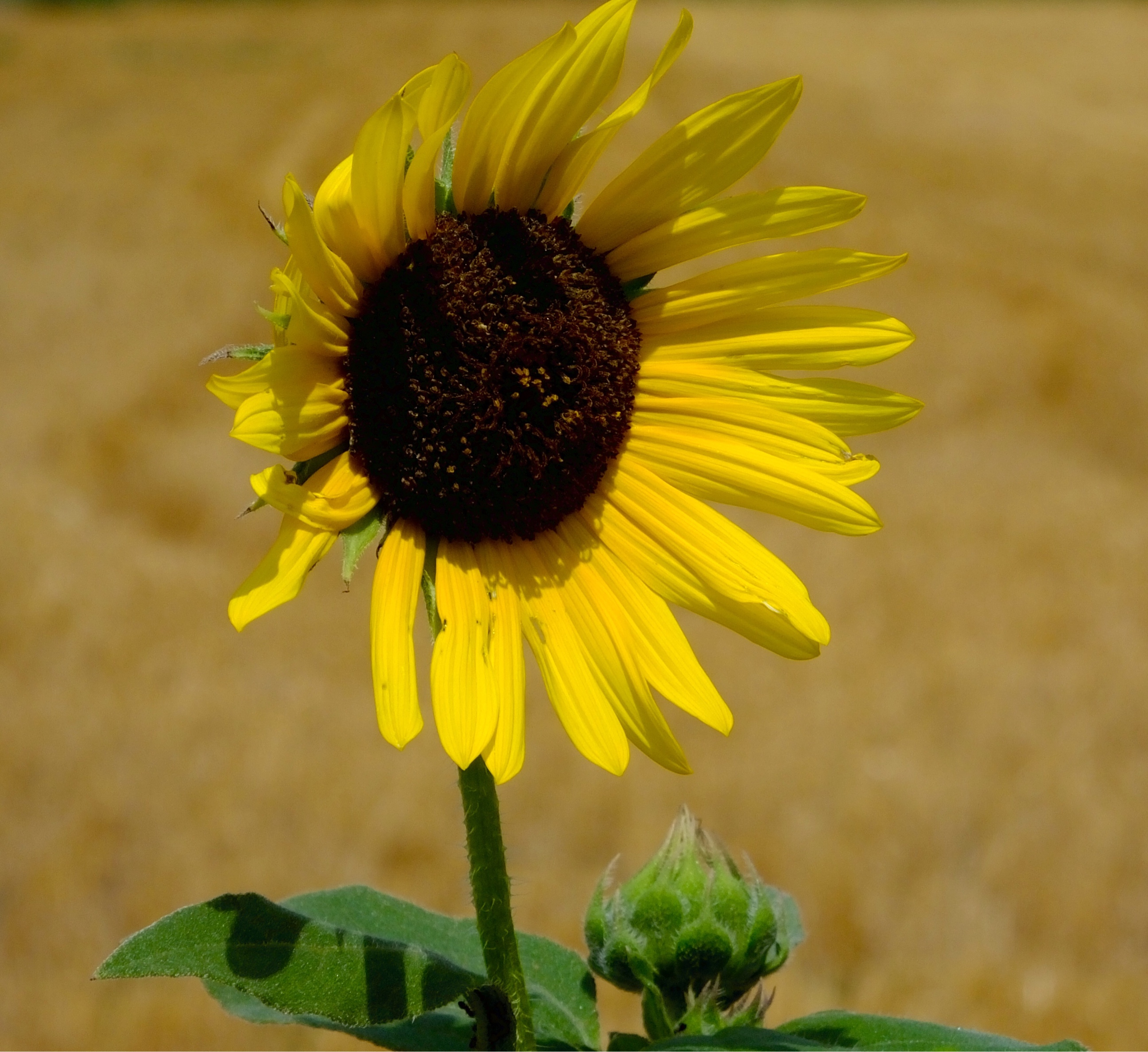
A sunflower and a background of wheat. Can’t get more Kansas than that.
GRMA Day 5: Day Off
Today may be the least active day of this trip. I spent a couple hours helping my brother, Jon, install a window that should have taken 20 minutes and did some laundry. Not much else to report.
The window replacement would have been easy if the replacement window had been the same size as the original, but it was 1/2″ taller so we ripped out the sill, cut the support studs down 1/2 inch, created a new sill and then put the window in. But it finally got done. Nothing is ever easy. (That’s been my mantra for years.)
So, lacking any activity to report today, I’ll write briefly about the Rocky Mountains, at least as much as I remember from the scattered reading I did last winter as I prepared for the GRMA.
The interesting thing about the Rocky Mountains, geologically, is that they’re in the middle of a continent instead of on an edge like the Alps, the Andes, the Pacific Coast Range or the Sierra Nevadas. Even the Himalayan Mountains are on the edge of a continent (Asia) and a subcontinent (India) where two tectonic plates are colliding. So why did the Rockies rise in the middle of the North American continent?
Although I don’t fully understand the geologic processes the experts painstakingly describe, the answer to the above question seems to lie in the angle at which two tectonic plates under the Pacific Ocean (the Pacific Coast Plate and the Farallon Plate) were subducted under (slid underneath) the North American Plate, whose western edge is just off the coast of North America. Geologists disagree on why the angle was shallow, but they generally agree that the shallowness caused the uplift to occur more than 1.000 miles from the edge of the plate.
I took this picture of the northern Canadian Rockies two years ago in Alberta on the way back from Alaska. I’ll be passing by it again in a few weeks.
The uplift generally occurred in an area that had once been a seafloor for hundreds of millions of years and thus had hundreds of feet of sedimentary rock (filled with sea-creature fossils) that served as the peaks of the ancient rockies until much, but not all, had been eroded, leaving the lower level, and harder metamorphic rocks behind. The Rockies contain all three general types of rock (igneous, metamorphic and sedimentary) and when I point my camera at the gorgeous scenery over the next four weeks, I’ll be photographing rocks created anywhere from more than a billion years ago to several thousand years ago. If I were to go to the hot springs and mud pots of Yellowstone National Park I would see rocks being created today. This adventure is going to be a dizzying, colorful, geologic kaleidoscope.
All this tectonic activity occurred during the Laramide Orogeny, about 50 to 85 million years ago. (Orogeny, I learned, comes from the Greek “oros” [mountain] and “genesis” [creation]. All mountain building events are known to geologists as orogenies.) During tens of millions of years, as tectonic plates slid under/over one another, the earth’s crust in the middle of North America buckled and thrust inexorably upward, rising more than 20,000 feet above sea level. During the next tens of millions of years, ice ages and the glaciers they brought carved and sculpted the mountains and the valleys. In addition, tens of millions of years of weathering and erosion removed rock from the mountains and filled in the basins between ranges and subranges creating high plains, reducing the height of the mountains by more than a mile.
Geologists have divided large mountain ranges like the Rockies into smaller ranges, subranges and sub-subranges, so if I refer to, for example, the “Bitterroot Range” or the “Sangre de Cristo Range” I’m referring to a range within the larger Rocky Mountain Range. For a brief time when I’m riding in northern British Columbia I will actually leave the Rockies and spend a day or two in the Pacific Coast Range.
It’s all fascinating stuff, I think, and I would love to take this ride with a geologist, a naturalist and and historian on bikes beside me to help me understand what I’m seeing. But, I’ll try to stop at the many roadside exhibits, professional displays and museums along the way to fill in the knowledge gaps as best I can.
I’m ready to “rock” and “roll.” Tomorrow, it’s off to Colorado and the beginning of the Rocky Mountain loop ride.
GRMA Day 4: New Tire & Family Time
No riding today, so no GPS Tracking Map.
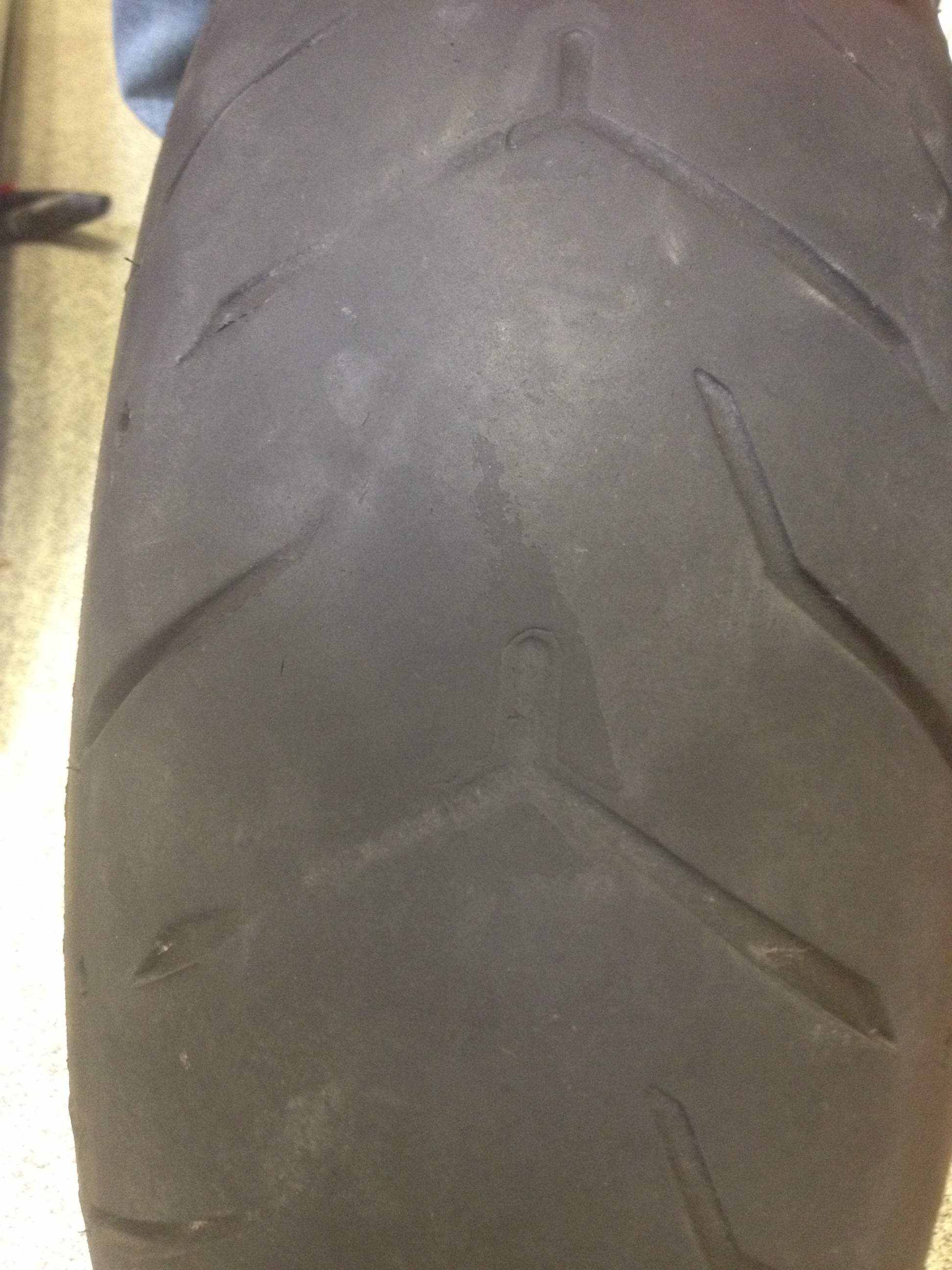
Not much tread left on the tire that carried me through the deluge in the Ozarks yesterday. That could explain why the back end seemed a little unstable at times.
I exaggerated in yesterday’s post when I said my rear tire had 1/32″ of tread left. It was nearly bald when I brought the mud-spattered Ultra Classic to Alef’s Harley Davidson this morning in Wichita. But now I have a new tire with 9/32″ of tread, and that should get me up and down the Rockies to northern Canada and back. I’ll keep a watchful eye on the front tire during the rest of the trip, but I’m hopeful it’ll last until I’m back in NC.
The sharp-eyed mechanic at Alef’s found a bad rear wheel bearing (that explains the whirring sound I heard as a leaned into the mountain curves), so I had them replace both rear bearings. It’s not a good idea to have the rear tire lock up with a siezed axel when negotiating steep and twisting mountain roads (or any roads for that matter). The new bearings were not an expensive fix ($80) and I’m glad he discovered it before it became a serious problem.
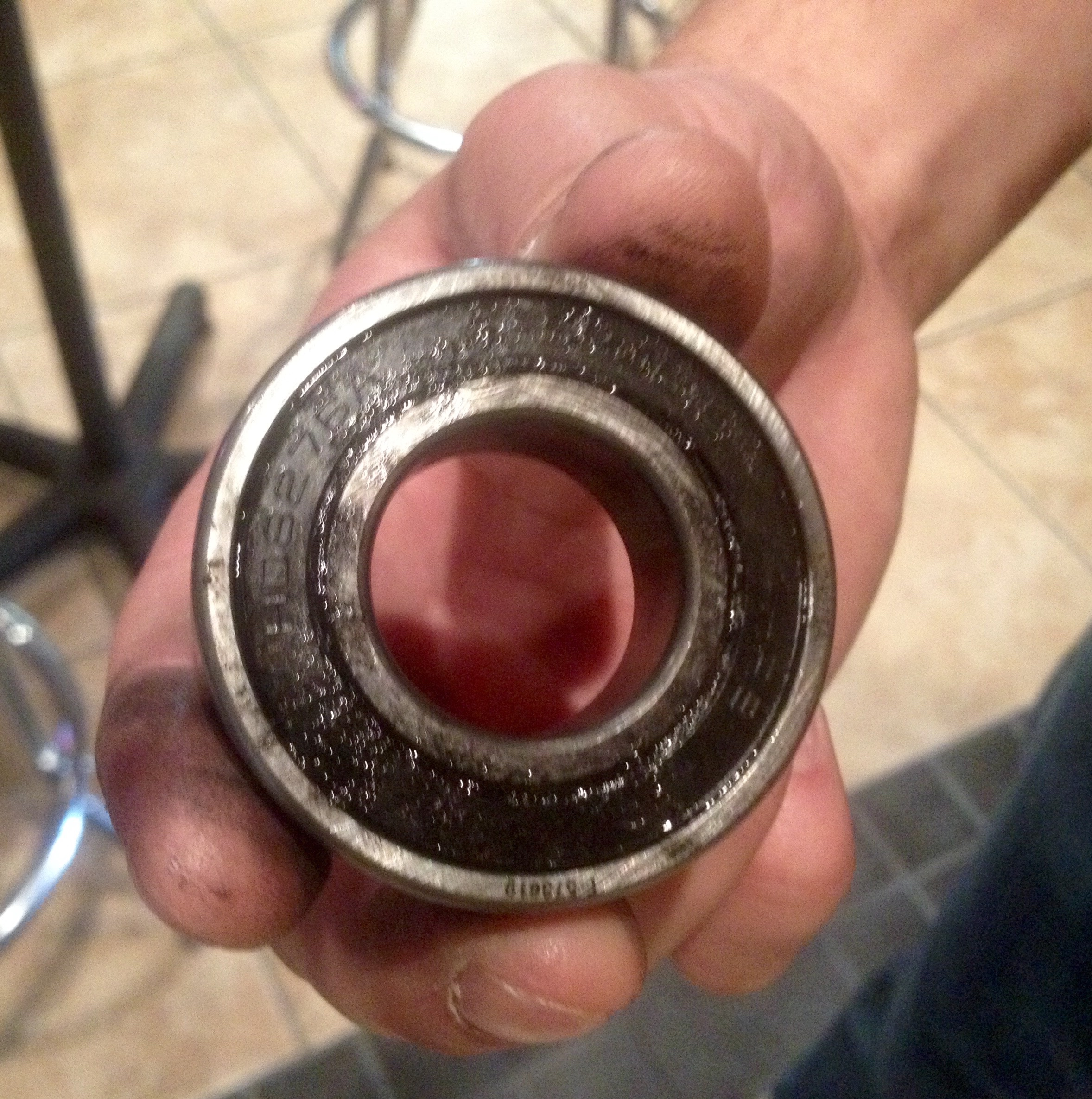
You can’t see the pitted rollers, but you could feel them. A bearing with bad seals is a bad bearing.
Waiting for the tire change and wheel bearing replacement, I had time to shop. Friend Dan had bought a really cool shirt before visiting us in North Carolina last month, and I got one just like it. Long-sleeved and thin, white material for sun protection and hot weather riding. Should come in handy in Kansas, southern Colorado and New Mexico. I also found a pair of riding gloves that I’ve replaced every two years for eight years, so I got a pair of those also. I don’t know if it matters to the way the bike handles, but my wallet’s weight dropped dramatically as I completed my motorclothes purchases at the dealership. Clearly, if I’m talking about shopping, there isn’t much to report on the GRMA motorcycle front today. My apologies, but family stops are important, too.
This afternoon I went to see my brother Jon’s new property. He’s moving out of a condominium complex which he believes to have an idiot infestation and onto 10 acres with two houses. He calls it “the ranch.” But our friend Linda has 8,000 acres in Wyoming that she also calls a ranch. I guess it’s all relative. He’s got some work to do to put the houses in the shape he wants them, but he enjoys that kind of thing and has time to work on them. I offered to help complete all the repairs and various fixes tomorrow, but he’s only going to let me help put in a new window.
I think tomorrow I may write a little about what’s coming up during the next four weeks on the road while I circumnavigate the rugged Rockies.
Stay safe.
GRMA Day 3: Arkansas Mountains and Rain
Click here for the GPS Tracking Map (Good for 7 days) Zoom in to see more specific locations. Click on any of the reference points for more information. Remember that the GPS only records where I was every 10 minutes; it may not follow roads exactly.
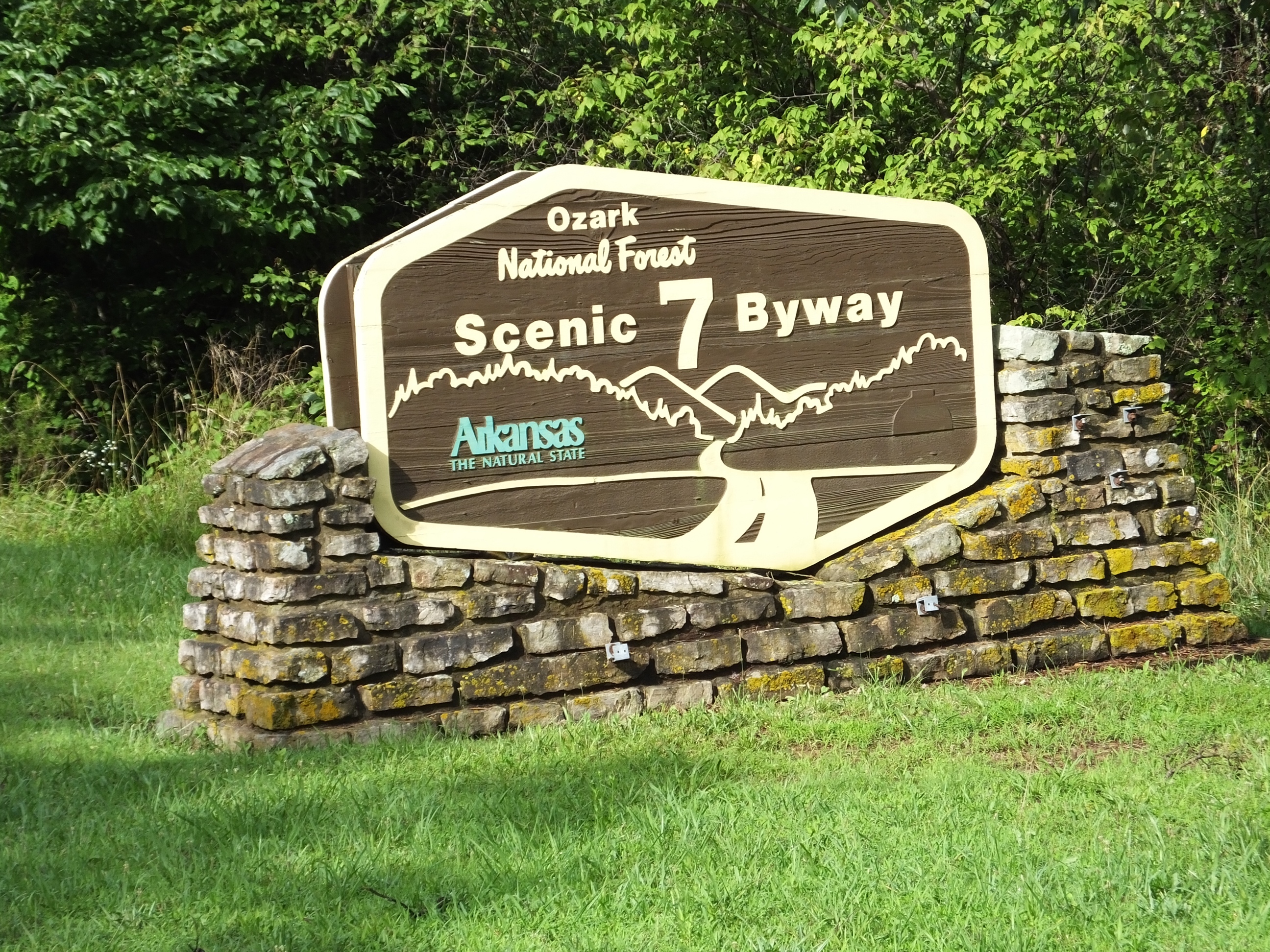
This road should be on everyone’s bucket list. Not dramatic, but very beautiful.
Knowing that today’s ride of nearly 500 miles would be longer than the first two days, I hit the road at 7 a.m. to get an early start. Good idea. After riding 40 miles along I-40, I turned north on Arkansas Scenic Highway 7, a road I’ve ridden several times and will ride again whenever I get the chance. It’s a beautiful ride and I highly recommend it if you’re in the area. The sky was overcast all morning as I wound my way through the Arkansas Mountains, but rain didn’t seem to be imminent, so I didn’t worry about it.
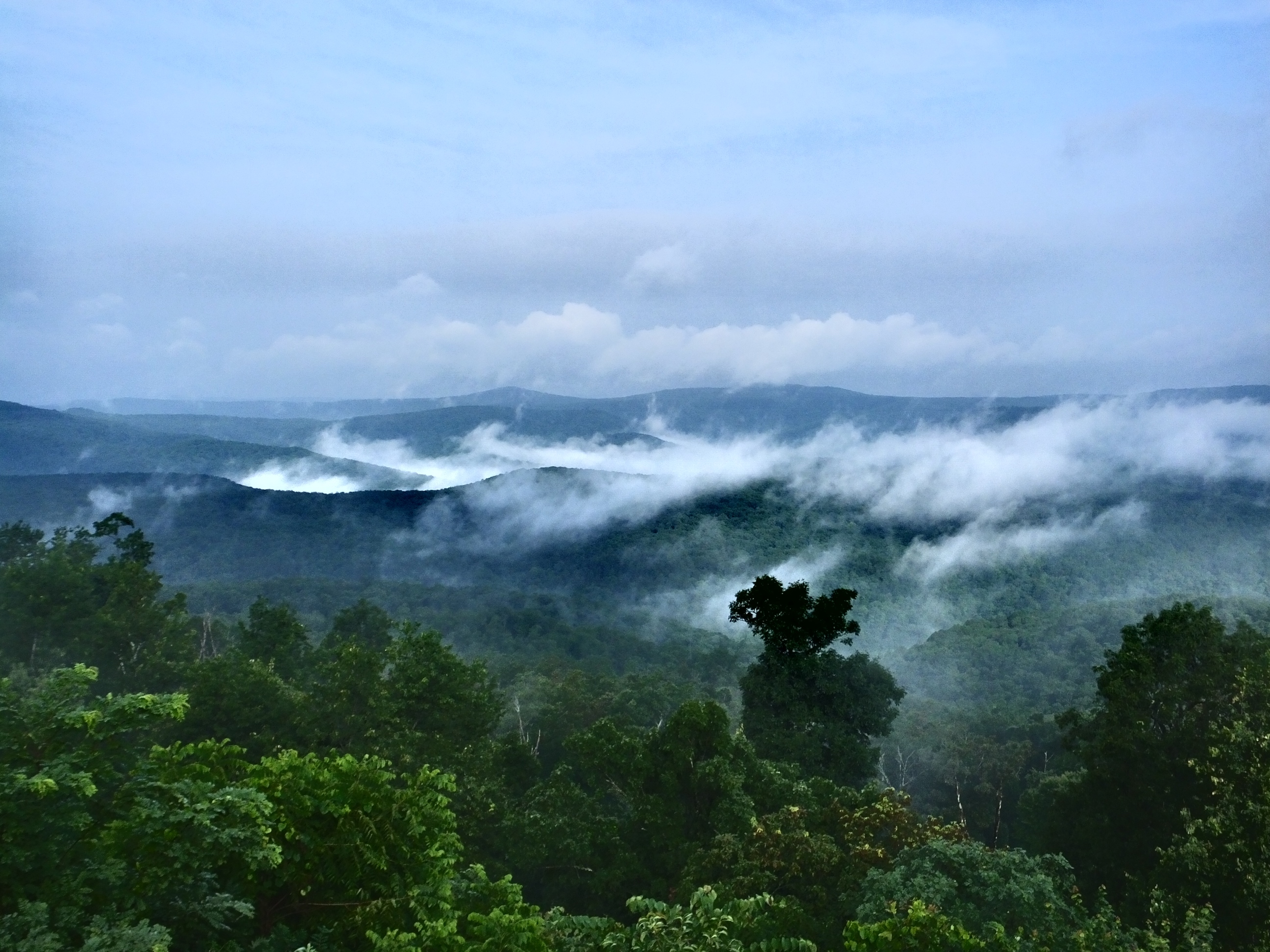
The early morning fog lifts off the Boston Mountains in the Ozark National Forest.
The Boston Mountains of north-central Arkansas, through which runs Arkansas 7, are part of the Ozark Plateau, which is part of the larger Ouichiita Uplift and were created about 300 million years ago. They are part of the highest elevation between the Appalachians and the Rockies, which is also known as the interior highlands. Enough geography. Suffice it to say that they are beautiful and make for great motorcycle riding.
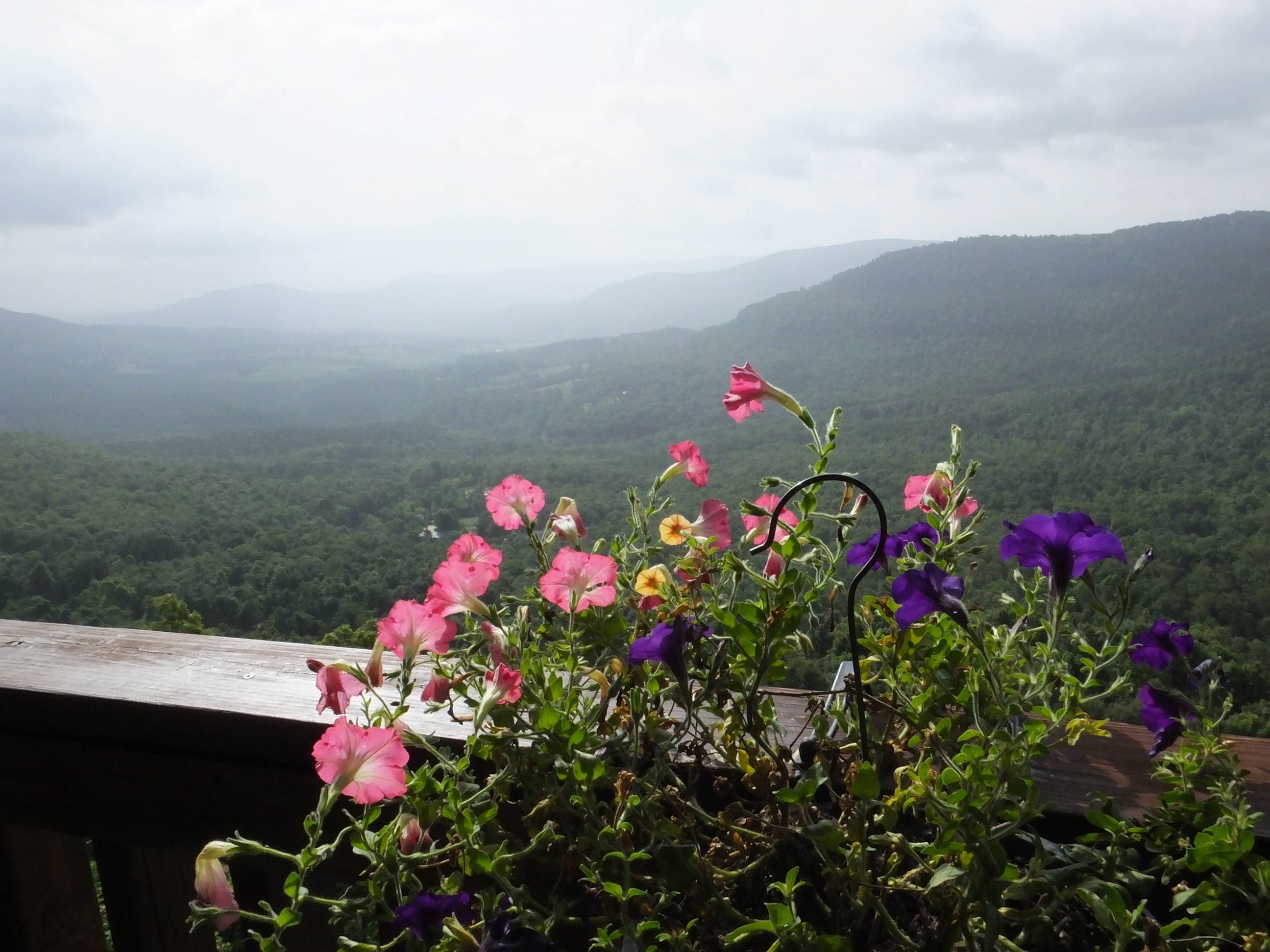
Pie, coffee and a gorgeous view at the Cliff House Restaurant.
Along the way, at about 9:30, I stopped at the Cliff House Restaurant, an establishment I’ve frequented in the past that I knew would have pie selections besides coconut cream. And it has one hell of a view of the deepest canyon in Arkansas. I had eaten the “Company’s Coming” pie (the state pie of Arkansas) before and knew that it would be too heavy for a 9;30 brunch, so I opted instead for Apple Pie, which, according to the menu, is so good it will make you want to slap your grandma. Hey, I can’t make this stuff up. That’s really what the menu says. It was good, but I finished it with no inclination to slap either of my deceased grandmothers.
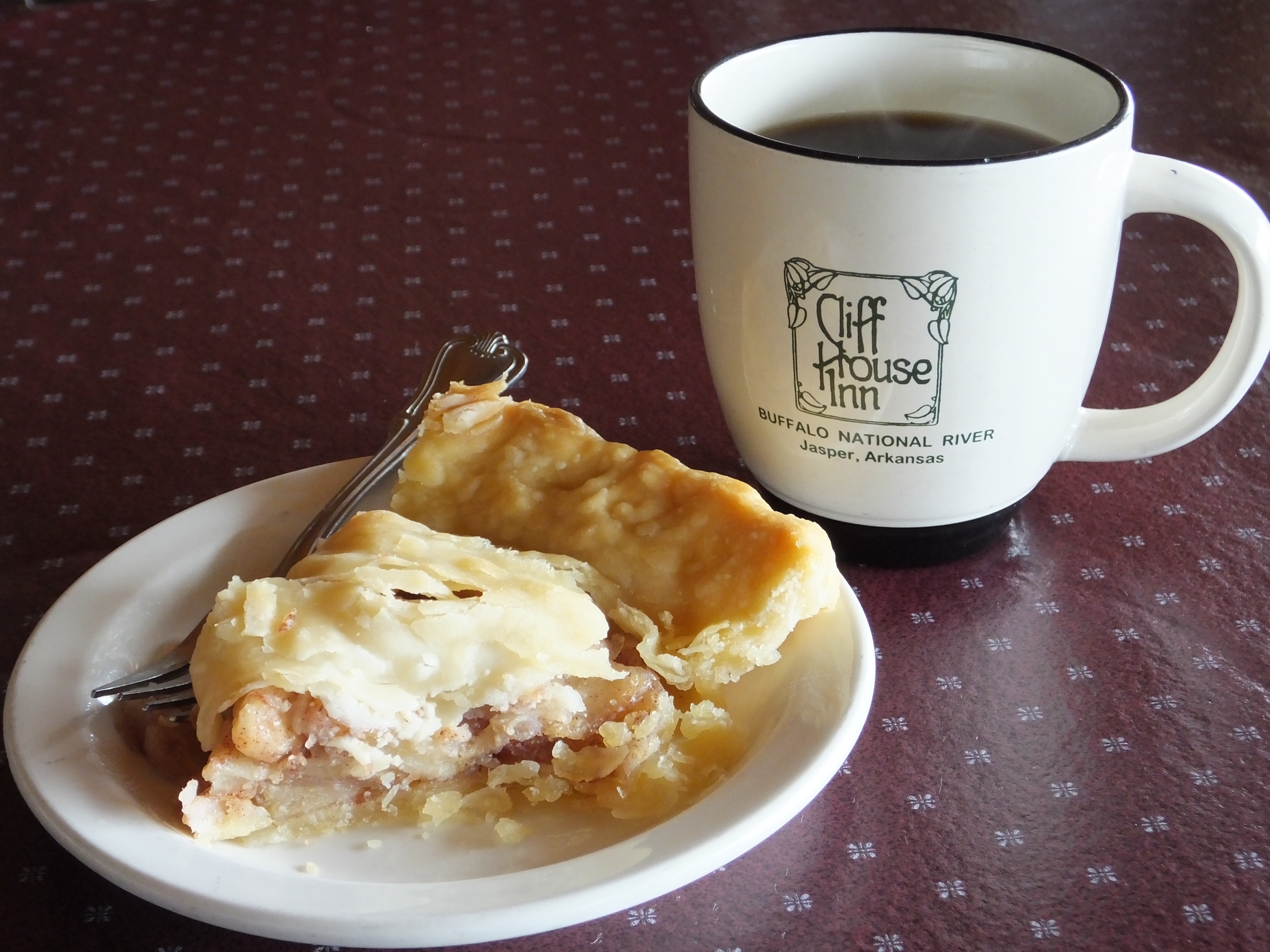
Finally, something besides coconut cream.
Following Arkansas 7 nearly to Missouri, I headed west for another 50 miles or so before darting northward to the Show Me State. The Show Me State showed me rain. About two miles after I crossed the Arkansas-Missouri border I had my first drops of rain and suited up before the real rains began. Weather forecasters use colors in the radar images to show rain severity. Green being the least rain and red being the most rain. Missouri showed me RED rain for about an hour and orange rain for another two hours after that.
Everything was OK except for the fact that when I put on my rain suit I forgot to cover the pack sitting on the passenger seat behind me. No real damage done. Clothes were in plastic bags. iPad was protected. But my official US Passport now has a warped cover that looks like a DeLorean with the doors open. It will still get me across the border, I think.
The rain started when I crossed into Missouri, and it stopped (at least temporarily) when I crossed into Kansas three hours later. I had some additional green rain going west across Kansas to Wichita but not too much. And by then I had covered my soaking wet pack with the rain cover. Can someone say, “Yes, but the horse was already out of the barn.”?
My dear mother had a hot pot of homemade soup ready when I arrived in Wichita after 480 miles and 10 hours on the road. So the day ended well.
Tomorrow I’ll get a new rear tire. Oh, did I mention I was riding in Red Rain with a rear tire that only has 1/32″ tread? Well, it wouldn’t be an adventure if there wasn’t a little butt-cheek clenching along the way.
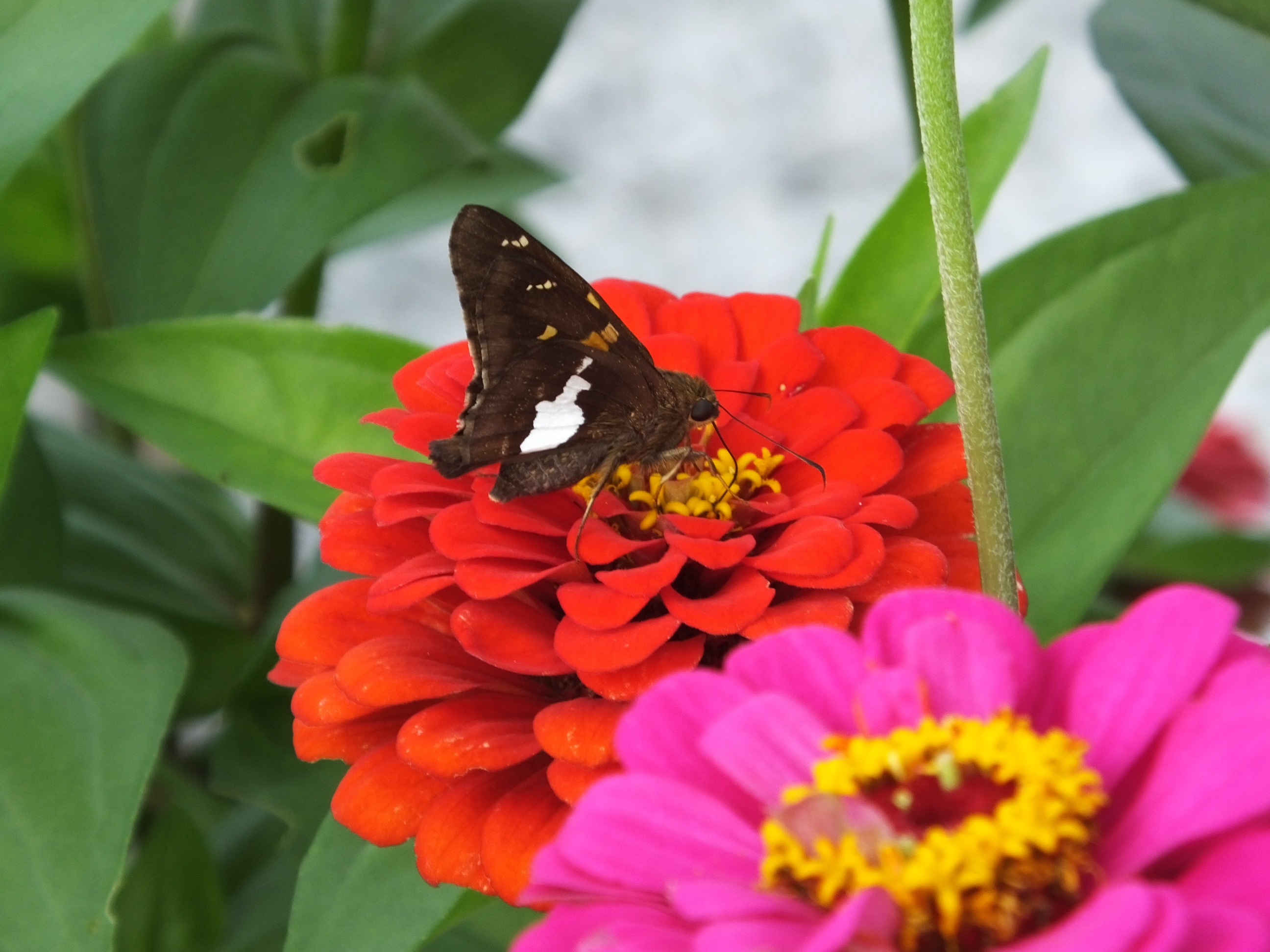
Just because I liked the picture.
I’ll be in Wichita for two days and will head west to Colorado on Sunday. But I’ll continue to post while I’m fulfilling filial responsibilities.
GRMA Day 2: Flat. Land.
Click here for the link to GPS Tracking Map. (Good for 7 days) Zoom in to see more specific locations. Click on any of the reference points for more information. Remember that the GPS only records where I was every 10 minutes; it may not follow roads exactly.
Today’s ride may have been exciting to soy bean farmers and rice growers, but for a motorcyclist whose adrenaline is pumped by twisties, blind curves, and roller coaster roads, today’s ride rated a 9. On a 100-point adrenaline-jockey scale. Of course I realize that not all roads can be the Tail of the Dragon, the Bear Tooth Highway, or the Icefields Parkway and I know that getting from point A (Maggie Valley) to point B (the Rocky Mountains) involves considerable stretches of flat land, so today I sat back, put on the cruise control, and looked for interesting sights along the way.
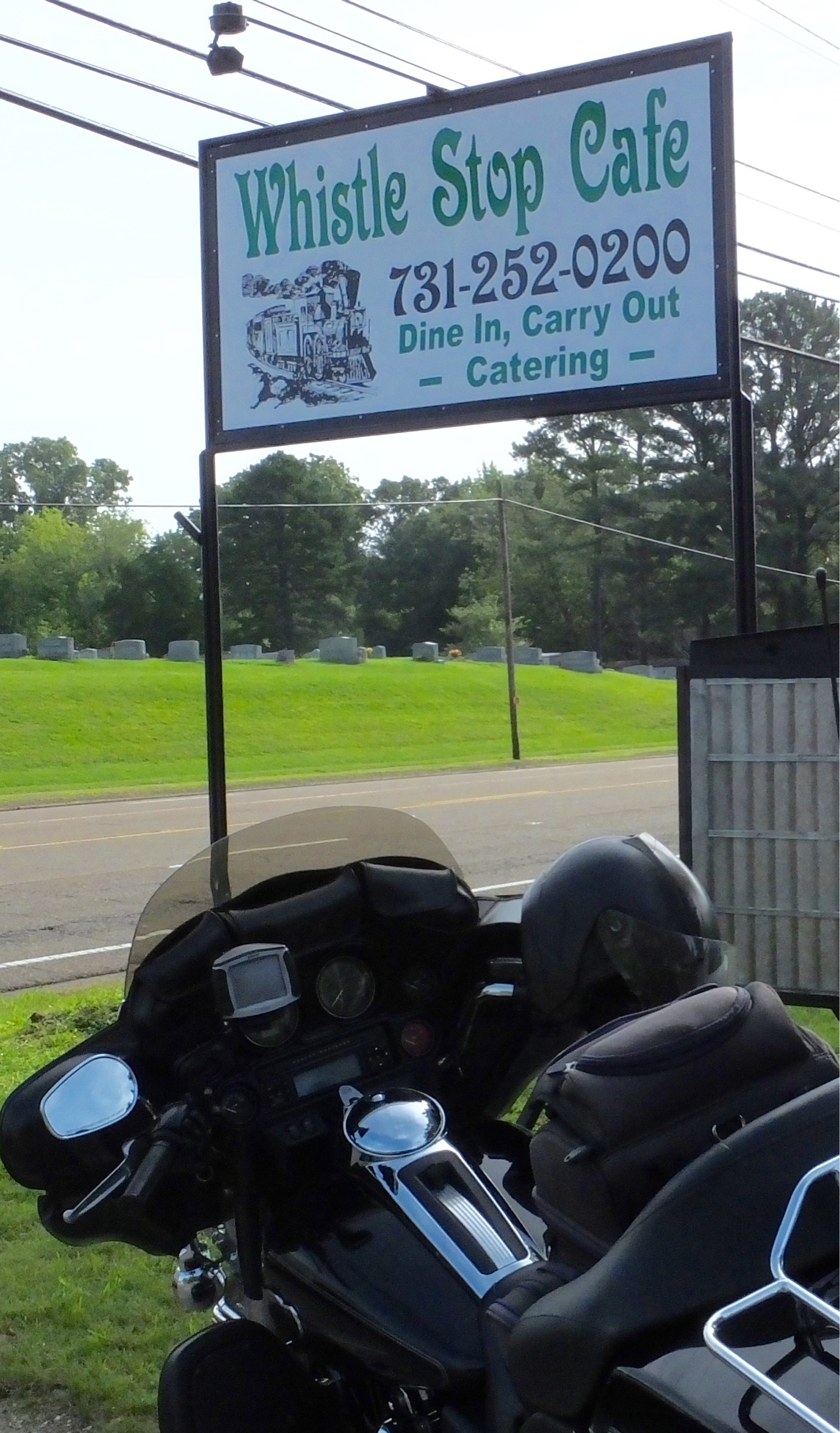
Inside the Whistle Stop, crops and politics were the talk of the table.
I had to ride on an interstate highway for about 40 miles (I-155), but that solved the problem of crossing the Mississippi River without going through Memphis, the other 330 miles involved motoring through farm country and small towns that hark back to earlier days. Rolling through the countryside meant rolling past dirt race tracks that roar Friday nights in the summer and small-town football fields that transform to Friday-night people magnets in rural America. And it meant stopping for morning coffee at the “Whistle Stop Cafe” where local decision-makers in over-alls and cowboy boots worked on international, national and local political issues without actually solving any of them. But not to worry, they’ll no doubt be back tomorrow morning and the mornings after that to continue to cuss and discuss.
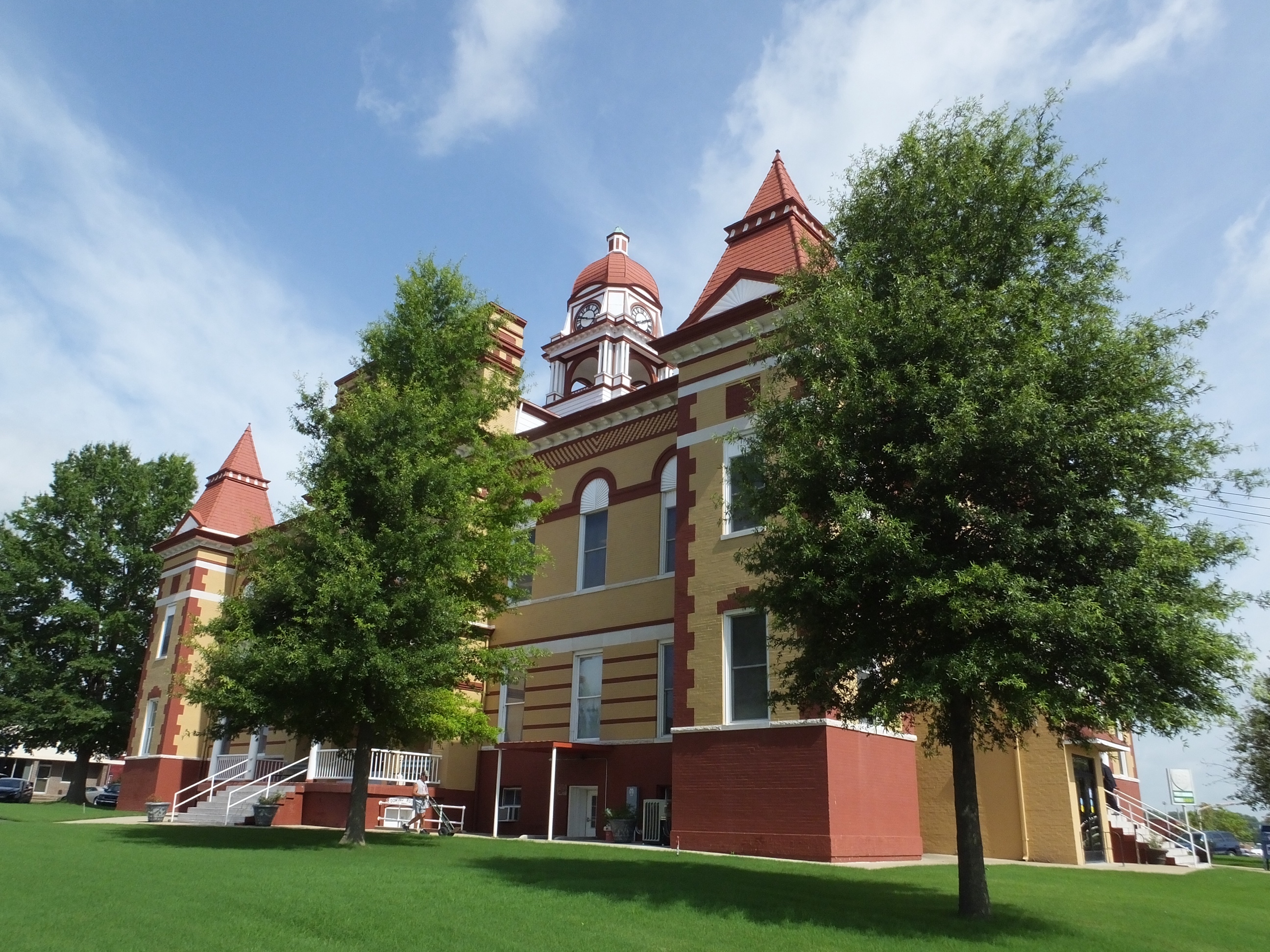
One of Tennessee’s 99 county courthouses. This has to be one of the best.
And it meant taking time to walk around the courthouse square in Trenton, county seat of Gibson County Tennessee and home to about 4,200 mostly happy people and their somewhat successful efforts to keep a 19th century era downtown alive. I even applauded my congratulations as a bride in long dress and carrying flowers and her grinning groom pranced down the courthouse steps. And it meant continuing a journey along Tennessee’s oldest cross-state highway, which I picked up in Sparta about mid-way through yesterday’s ride. Known as the “Memphis to Bristol Highway” (or, I guess Bristol to Memphis depending on which way you’re going), Tennessee State Route 1 covers nearly 540 miles as it connects the southwest corner of the state to the northeast corner. As it turns out, the first half of today’s ride gave time to reflect on what makes small-town America special.
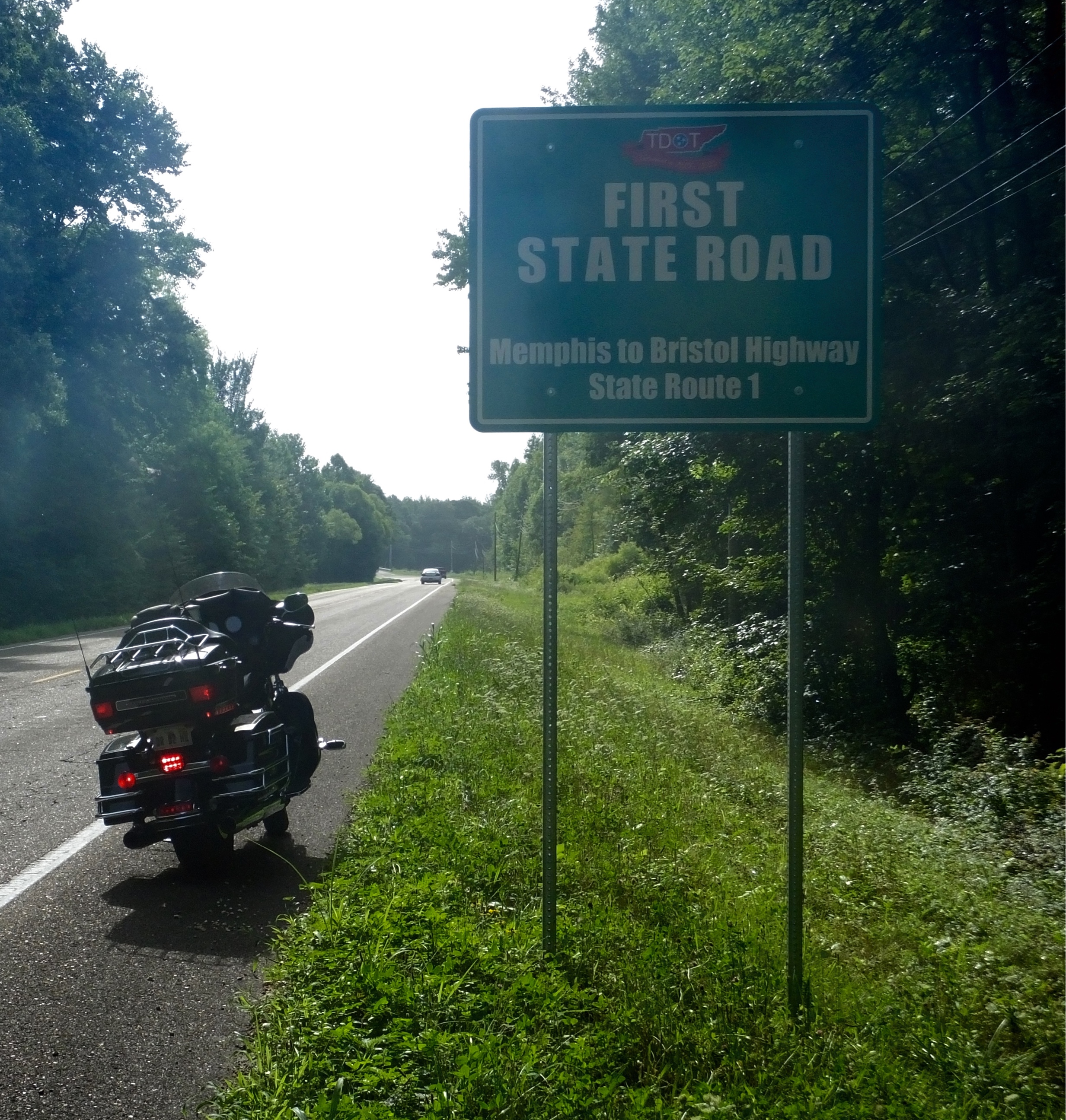
Interesting to consider how many cars made this trip before the Interstates were built. Maybe even a few early generation Harleys.
As flat as west Tennessee is, eastern Arkansas is even more billiard-table like. And the green felt has been replaced by acres and acres of rice. Arkansas, it turns out, produces more rice than any other state, accounting for nearly 50% of the U.S. harvest. Five additional states tally nearly all the rest.
Arkansas “cafes” presented a vexing problem as I searched almost in vain for lunch-time pie. The first three “cafes” had the temerity, the unmitigated gall to admit that they didn’t have any pie, offering instead such sorry replacements as cobbler or cake. “No thanks,” I said firmly. “My heart’s set on pie.” Finally at the fourth establishment bearing the surname “Cafe,” I finally located the elusive pie. That’s the good news. The bad news was that all they had was coconut cream, which I had yesterday. Fearing that was the best I would do in my Quixotic pie quest, I ordered a slice and some strong black coffee to wash it down. I hope this isn’t going to develop into a pattern. Man does not live by coconut cream alone.
I got to my motel in Conway a little early today because it was a short ride, and I used the extra time to solve yesterday’s picture enlargement problem. Well, not really solve it, but at least I think I have a work-around. It’s a good thing the City of Jacksonville let me practice HTML coding skills for 10 years, because the solution to the problem, at least for now, is to edit the HTML code for every picture I put in the blog. It’s not a big deal, but I’m going to continue to search for a less labor-intensive solution.
Tomorrow morning it’s back into the mountains as I head north through the Arkansas mountains and into the Missouri Ozarks before executing a left turn for a run into the flat lands of Kansas.
As always, thanks for following along. Hope you’re enjoying the ride as much as I am.
GRMA Day 1: A Good Beginning
Click here for the link to GPS Tracking Map. (Good for 7 days) Zoom in to see more specific locations. Click on any of the reference points for more information. Remember that the GPS only records where I was every 10 minutes; it may not follow roads exactly. I’m not sure what happened in the one section that seems to backtrack across the mountains.
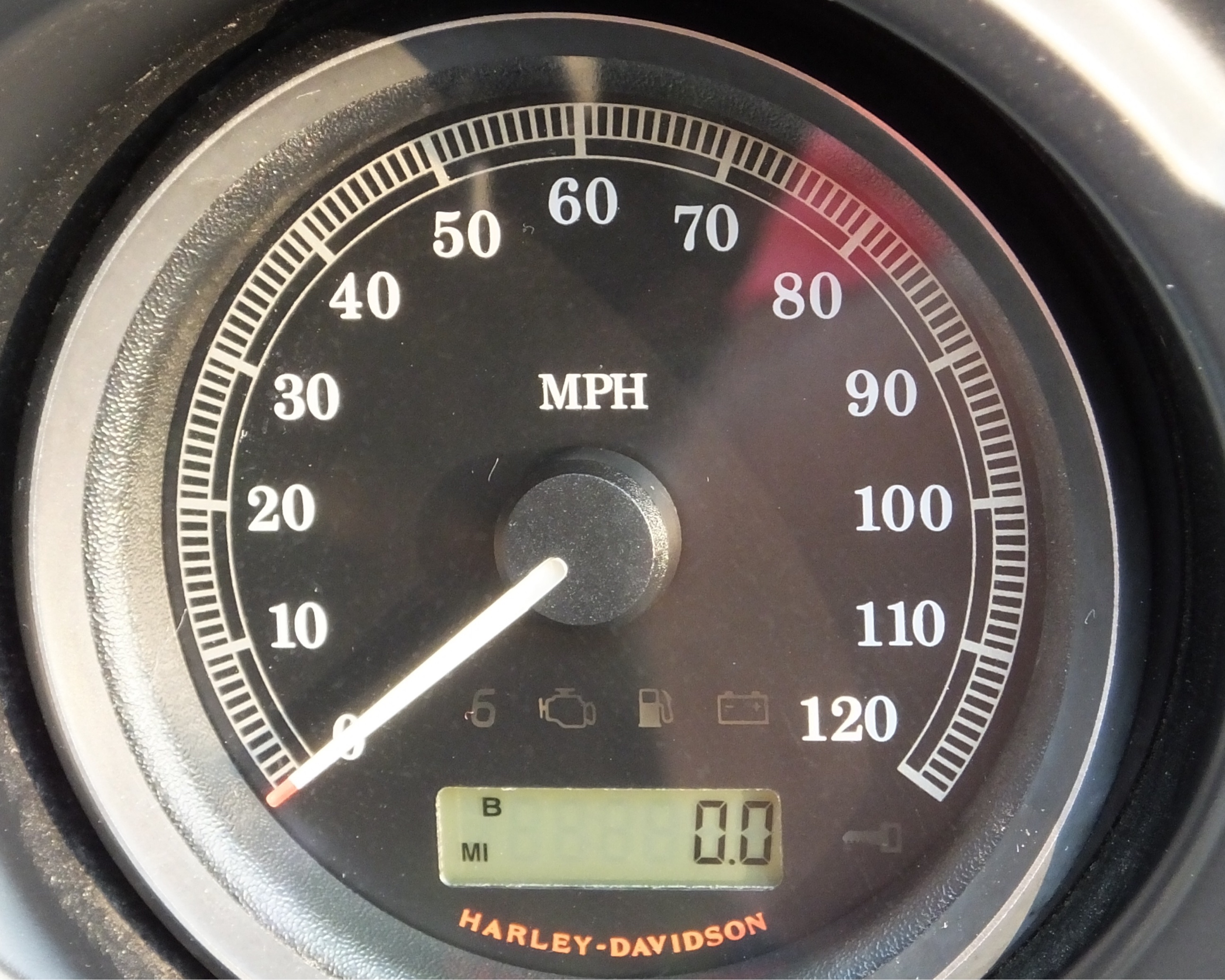
Mile “0.” At the end of the GRMA, more than 10,000 miles?
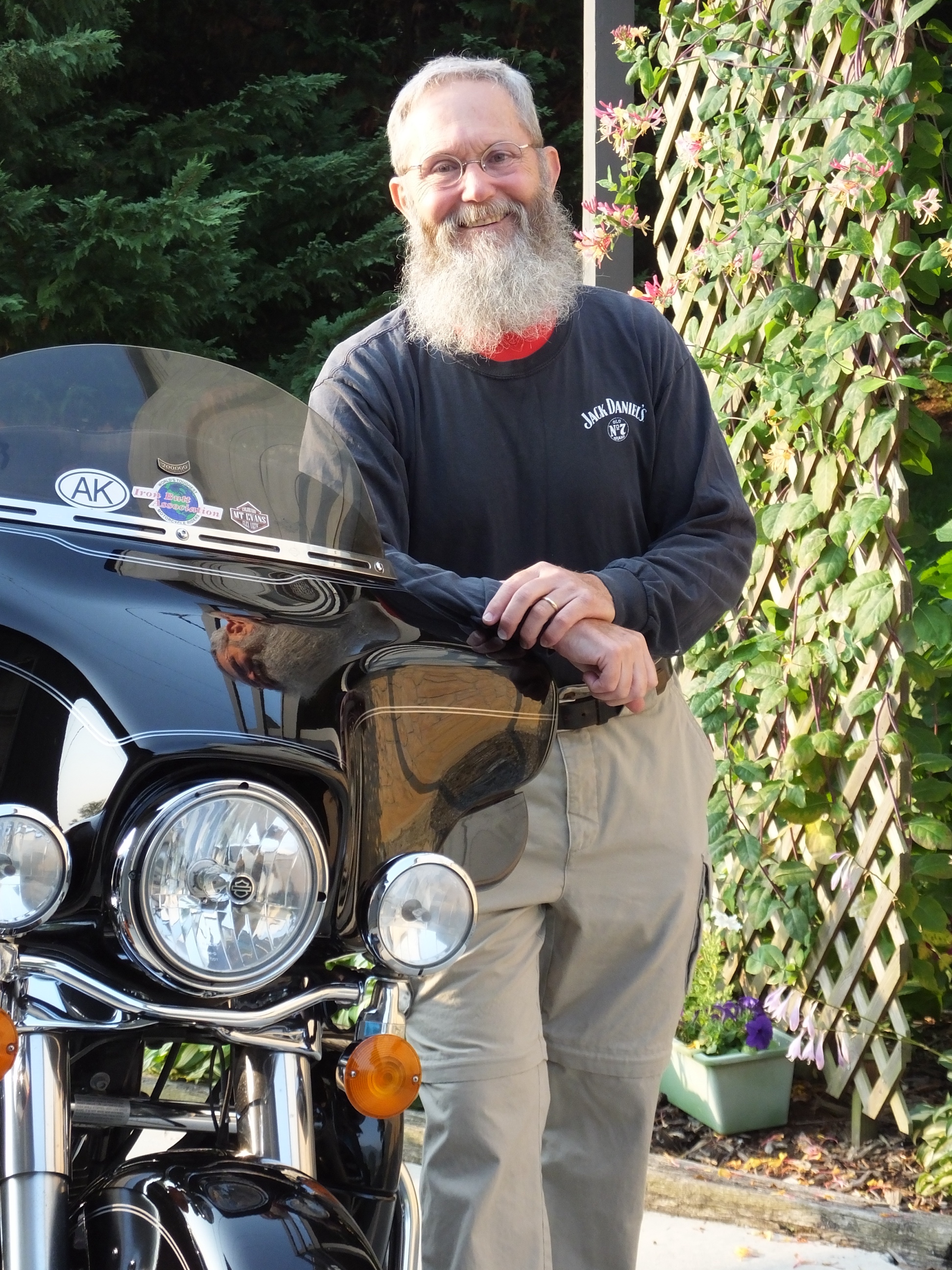
Ready to get “On the Road Again!”
Finding a better send-off than the one I had in Maggie Valley this morning would be difficult. Friends and neighbors at Raven Ridge stood on their porches and waved and shouted best wishes as I made a “parade lap” around our neighborhood with “On the Road Again” blaring from my bike’s speakers. It was a great way to begin a six-week adventure and I appreciated the sincere gesture of friendship. Today’s ride began in the Appalachian Mountains of Western North Carolina, a mountain range considerably older than my ultimate destination out west. At least six times older, in fact. The Appalachians were formed nearly 500 million years ago, while the Rockies are geologic upstarts at only 50-85 million years old. And the Appalachians were once as tall as the Rockies at more than 20,000 feet, but now rise only about 4,000-6,000 feet, the result of hundreds of millions of years of erosion.
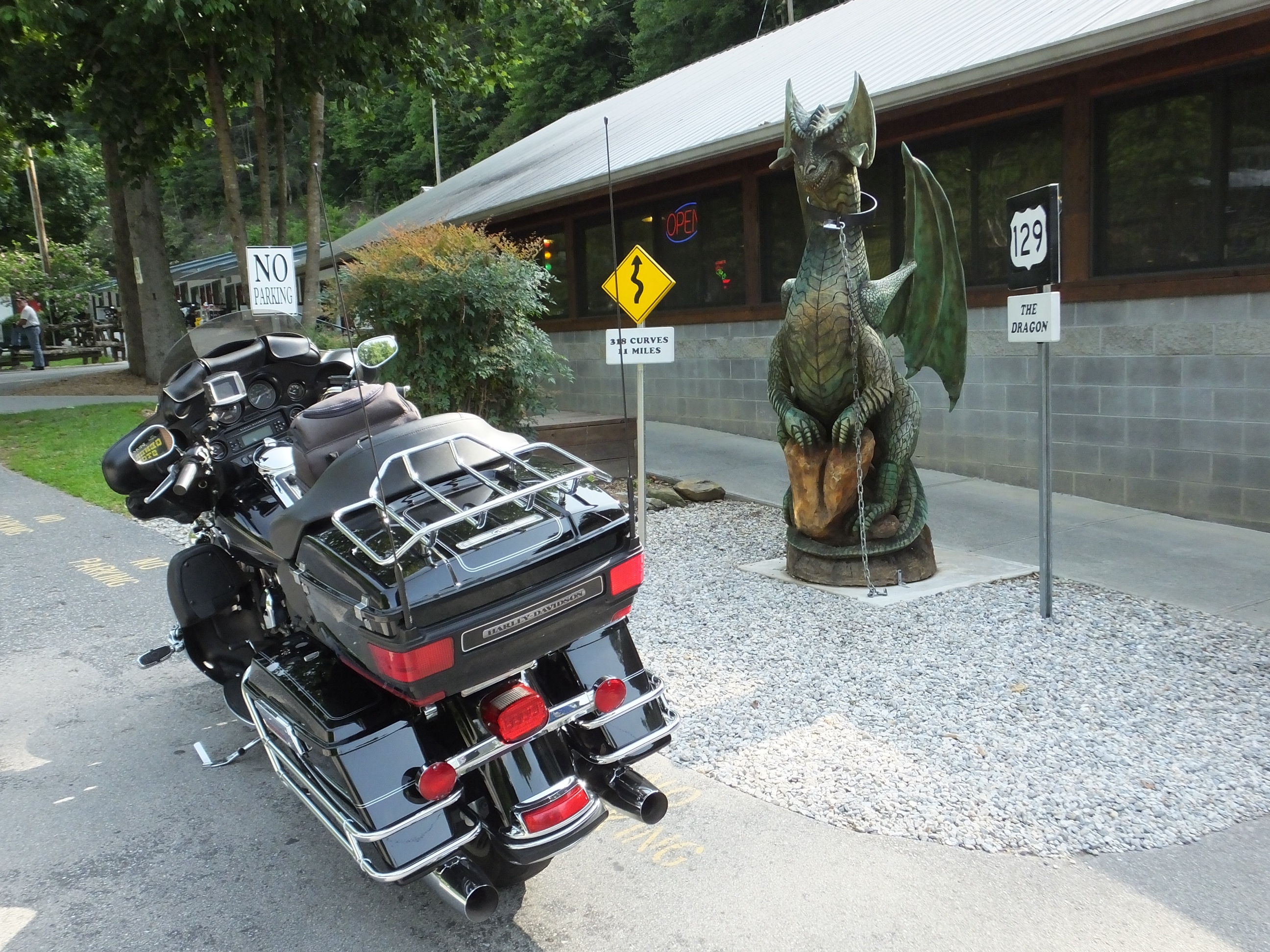
This Harley is ready to slay the Dragon.
Rolling south on the modern Smoky Mountain Expressway and carving through the shady curves on NC 28 along Fontana Lake was a good first-hour warm-up for the riding highlight of the day: The Tail of the Dragon. US highway 129. 318 curves in 11 miles. The “Dragon” is always crowded and today was no exception. But I waited until three slow Harleys in front of me had a four-minute head start before I took off on my dragon-slaying adventure and had the road to myself. I promised I’d behave and a three-bike, double-yellow-line pass would probably not have met the expectations of the Maggie Valley-bound holder of my promissory note, so I held back. I kept the bike “near” the speed limit for the entire run and only scraped my floorboards a half-dozen times. Still, it was a good run and an exhilarating way to start the GRMA.
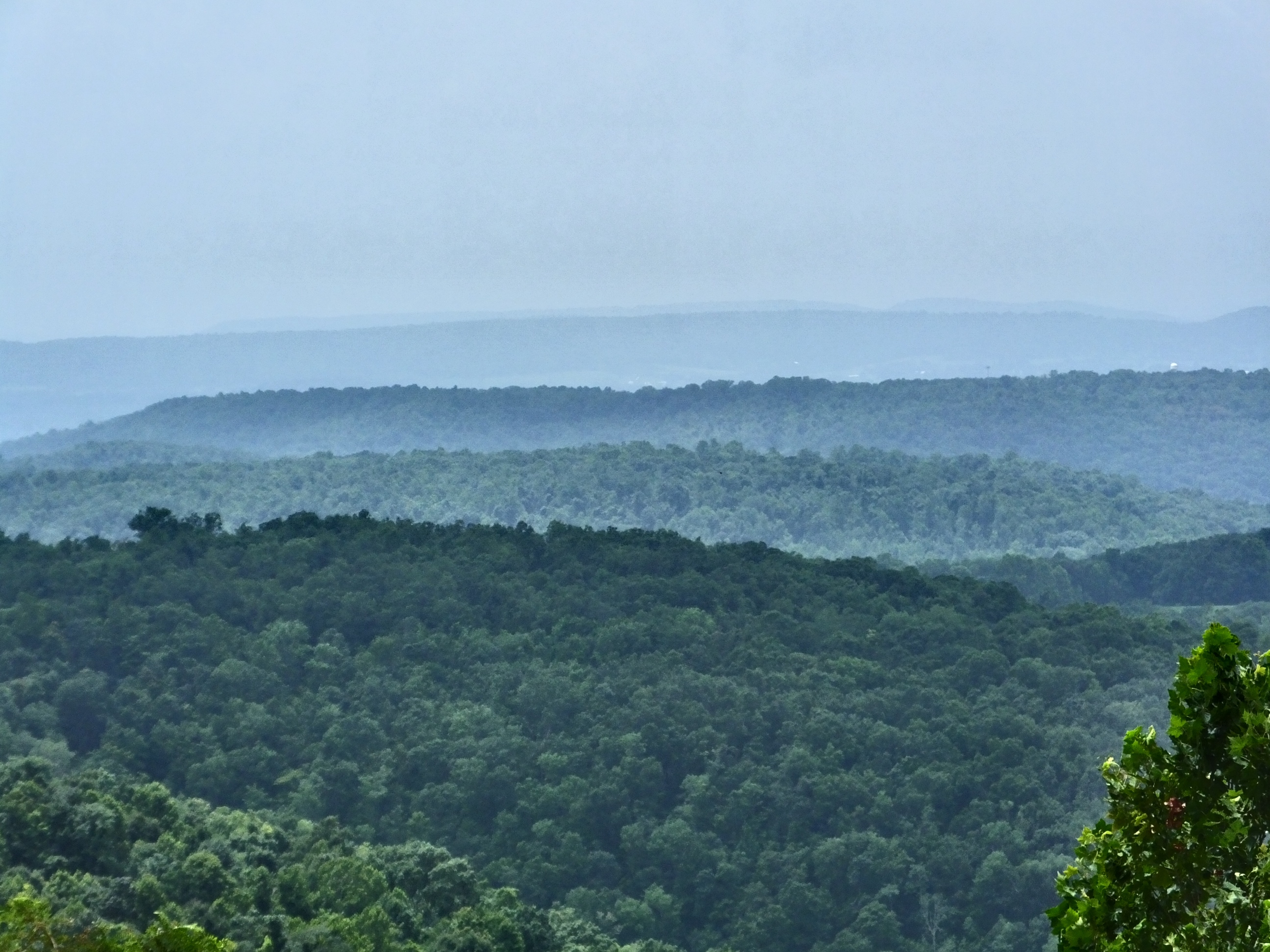
The ridges of the Cumberland Plateau are smaller and less numerous than the Appalachian Mountains in NC, but they still possess a striking beauty.
I covered 360 miles today and could have made the trip to my current location in Dickson, Tennessee, in about 5 1/2 hours if I had taken the Interstate. But the purpose of this ride (and all rides) is to enjoy the adventure, and riding the Interstate is definitely not enjoyable. Instead, I took back roads across Tennessee, avoiding all the big cities (Chattanooga, Knoxville and Nashville) and reveling in the gorgeous scenery that defines the soft beauty of the Cumberland Plateau. While not technically part of the Appalachian Mountains, the Cumberland Plateau is largely made up of sandstone that eroded from the once massive Appalachian Mountains and settled as sedimentary rock in a large inland sea in North America about 350 million years ago. About 50 miles east of Nashville, the Cumberland Plateau ends and the flat lands of middle and west Tennessee begin. And so did the heat. Temperatures went from a comfortable low 80s to a decidedly less comfortable low 90s. But by the time I got to Murfreesboro where I once attended college and later taught at MTSU, I had less than two hours left on today’s ride and the rolling middle Tennessee countryside, dotted with working farms and “gentleman” farms, made for a pleasant finish to the day.
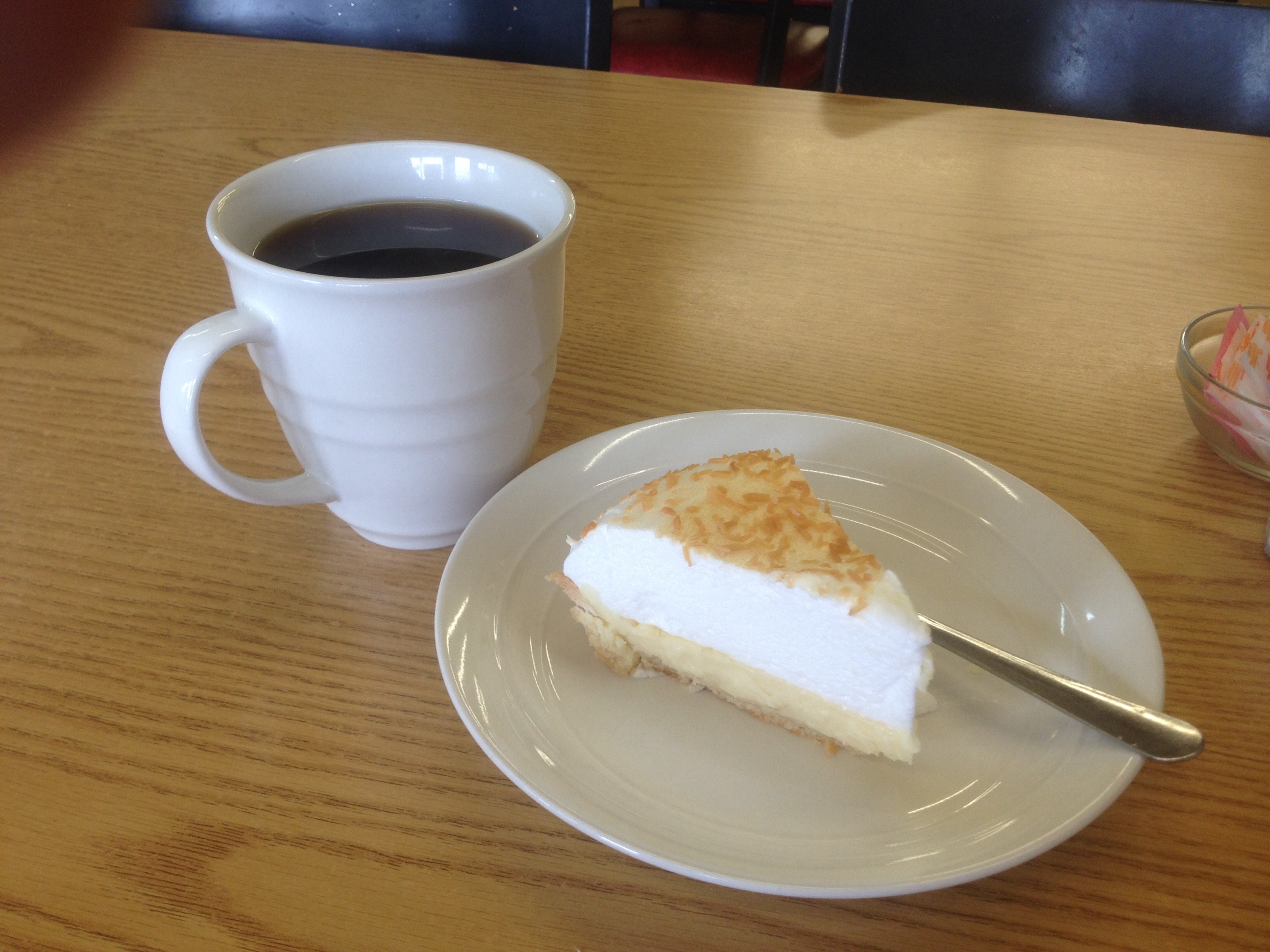
A perfect lunch.
No Great Adventure ride is complete without a (nearly) daily dose of pie. So, today’s selection was Coconut Cream at “Sweet Thang’s Cafe” in Spring City, TN. I asked the portly proprietor who “Sweet Thang” was and he responded that it was himself and his wife in the kitchen who baked my pie. “I’m sweet,” he said, “and she’s a thang.” Tomorrow I head through the flat land of west Tennessee and east Arkansas, bisected by the mighty Mississippi River. The bridge over the river will be the lowest elevation I’ll see this trip. Thanks to everyone who’s left messages, comments, emails and texts and also to those who have signed up to receive e-mail notifications when I post.
Note: I’m having trouble loading the full size images and you’re liable to see an error message. I’m going to work on this over the next couple of days. Sorry for the glitch. Two more pictures I like today:
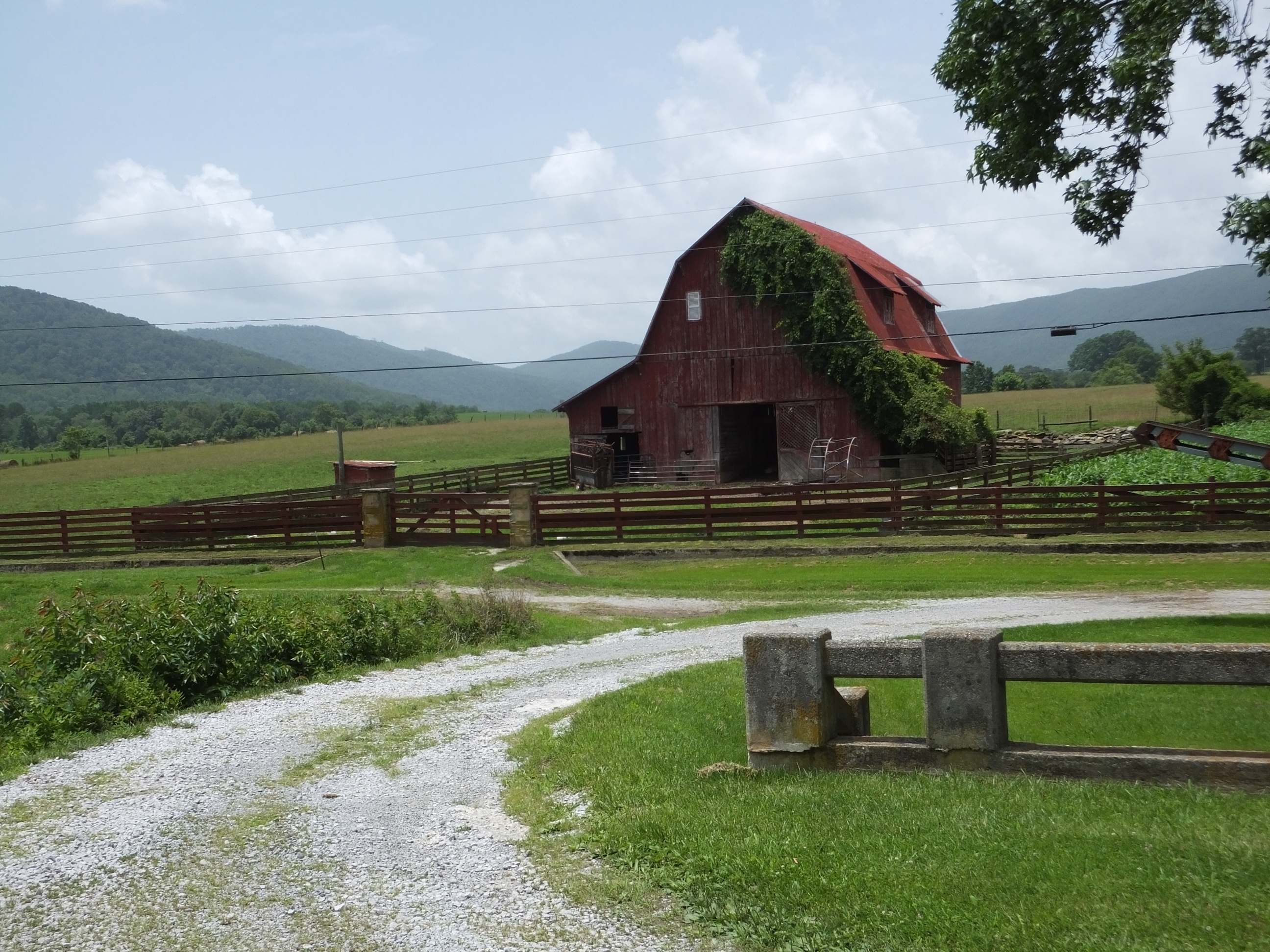
A reminder of bygone days on the Cumberland Plateau.
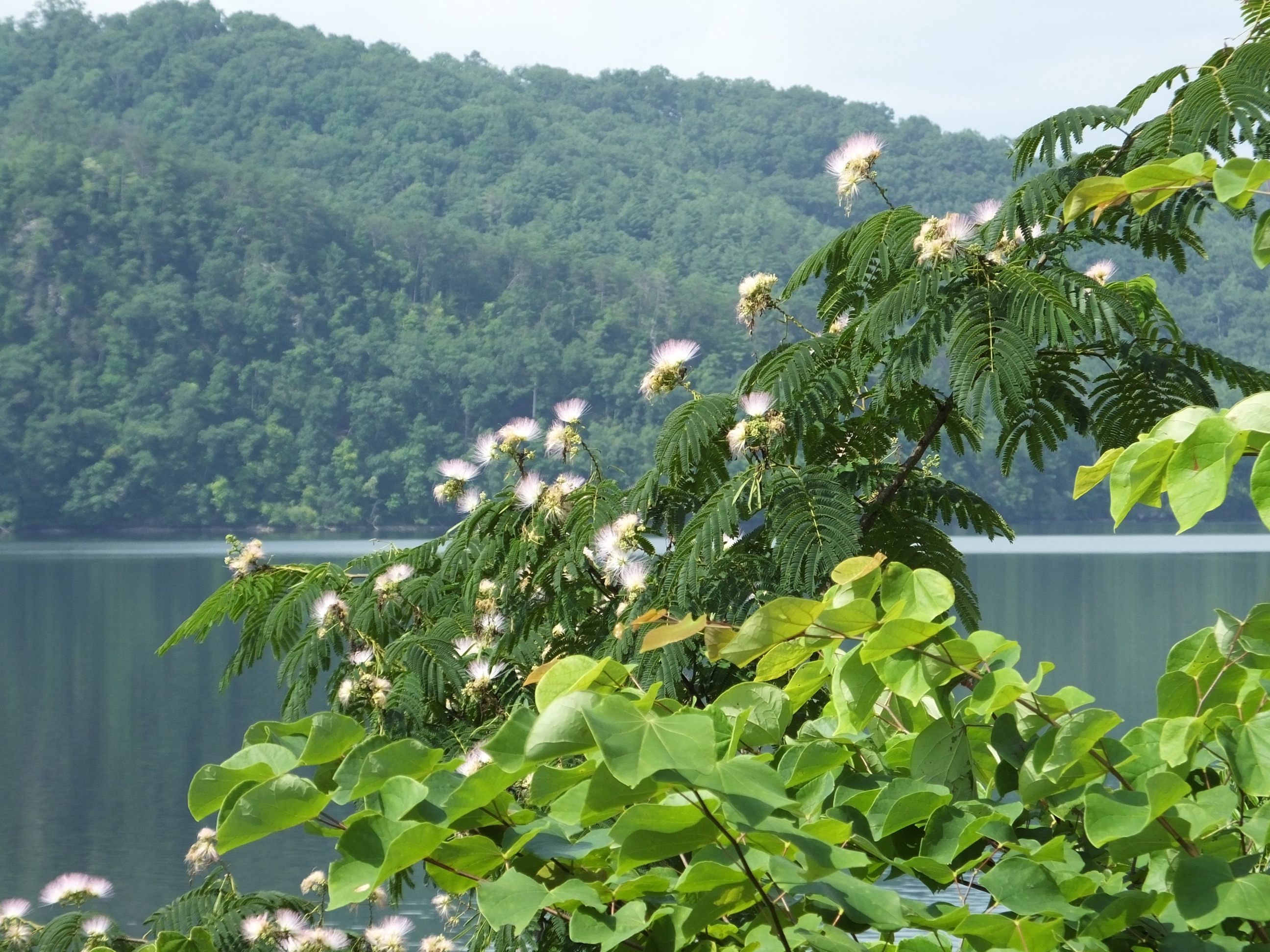
Chilhowee Lake is at the Tennessee end of the Dragon.
GRMA About to Begin
Tomorrow morning, surrounded by the misty Appalachian Mountains, I’ll fire up my Harley-Davidson, roll down the hillside on which our North Carolina cabin sits and begin The Great Rocky Mountain Adventure (aka GRMA). If all goes well, I’ll return in about six weeks after logging more than 10,000 miles on the bike and wandering through eleven states, two Canadian provinces and one Canadian territory. Along the way, I’ll once again use this blog to stay in touch with friends and family and to record the adventures, misadventures and amazing sights one finds only on two wheels on the open road.
For the past several weeks, Willie Nelson seems to have established residence between my ears, constantly crooning “On the Road Again.” I frequently whistle along, much to the distraction of Marilyn.
 This map shows the general route I’ll follow. I’ll head west from the Appalachians, cross Tennessee’s Cumberland Plateau, and wind through the picturesque mountains of northern Arkansas before pausing briefly for a family stop in Wichita. Then I’ll be on the road again to Colorado where I’ll begin the heart of this year’s adventure: a loop around and through the Rocky Mountains. All of them. I’ll meander south for a couple days to Santa Fe, New Mexico, and the southern terminus of the Rockies (according to geologists who should know about these things). Then I’ll change my compass heading to north by northwest and head back into Colorado, continuing through the corners of Utah and Wyoming before riding through the rugged Bitterroot Range in Idaho and up to the Canadian border. There, I’ll begin an 11-day sojourn through the Northern Rockies in Alberta and British Columbia (with a quick jaunt into the tail of Alaska) before completing the northward trek in Yukon Territory where the Rocky Mountains taper to their northern end. Then I’ll point my headlight south again, hugging the eastern slopes of the Rockies through Canada, Montana, Wyoming and Colorado, ending, I hope, at the top of Pike’s Peak before heading east and home.
This year I’ve added a new feature to the blog: A GPS tracking program to trace each day’s ramblings on a map. Beginning tomorrow, there will be a link on each blog post to a map showing that day’s route. It’s not a perfect representation of every mile on the road, but it will show where I was at five or ten minute intervals during the ride.
Many years ago, the quintessential American naturalist John Muir wrote: “The mountains are calling and I must go.” That’s as good an explanation as any for why I plotted this year’s adventure the way I did. Mountains, whether shaping the American West or Western North Carolina, soaring skyward in Switzerland or Tibet, or rising majestically from the the plains of the Serengeti or the Chilean shore, are special. They inspire awe and they inspire “aahhhhs.” They are the home of gods and they are the home of good. They show us our potential and remind us of our limitations. Oh, and they often have really great twisty roads that beg for more lean and more throttle. For these reasons and more, I’m bound for the Rocky Mountains.
Some roads I travel in coming weeks will be familiar. I’ve ridden them with Marilyn perched behind me. I’ve ridden them with Marilyn riding alongside me. I’ve ridden them alone with a tent and bedroll strapped to my bike. I’ve ridden them with a group of “Twisted Riders” who taught me a lot about riding. But many of them will be new. And just as one cannot step into the same river twice, neither can one ride the same road twice. This trip will produce new sights, new adventures, and new friends, even if some of the roads are familiar.
In a sense, this adventure is a sort of homecoming for me: I was born in Boulder, Colorado, at the foot of the Rockies. I vacationed in the Rockies as a child. I worked in the Rockies for four years. I’m drawn back, it seems, by a powerful force.
Waiting for tomorrow began about a year ago when I finished my Newfoundland/Labrador trip. I no sooner finish one riding adventure before I begin dreaming about and preparing for the next one. I’ve studied maps of the Rockies. I’ve read histories of the area. And I’ve learned about the geology of the area. On the road I expect to learn more. And I expect to share what I learn on this blog. Hey, professorial inclinations die hard. What can I say.
I would write this blog if nobody read it. But, believe me, writing means more if someone is reading. So, to my friends, family and thousands (dozens?) of unknown readers, thanks for following along again this year as my journey takes me to new heights and new sights. You’re encouraged to comment on the blog as you join me on the Great Rocky Mountain Adventure. You’re also encouraged to share http://www.hdriderblog.com with friends you think might be interested in my ramblings. The blog, as always, is the unfiltered, unedited reflections at the end of a long day on the road, often written with the help of my writing coach Jack Daniel, so please pardon any lack of clarity or roughness of style as I muddle through each post.
Yes, Willie, I hear you. I can’t wait to get on the road again, either.
2015 Plans
If you’re reading hdriderblog for the first time, welcome. If you’re a return reader, welcome back.
It’s been a while since I posted and will be a while longer before I post again, but I wanted to get something fresh on the blog explaining this year’s Great Adventure.
About July 7 I’ll fire up the Ultra Classic and head to the Rocky Moutains for a 10,000-mile, 5 week trip that will take me from the southern end of the Rockies in New Mexico to the northern end in Yukon Territory and back again. Some of the roads I’ll ride I’ve already been on, but not nearly all of them and never in a single trip. I’m looking forward to a Great Adventure and to having friends and family follow along on the blog and share the experience with me.
I’ll probably start posting again about July 6 and will try to let everyone who might be interested know that the adventure is about to begin.
In the meantime, please feel free to go to the archives for June and July 2013 and 2014 if you want to read about the Great Alaska Adventure and the Newfoundland/Labrador Adventure.
Thanks for checking in, and please join me in July and August for this year’s Great Rocky Mountain Adventure.
Blue & Grey Campaign Day 9: Tired Campaigners
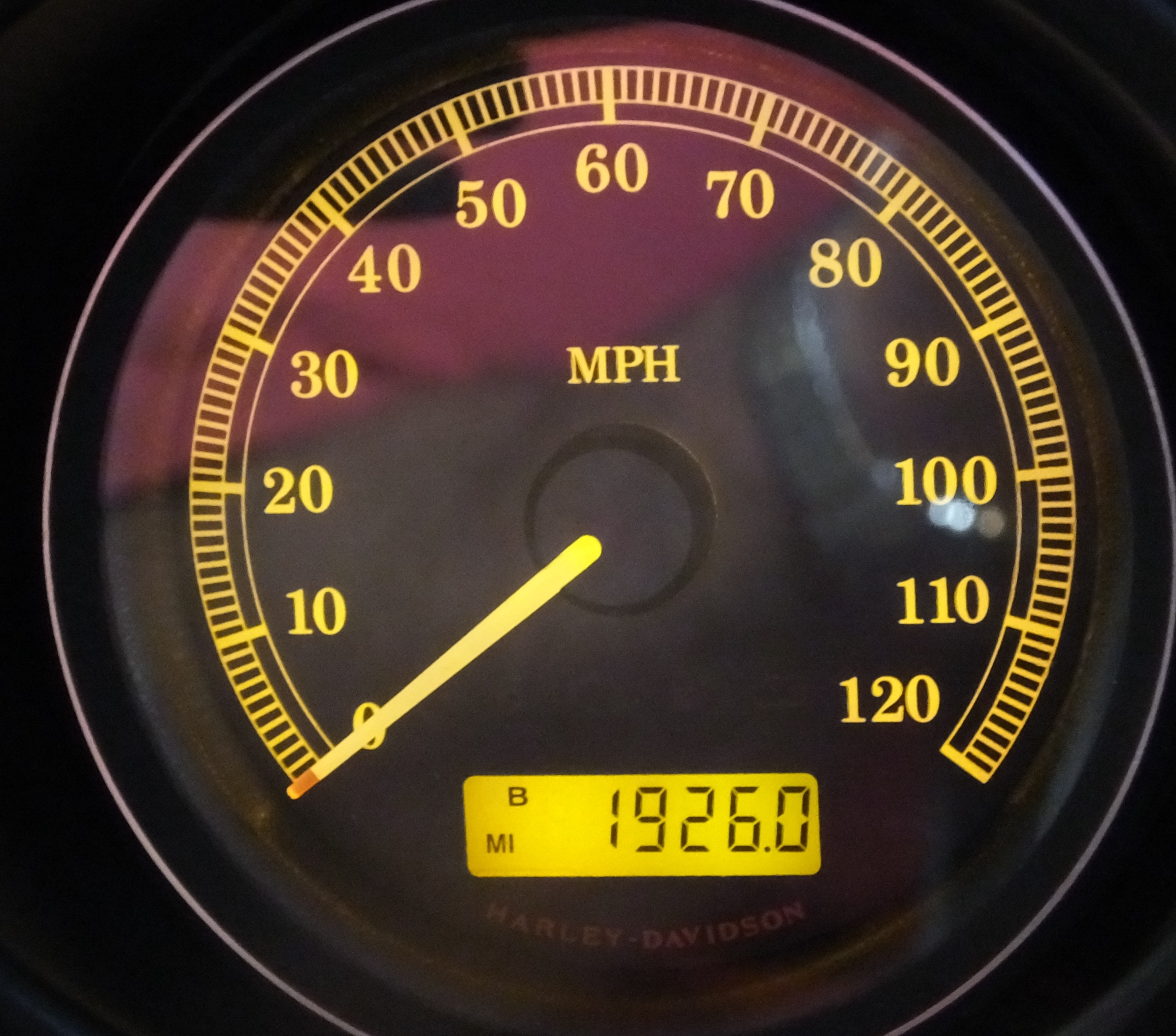
My trip odometer was set at “0” nine days ago.
Several times today I heard members of the ride say how nice it would be to sleep in their own beds again. I agree. Eight straight nights in hotel rooms, along with 1,926 motorcycle miles, and, of course, untold hours spent walking through and exploring museums, historic sites and battlefields, earned everyone a well-deserved rest in their own beds with at least one morning to sleep late.
While I think everyone would like to have extended the trip by many miles and more historic sites, they were also ready to decompress in the quiet of their own homes for a few hours or a few days. Most days on this trip started with alarm clock reveille before 6 a.m. and ended each day well after 10 p.m. Between reveille and lights out, each day was a full day of riding or walking or both. Don’t get me wrong. No one complained. No one asked for fewer miles or shorter days or fewer visits. And each morning–without fail–when we met for our pre-ride safety briefing and historical synopsis of the day’s planned activities, all campaigners were ready before the appointed time.
We couldn’t visit all the sites in the Eastern Theater of the Civil War. That would take months or even years. But in nine days we managed to visit eight of the biggest and most important sites. Each person, including me, has finished the Blue and Grey Campaign with a much better understanding of the men and women who argued, debated, cried, fought, bled, and died and the causes which led them to suffer unspeakable pain and unfathomable loss during those bitter and bloody years. In fact, several members of the campaign returned home with a pile of books they will read to continue to expand their newly-gained knowledge of the Civil War. And they all returned with tales–Civil War, motorcycle and after hours–to tell friends and family (and even strangers who get cornered and are forced to listen to their “war” stories).
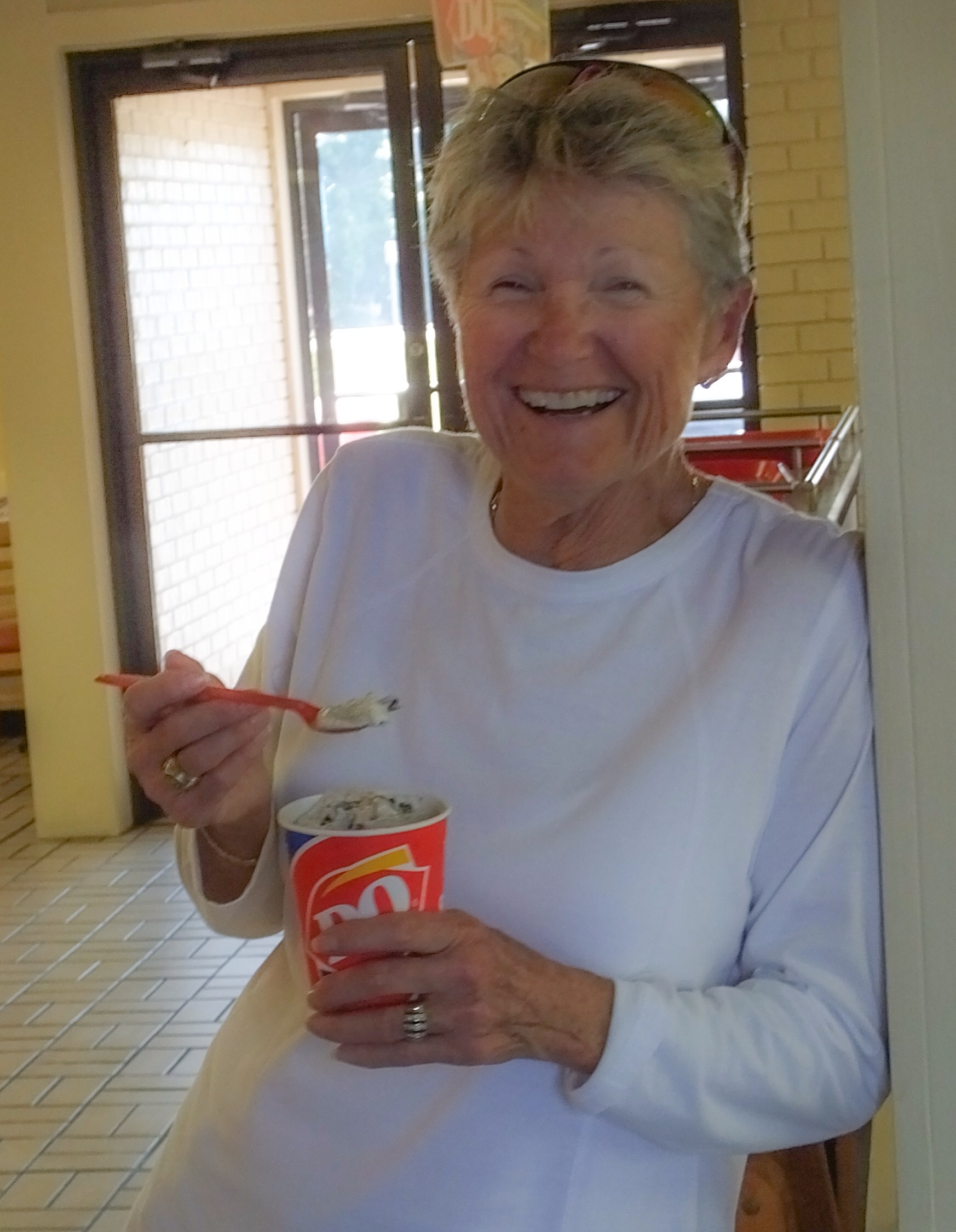
Terri cools off with a little DQ.
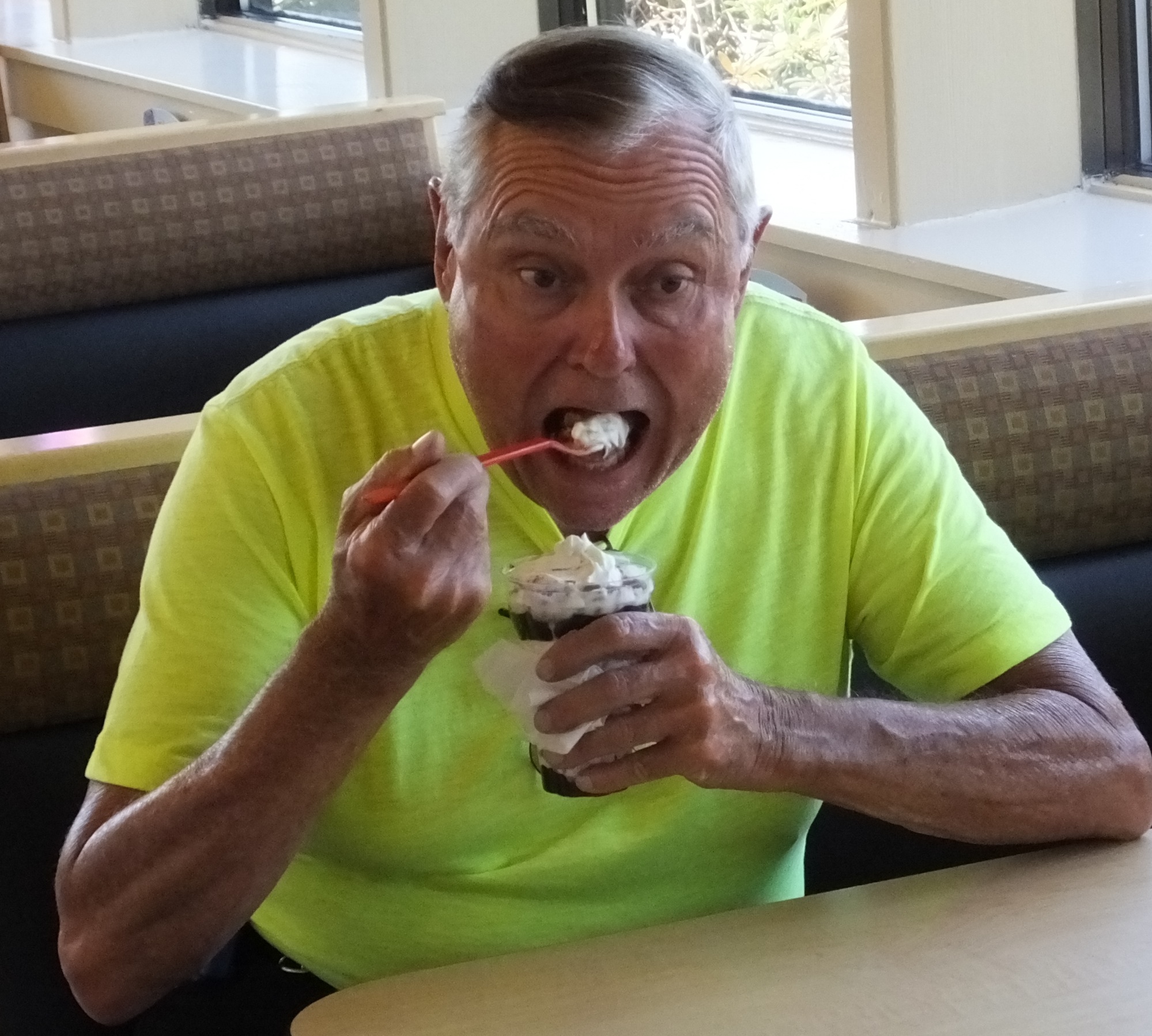
Mmmmmmm. Good.
Today’s ride, which began with Willie Nelson crooning “On the Road Again,” was uneventful, and rain that had been forecast for today several days ago never materialized. It would have been hard to find better weather for riding than we had today. But it was just 360 miles down the asphalt ribbon, swerving around the occasional South Carolina road breaks and potholes and keeping an eye on 18 wheelers and motorists in a hurry. Lunch, a couple of gas stops, and a final Dairy Queen break to extend our time together, made for an unremarkable ride home.
Each campaigner now has an assignment: A brief essay that records their view of the Blue and Grey Campaign to be provided to the task master Road Captain/blog author/book editor. The essay will be their contribution to history, at least for their grandchildren and great-grandchildren who inherit the book to be published using the contents of this blog.
For now, the blog posts come to an end again. But, as long as unridden roads remain unexplored, I’ll make other rides and, no doubt, contribute more scribblings to memorialize those exploits. I hope everyone who followed along the past nine days enjoyed the Blue and Grey Campaign as much as the campaigners did. It was a good ride.
Blue & Grey Campaign Day 8: Appomattox Courthouse

The Blue & Grey Campaigners stand on the steps of the historic McLean House.
On the penultimate day of the Blue & Grey Campaign, it was only fitting that we concluded our Civil War battlefield tour at the site of the end of the war: Appomattox Courthouse, Virginia. On April 9, 1865, almost four years to the day after the opening shots of the war were fired at Ft. Sumter, General Robert E. Lee surrendered the Army of Northern Virginia to Lt. General Ulysses S. Grant, Confederate arms were stacked, colors were furled and exhausted troops began their long walk home to families and farms.
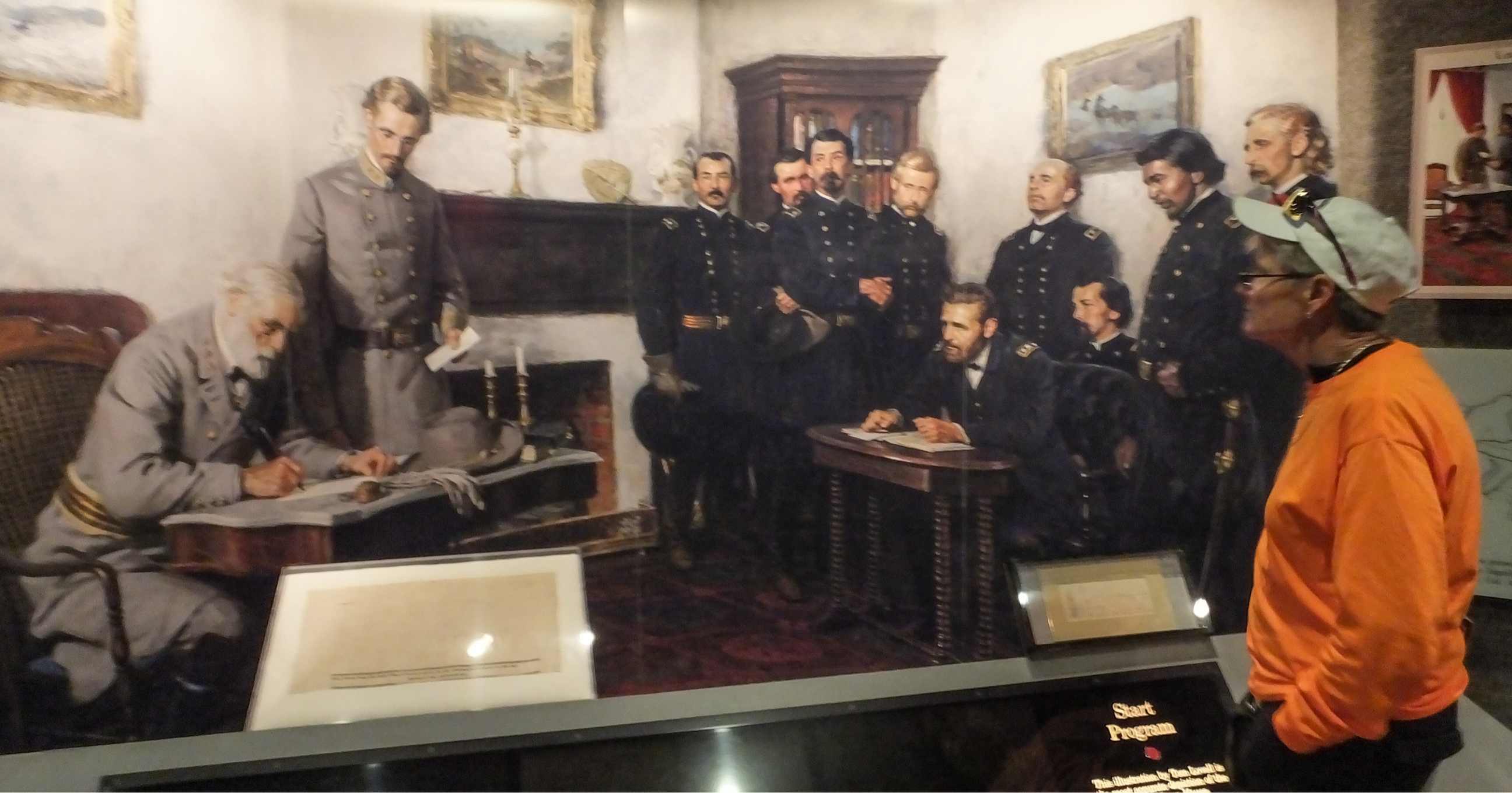
Terri looks at one of the most authentic depictions of the surrender by Lee.
From Lynchburg, we had only a 30 minute ride to the National Parks battlefield site, and we arrived to a nearly empty park just as it opened at 8:30 a.m. Nine motorcycles pulled up to the entrance kiosk and the park ranger on duty asked, “Are you all together?” “Why yes. Yes, we are,” I replied, looking back at nine bikers on nine Harley Davidsons and wondering what his first clue was. We dutifully showed our Senior Passes, and proceeded, “all together” to the historic site. The sky was blue, the temperature was about 70 degrees and the site of the final battle of the Civil War had a remarkably peaceful feeling on this perfect fall day.
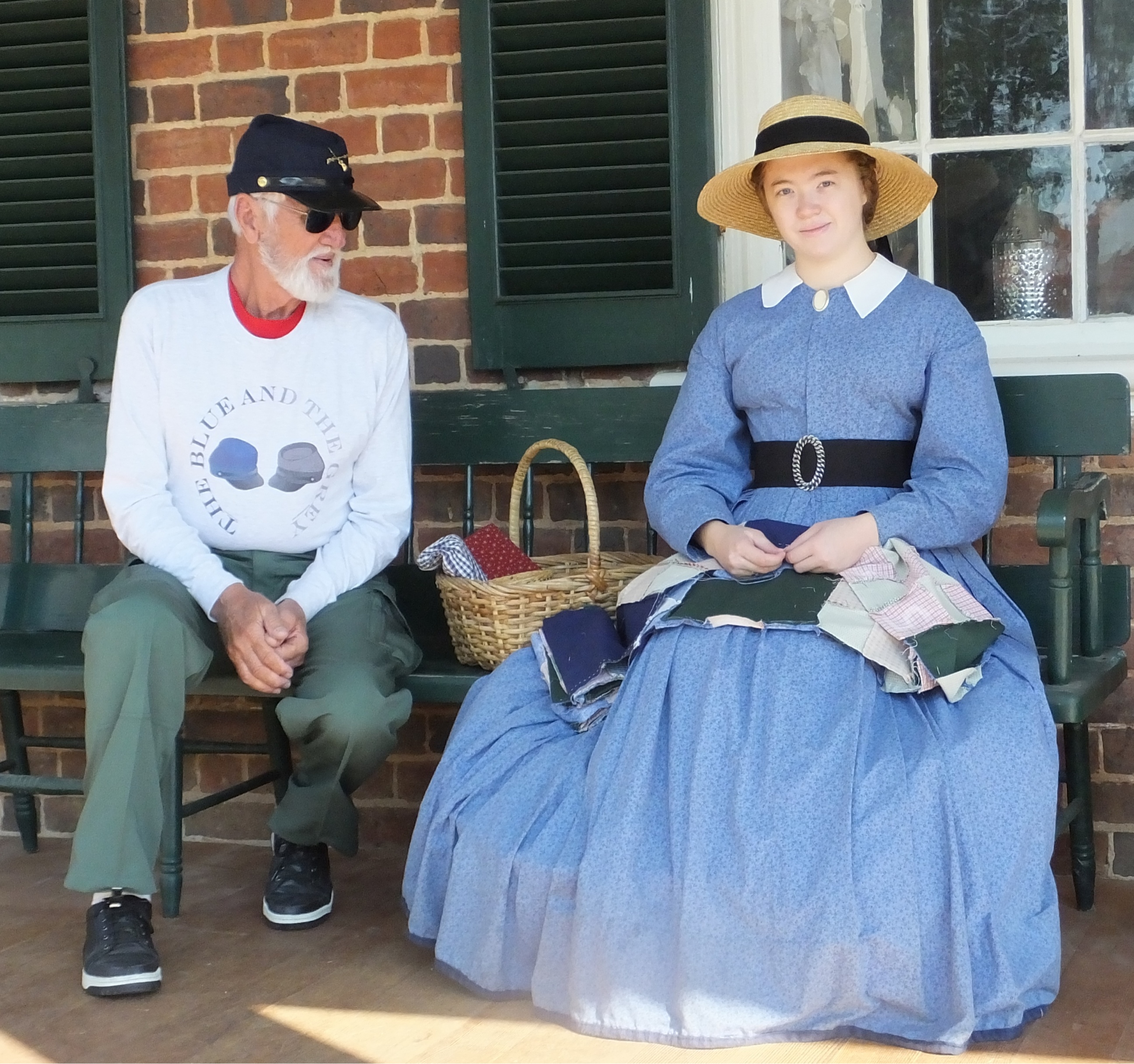
Ski talks with “Miss Emma” on the porch of the tavern. She wasn’t fond of the Yankee.
The site consisted of some original buildings from the small village known in 1865 as Appomattox Court House, a rebuilt courthouse that served as the visitor center, and an historic reconstruction of the McLean House where the meeting between the two generals took place in the parlor.
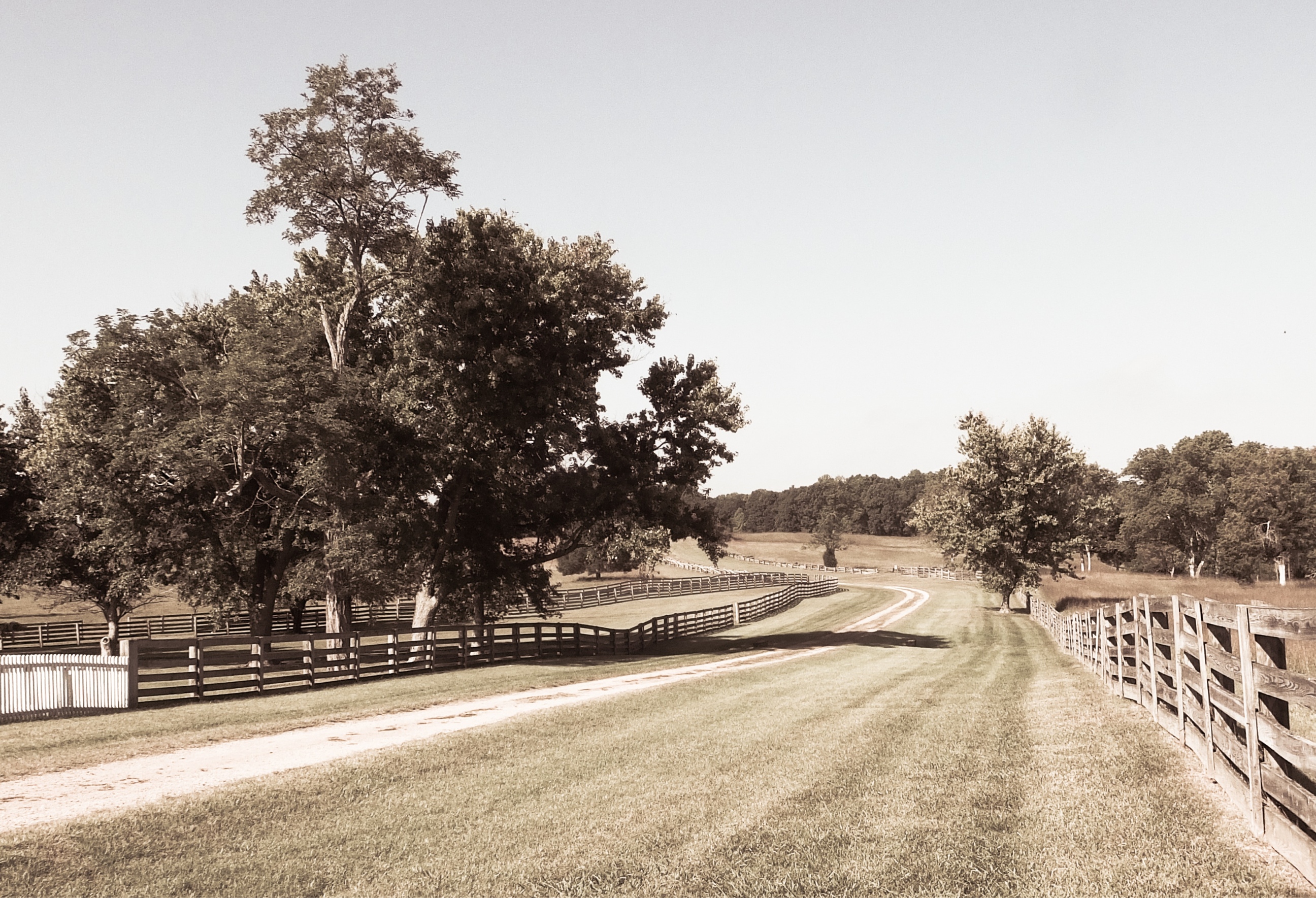
This road led past the McLean house and out of Appomattox Courthouse.
We watched a couple of short videos and wandered through the exhibit area, learning about the final Appomattox Campaign that occurred when Union forces drove the battered and starving rebels out of Petersburg and Richmond and dogged them westward across central Virginia until the denouement near Appomattox Courthouse.
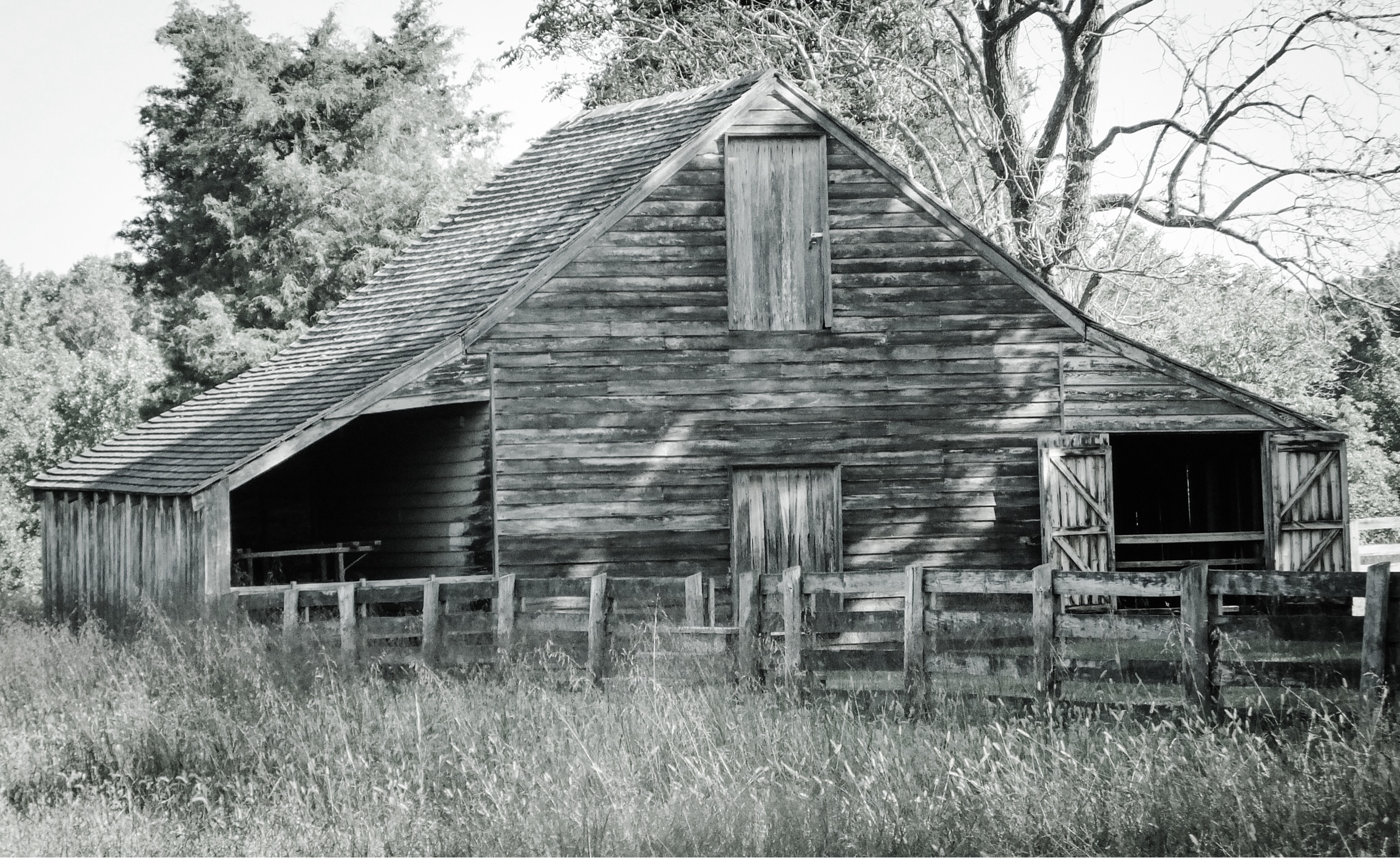
This barn was across the road from the McLean House.
As we walked around the site we also visited some of the historic structures that witnessed the final actions of the war, including the Clover Hill Tavern where paroles were printed for the 30,000 Confederate soldiers who surrendered and were allowed to return to their homes after they stacked their arms. On the porch of the tavern was a young woman named Emma, who was the daughter of the tavern keeper and provided a wealth of information about the area in the days after the surrender. Later, the re-enactor spoke in character with large groups of tourists as they sat on the porch of the tavern.
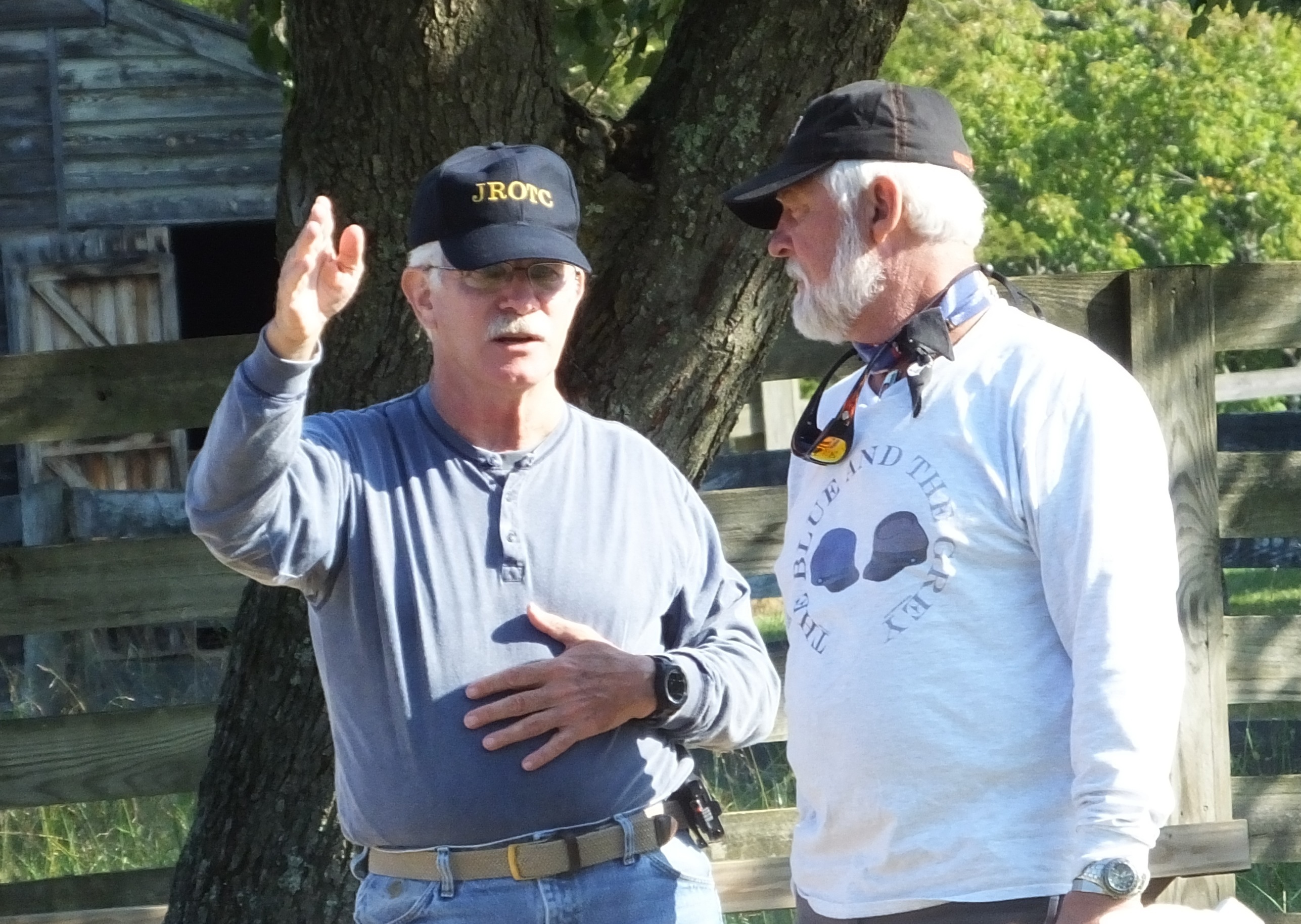
Lee and George talk about the events of April 9, 1865 at Appomattox Court House.
The McLean House had actually been torn down in the 1890s and then rebuilt in the 1940s using some of the same materials and on the same site. But it was close enough to the actual structure that it felt as if we were standing in one of the important buildings of the Civil War and all of American History. After more than 600,000 deaths, the actions of two gentlemen generals brought the war to a simple and undramatic close.
One final look around the park and we returned to the bikes and left the final site of our eight-day tour behind us.
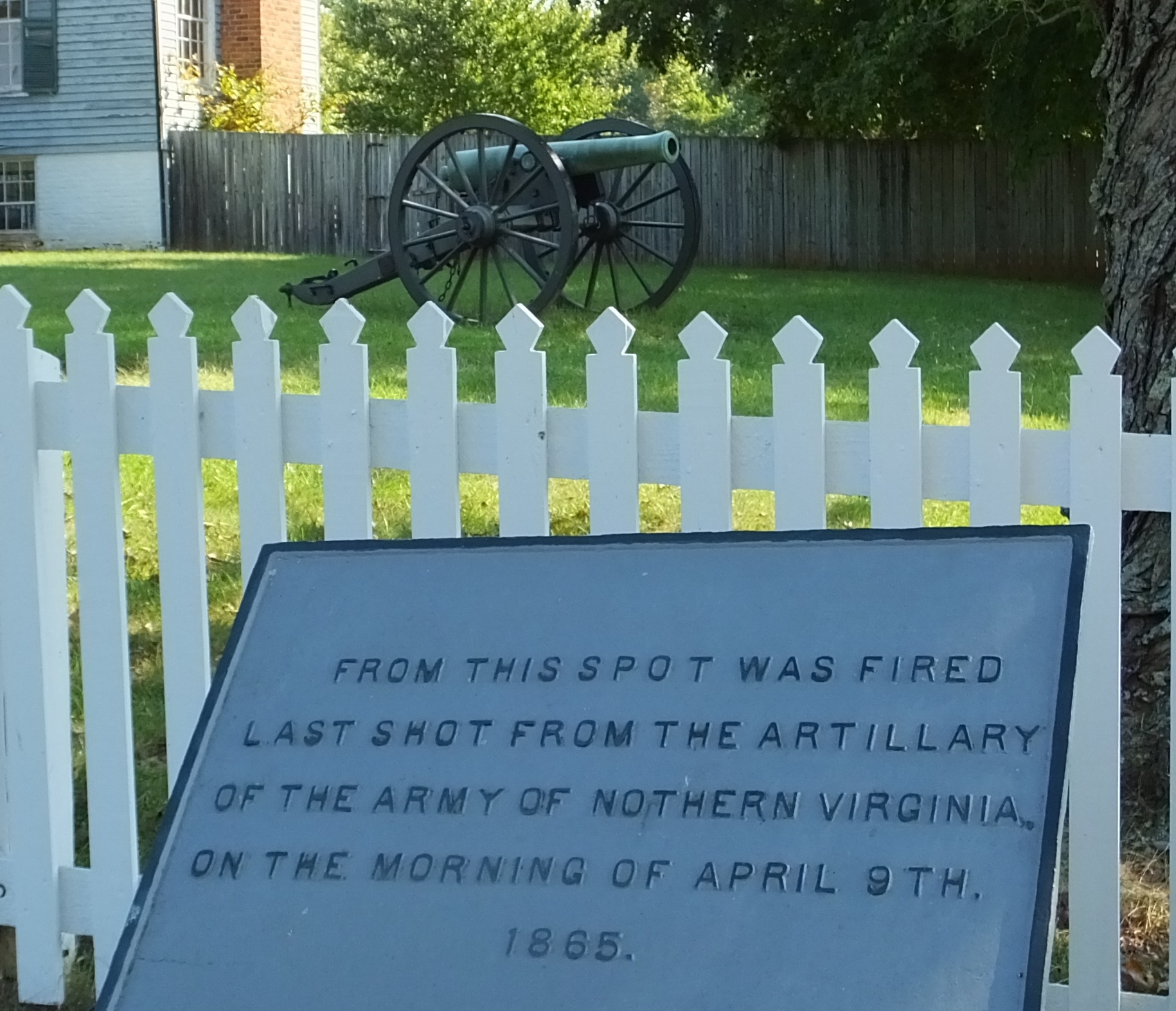
All is quiet now at Appomattox
The ride the rest of the day took us south through Virginia and into North Carolina. The group was kind enough to follow me through Chapel Hill, home of the University of North Carolina, where Marilyn and I reminisced briefly as we rolled slowly through the downtown and past parts of the University. It had been nearly 35 years since we were last there.
Lunch had been planned at a quaint sandwich shop in Chatham, Virginia, but the planner (me) didn’t realize they would be closed on Saturday. So we opted instead for a pretty good lunch at a Mexican eatery just down the nearly deserted Main Street.
The longest part of the day came as we rode through the area near Ft. Bragg, N.C., where there seemed to be a traffic light every quarter of a mile and we seemed to stop at nearly all of them. Finally, ten hours after leaving our motel in Lynchburg, we arrived at our final motel of the campaign in Lumberton, N. C. Tomorrow we make the final ride home. Tomorrow night I’ll post the final entry for the Blue & Grey Campaign blog, and the nine-day, nearly 2,000-mile Orange Park Harley Owners Group ride will, like the Civil War, be history.
 hdriderblog