
Day 8: Nuremberg and Rotbier and Sausage
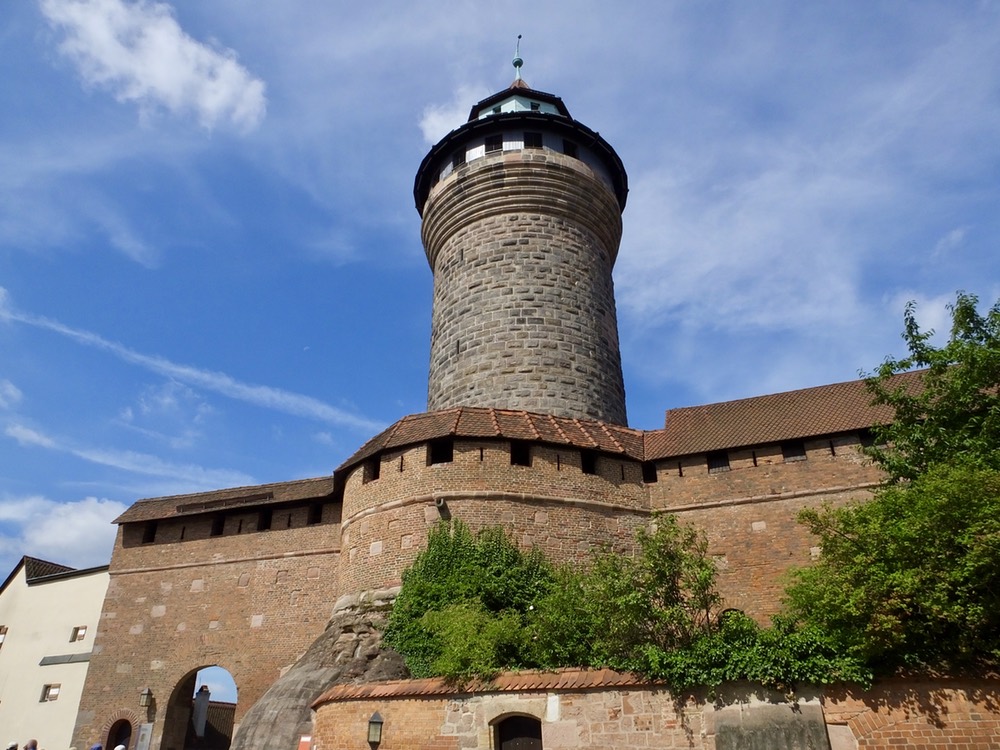
The Tower Keep at Nürnburg
Old and new buildings; old and new history. That’s a petty good short description of Nuremberg (aka Nürnberg), today’s stop on the Viking River Cruise Grand European Tour.
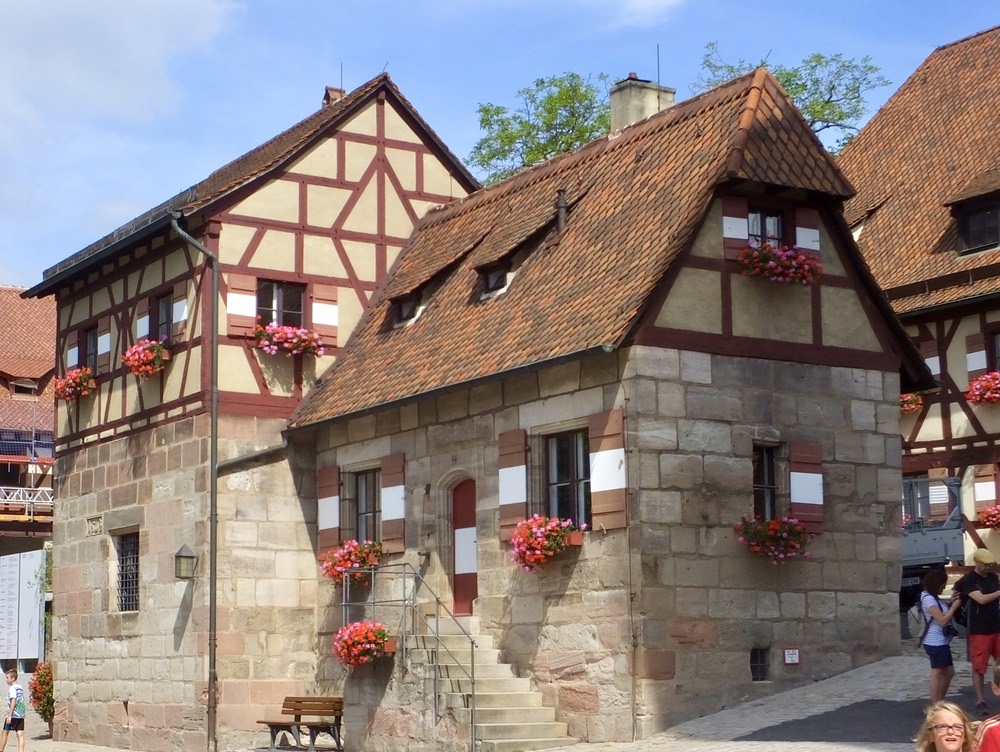
Well house in the castle
Nürnberg was one of the most important crossroads on the trade routes during the years of the Holy Roman Empire (12th-18th centuries) and one of the primary seats of power for the emperors who ruled the hundreds of small German states during that period. As a result, Nürnberg has one of the finest fortified medieval castles in Germany and one that was never taken by force but changed hands occasionally following extended seiges.
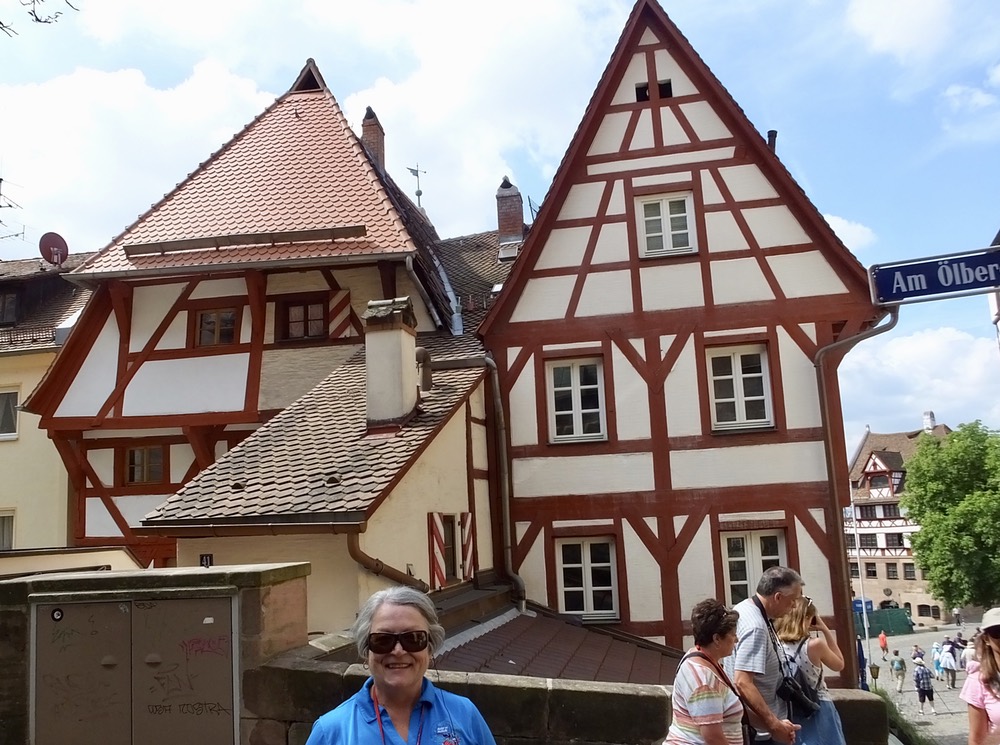
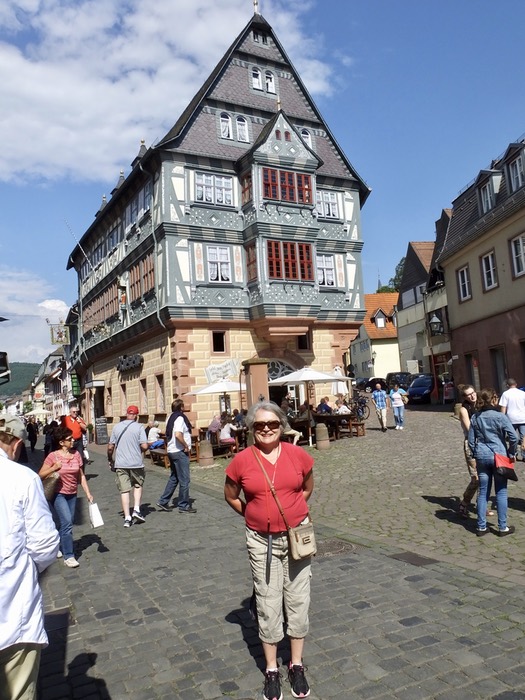
Marilyn stands in front of the oldest undamaged houses, built in the 15th century
It also has the best preserved city wall in all of Germany. As cities grew in the 18th and 19th centuries and the weapons of war made city walls obsolete, most cities tore down their walls in order to more easily expand. Nürnberg was an exception. The people here (Franconians not Bavarians, they will tell you even though they live in the state of Bavaria) have long had a valuable sense of place and an enduring respect for history.
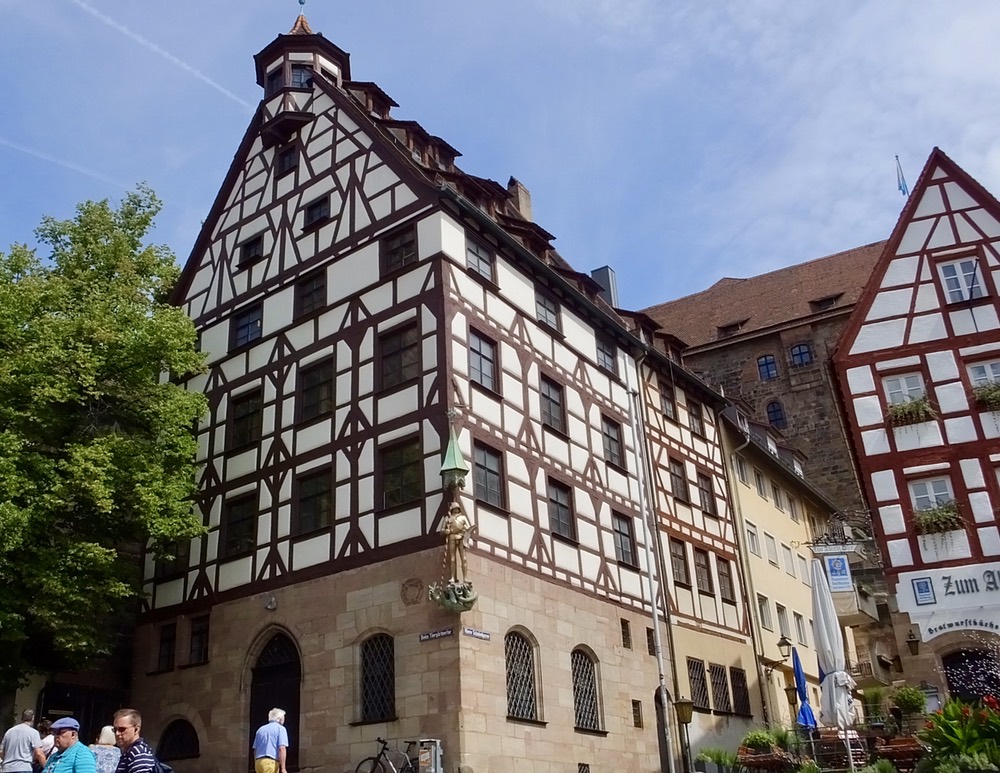
One German leader once said that Nürnberg was the most German of all German cities. That leader was Adolph Hitler, and as a consequence he made Nürnberg the site of the famous enormous Nazi rallies of the 1930s and the location of his never finished Congresss Hall. Today I had a chance to literally ride into the middle of the Congress Hall in a tour bus. It’s impossible, I think, to describe how big the building was to be, but the circular outer walls that remain and which would have supported the roof of the courtyard testify to its anticipated size. Had it been finished, the interior would have held more than 50,000 Nazi party loyalists to hear the rantings of a madman. Nearby, the Zeppelin Field and the Stadium remain, while most other structures were demolished after World War II.
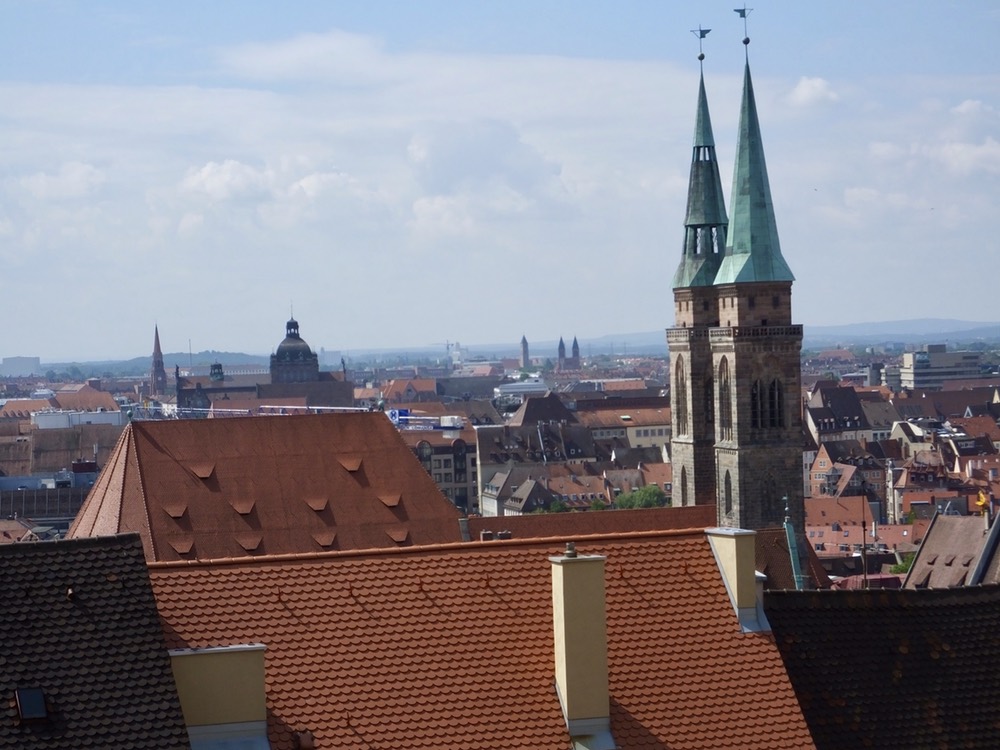
View from the castle of a rebuilt Nürnberg. Most buildings in this picture would have been completely or partially destroyed by April 1945.
So, in Nürnberg you have two histories: A thousand year history before the 20th century and a tumultuous and deadly more recent past. Unlike Bamberg where we were yesterday, Nürnberg was nearly totally destroyed by bombs and fire by the end of the war. The castle was badly damaged, yet its 40′ walls and deep subterrean rooms saved invaluable pieces of local art from dozens of churches and protected the lives of up to 50,000 residents during bombing raids. The rest of the town, however, suffered near destruction. The question after the war was should the burned out houses, churches, shops and public buildings be torn down and a new town erected in their place or should the people take on the more arduous task of restoring the town to its medeaval, baroque and renaissance glory?
The sense of place and past I noted earlier held sway and the people of Nürnberg spent the next 30-40 years carefully restoring the town as much as they could. Even the large churches had to be nearly completely rebuilt but the artwork saved in the bunkers under the castle are in place as it was for centuries. Many of today’s buildings are only about 50 years old, but they look as though they’ve been standing for hundreds of years. I for one am glad a respect for the past won out.
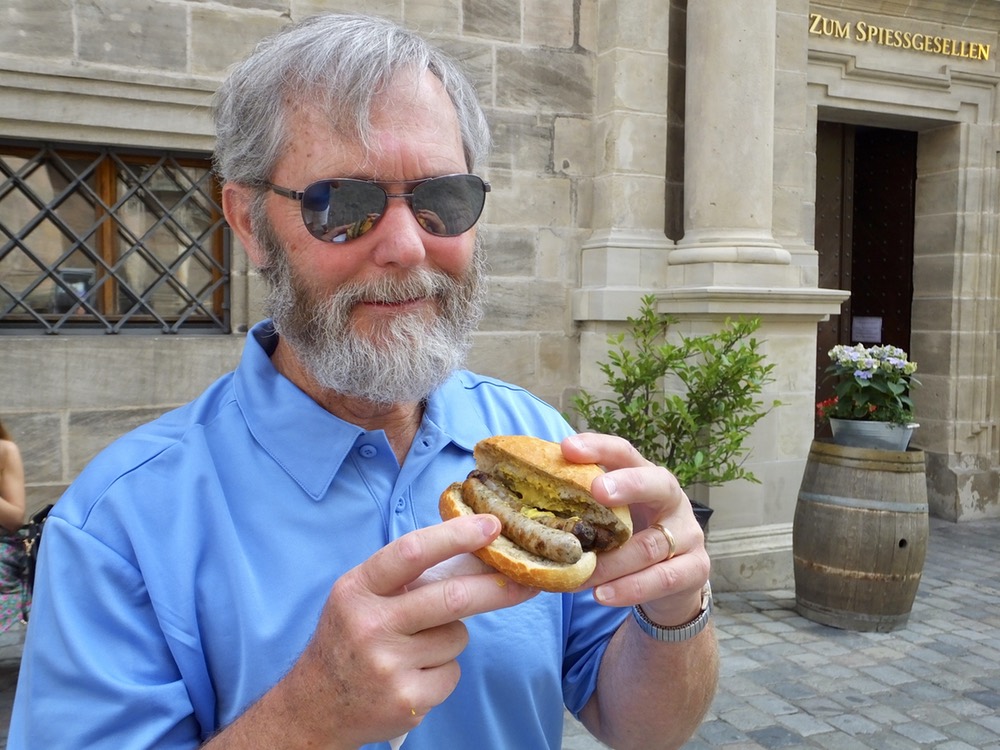
Drei im Weggla (Three in a bun)
Every region of Germany has the best sausage and the best beer in the world. Just ask the fiercely proud residents in any region. Nürnberg is known for its small pork sausages seasoned liberally with marjoram. In most places, one or two sausages or brats would be sufficient for a restaurant dinner, but in Nürnberg you need to order at least six, eight or ten to go with your sauerkraut or warm potato salad. Or, you can do as I did and go to the takeout window in the restaurant and order “Three on a Bun,” cover it liberally with mustard or horseradish and enjoy it as you walk though the narrow streets. The other half of the Nürnberg culinary experience has to be the craft brewed Rotbier or red beer and the best place to get it is the Hausbrauerei Altstadthof (Old City Brew House) where they’ve been making it the same way for nearly 300 years. Both the brats and the beer convinced me that my German roots are real. I think I could live here on those two things alone. My guide, Andreas, informed me that “A man without a beer belly is not yet a man.” I’m not sure that’s the direction I want to go, though.
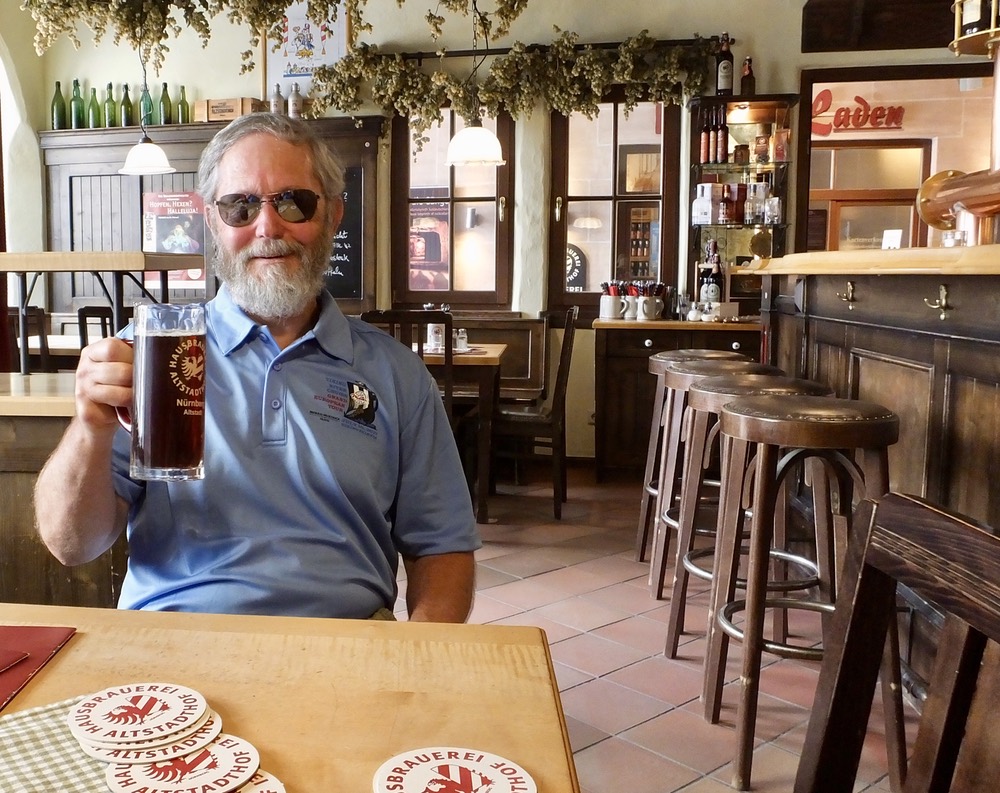
Rotbier at Hausbrauerei Altstadthof
Nürnberg’s most famous son was the artist Albrecht Dürer (1451-1528), known mostly for his woodcuts but also a prolific painter. Unfortunately for the people of Nürnberg, he achieved great fame during his lifetime and most of his works hang in great museums throughout Europe and not in his hometown. They did preserve the house he lived in and created a small museum there, but, unfortunately, our schedule didn’t allow time for a visit.
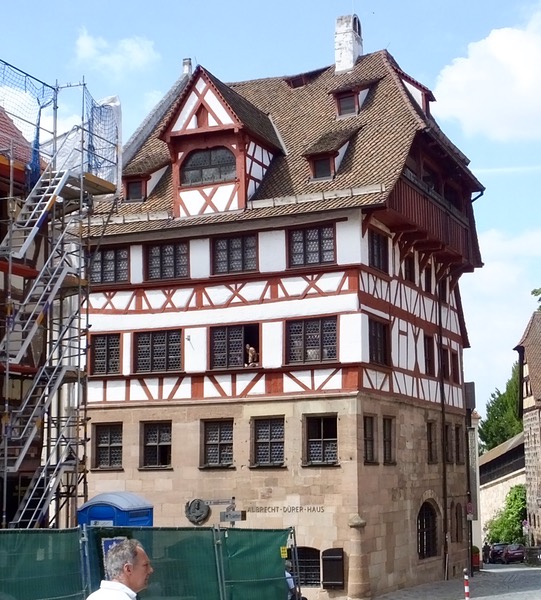
Albrecht Dürer house and museum
Today we left the Main River in Nürnberg and headed south through a 150-mile long canal that will take us to the Danube and into Austria. The canal journey will carry us through more than two dozen locks, two of which are 80′ high. As I was writing this we sailed along an aquaduct that flows above a highway and Marilyn got to see the four-lane road below our river highway. No doubt, it’s some shock to drivers of cars below to see a 2,000 ton cruise ship above their heads.
More from Nuremberg
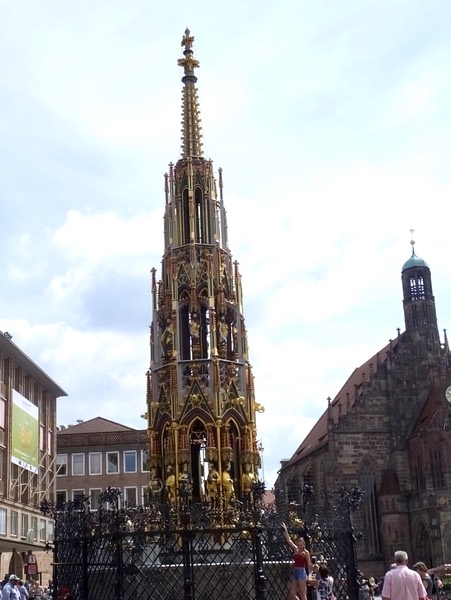
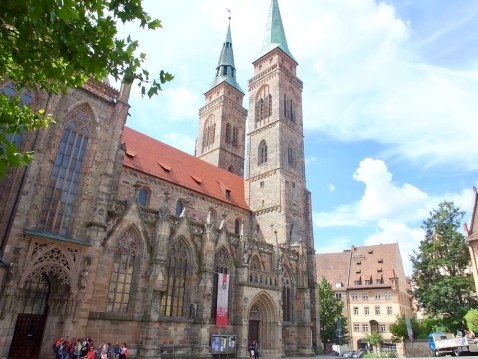
Formerly a Catholic Cathedral, this Lutheran Church is probably the only Protestant Church in the world that has a Catholic Saint buried inside!
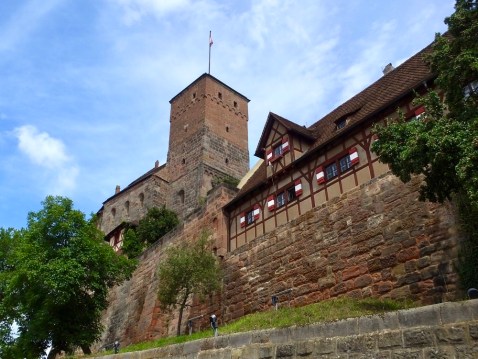
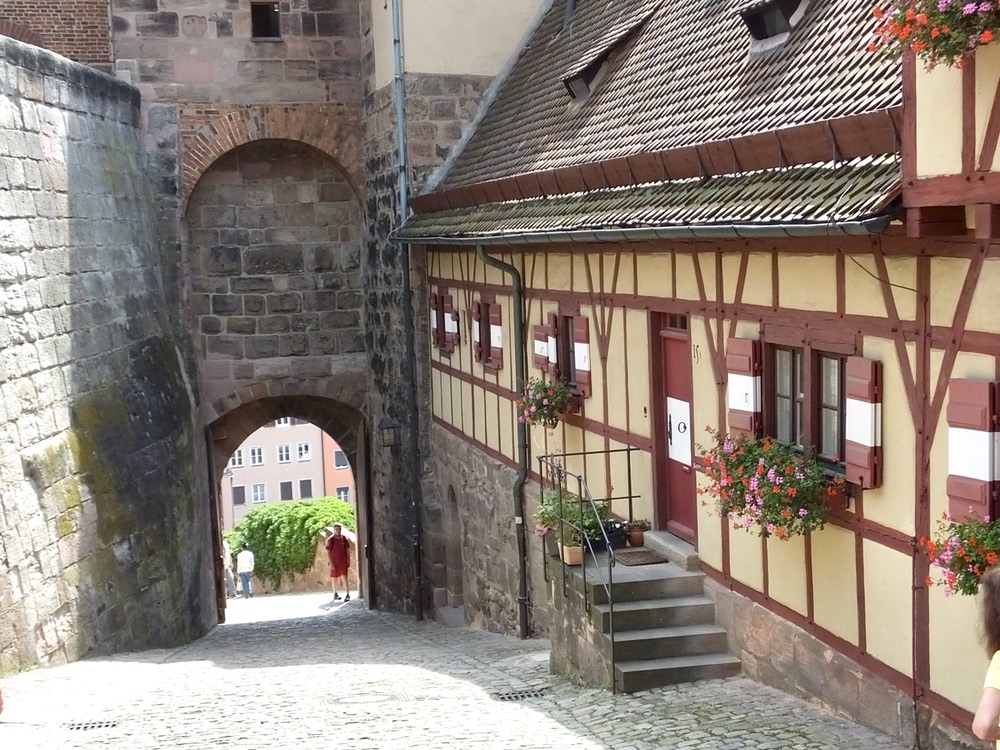
“Heaven’s Gate” leads to the castle if you’re heading uphill.
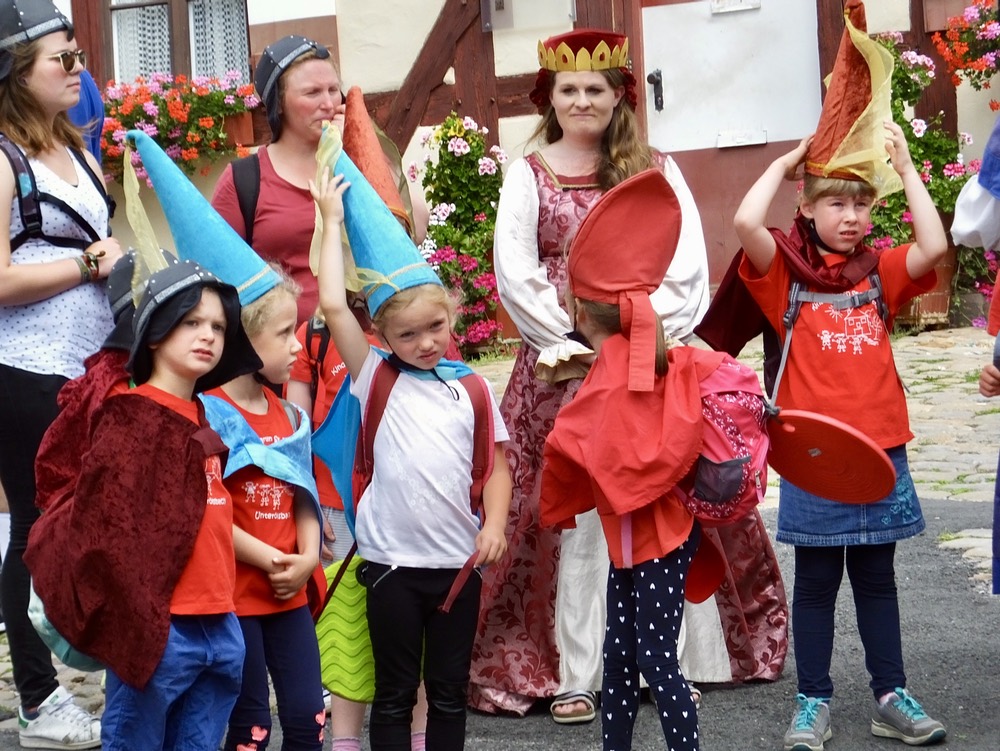
School children enjoying a day at the castle.
Day 7: Bamberg and a New Career
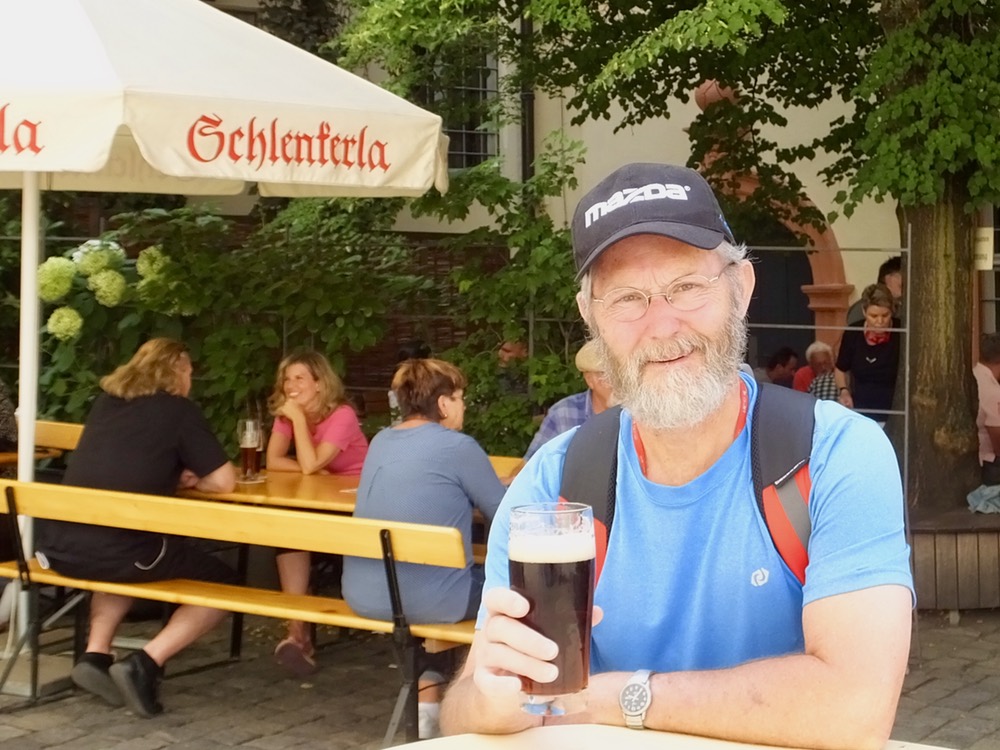
Enjoying Rauchbier or “Smoked Beer” in a classic Bamburg brauhaus.
A good day should include several new experiences. Using that criteria, today was a good day.
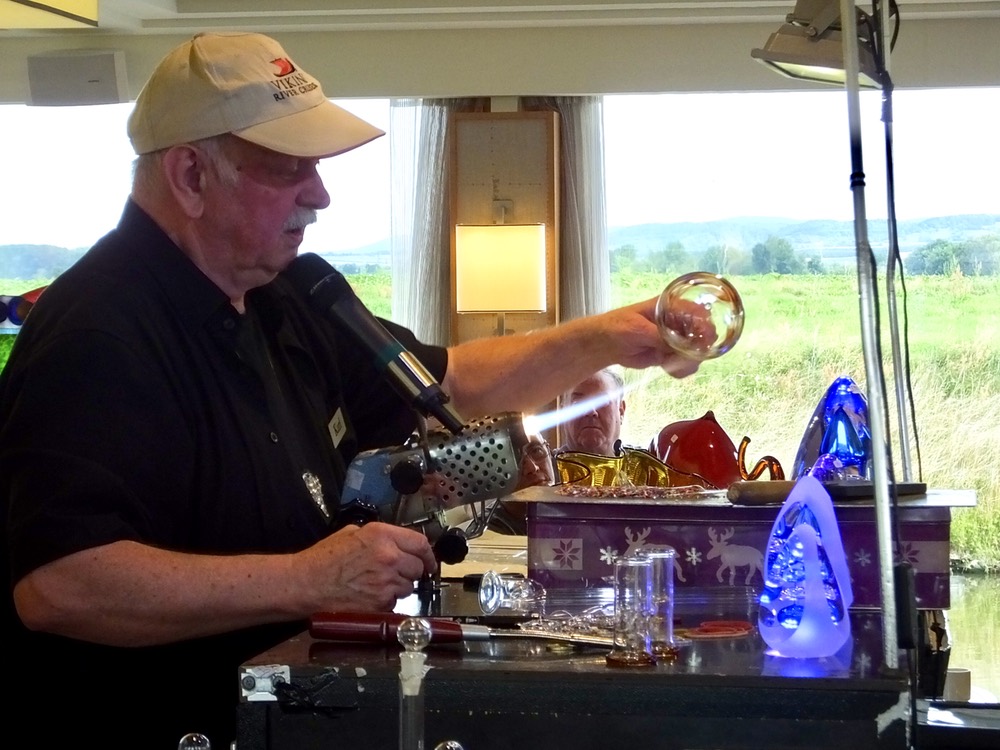
While we cruised on the Main River to our next port of call–Bamberg–in Franconia/Bavaria/Germany, Carl the Viking River Cruise Program Director thought we should have the opportunity to be entertained if we wanted to do something other than watch the river. So he brought aboard a sixth-generation glass blower from Wertheim, a small town near Miltenberg, who happens to be one of the best glass artists in the world, to give a demonstration of his art. In the course of his demonstration he asked for a volunteer to show how “easy” glass blowing is. Of course, I volunteered when the others in the ship’s lounge hesitated to step forward.
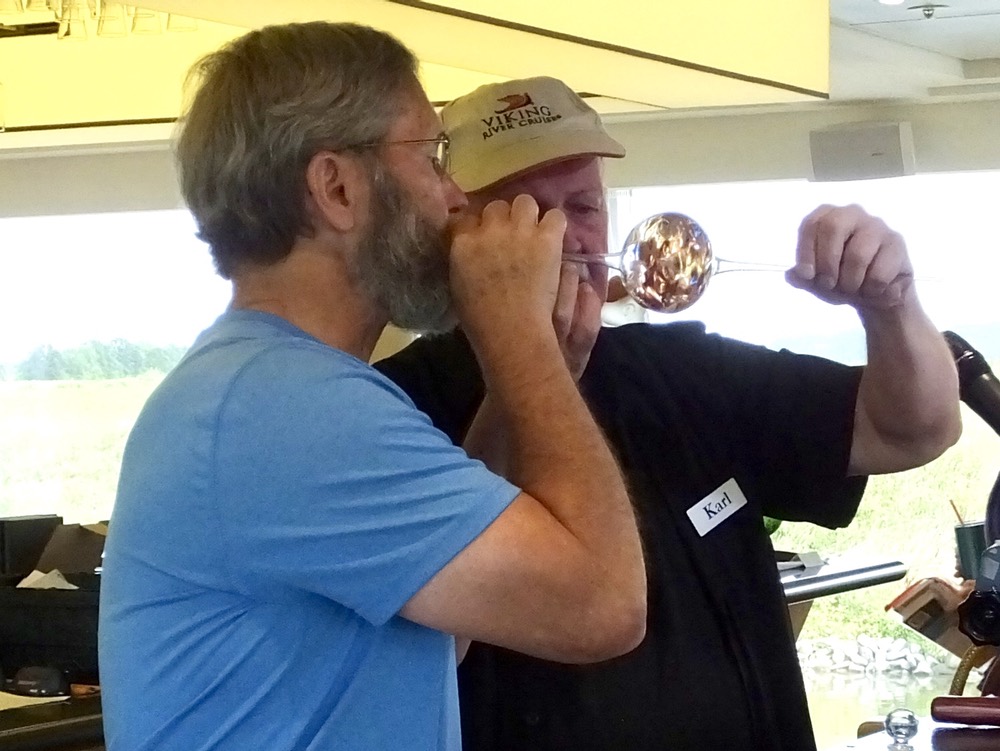
Karl turns me into a master glass blower.
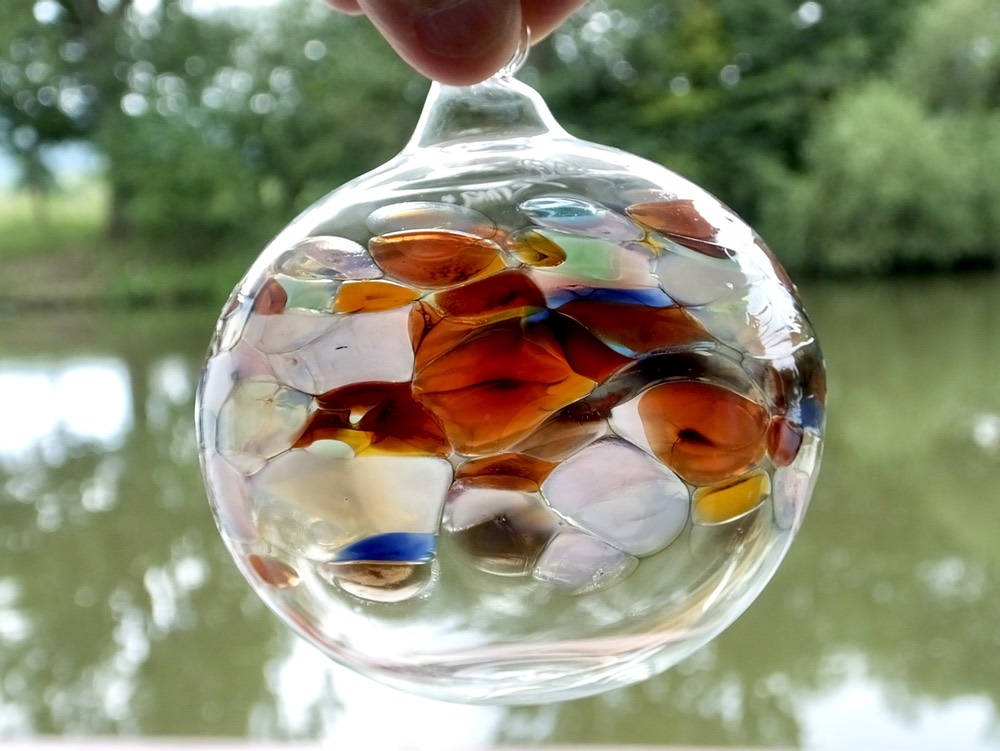
Karl Ittig, a showman as well as a world-class glass blower/artist, started me off with a shot of Jaegermiester, which he said was essential for good glass blowing. The Jaeger went down smooth. After sharing shots, we moved on to the main course–glass blowing. Karl heated the special, hard Pyrex glass tube and gave it to me to blow into, with the unnecessary warning not to inhale. Working together, Karl and I produced a beautiful glass ball that he gave me when the demonstration ended. It will be one of the best souvenirs of this trip.
After docking in Bamberg and once again eating way too much at lunch, we headed into the city, another of the lucky towns to escape the wrath of allied bombers, leaving intact public buildings, shops and cathedrals that date back to the 11th century. Today happened to be a festival day and the city was crowded with festival goers and various magicians and other performers. Normally on Sunday, the city streets would have been relatively quiet and we wouldn’t have had to compete for sidewalk space with hordes of families and other celebrants. But it was nice to see how the populace enjoys themselves on a special day.
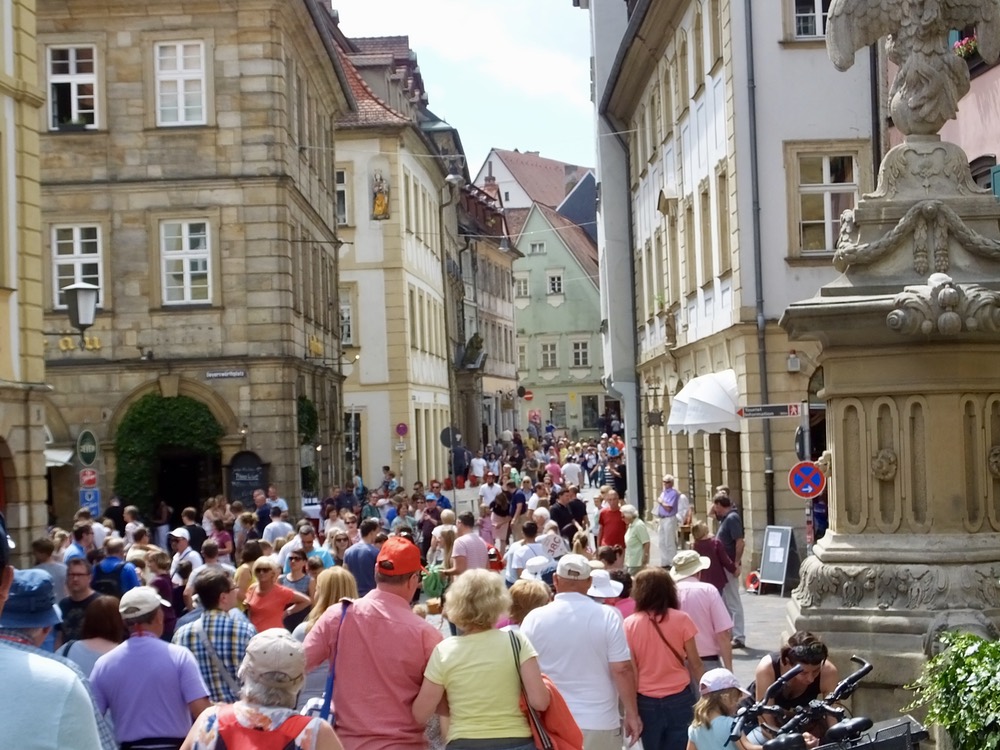
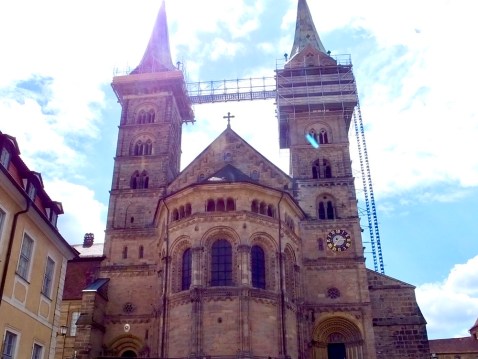
Our tour guide, Alex(andra), walked us on a one-hour tour focused mostly on old Bamburg. The city had it’s start sometime before the 12th century and was intentionally founded with seven churches on seven hills to mimic Rome, the heart of the Holy Roman Empire. Because it was a Sunday and the main cathedral (circa 1020) was in use, we couldn’t go inside as a group, but from the outside we knew it was an impressive structure. We passed by the Old City Hall, decorated with colorful murals and intentionally build in the middle of a river so the town wouldn’t have to pay taxes to the local bishop. The various cobblestone-covered plazas were enormous and even with all the crowds in town, many still seemed to be mostly empty. Behind one of the state buildings which held the state library we enjoyed a rose garden filled with flowers and statues and providing a tremendous view of the city spread out below.
When the tour ended and we said auf weidershen to Alex, I set course for the Schlenkela brewpub to try the talk of the town: Rauchbier or smoked beer. By cooking malt over an open flame, Bamburg breweries impart a smoky, bacon-like flavor to their dark beer. We had been warned it wasn’t to everyone’s taste, but it definitely suited mine. Joining the locals, I went to the window inside the tavern, ordered ein rauchbier, put a deposit on my glass, and went outside to enjoy the sunny afternoon. The beer garden outside was nearly full, but we found a small table at which we could stand and watch Bambergians (?) drinking their smoke beer, eating saubraten and enjoying the day.
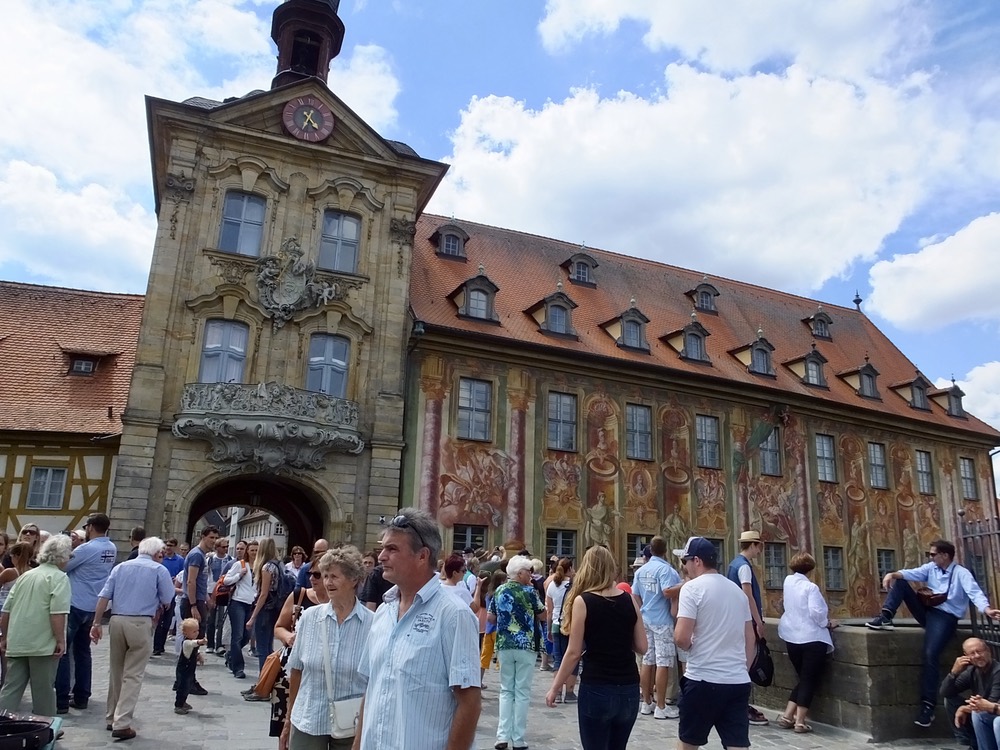
Old City Hall
After a couple leisurely stops along the way at shops and a market place, we headed back to the ship, ending another great day with another great meal of regional specialities prepared by the ship’s executive chef.
Tomorrow we dock at Nurmburg, site of the post-WWII war crimes trials where Nazi leaders were brought to justice and go off for another tour.
Glass Blowing
Old City Bamberg
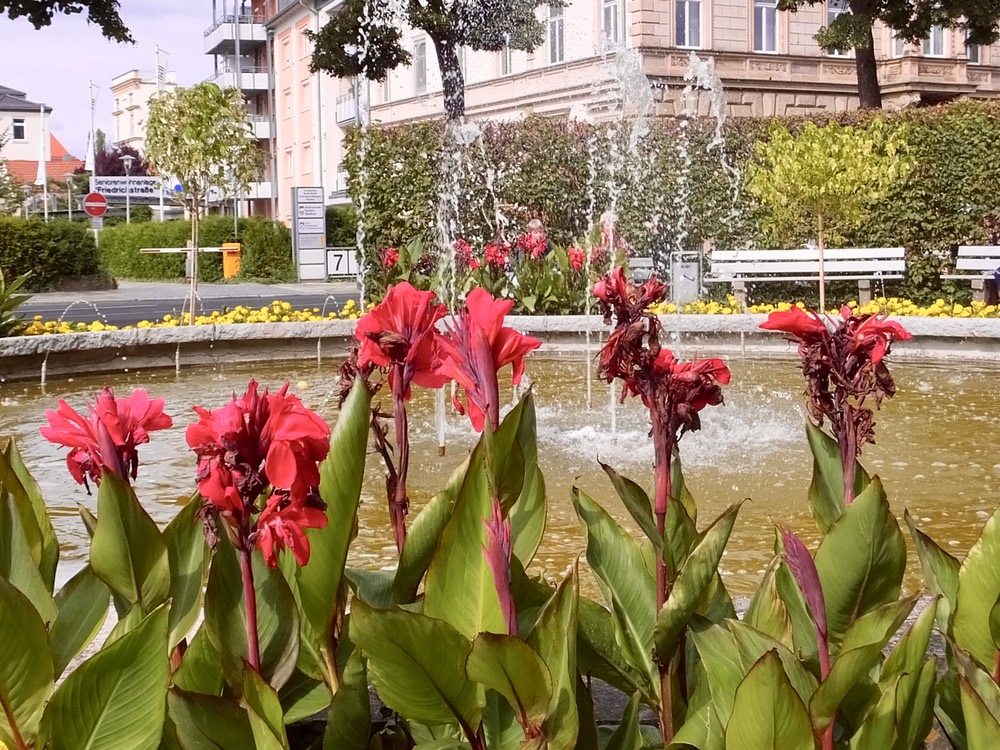
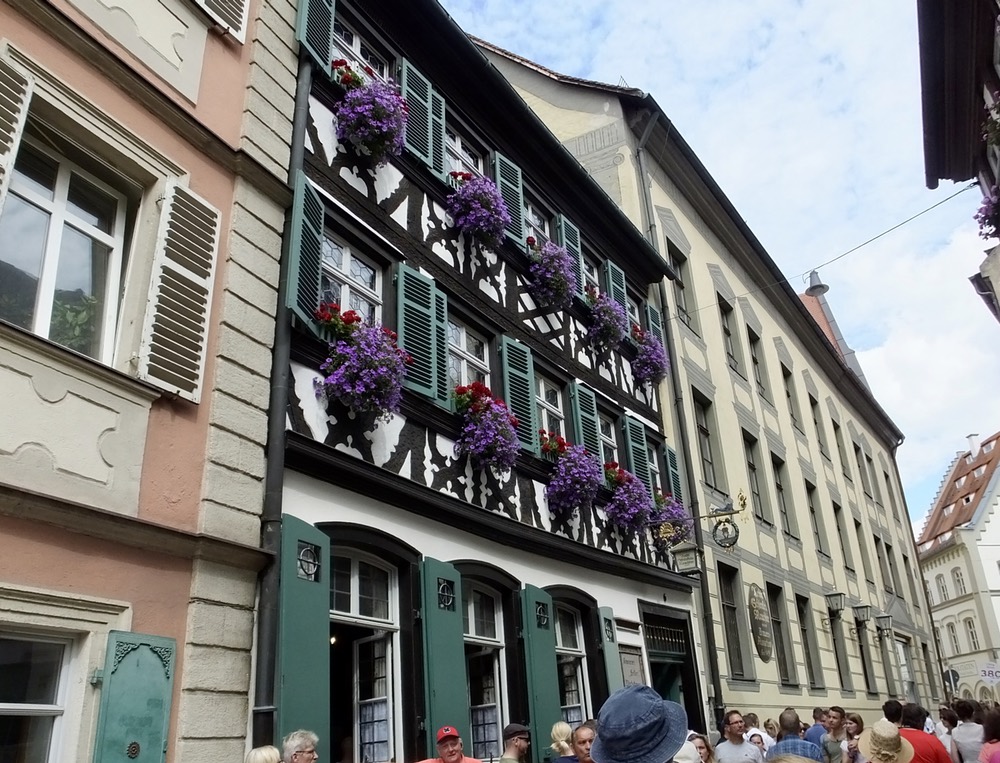
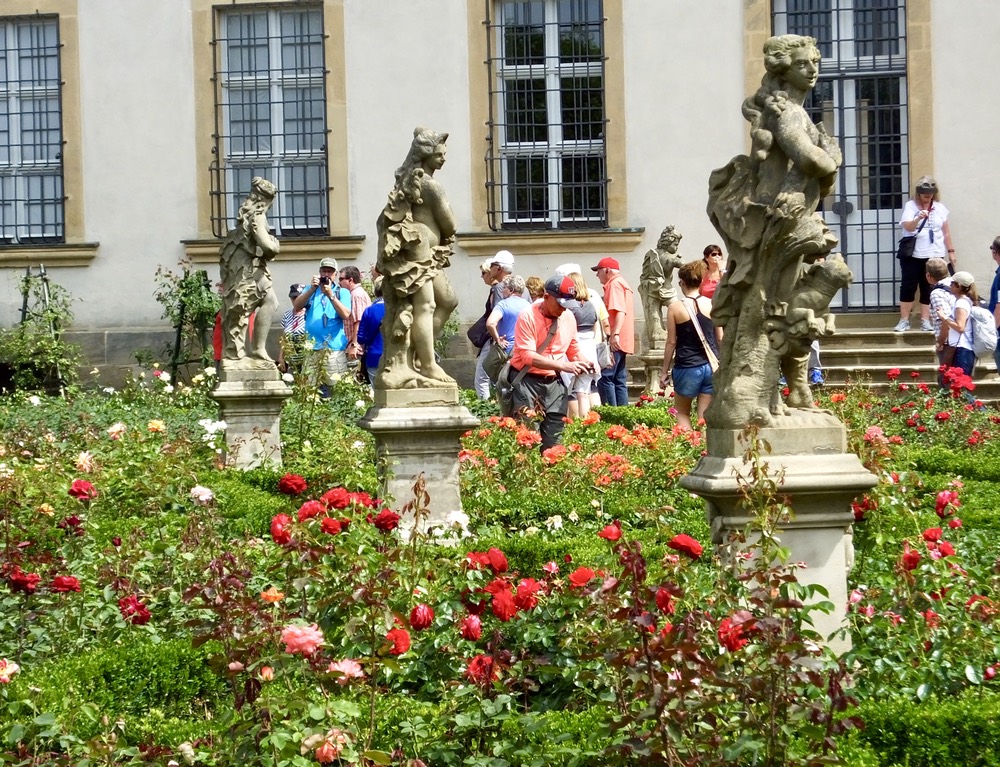
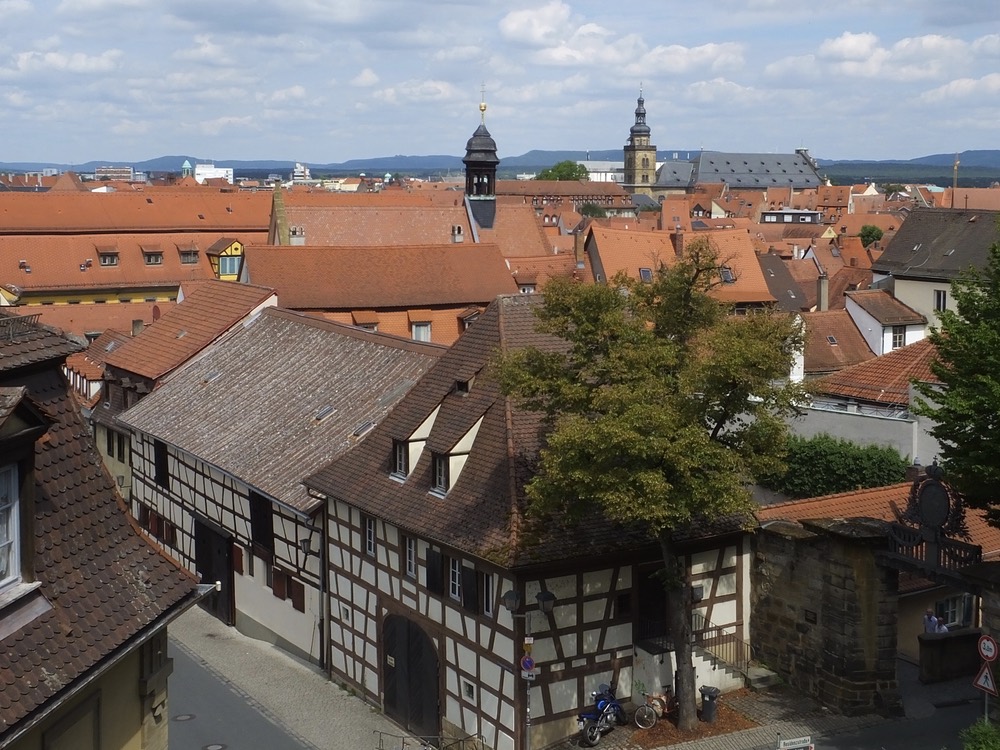
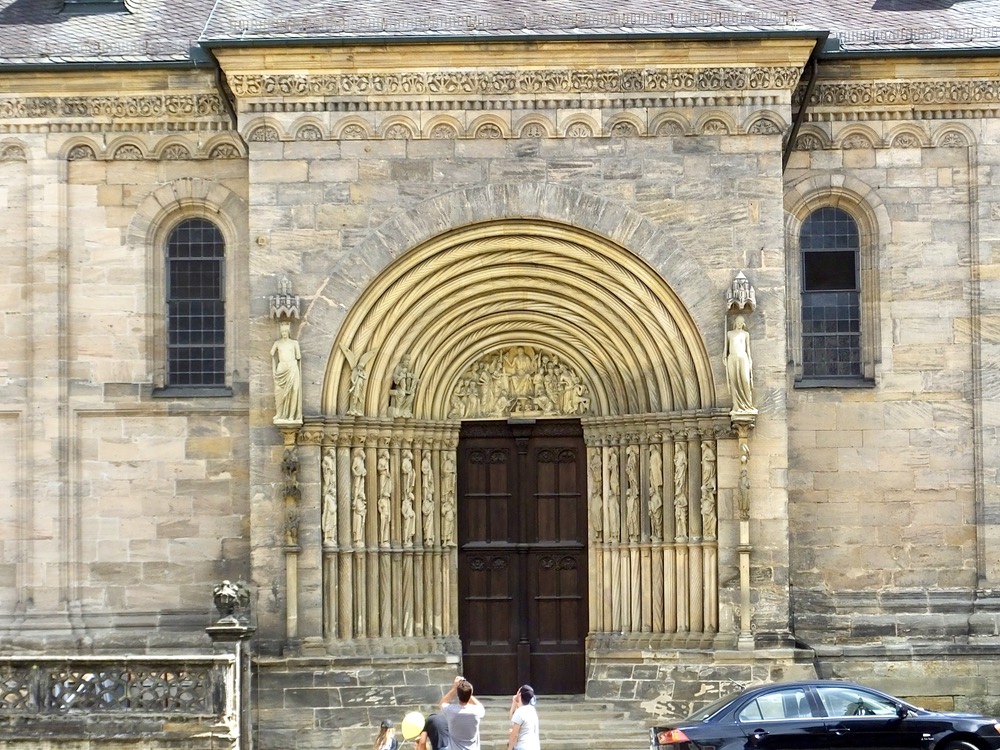
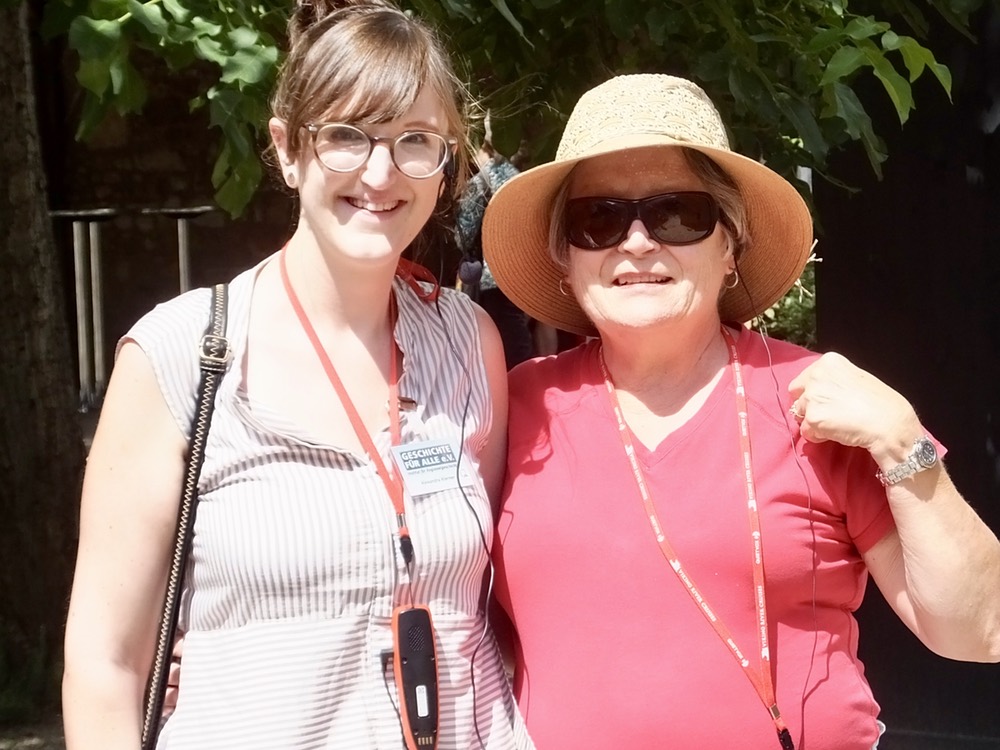
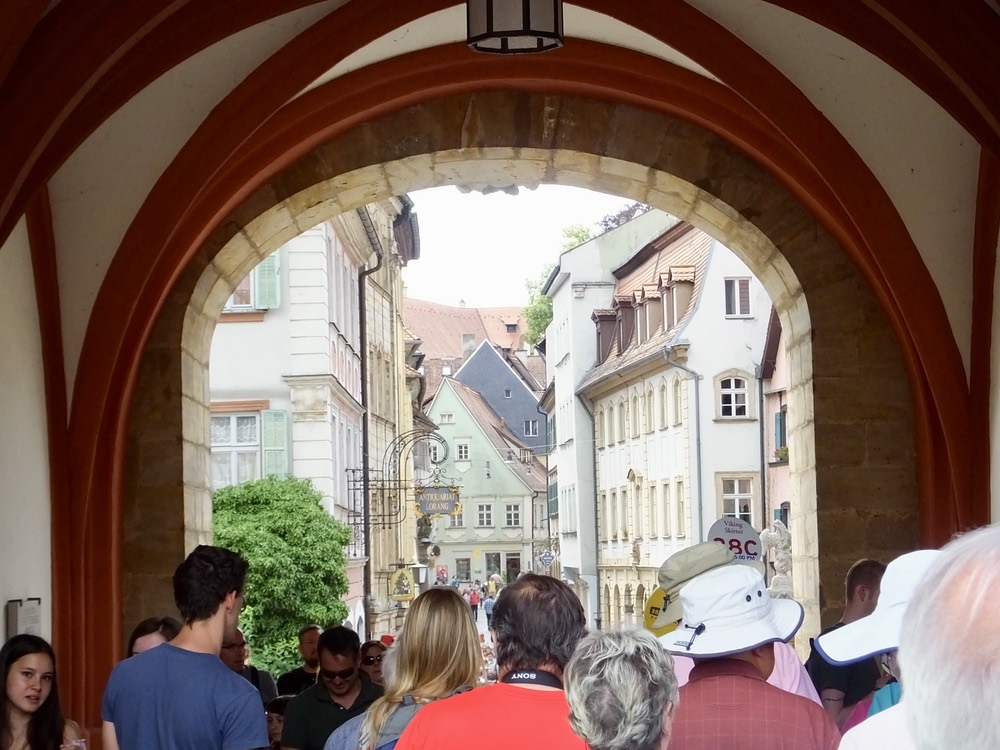
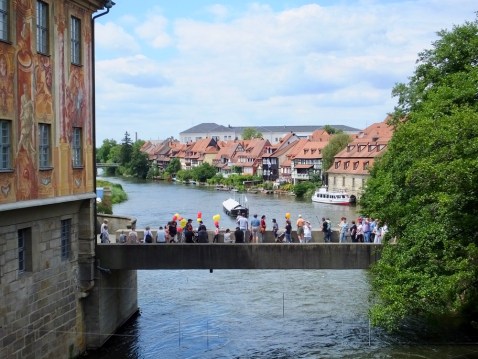
Bamberg is also known by some as “Little Venice.”
Day 6: Würzburg and The Residence

The Bishop’s Residence
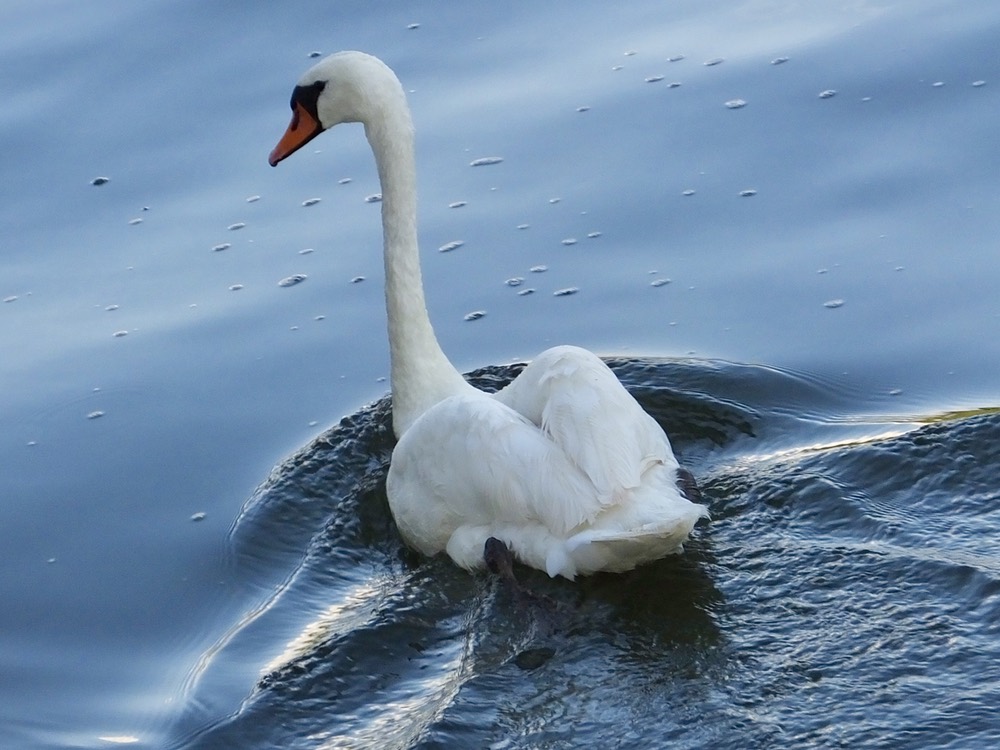
Waking early this morning knowing I had to post pictures to yesterday’s blog, I quietly slid open the veranda door of our stateroom and stepped into the cool river air. In the water just below, silently swam a snow white swan, a single beautiful creature enjoying the early morning with me on the Main River. What a great way to start the day.
Posting pictures to blog site when most of the ship’s passengers are still abed is much less frustrating than competing for bandwidth in the evening when everyone is online emailing, sending pictures home, surfing the web and doing whatever else sucks the life out of the ship’s internet connection. I think I’ve found my solution to posting frustration. However, as I write this now, the connection seems to be reasonably fast and I may get everything done early tonight for a change.
This morning we docked briefly in Karlstadt where buses waited to take us on a 20 minute ride to Würzburg while the ship made the same trip in about three hours. Our first tour stop for the day was “The Residence,” the former home of eight Prince-Bishops from the early 18th century (ca. 1720) until early in the 19th century (ca 1808). The Residence (aka Residenz) should more accurately be called a baroque palace and is one of the most extravagant and stately buildings in all Germany. A Prince-Bishop was both a political figure and the head of the Catholic Church in this region and thus controlled power and money that made possible the building of this huge and opulent structure.
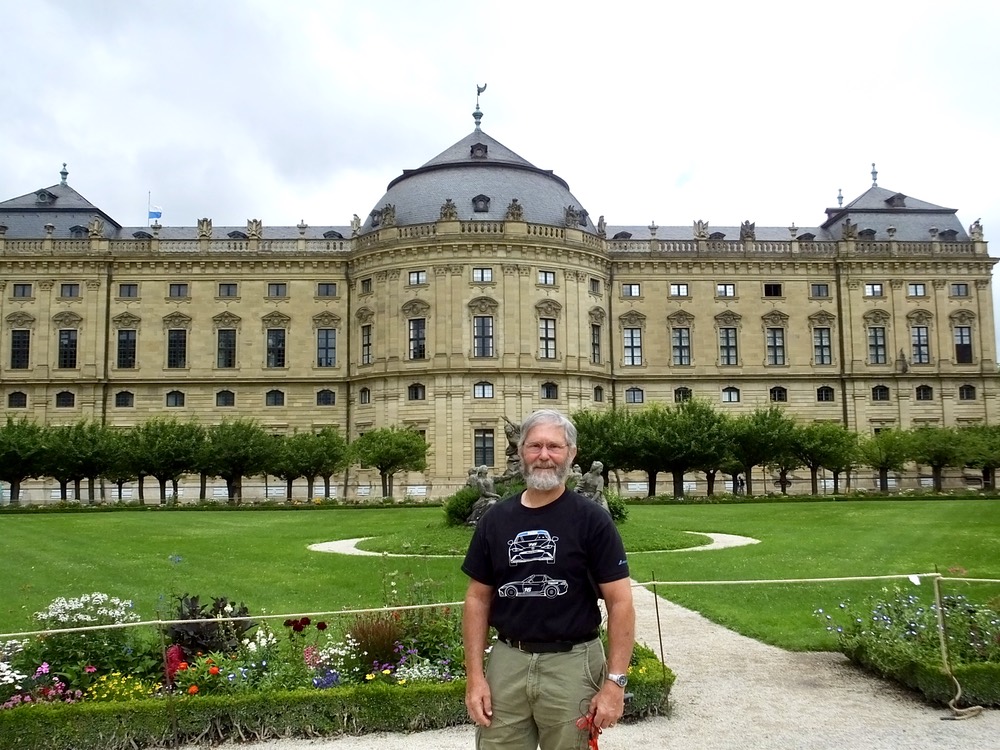
This is not me in front of our new home in North Carolina. It’s one end of the Residence
Pictures of the exterior and gardens are permitted, but no photography is allowed in the interior, much to my chagrin. You can see pictures of the interior and learn more about the residence and it’s amazing structural art at several web sites, including this link to Wikipedia.
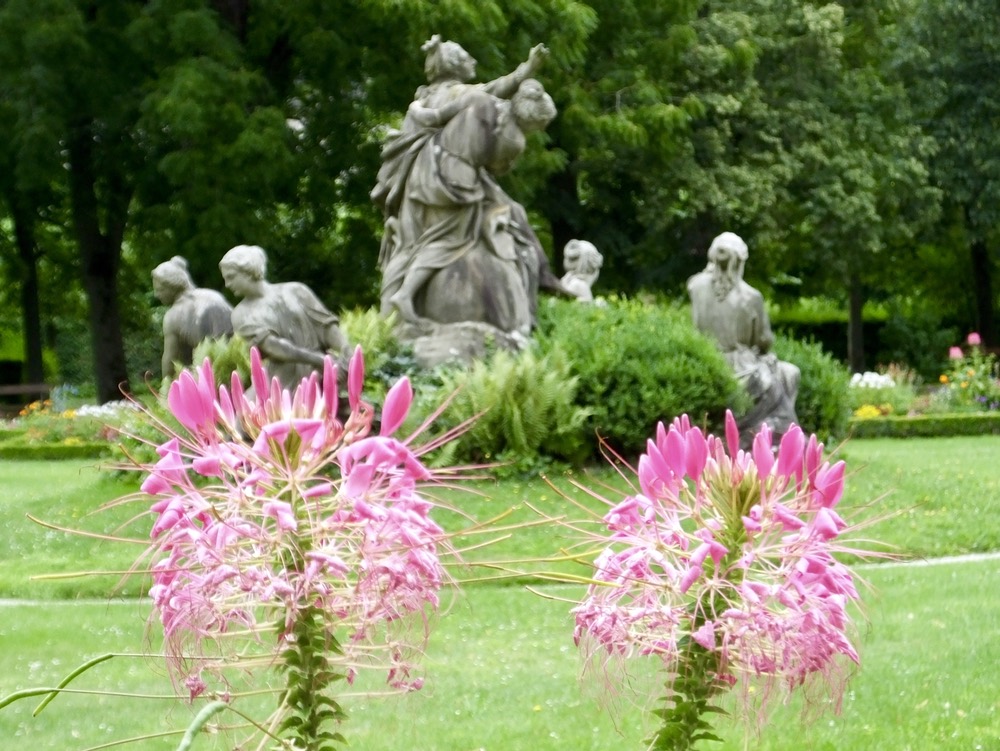
In the Residence Gardens
The one-hour walk through the palace was awe inspiring for the art and craftsmanship on display, but also thought provoking as I considered the vast economic and social distances between the privileged few who lived in and ruled from the residence and the many whose taxes, labor and support made possible the life lived by the most exalted of the upper class. As an artistic statement, I approve of the palace and its appointments; as a political statement I of course disapprove of the vast gulf that separated the classes.
One other note: Near the end of World War II, Würzburg suffered the same fate as several other German cities, Dresden being the most well-known, which were fire bombed and almost completely destroyed. In the case of Wurzburg, about 90% of the city was destroyed in the incendiary induced firestorm, including much of the Residence. What remained was saved, in large part by Americans recently made famous by the movie “Monuments Men.” By 2000, the residence had been largely restored at a cost of €20 million proudly paid by German and Würzburg taxpayers, and subsidized in a way by the U.S. Marshall Plan.
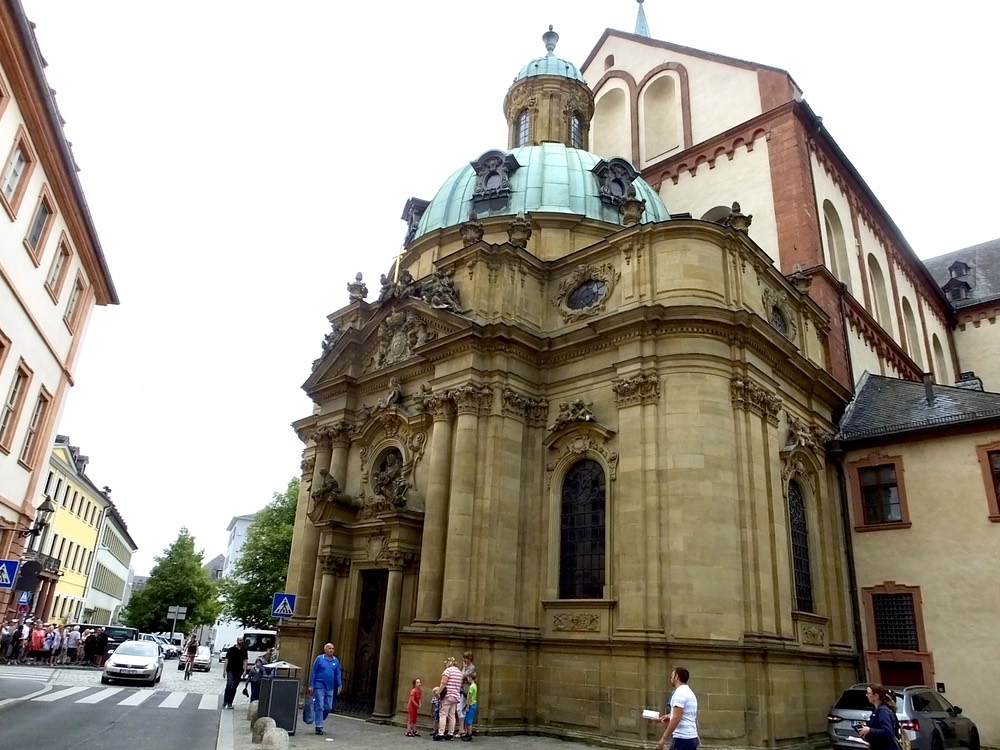
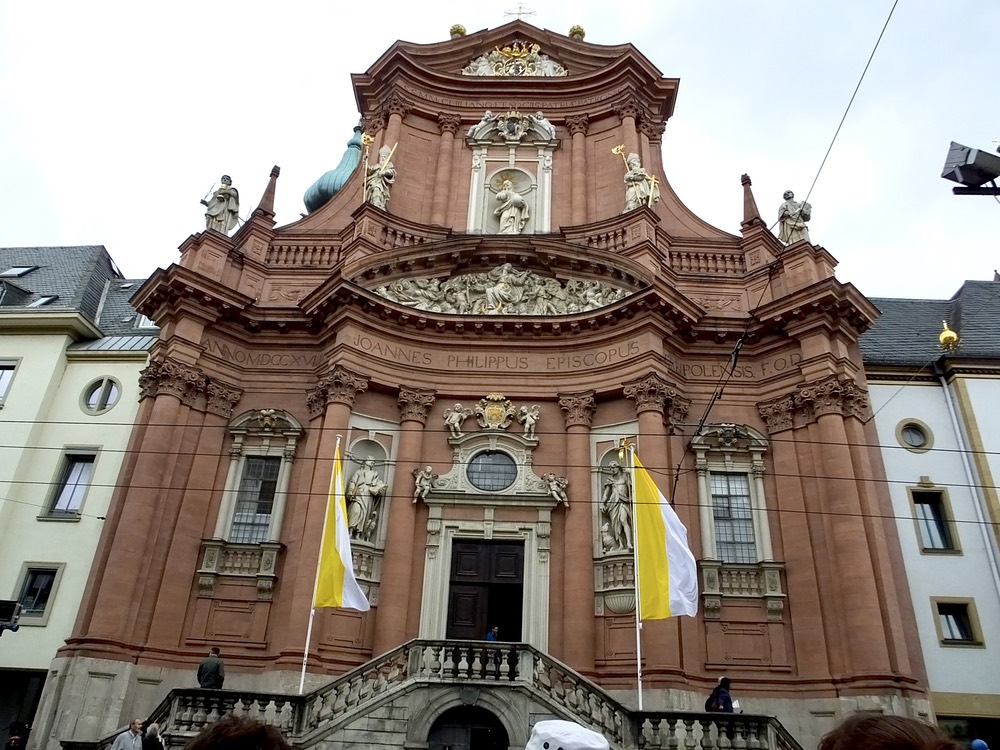
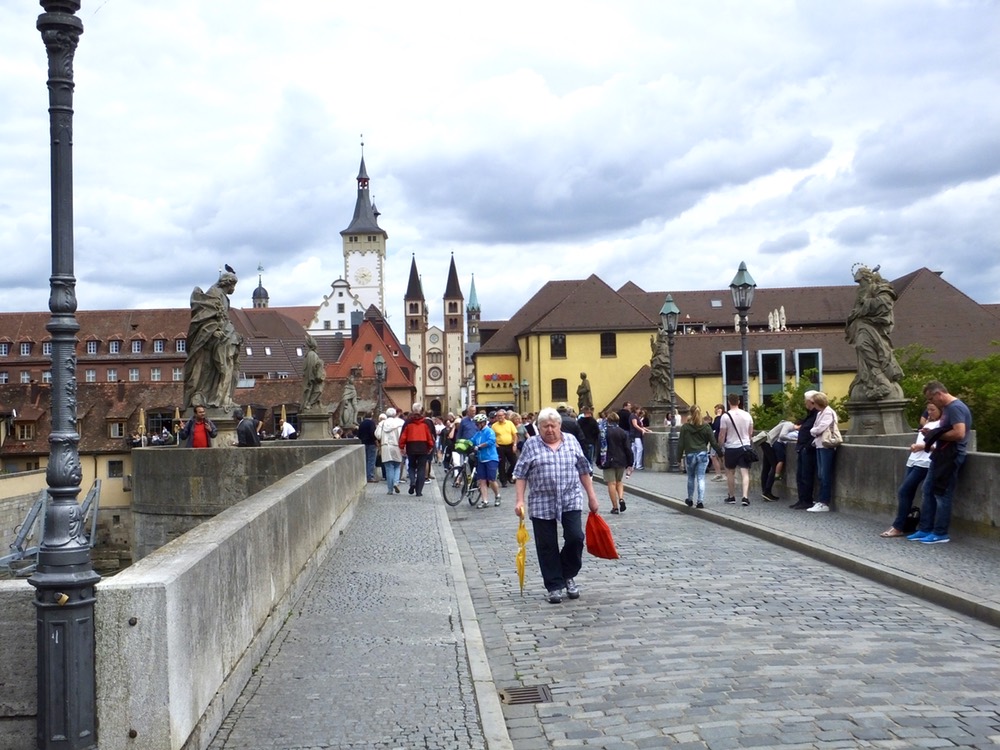
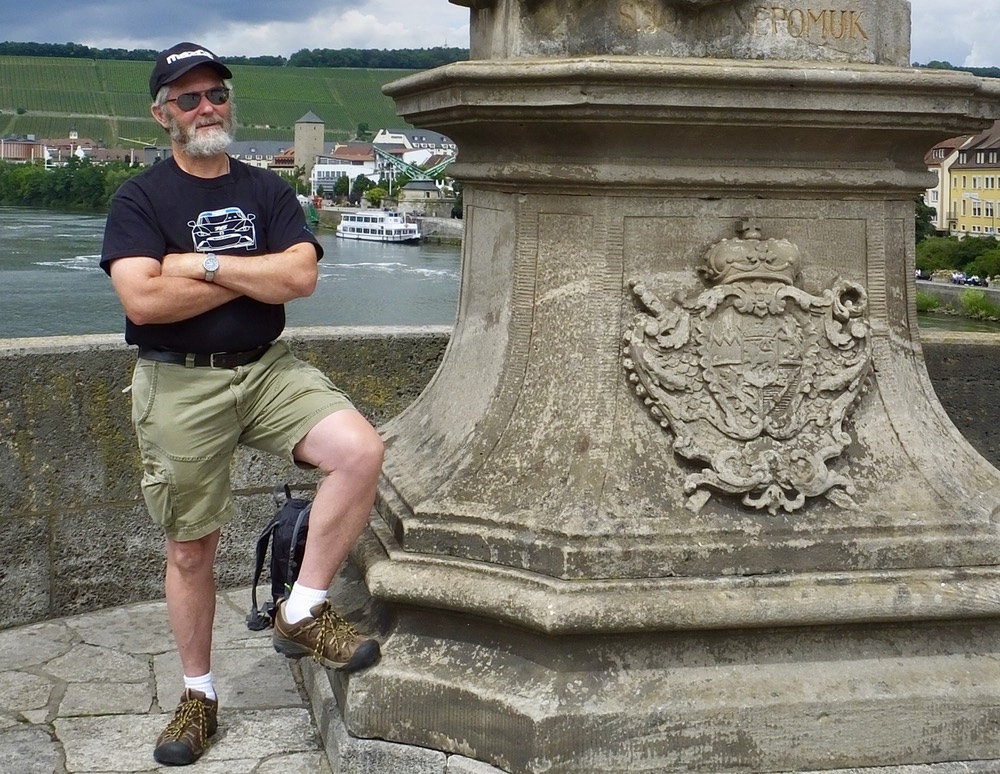
Following our time in the Residence, we headed out for a one hour tour of the center of Würzburg and several hours of free time walking through the city and it’s busy market place. Our guide correctly pointed out on several occasions that churches dominate the skyline of the city and still play an important role in the lives of the people who live there. I focused my camera on a few of the more prominent and striking examples.
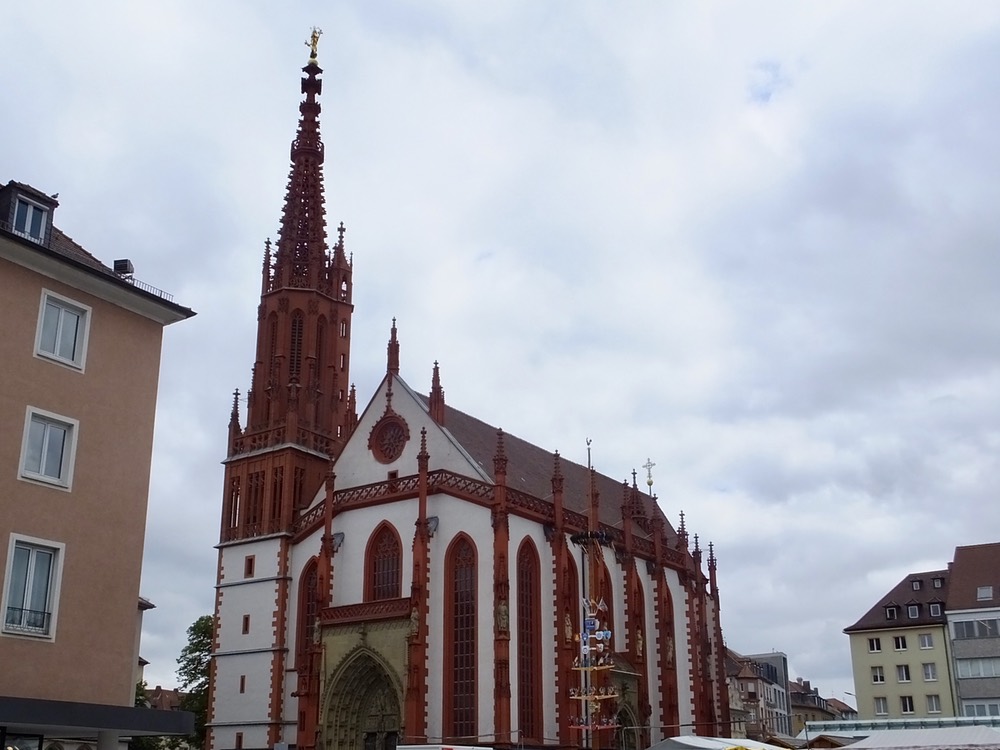
Church of the Virgin Mary
A large festival honoring the patron saint of Würzburg (St. Killian, also the patron saint of Ireland) was underway in the city and we competed with pilgrims for sidewalk space. Large churches also competed with one another for space and every block seemed to contain several churches or cathedrals, any one of which would have made most cities proud.
The market square has been part of city life here for a thousand years and today was no different. Vegetable stalls, clothing tents, jewelry vendors and a endless variety of other merchants hawked their domestic and imported wares to tourists and residents alike. It was a great place to people watch and to get a feel for the flow of life in Würzburg.
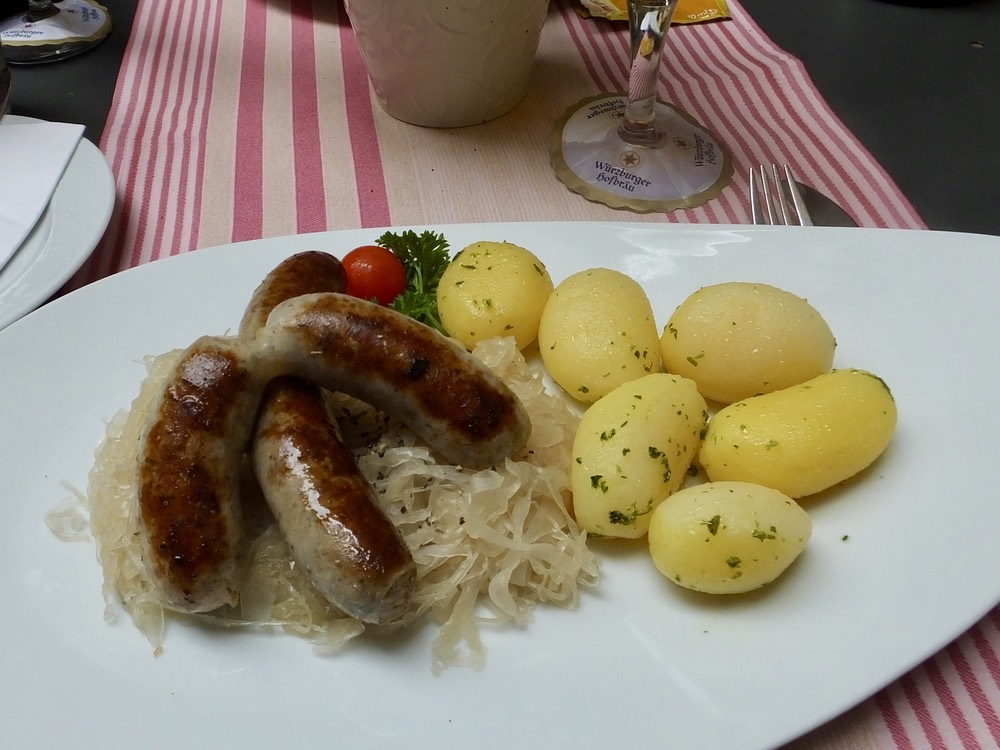
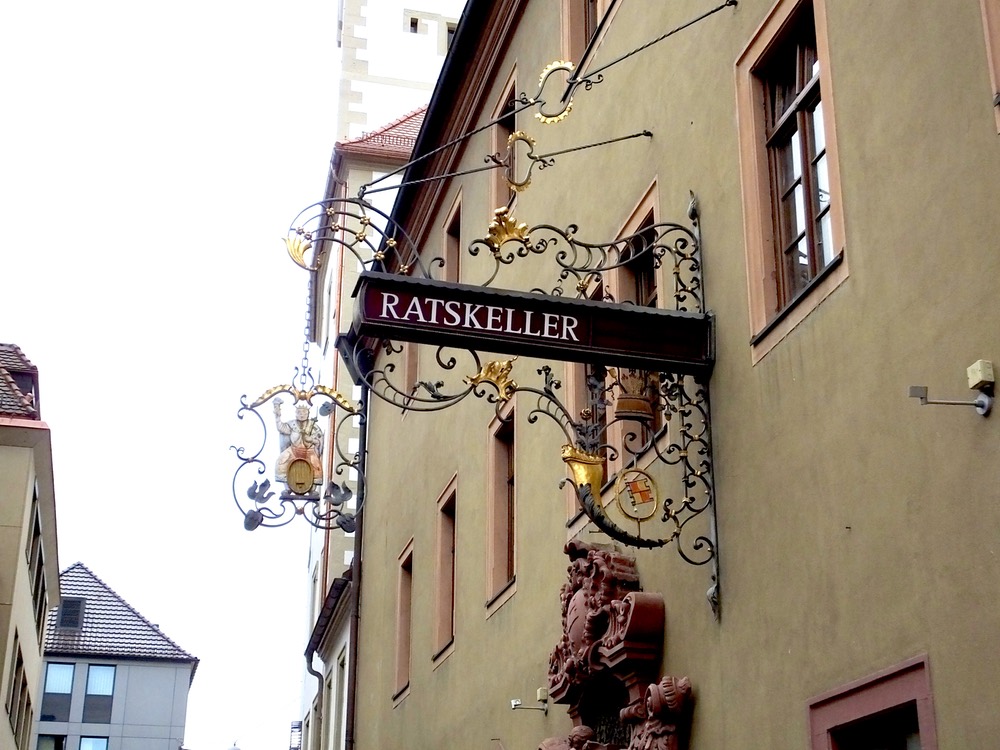
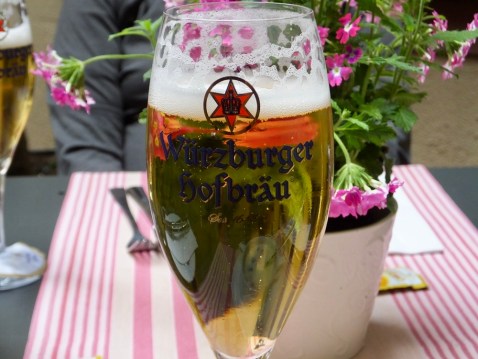
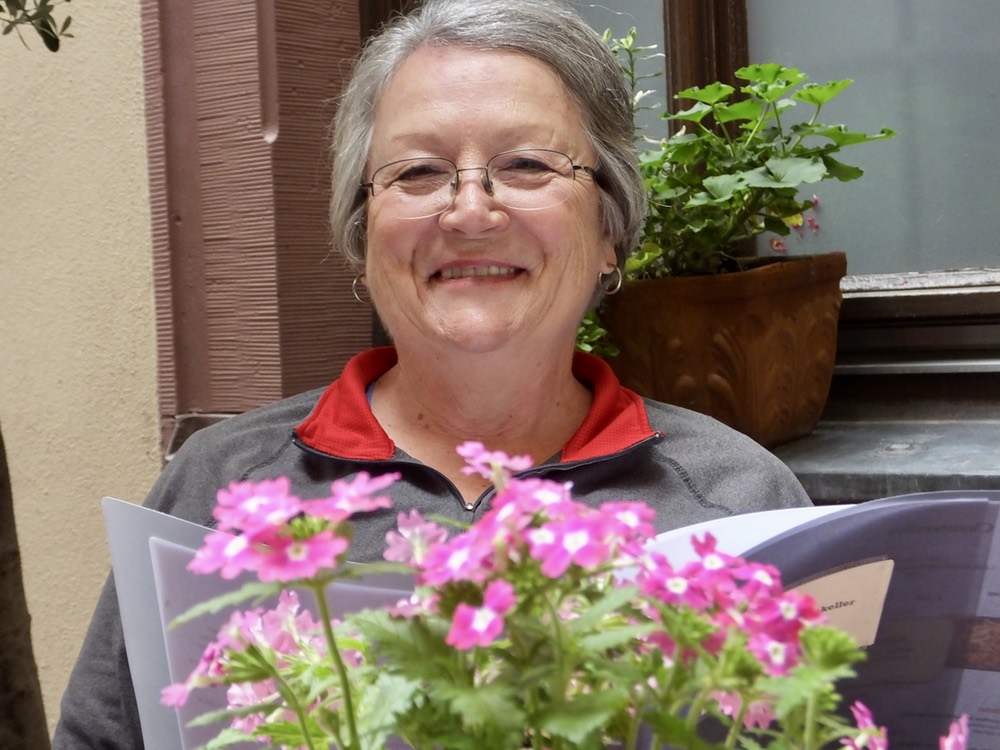
We could have gone back to the ship early but decided to spend a large part of the afternoon in the city exploring and experiencing the local cuisine. Every town in Germany probably has a Ratskeller restaurant/bar, which roughly translated means the place where government officials meet outside of city hall to drink. We chose the Ratskeller because it was nearby and because it promised bratwurst, sauerkraut, rye bread and beer. Find a table outside and a waitress who speaks English and you’re in for a Franconian treat. As usual, I ate more than I should have, but it was delicious and the beer was cold.
Our only purchase today was another bottle of white wine for which this region is well known. I anticipate emptying it tomorrow or the next day sitting on my veranda enjoying the river views.
It’s nice to finish the blog early for a change. More to come tomorrow.
More Views from Würzburg

Day 5: Shipboard Activity and Miltenberg
Click on any image to enlarge it.
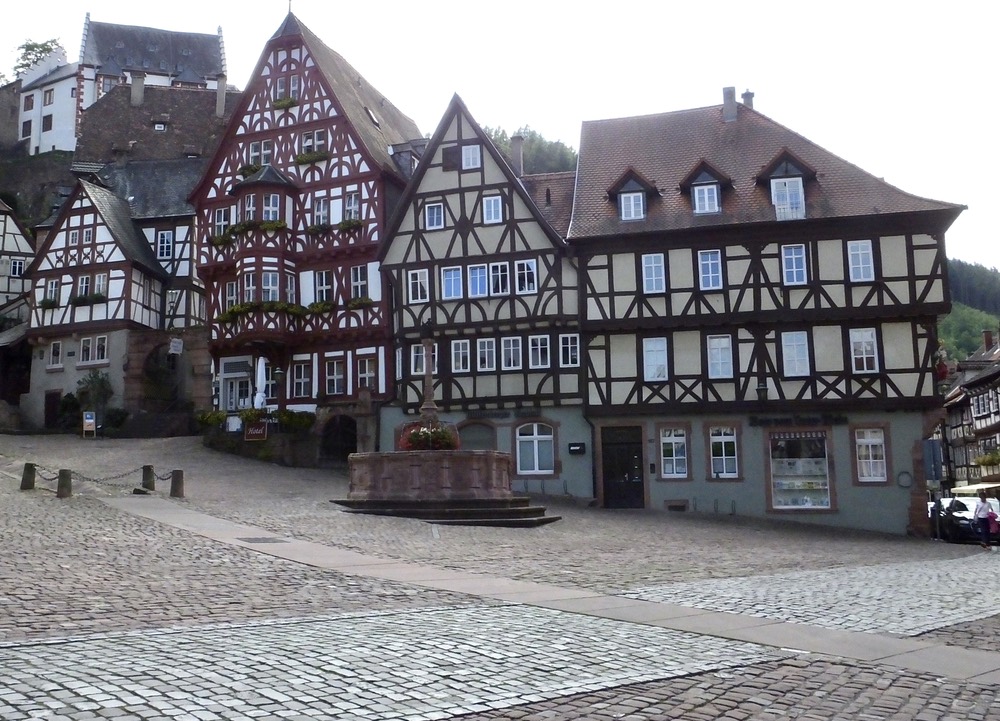
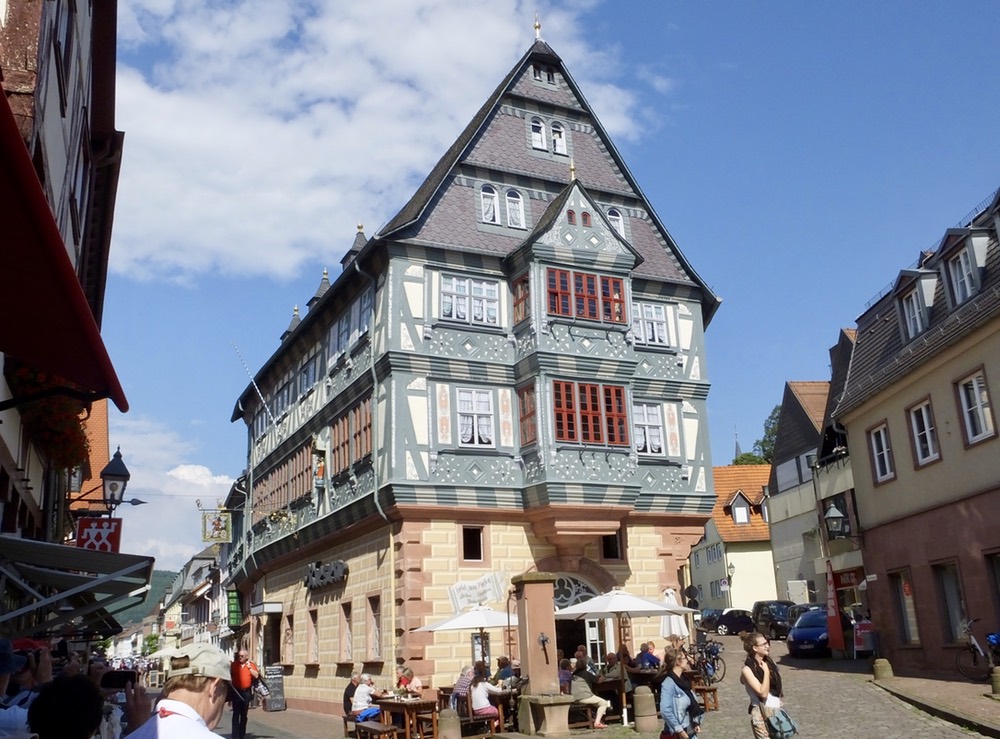
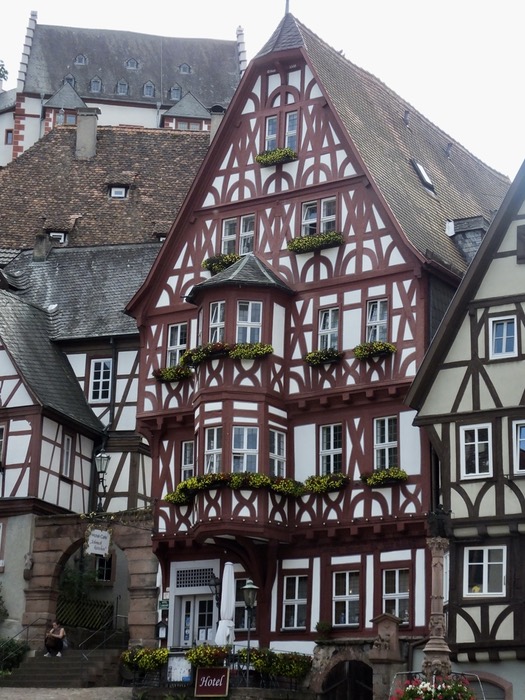
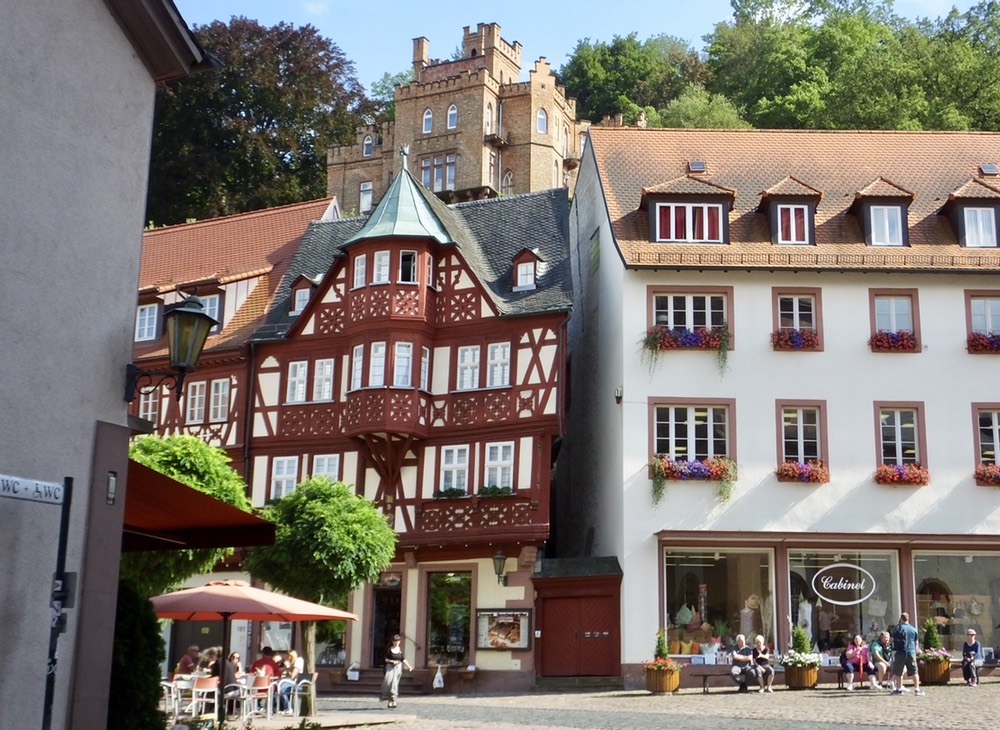
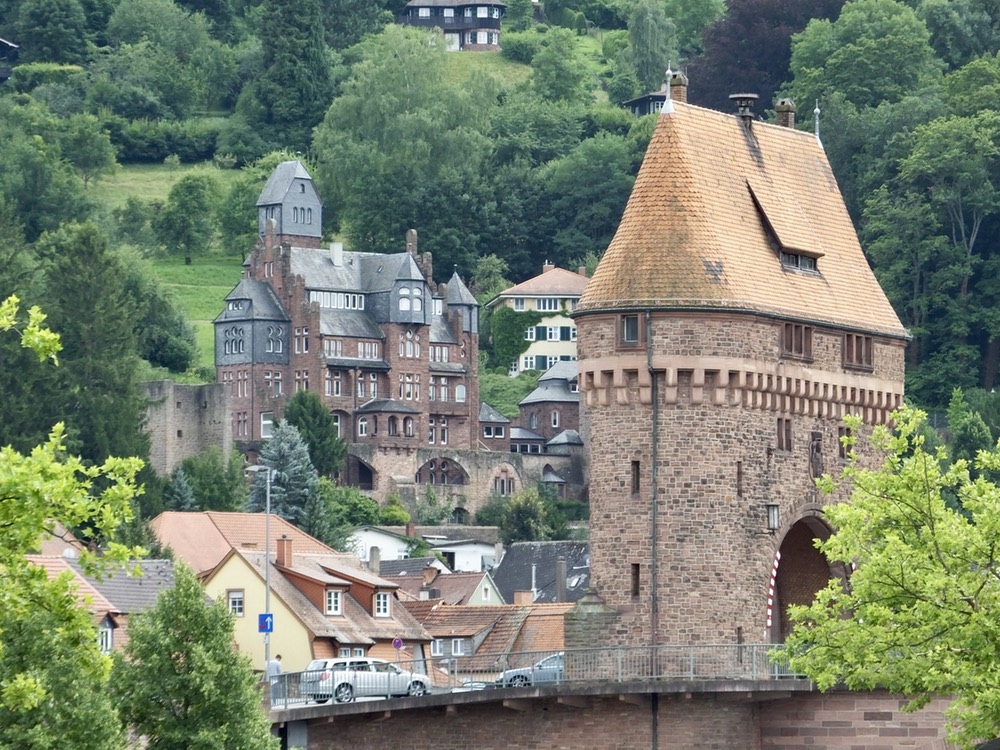
Very few German towns escaped the punishing Allied air craft bombing runs (including my dad’s) during World War II, but today we toured a town untouched by that war, parts of which remain pretty much as they were in the 13th, 14th and 15th centuries when the original town was built. The picturesque town along the Main River is Miltenberg, where we spent an enjoyable three hours learning some of its past and shopping in its stores on a thoroughfare where people have shopped for more than 800 years.
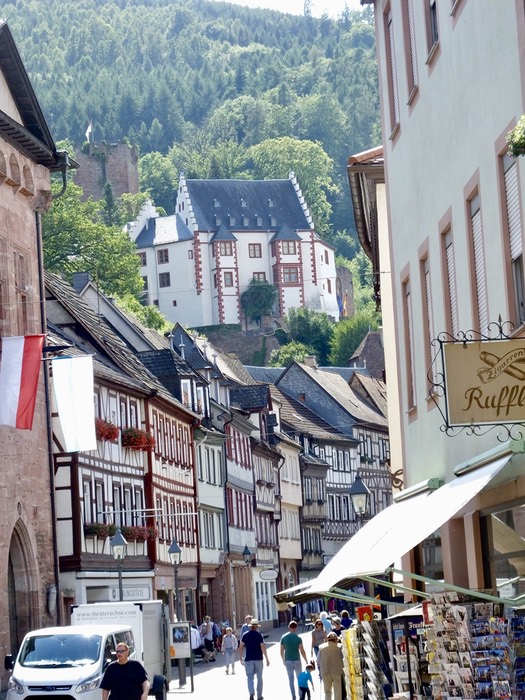
Miltenberg escaped the devastation suffered by hundreds of other German towns after 1942 in large part because of what it lacked: an industrial base. What the town was and is famous for continues to be its red sandstone, its abundant timber resources and its delicious white wine, none of which attracted the attention of Generals and bomber pilots. And the red sandstone not only served as building material in this village on the Rhine, but has helped build cities as far away as Moscow. And the abundant forest resources provided logs for the half-timbered houses and shops that lined the streets of the town. And the white wines simply made living here all that more pleasurable.
But more of Miltenberg later.
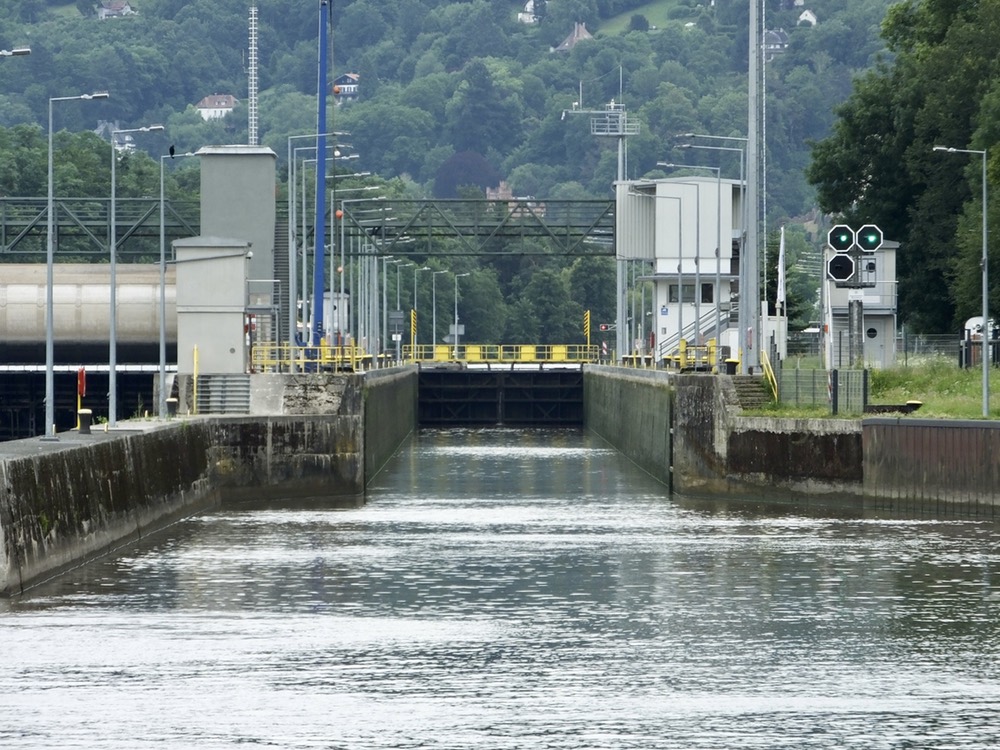
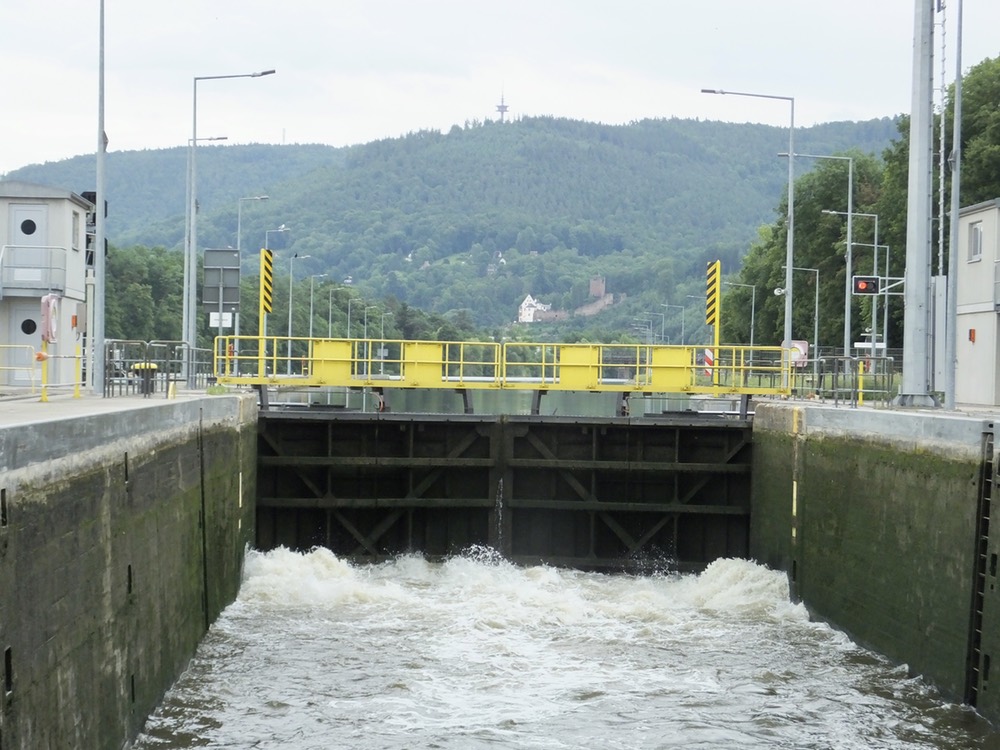
Today, before arriving at Miltenberg, we navigated through a half dozen or more locks that make navigation on the Main River possible. About every 7-8 miles, a small dam and an accompanying lock allows river traffic to move smoothly, albeit very slowly, up and down the river. Over the course of our 1,100 mile cruise, we will go through 67 locks, each of which can slow or stop the ship for up to 30 minutes. So, it’s cruise, slow down, stop, enter the lock, close the rear gate, flood the lock, open the front gate, and begin cruising again. For about 7 or 8 miles. Then do it all over again.
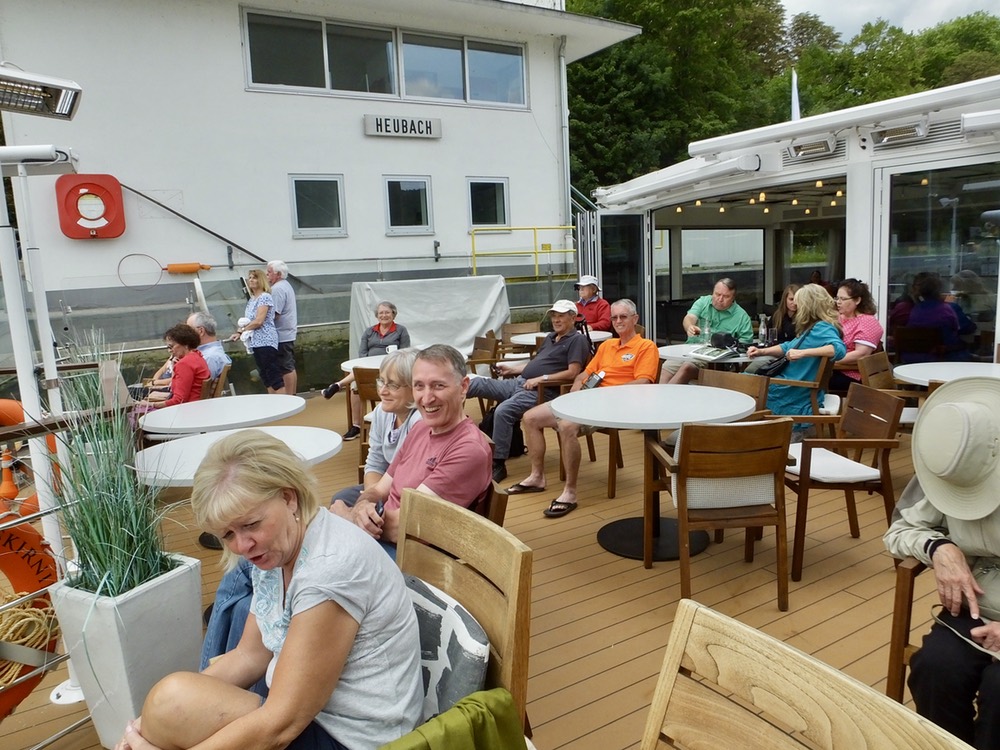
That makes for a slow cruise, and the ship’s program director, Carl, has to find ways to keep 190 guests occupied and entertained. Today’s shipboard activities included a brief German lesson from Carl, an Austrian who speaks six languages, holds a Ph.D. in economics, and keeps everyone entertained with his unique, German-accented delivery of various announcements. While I can’t speak German any better than I did before the lesson, I learned things about the language that will be helpful if I get lost or need to find a toilette or just want to say Good Morning (Guten Morgen, but only before 10 a.m. and only once per person).
Following Carl’s German lesson, the ship’s engineering office gave a one-hour presentation on the construction and operation of the Viking Skirnir. The ship (not a boat) is more than 450 feet long, a little less than 40 feet wide, and is powered by two large Catapillar diesel engines, which in turn power electric motors attached to eight propellers on four shafts aft and side thrusters at the bow. Viking now has 50 Long Ships, all of which are of a propriety design used only by Viking. The ship can travel for more than 2,000 miles on a single fill-up of diesel fuel, but it must stop every three or four days to take on fresh vegetables and other perishables to fuel the guests. It treats all its waste water before pumping it into the river, then offloads the remaining sludge twice on a trip such as this one. The captain’s wheelhouse (a misnomer since the house has no steering wheel but instead uses a joy stick for steering) is mounted on a hydraulic lift which can lower it to the level of the top deck when necessary to pass under various bridges. The clearance under those bridges after lowering can be as little as two inches after the ship takes on ballast to increase the draft from five feet to six feet. I learned more, but you get the idea. It was informative, entertaining and gave me a much better appreciation for this self-propelled, floating 95-room hotel.

By about 3 p.m., the lectures were finished and the last lock of the afternoon had been passed and we tied up in Miltenberg where we met Andreas, our guide for the afternoon. “Andy” recounted some of the history I mentioned early and told us much more about the various buildings along the tour of the Old Town and Market Square. One of the reasons Old Town remains intact, besides the lack of allied bombs, was the red sandstone that’s been quarried here for more than 1,000 years. Because of the abundance of available stone, all houses in town had their bottom floors build with sandstone, which helps explain why the town has never suffered a catastrophic fire that consumed most towns at one time or another. Houses and shops built in the 1300s remain much as they were the day construction ended. The residents and the shops have changed but the structure remains largely the same.
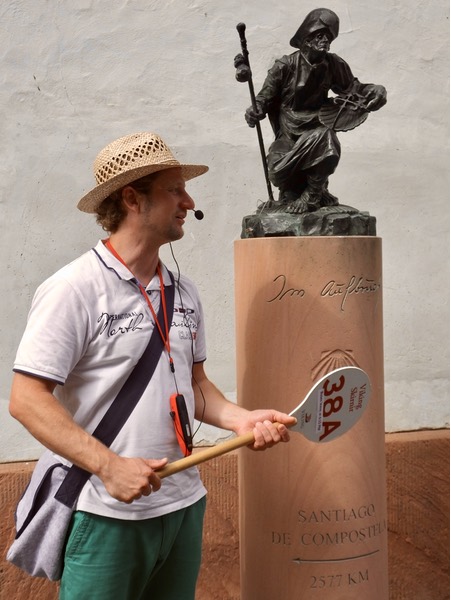
Our guide Andreas
After the tour, I followed Marilyn through various shops, contributing my credit card as the need arose. Maybe tomorrow I’ll post pictures of her modeling the fruits of her shopping labors. My purchases amounted to two bottles of local white wine, a sickeningly large box of locally-made licorice, and a pretzel. I think all this must be replacing the traditional travel pie.
Back at the ship, following another amazingly fine dinner, I’m writing without the benefit of WiFi, saving the post in Notes and hoping to copy and paste on my blog site before I go to bed. Pictures will have to follow tomorrow morning when WiFi seems to be faster.
Tomorrow more views of the Main, it’s locks and a stop at Wurtzberg.
Click on any image to enlarge it.
Cruising Along the Main River
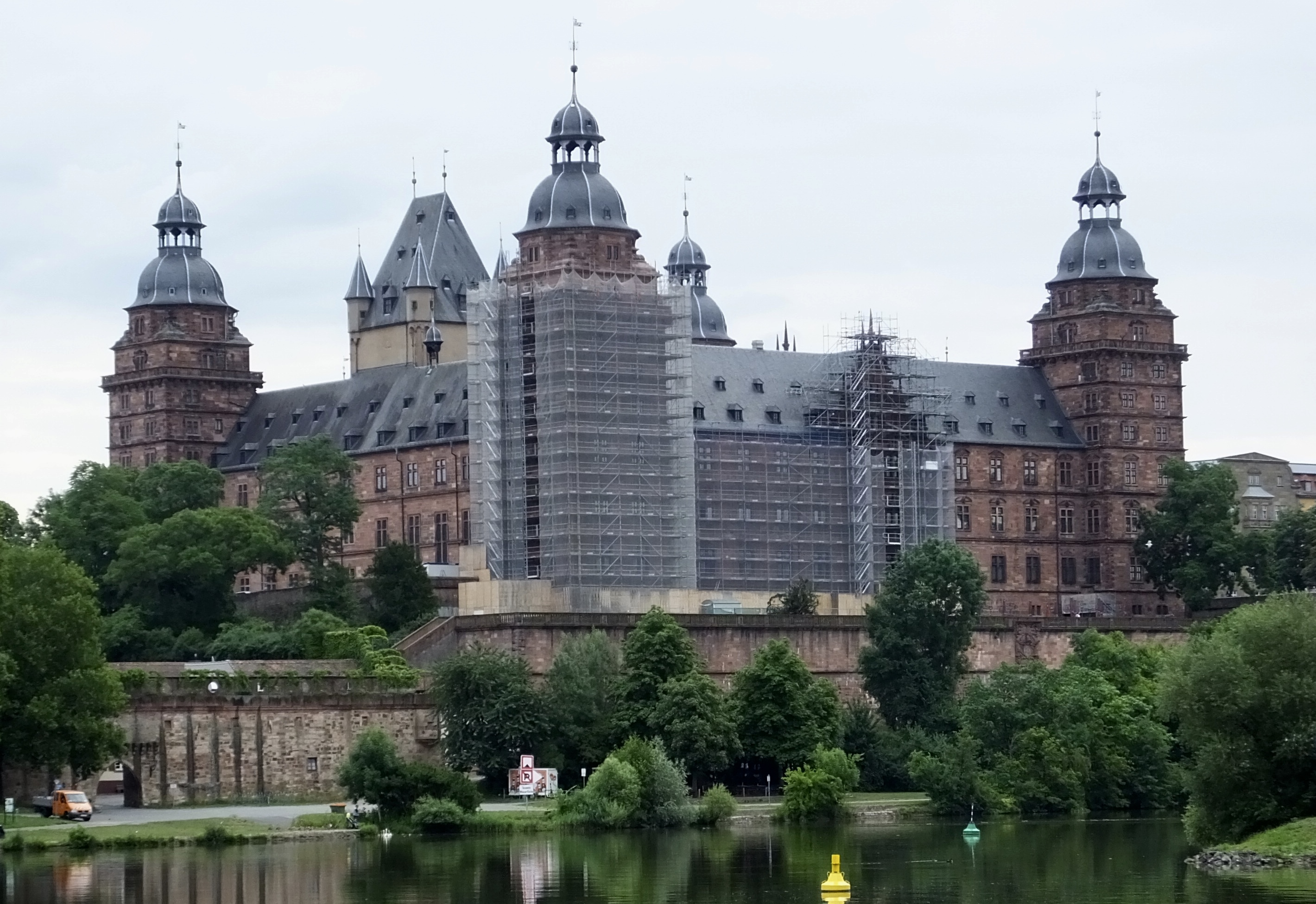
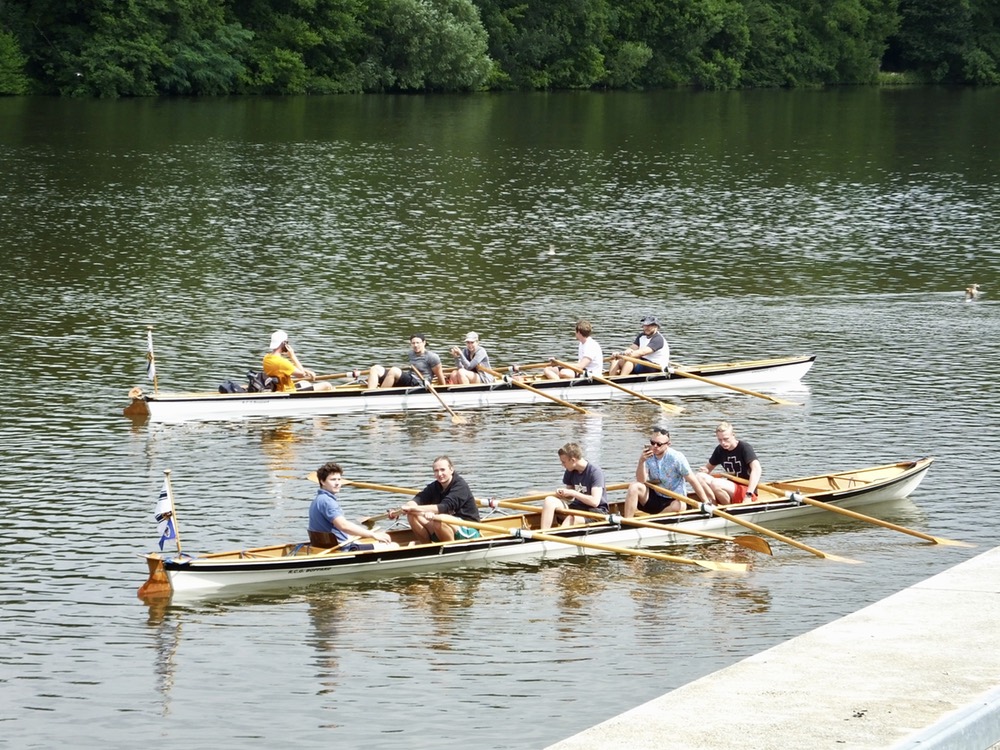
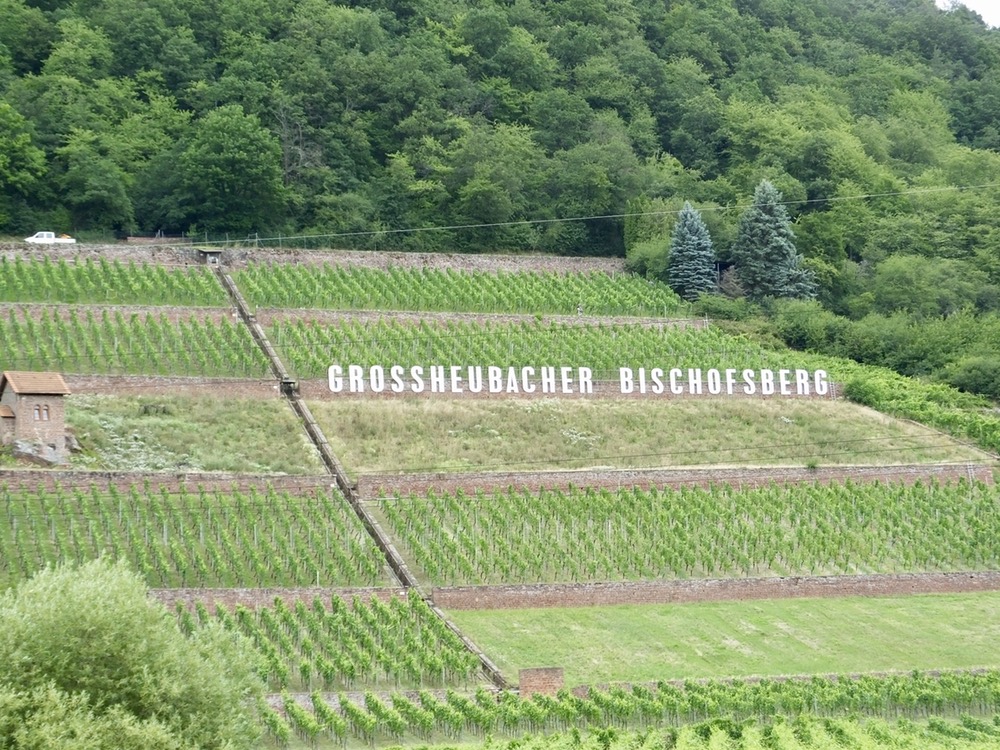
In Miltenberg
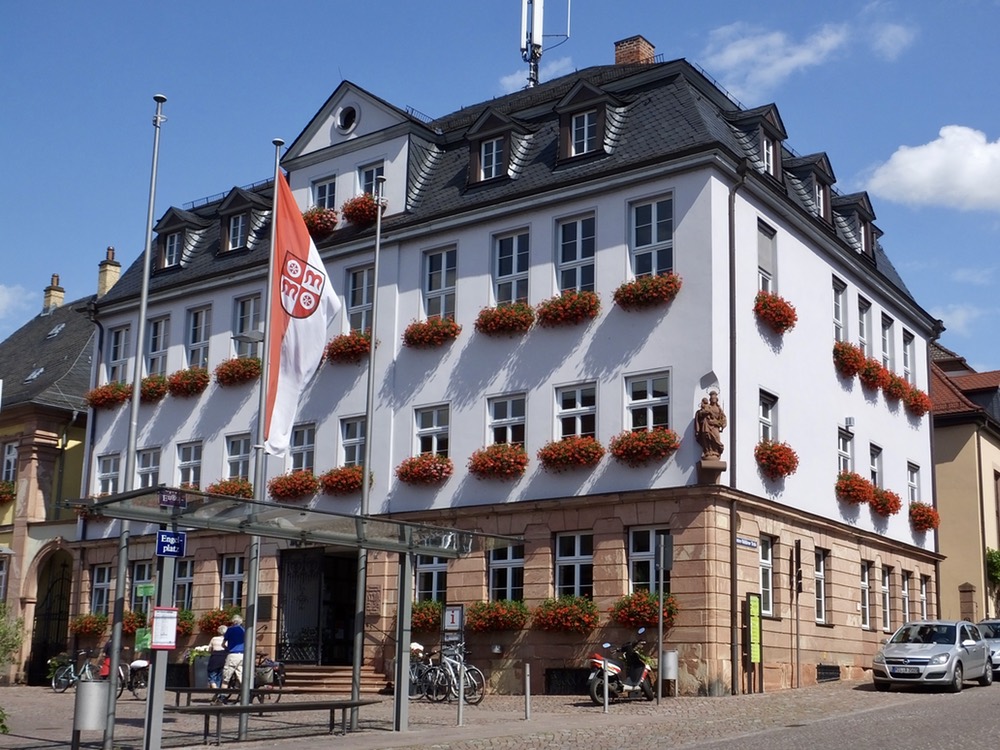
Miltenberg City Hall
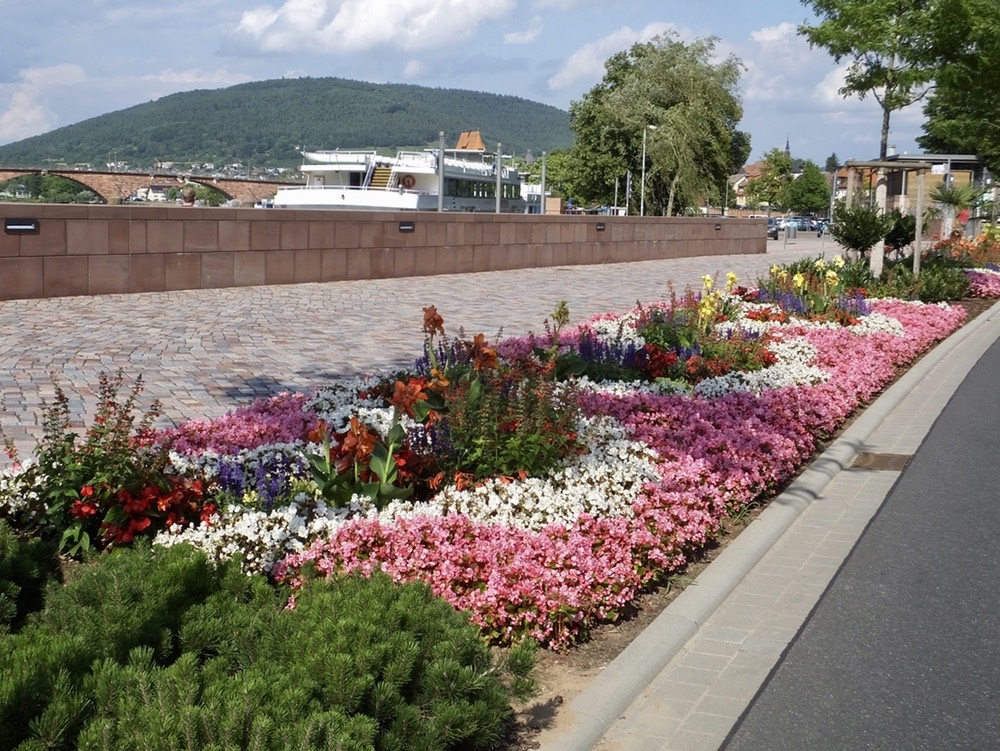
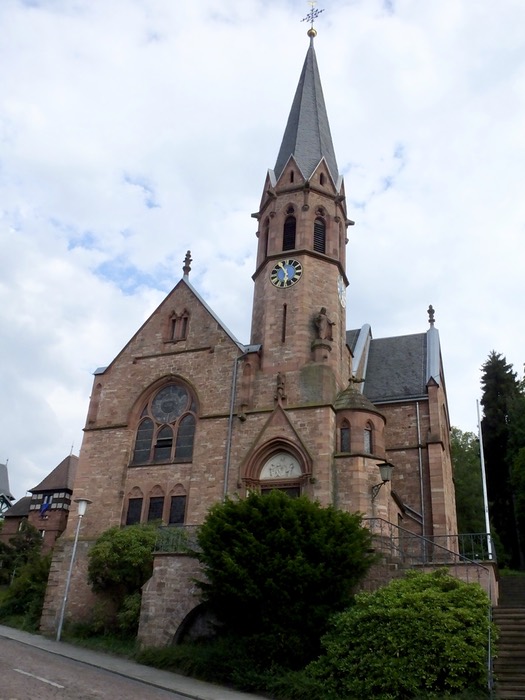
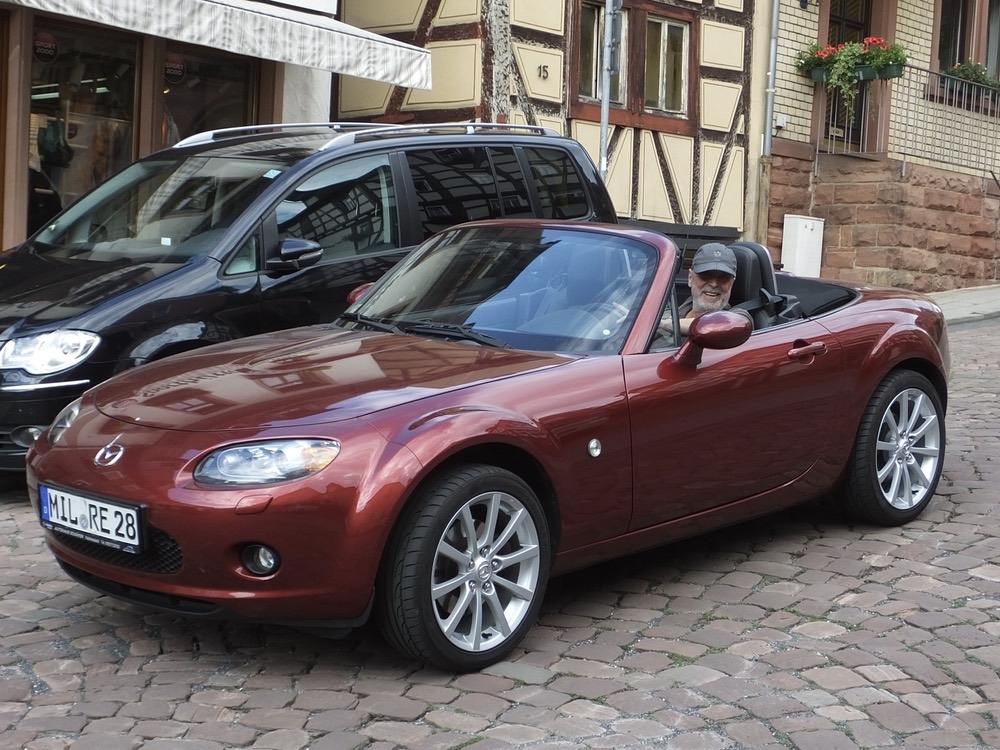
Miata’s are everywhere!
Day 4: A Castle and Cruising the Middle Rhine
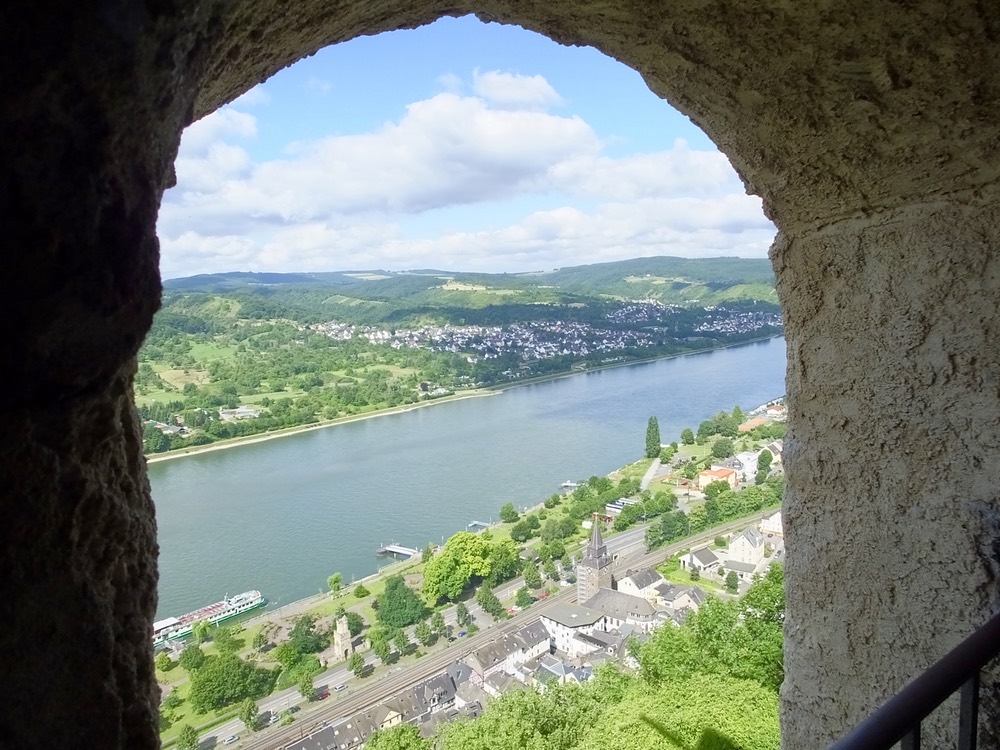
View of the Rhine River from Marksburg Castle.
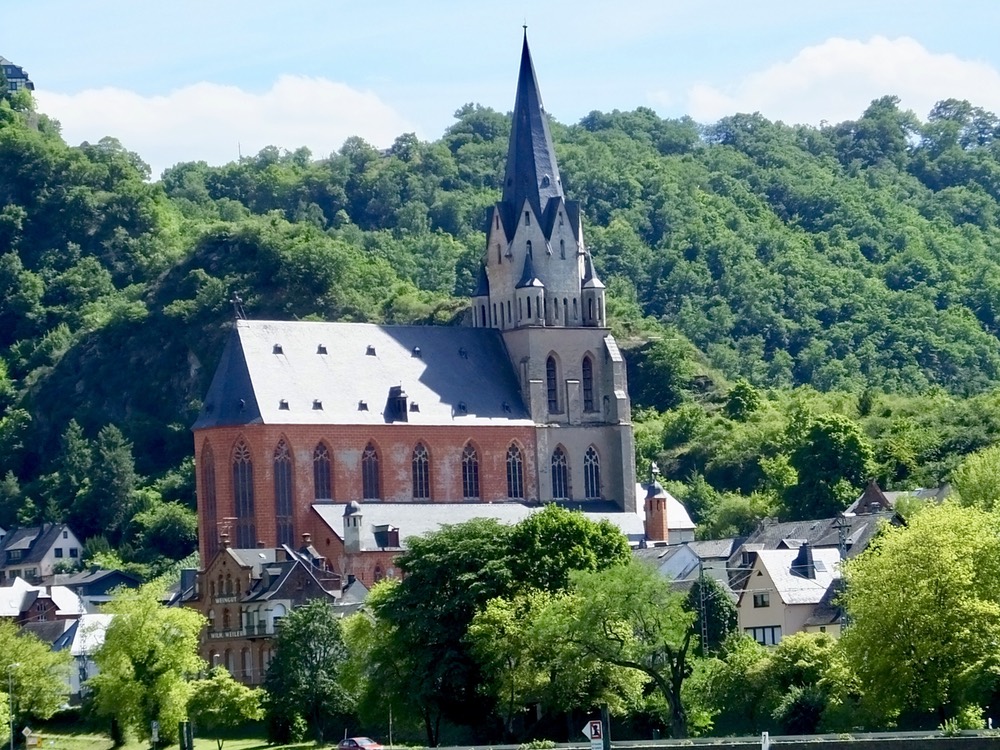
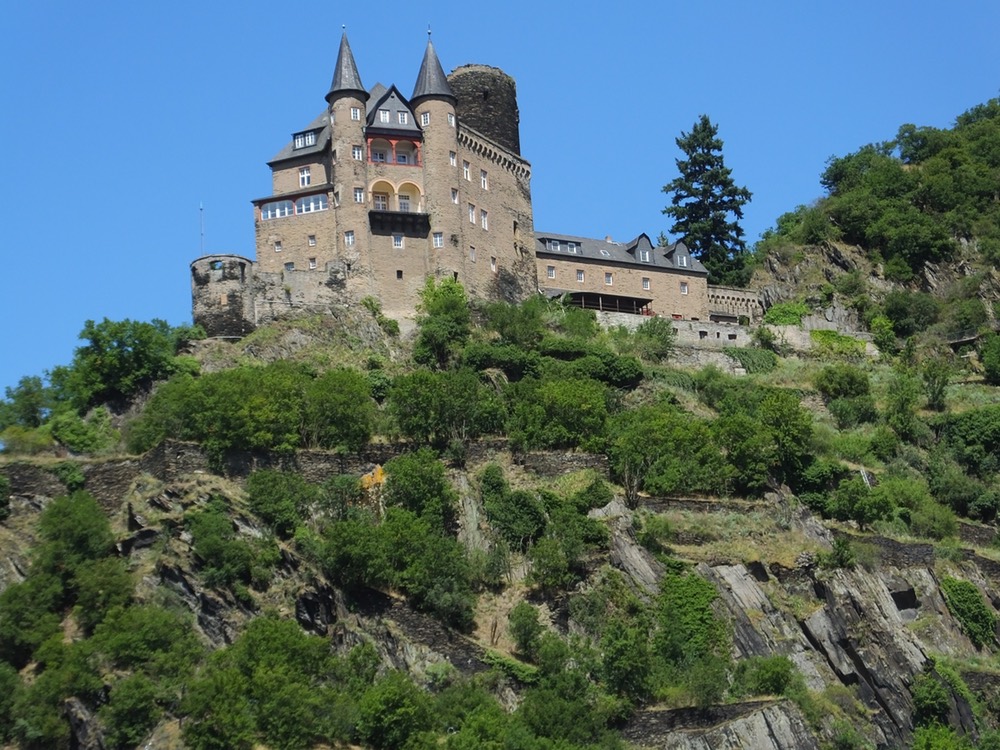
The “Middle Rhine” winds through a valley where small mountains (smaller even than the Smokeys back home) rise steeply from the riverbanks and where more than a dozen 13th and 14th century castles–or their remains–stand sentinel over the busiest river in Germany. Viking River Cruises suggested it would be the most scenic and photogenic section of the cruise and the day–complete with warm temperatures and blue skies–did not disappoint.
NOTE: You may click on any photograph for an enlarged view.
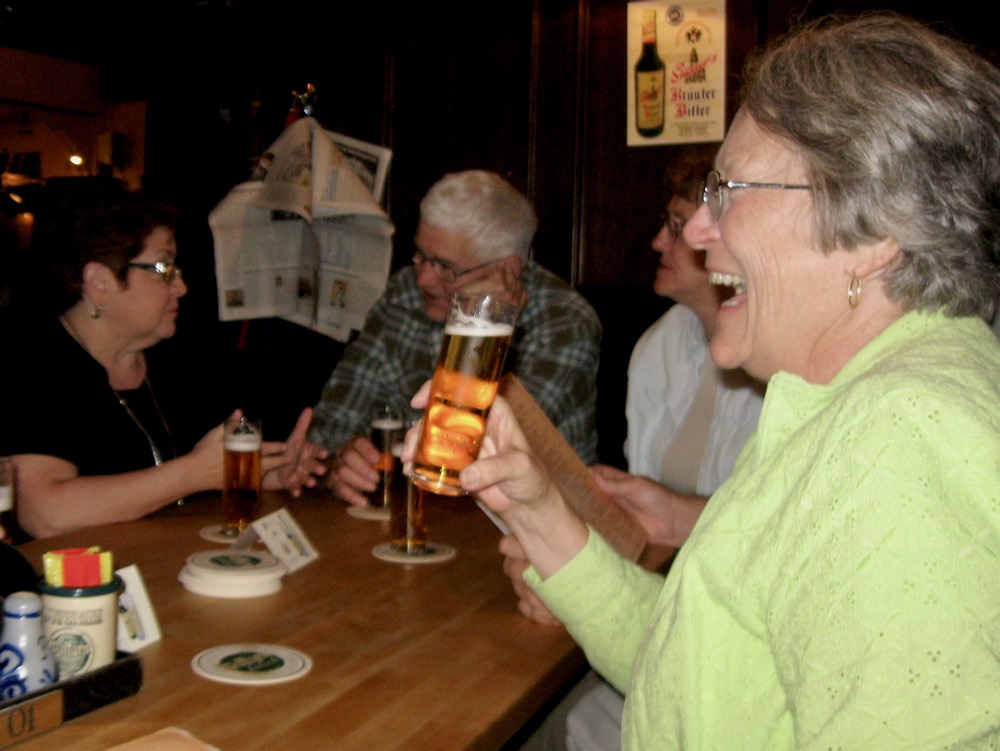
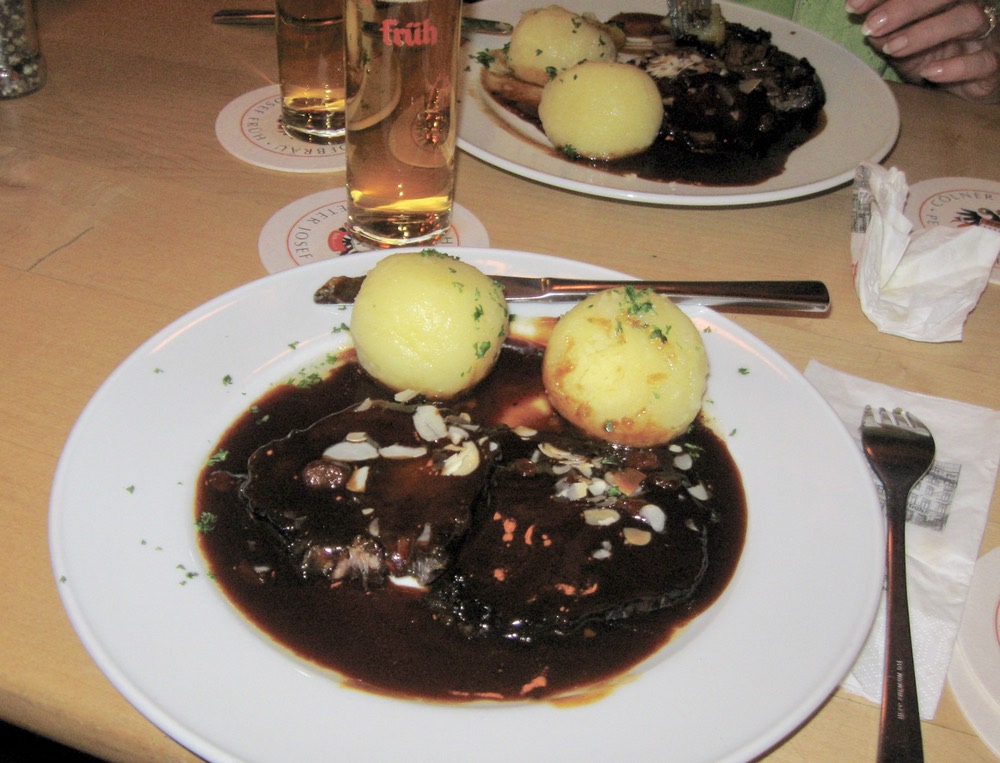
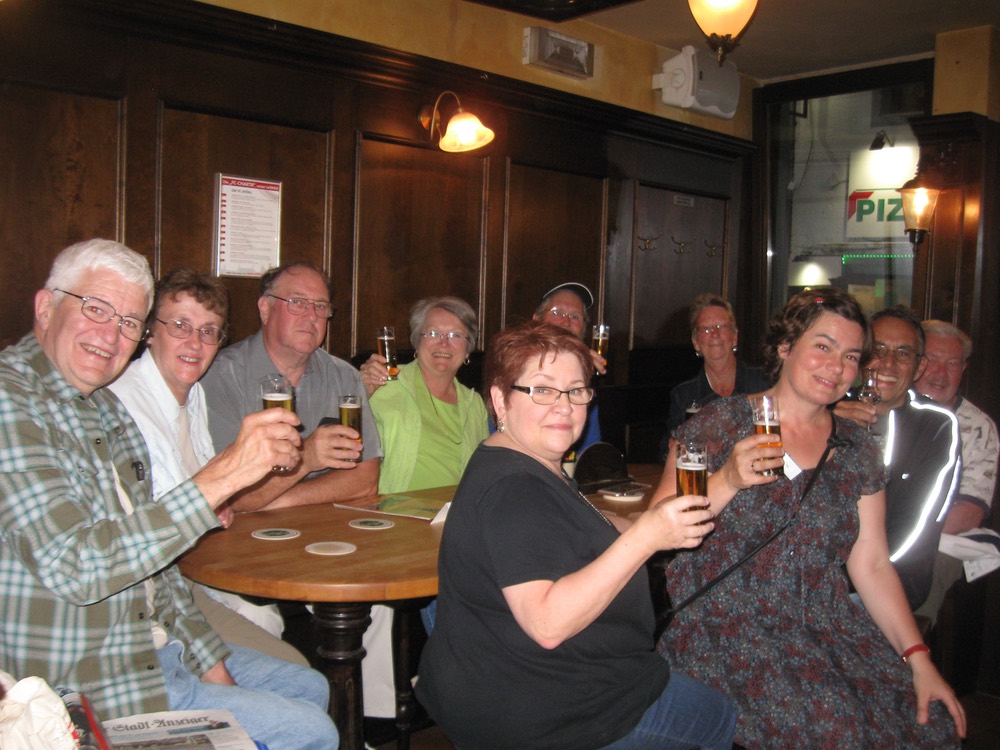
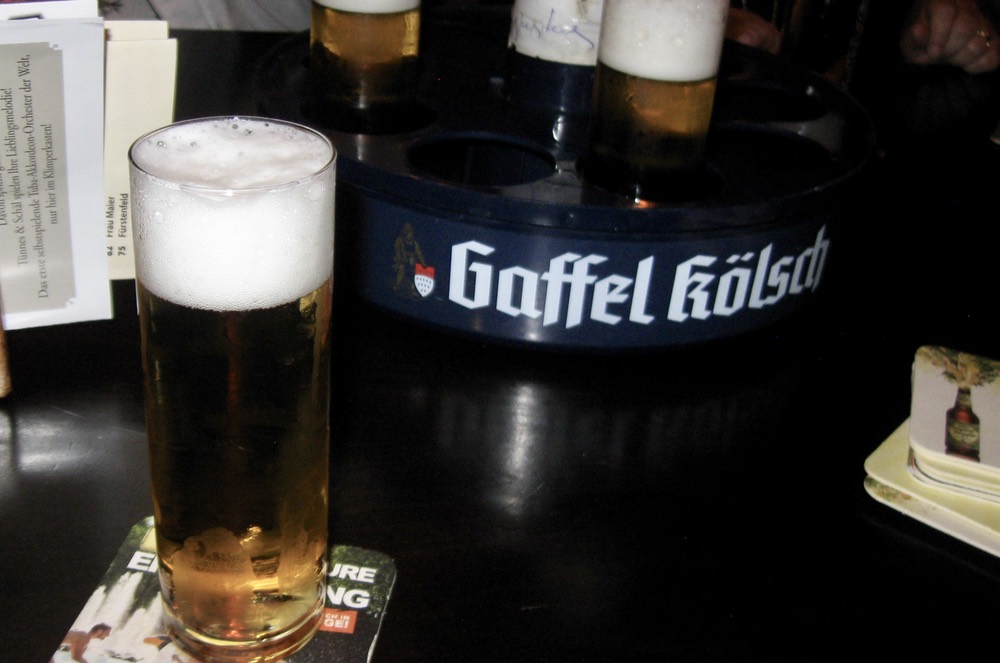
But first, last night’s “Beer Culture Tour.” In the states we would refer to this cultural tour as pub crawling or bar hopping, but “Beer Culture Tour” sounds more refined. It was great fun. Nine of us from the ship joined our German guide for a quick bus ride to town, then dinner at the first bauhaus–“Brauhaus Fruh am Dom” we enjoyed a dinner of traditional German appetizers, sauerbraten and potato dumplings, and desert. We also enjoyed several small glasses of Fruh Kölsch. Kölsch is a particular type of beer than can only be called kölsch if it’s brewed in Cologne. It is served in small glasses that get replaced frequently by the waiters known as “Köbes.” If you no longer want your glass replaced, you simply put your coaster over the top of the glass. See, the “cultural tour” was educational. Following dinner we toured the Fruh am Dom, the second largest restaurant in Germany with seating, we were told, for 1,600 patrons.
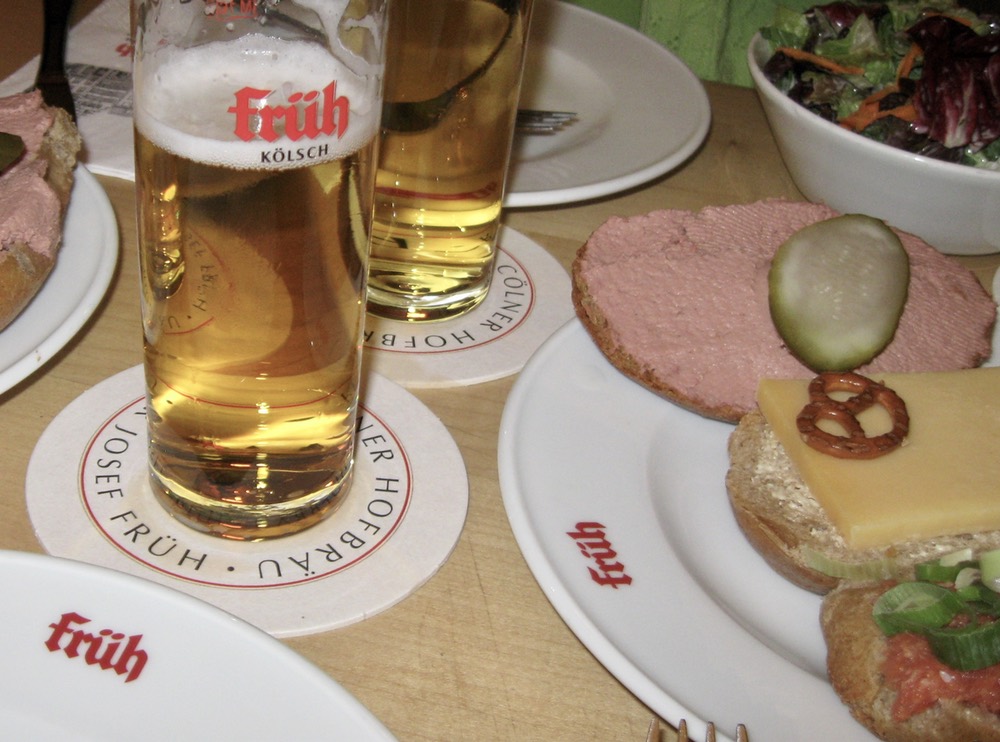
Our cultural tour continued with a stop at the next pub, which served another brand of kölsch. Fruh was better, but the atmosphere of the second brauhaus was interesting, including hundreds of pictures 1920s “art” photographs of ladies in various states of undress and several hundred year old self-playing musical machines, one of which our guide jumped over a barrier to operate. Finally, we headed to our third brauhaus where we tried yet another brand of kölsch and learned about the annual “carnival” in Cologne where one lucky man will pay as much as 100,000 euros to dress up like a virgin princess, complete with blonde pigtails. Would love to go back for that. The entire night of bar hopping only involved about 6-8 beers (fewer for Marilyn) but it was a great time.
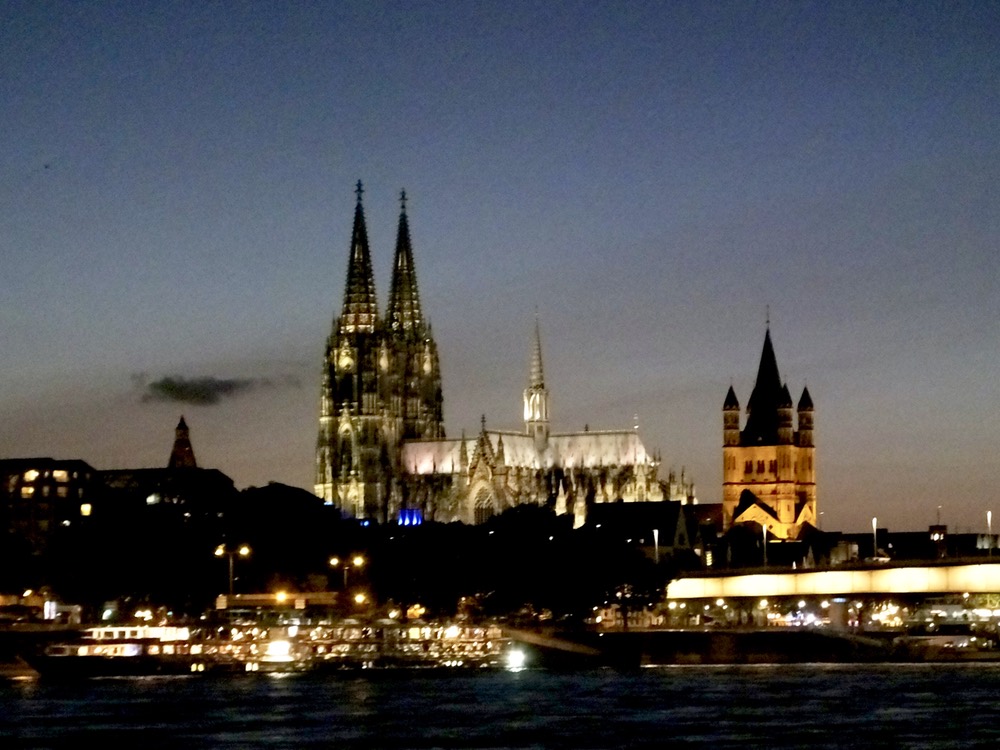
Back at the ship by 10:30 because the lines were cast off at 10:45 and we were underway again up the Rhine. The sight of the cathedral and other buildings and bridges lit up at night was worth staying awake for a little while longer.
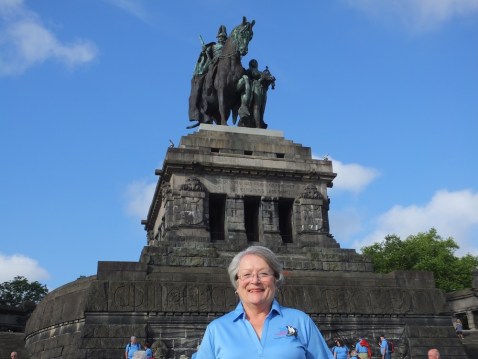
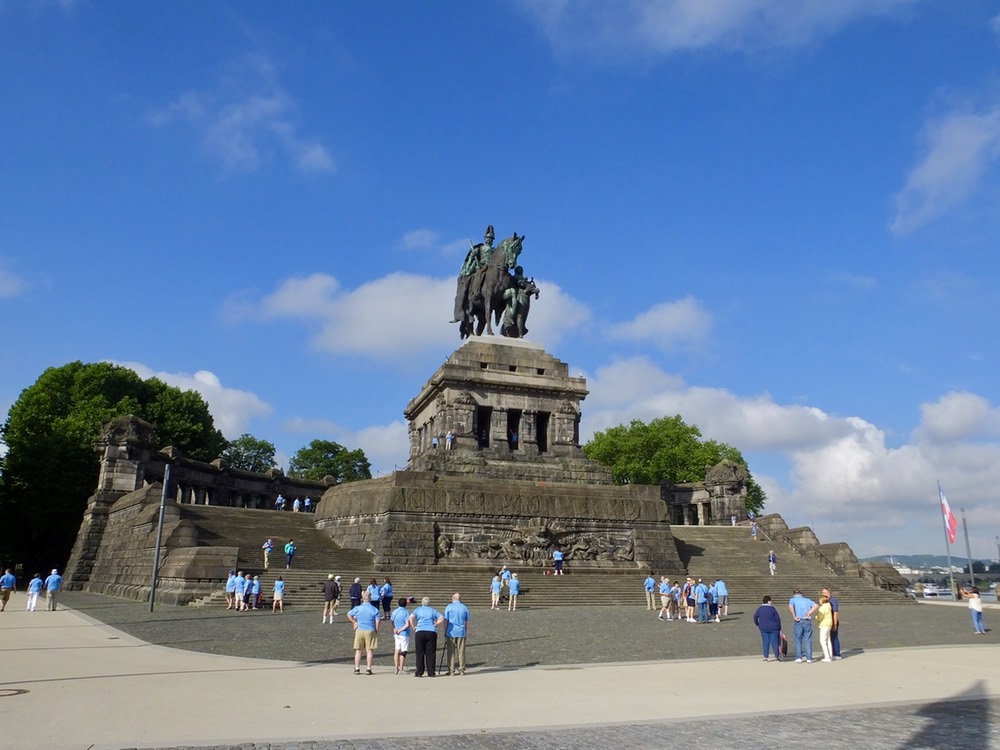
Marilyn and Wilhelm
When we woke this morning, we had docked in Koblentz, the confluence of the Moselle and Rhine rivers. All of the Miata owners aboard ship gathered for a group picture in the foot of a massive statue of a horseback Emperor Wilhelm, the first emperor of Germany in 1880.
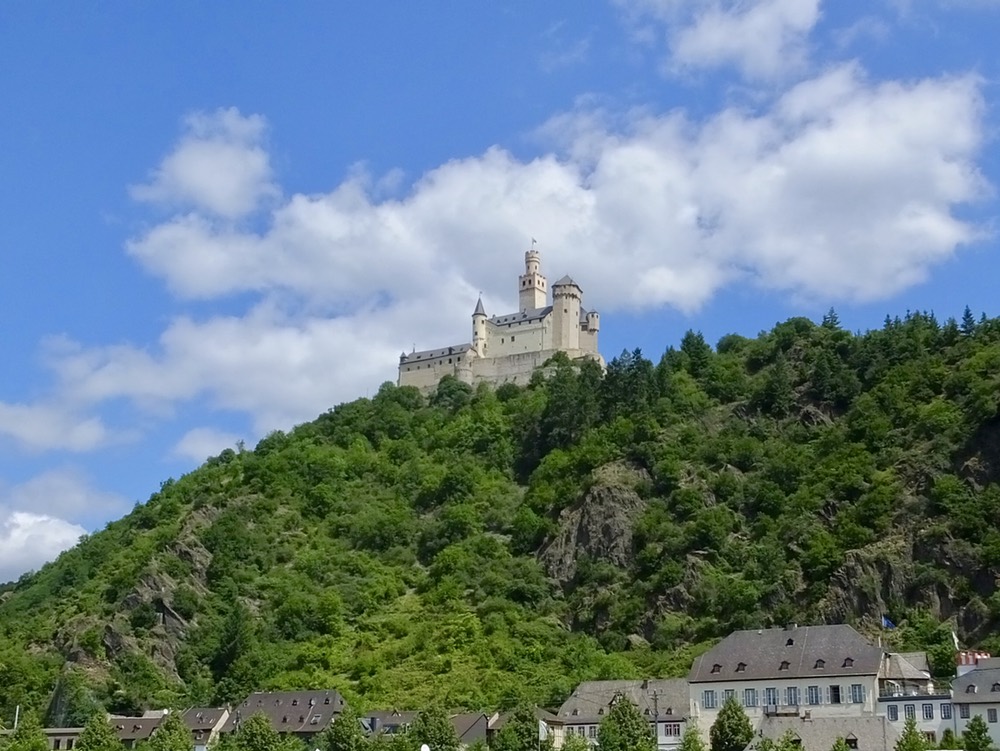
Marksburg Castle
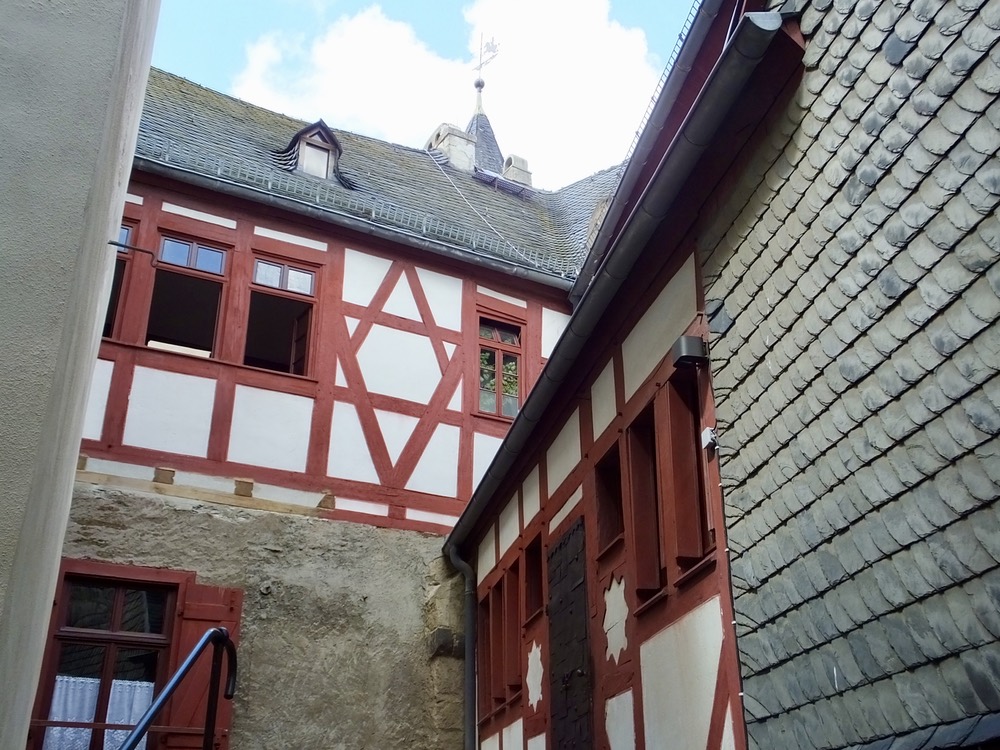
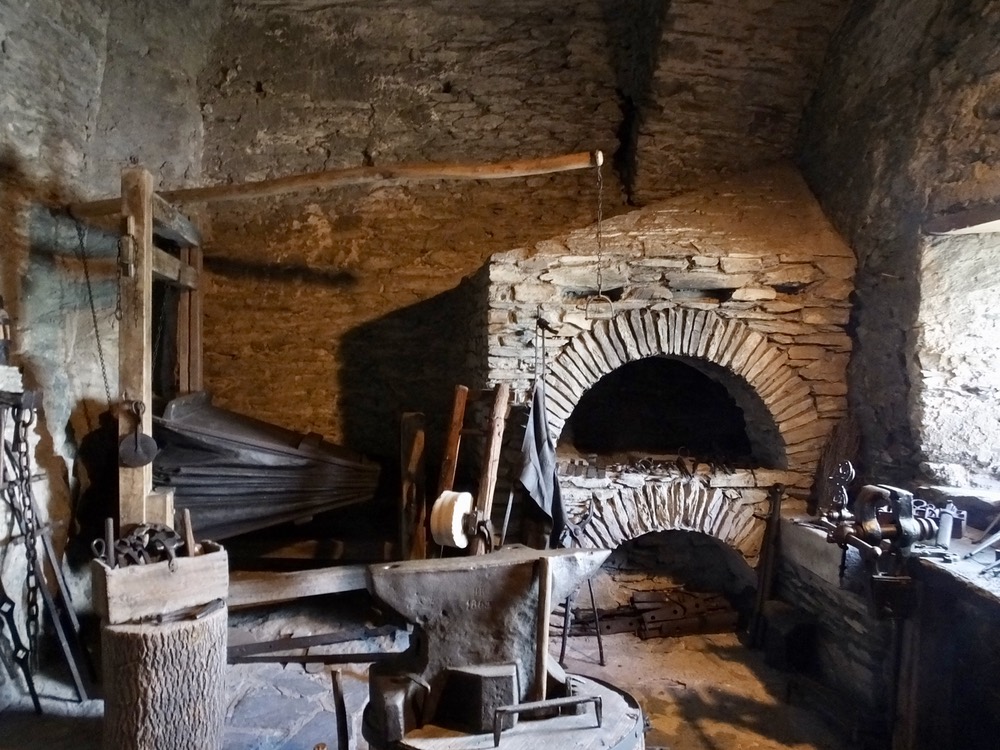
Less than half an hour later we headed to Marksburg Castle, the only castle in Germany that has never been destroyed, rebuilt or restored. Sitting high on a hill near Koblentz, the castle dominates the skyline, and our young history-student guide, led his tourist flock through the narrow passages, steep stairs, dark rooms and uneven floors that residents of the castle endured for more than 800 years. The castle even included a room of knightly armor and the tools of the torture trade. Another valuable experience that, along with a beer culture tour, enhances my understanding of my German ancestors.
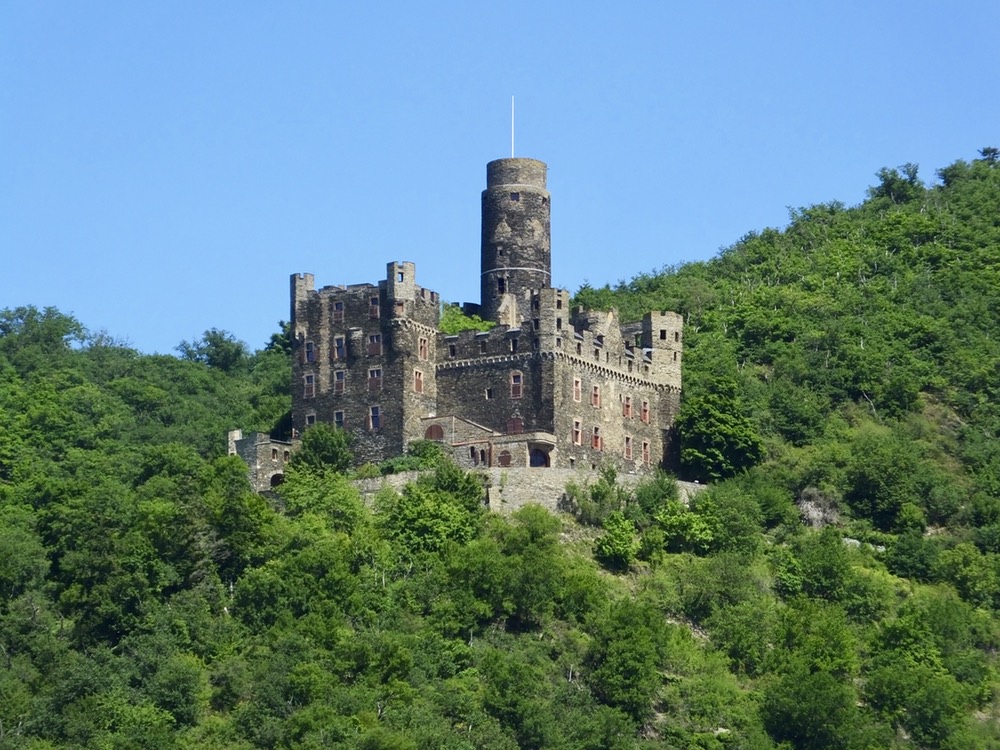
The “Mouse” castle on the Middle Rhine
By noon, we were underway again for the five hour trip down the Middle Rhine and spent a delightful afternoon on the ship’s sundeck relaxing and taking pictures of the ancient castles, the quaint half-timbered houses, and miles of grape vineyards famous for their Reisling grapes and other white grape vintages. In addition, we passed by Loreley Rock, important in German mythic history and song as the site of a mermaid who lured sailors on the river to their watery demise as they crashed their ships on the rock while entranced by her song. The area remains a dangerous part of the river, even without a mermaid, and our captain had to carefully navigate the narrow channel to keep us from meeting the fate of countless watermen of the past.
Late this evening, we left the Rhine and entered the Main (pronounced “mine”) River. We are no longer flanked by mountains, but we are told that tomorrow will include tours of historic and unchanged river towns.
Apparently everyone is trying to write home with emails of pictures of castles and I’m unable to post any pictures tonight. I will rise early in the morning and hope the WiFi signal is stronger then. Sorry for the problems, but please check back.
(EDIT Friday July 14) The WiFi is better this morning so I’m adding new pictures.
NOTE: You may click on any photograph for an enlarged view.
Beer Culture Tour
Marksburg Castle


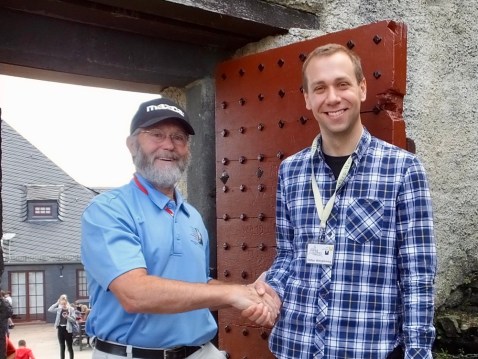
Our historian guide Stephen
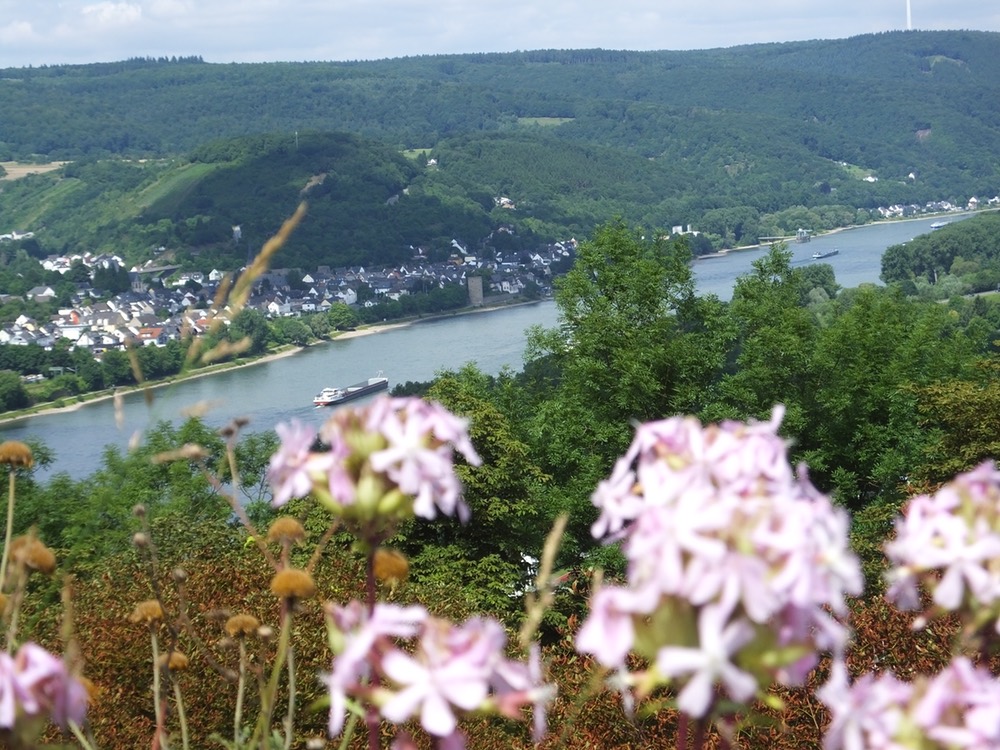
Confluence of Moselle and Rhine Rivers
Cruising the Middle Rhine

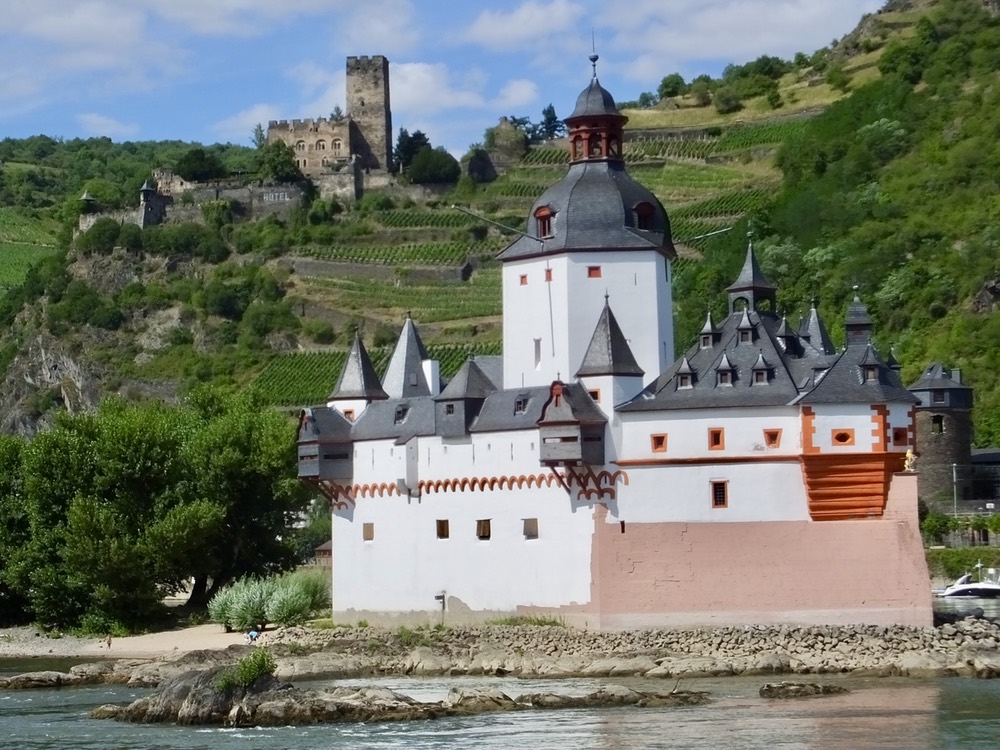
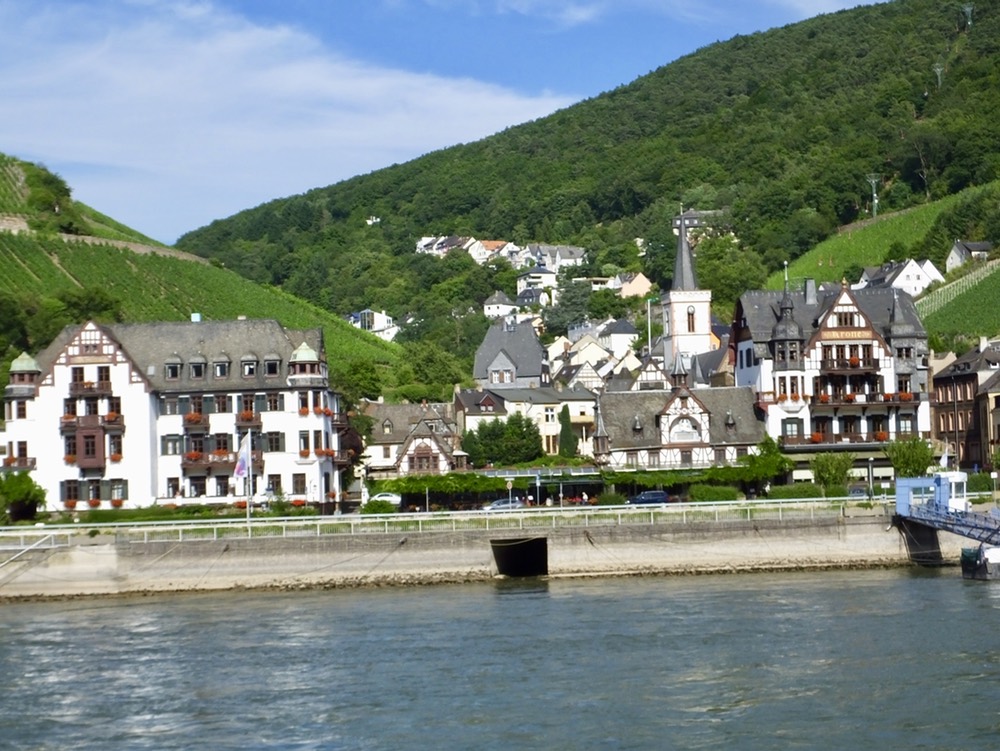
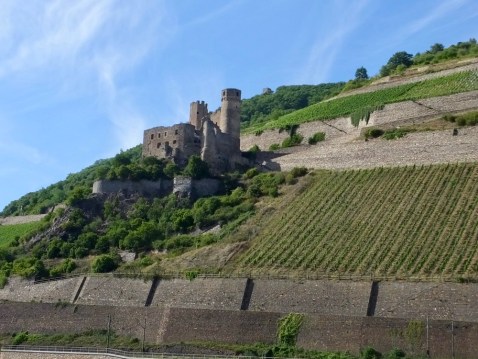
Grape vines line the steep hills adjacent to a medieval castle.
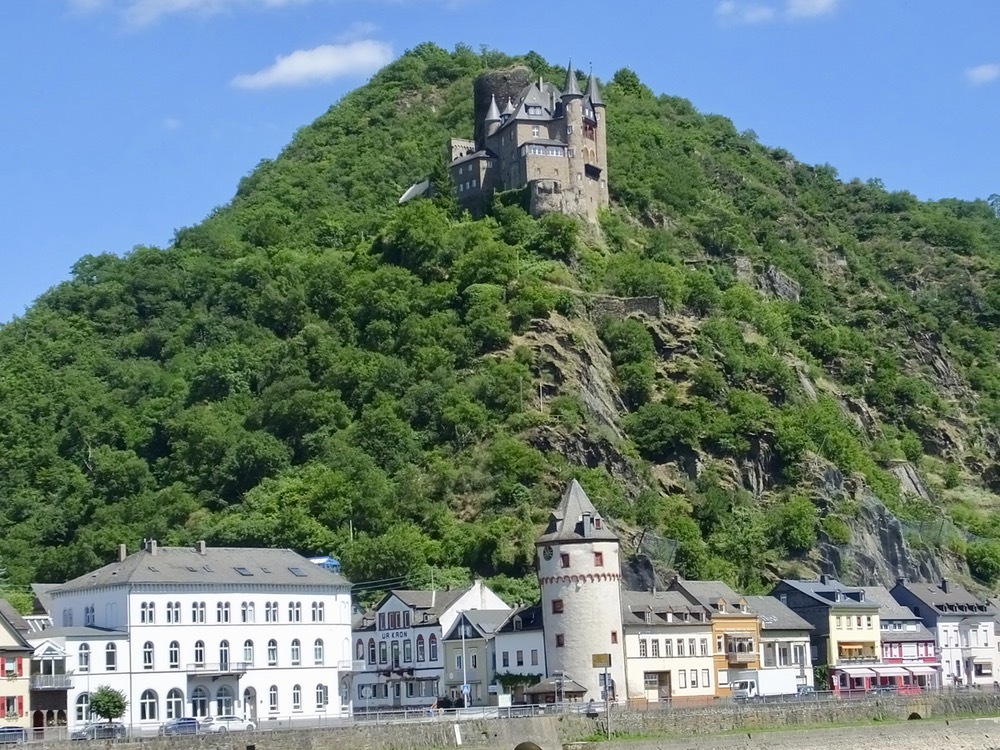

Loreley Rock
Day 3: Cologne–(aka Köln) Cathedral and a Museum
(NOTE: In order to continue posting the blog, I’ve had to change the format, especially of the pictures. I’ve reduced the file size of each picture considerably and full-sized images will no longer be posted. Instead, at the end of each written blog, I’ll post a series of photographs instead of including them within the written section. This isn’t the way I would prefer, but given the limited bandwidth of the ship’s WiFi, it’s the best I can do within the one-hour time limit I’m trying to allot for writing and posting.)
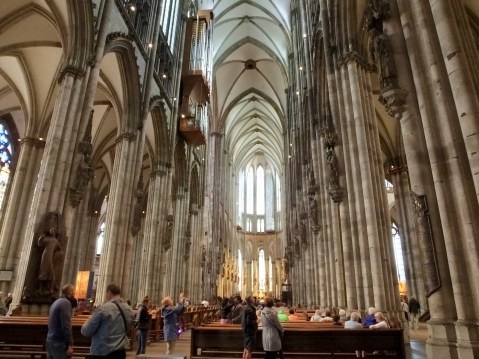
After sailing all night, the ship arrived just outside Cologne, Germany, about 8:30 a.m., where it stopped to drop off the guests going to town, before navigating the remaining 10 miles or so upriver to the docks near the city’s center. Misty rain greeted us as we left the ship and boarded a bus that took us downtown, but I wasn’t too concerned because we planned a morning at the city’s 900 year-old massive gothic cathedral and at a museum next door highlighting the city’s 2,000 year-old Roman history.
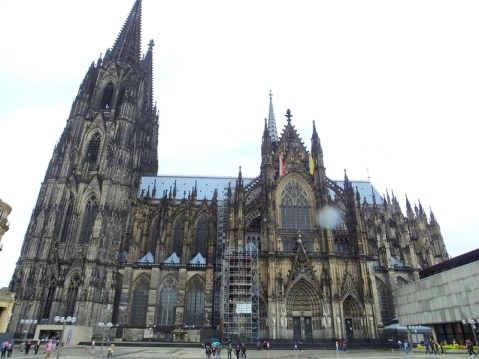
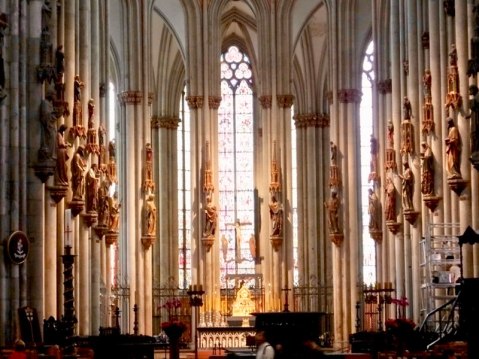
Our guide planned to show us the inside of the cathedral before exploring the outside of the structure and visiting town center, but the moderately-heavy rain made any outdoor tour unpleasant though not impossible. Nevertheless, the time we spend inside the church was an impressive experience.
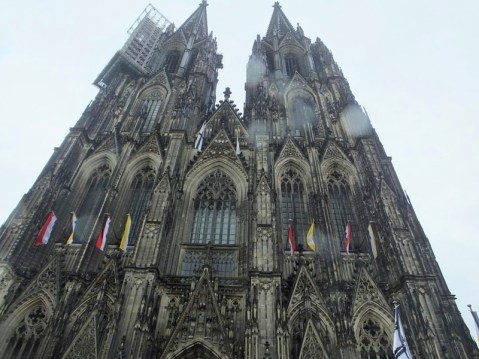
Begun with the laying of a cornerstone in 1242, the cathedral wasn’t finished until the final stones in the spires were set in 1880 due to lack of money and sometimes lack of interest. Unfortunately, the building suffered tremendous damage by 20 allied bombs in WWII, including the collapse of the roof. But the people of Cologne, a town of more than 1 million people, dedicated themselves to rebuilding the damaged church and completed the final work in the 1990s.
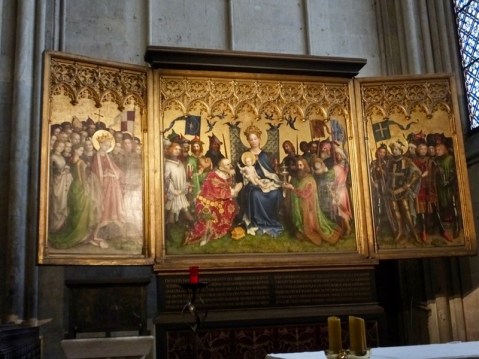
The church is said to contain the stolen bones of the Three Wise Men of Christmas fame, though some testing suggests there may be as many as five different people contained in the gold chest containing the bones. Once a year, church officials display three skulls for those who make the pilgrimage to Cologne.
More than 80 stonemasons work year-round to maintain the cathedral, which soars more than 500 feet in the air and covers about 24,000 square feet. It’s said the building can house 20,000 people and today it seemed like there may have been half that many tourists wandering around getting in the way of my camera. They were probably just getting out of the rain, too.
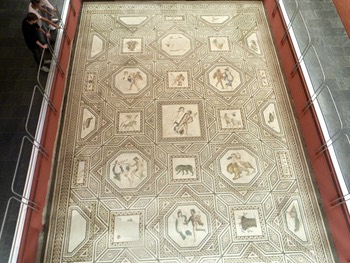
Mosaic Floor of a Roman Villa
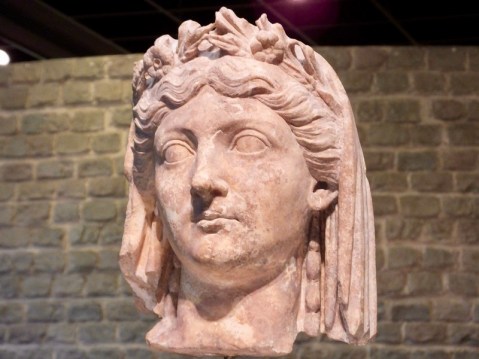
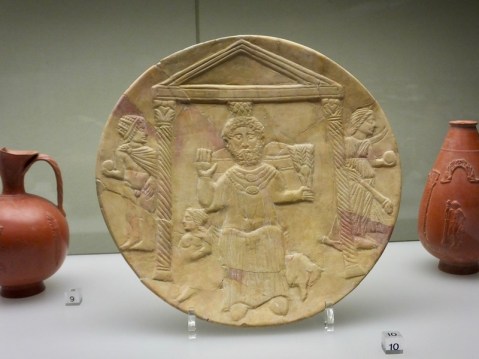
During the post-war reconstruction of the church, workers discovered an amazing Roman mosaic some 25-feet below the surface of the ground. The Roman empire had expanded northward into what is now Germany more than 2000 years ago and by the first century AD, Cologne (derived from the Latin word for “colony”) was firmly established as a Roman town with a growing store of wealth. The mosaic found next to the church was actually the floor of a wealthy Roman’s dining room in a large villa. Thought was given to removing the mosaic, but it was decided that moving it would probably destroy it, so the city instead decided to build a museum of Roman history around the mosaic, using it as the centerpiece of the museum, which now holds thousands of elaborate artifacts from Cologne that attest to the Roman occupation. The town had elaborate sewers and aqueducts, many villas, and statues, walls and structures that have been uncovered and preserved.
Following the museum visit, we took a short, damp tour through the city center learning more about this amazing city from our energizer-bunny guide, Parthena. Of Greek and German heritage, fluent in four languages, and schooled in archeology and art history, she provided an amazing tour of Cologne. We could easily and enjoyably have spent the entire day with her.
Tonight we’re going on a beer tour of Cologne. If we make it back, I’ll write about it tomorrow, assuming the absence of a hangover.
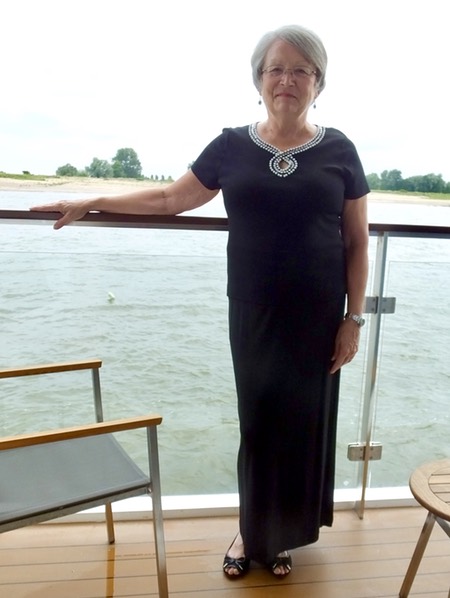
Ready for Captain’s Reception Tuesday Evening
Cologne Cathedral
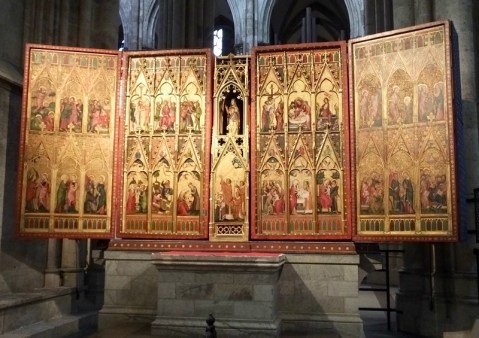


Museum of Roman Artifacts and History
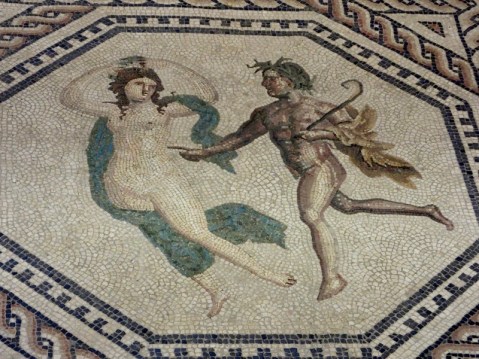
Close up of Mosaic Floor

Mausoleum of a wealthy Roman
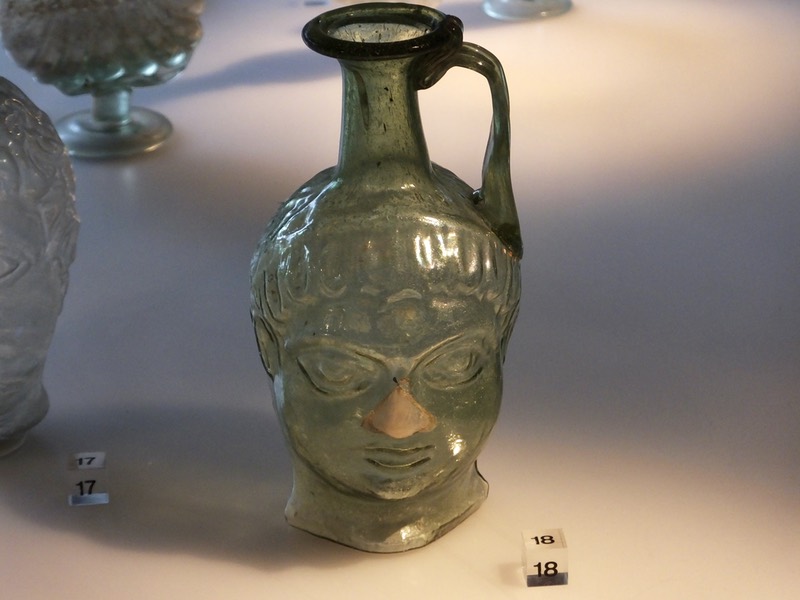

One of the most valuable holdings of the museum. The filigree was etched from a solid piece of glass that became the cup. Only one of five in the world.
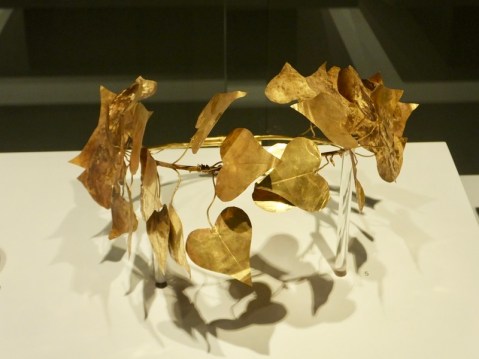
Gold head band
City
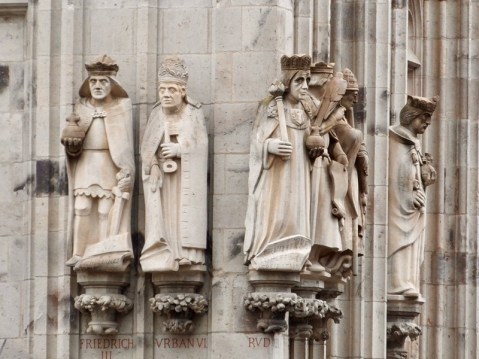
Statues on the side of City Hall.
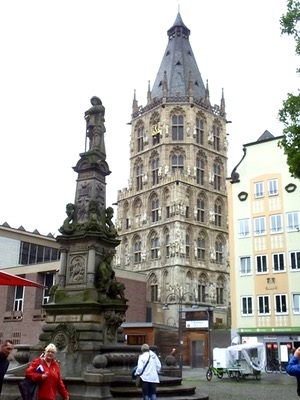
City hall in the background.
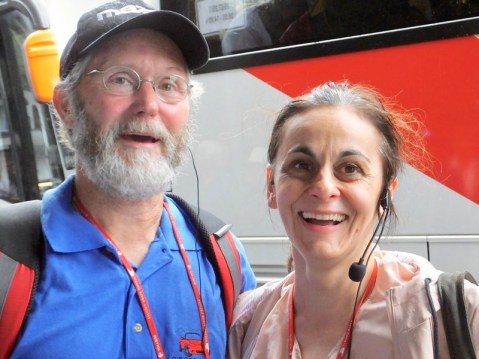
Parthena was our guide extraordinaire in Cologne.
Day 2: Windmills at Kinderdijk
(NOTE: I have worked for four hours today trying to post pictures, but the internet service about ship is unable to accommodate me. I will try to post more pictures when we reach Cologne tomorrow. Sorry.)
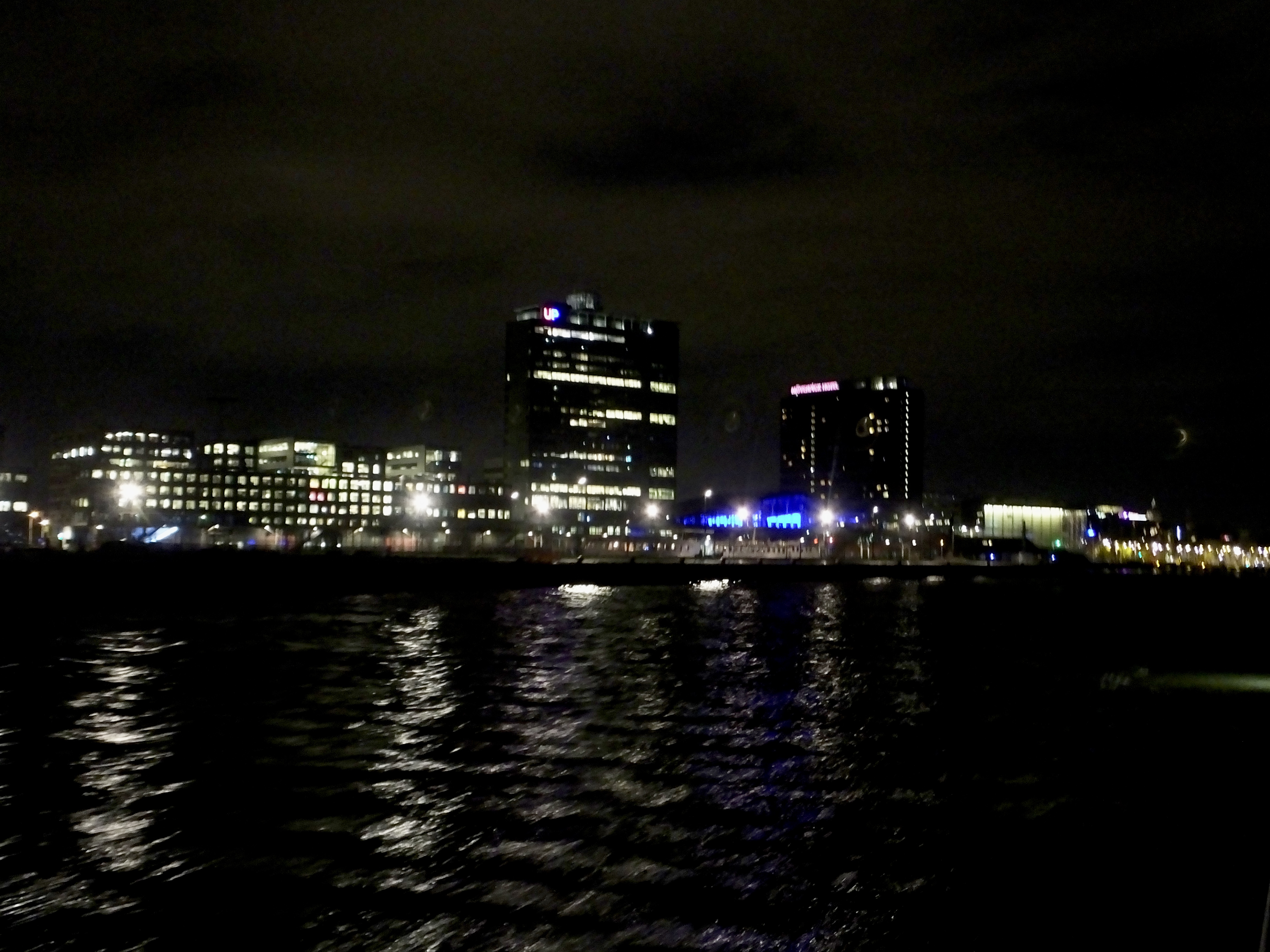
Minutes after I posted the blog last night, the ship pulled out of Amsterdam for a short overnight cruise to Kinderdijk, a UNESCO World Heritage Site because of its 19 functioning 17th century windmills. Although I couldn’t see much of Amsterdam as we left the dock, the buildings along the dock provided a minor light show as we slowly slipped our moorings and began our upstream journey. The windmills at Kinderdijk remain operational because of the love for these engineering marvels by the people who live in and operate them. For the honor and privilege of living in them and raising their children in them, operators must give 1,000 hours of labor per year to using the windmills to continue pumping water from low ground to higher ground. How special is this honor?
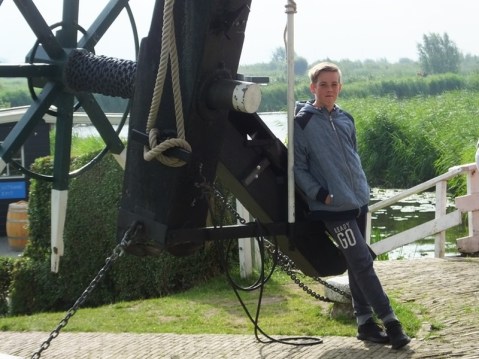
Today we met a young man of about 13 or 14 years who will be the 12th generation to live in and operate windmill #5 at Kinderdijk. The windmill was built in 1738 and the Hoek family has been part of the watery landscape for nearly that long.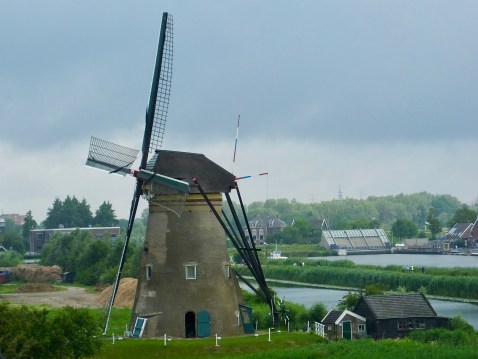 Approximately 50% of The Netherlands lies below sea level on land taken from the sea and made dry through diligence and hard work for hundreds of years. Initially the iconic wind powered mills were the only source of pumping power, but beginning with steam in the 1850s and augmented by electric and diesel motors in the 20th century, the area being claimed from the North Sea has grown dramatically and is an engineering marvel that engineers from around the world come to study.
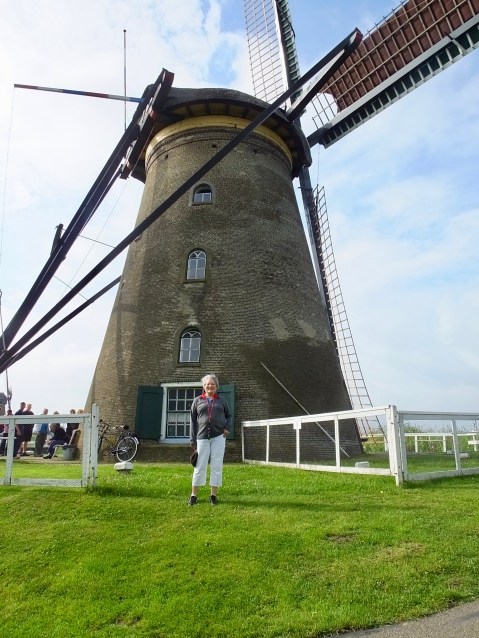
Our very-knowledgable guide on today’s walking tour from the ship to the windmills is one of 250 local volunteers who commit their time and energy to preserving this uniquely Dutch heritage. Some give tours to companies like Viking Tours, some work in gift shops, some donate time to maintaining the miles and miles of dykes, but all care deeply about their country’s culture and history. And few things are more Dutch than brick and wood windmills. Most have disappeared over the years and many more–perhaps al–would have without the passionate support of Netherlands’ post-war queen who made it her mission to save as many of these windmills as possible.
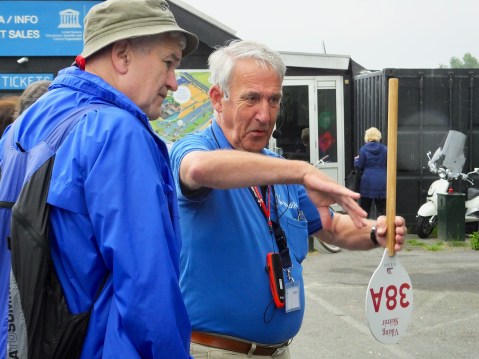
(A short geography diversion is in order here. The Netherlands is often called Holland, but our guide set us straight by pointing out that “Holland” is the name of several coastal provinces of the Netherlands from where many 16th and 17th century mariners sailed. When asked where they were from, they said “Holland” and the English and other world travelers began calling the country that. At the same, the people from the Netherlands were known as the “Dutch.” Why? Because their language was similar to the Germans who were “Deutsch.” Hence, they were called Dutch by those who thought they were germanic. End of geography lesson.)
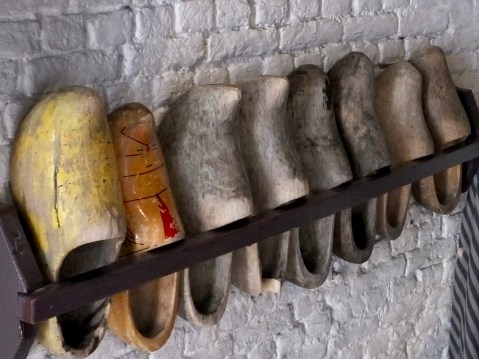
Back to the windmills. Eighteen are occupied by the “millers” who operate them. One of them is available to thousands of tourists like us who want to walk through a piece of history. It is known as #2. The windmills have four, levels: a bottom level with a kitchen/dining/living/sleeping room for parents and one or two infants and the lower workings of the windmill gears, a second floor where girl children slept, third floor where male children slept, and a fourth floor known as the “smoking” floor where the chimney from the ground floor opened up and allowed the miller’s wife to smoke eel and fish. It also contained the upper workings of the windmill gears that powered the pumps. And these cramped quarters constituted living space for up to 12 children and two adults who were glad and fortunate to have it. In a country where it rains more than 200 days a year, a roof over one’s head was something to be sought and protected.
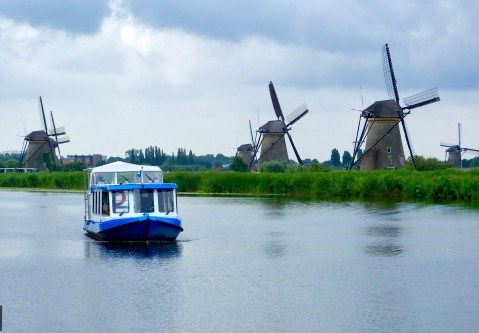
The windmills are basically conical brick structures with a thatched roof, wooden “wings,” and huge wooden gears painstakingly made from wood gathered from throughout the world, including Indonesia (ironwood) and Surinam in South America (greenwood), as well as the oaks of south and central Europe and the willows of the Netherlands.
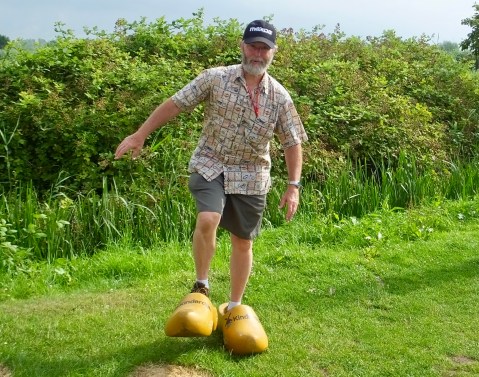
Tomorrow we arrive at Cologne, Germany, for a tour of the great cathedral and town center. In the evening beer and bratwurst. And hopefully better internet service.
Day 1: Amsterdam
 Please click on the small pictures to enlarge them.
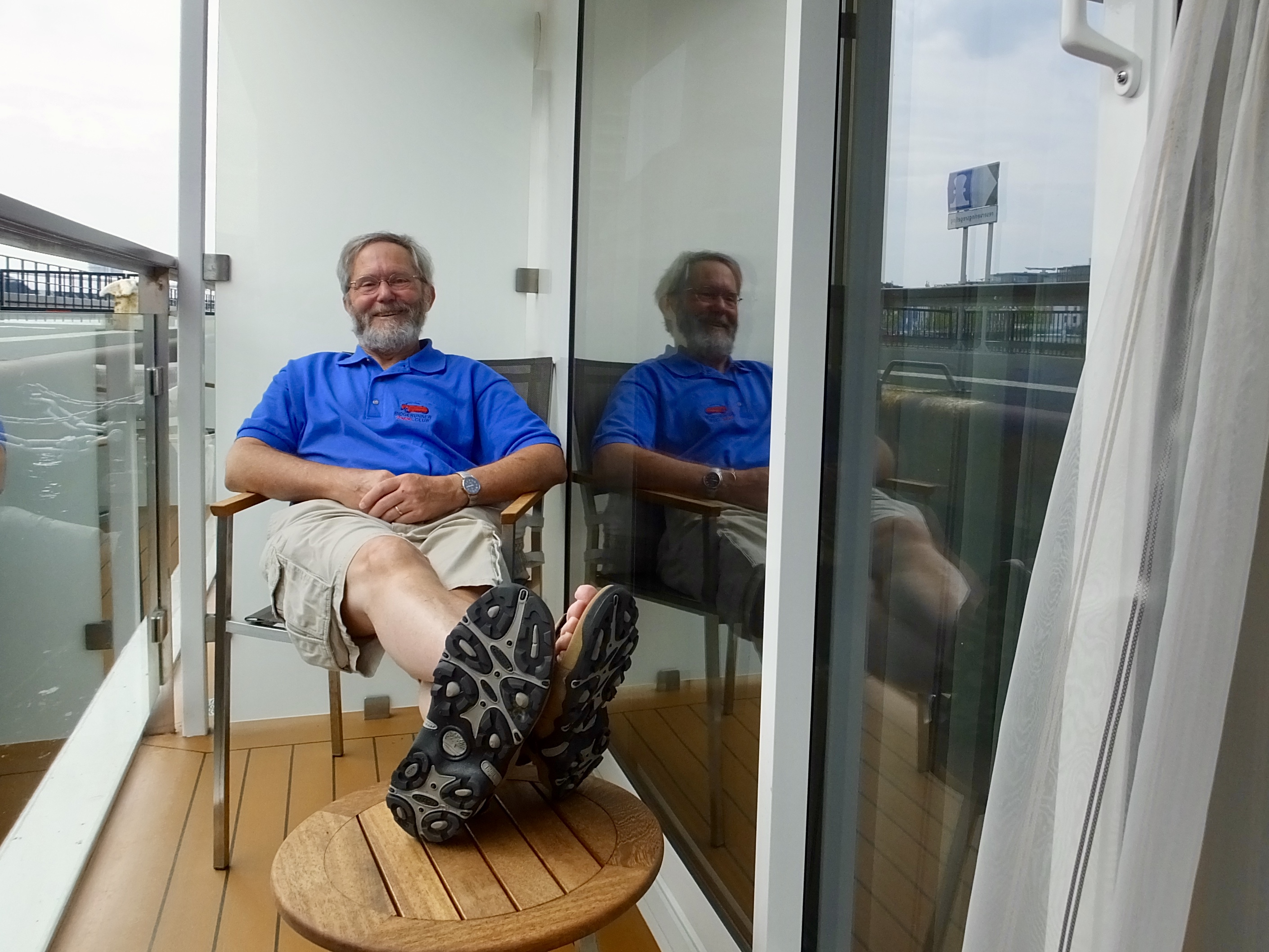
Even though this is our third day of this adventure, I title this post “Day 1” because it’s our first day aboard the Viking Skirnir, home floating home for the next two weeks. 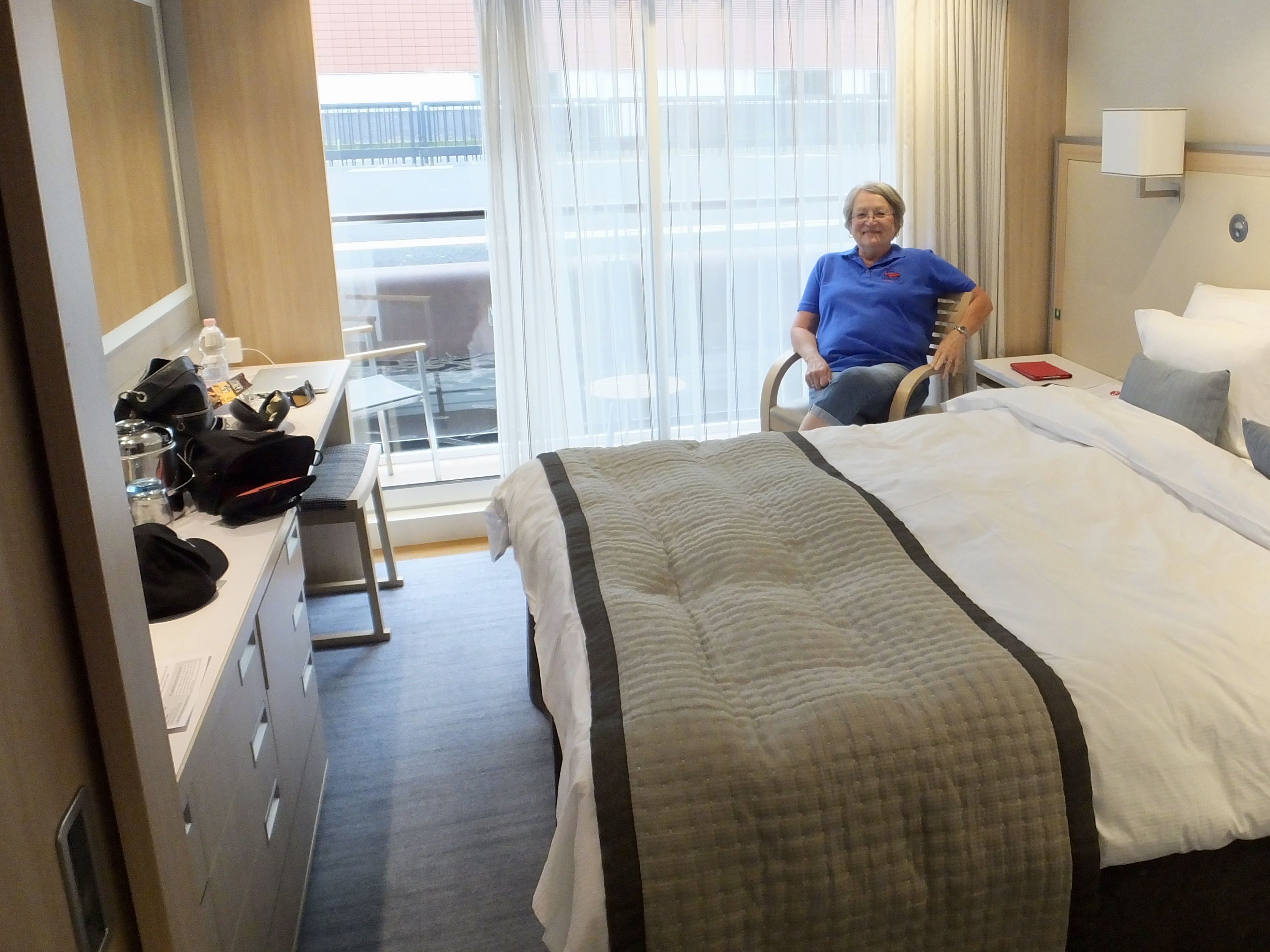 And what a floating home. So far the service has been amazing, the accommodations luxurious and the food and drink first rate. In addition, we’ve struck up an acquaintance with a group of Miata owners from Massachusetts who will no doubt help to the make the trip memorable.
 After a short bus ride from the hotel to the ship, we were checked in quickly (along with 94 other cabins), our luggage was delivered to our room, the concierge explained the special features of our room and we were free to explore the ship and, later, more of Amsterdam.
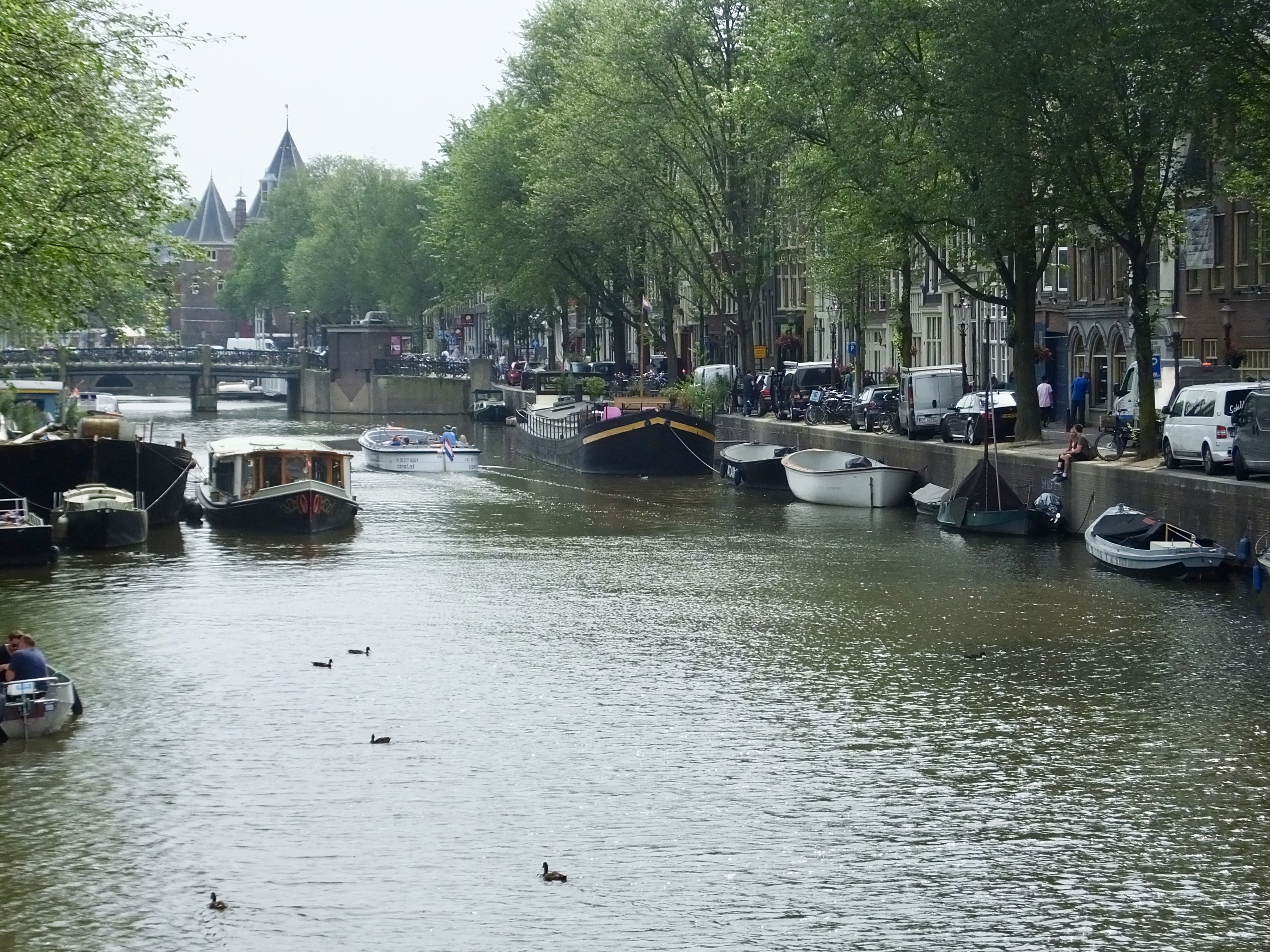
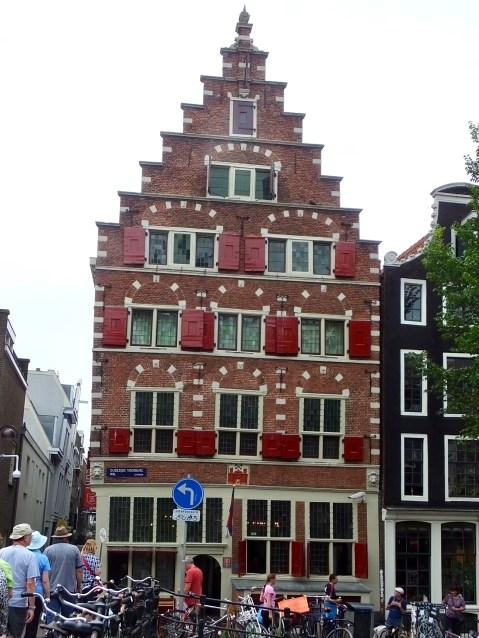
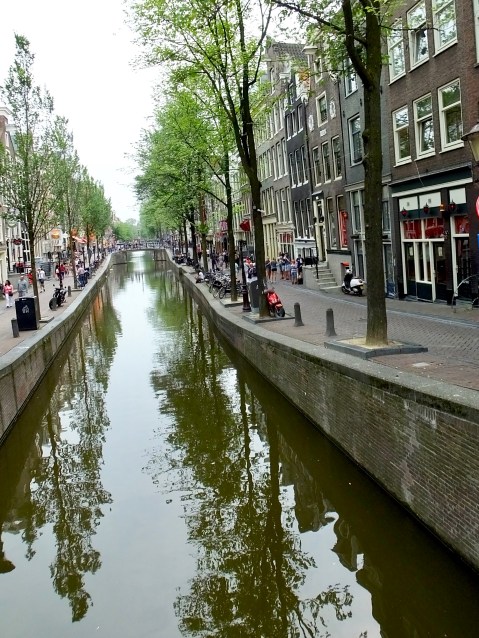
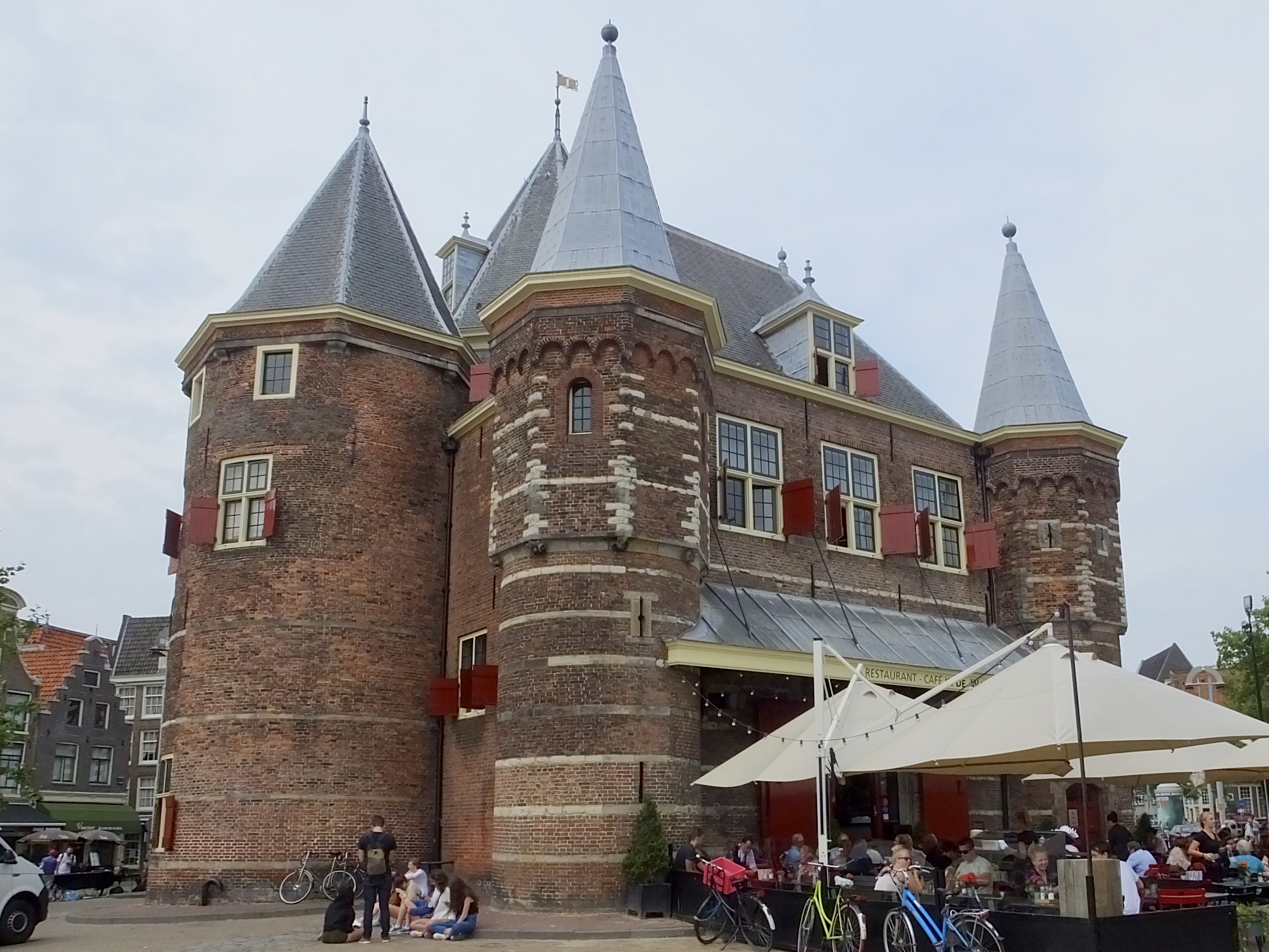 After walking around the ship, we boarded another shuttle bus that delivered us and a tour guide to the center of Amsterdam’s old town. With the help of small radio receivers and an ear piece, the guide took us on a one-hour tour of the older part of the city. Buildings built nearly 800 years ago sat along canals that have been in use for nearly that long.
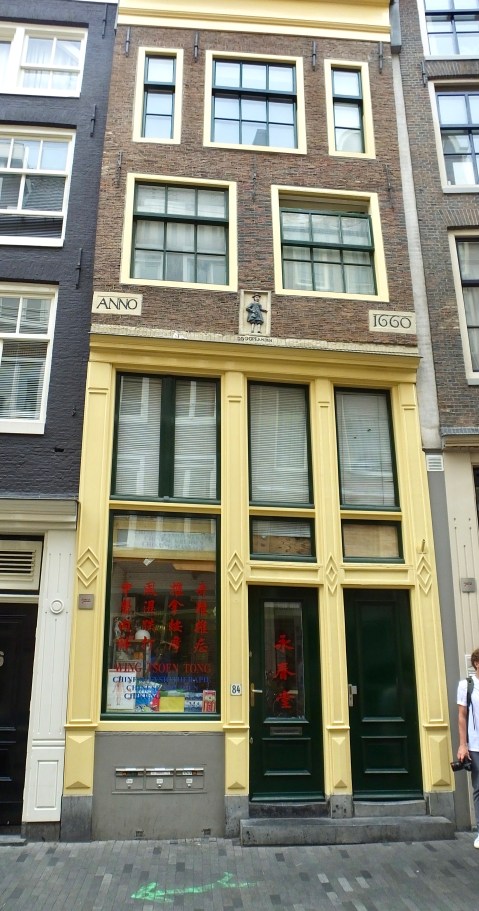
 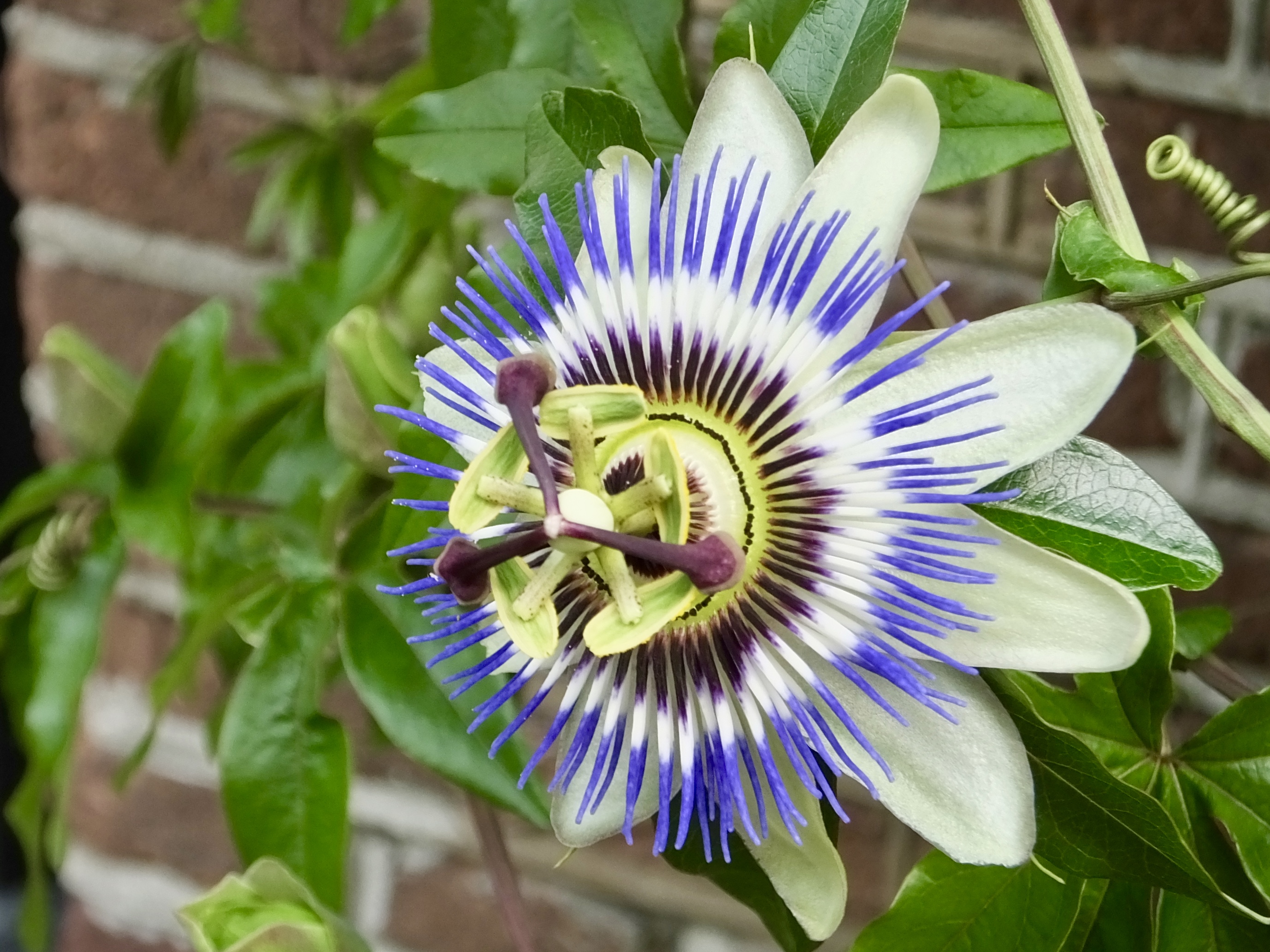 A tower where women said goodbye to their sea-faring sweethearts or husbands was pointed out as the “Tower of Tears.” Meanwhile, the sweet smell of smoldering cannabis frequently wafted out of “coffee houses” that clearly sold more than coffee, and this multi-cultural city came alive as we walked through “China Town,” passed Indian restaurants, and bars and shops of all description.
 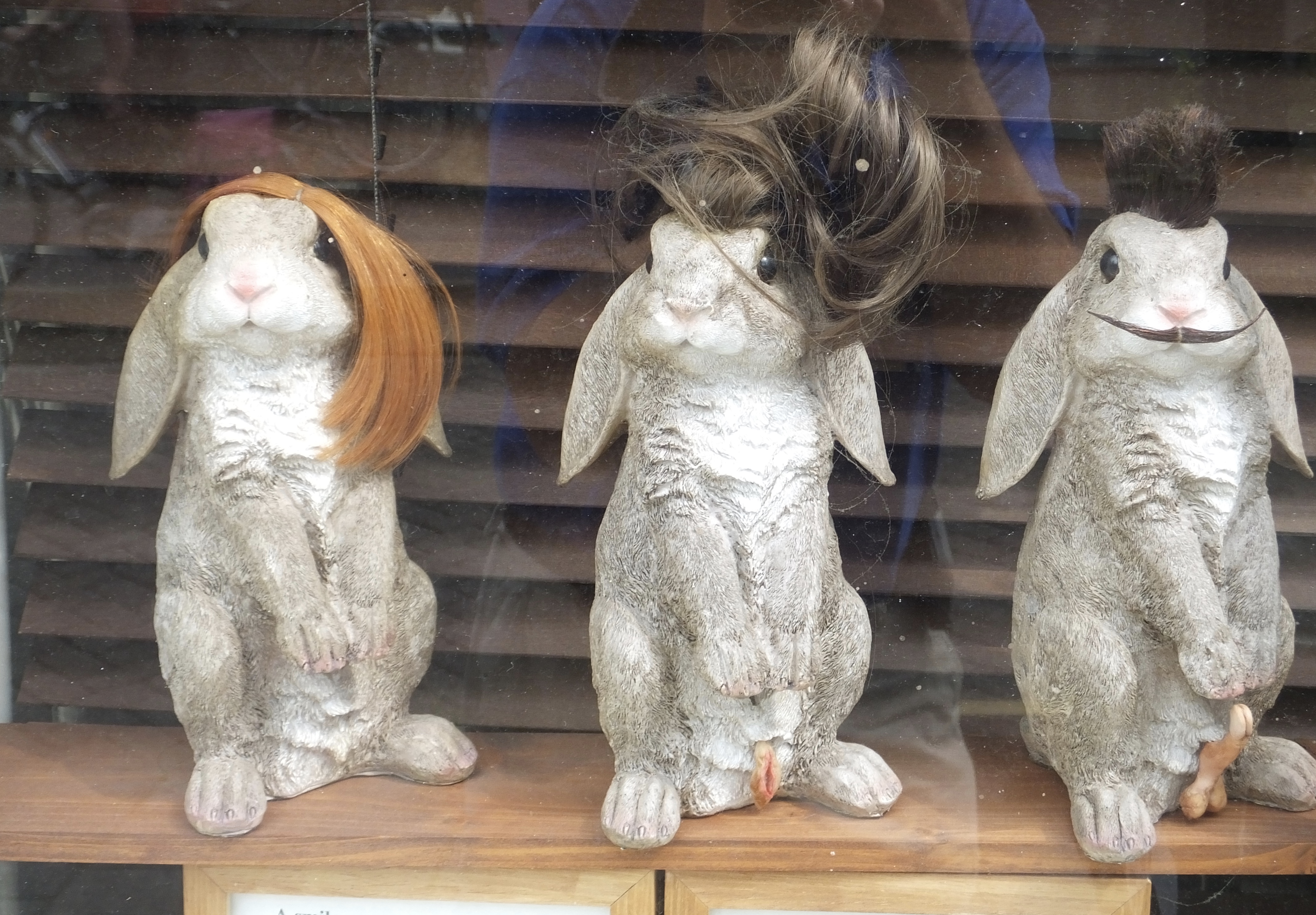 There didn’t seem to be much that you couldn’t buy in old town Amsterdam, including the professional services of licensed prostitutes in the Red Light district.
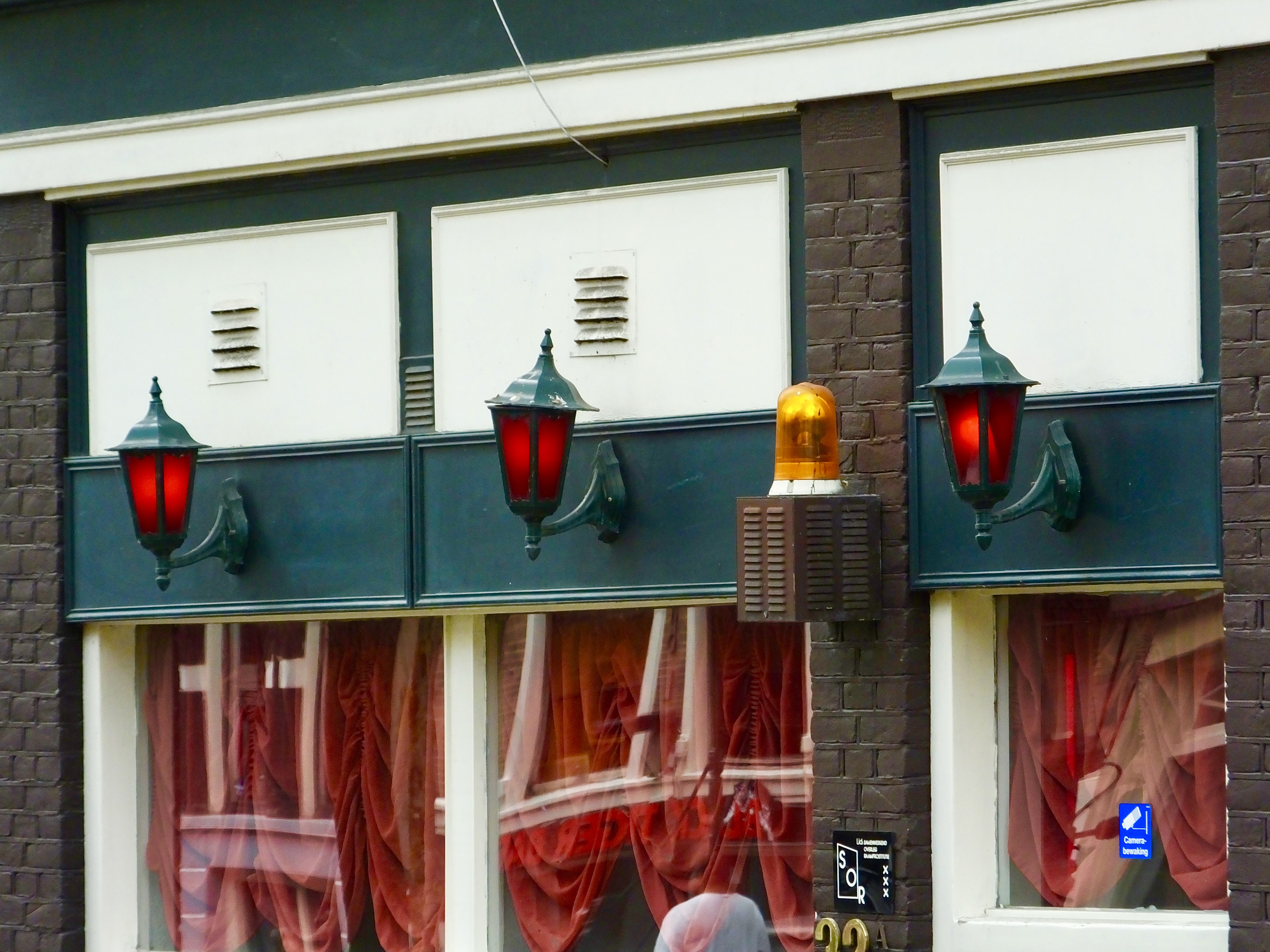
If the lights are on, the ladies are working.
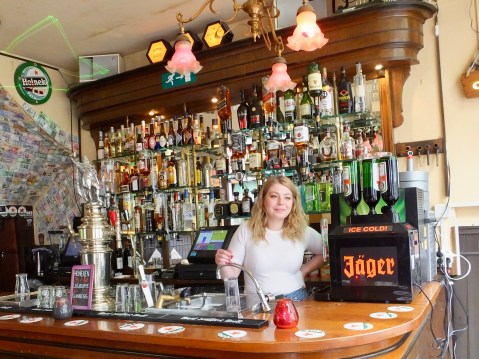
After an hour of walking with our tour group, Marilyn and I opted to continue our own exploration of the city, finding a quaint corner bar where we enjoyed a round of Heineken beer, 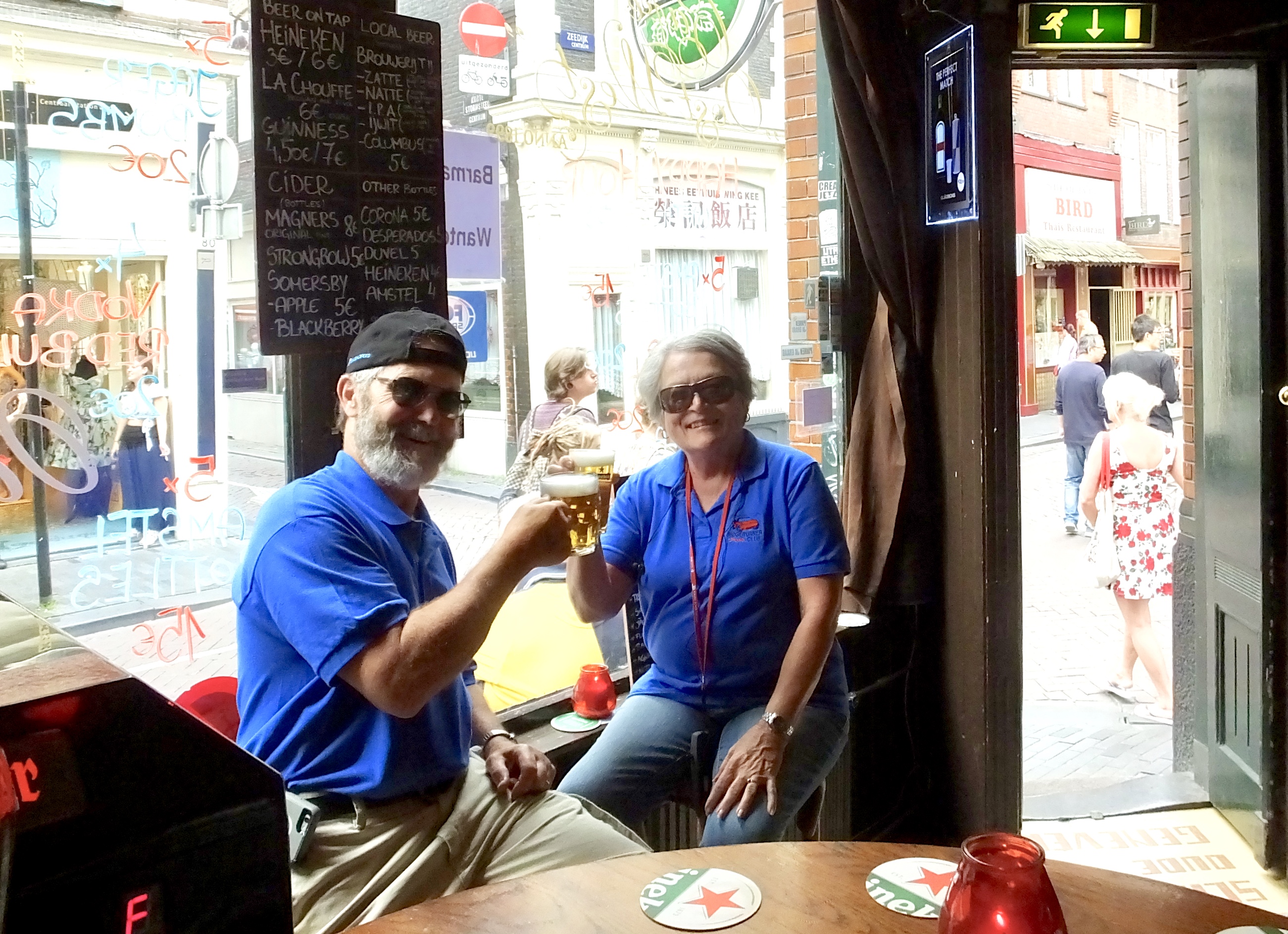 drawn from an elaborately carved tap in use since the early 1800s by a young woman who encouraged us to continue our adventures around the world as a way of staying young.
Back at the ship, we sat through an informative information session with the head of the ship’s hotel and the ship’s Program Director. This river cruising thing is new to us, but I think in a day or two we will be as comfortable as old touring hands. 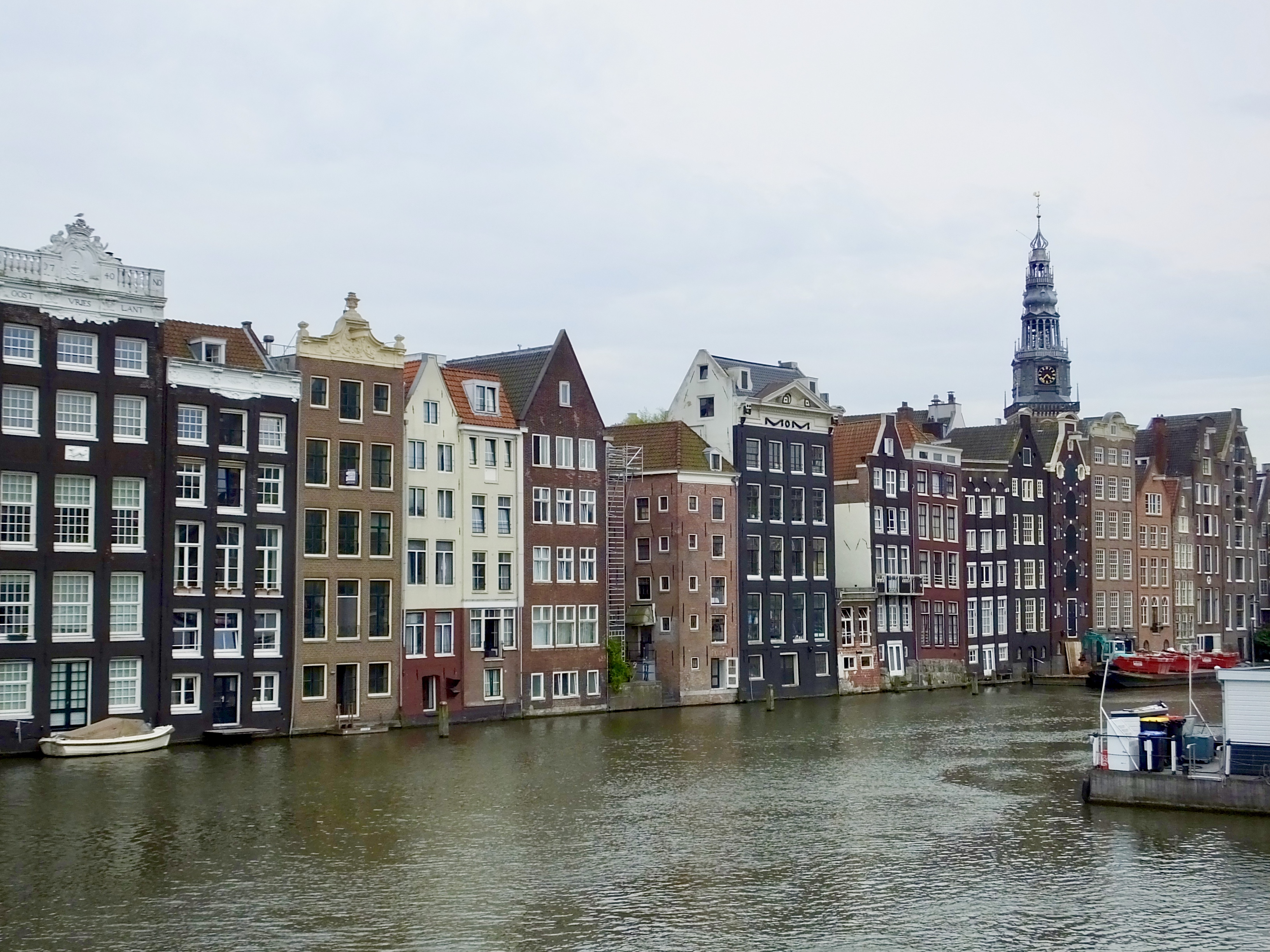 One of the things I’ve learned so far is that the WiFi is weak in our room and I’ve moved to the library area in the center of the ship where reception seems to be stronger. We’ve been warned that reception in the more remote sections of the river may challenge my ability to post the blog each night. But I’ll do my best.
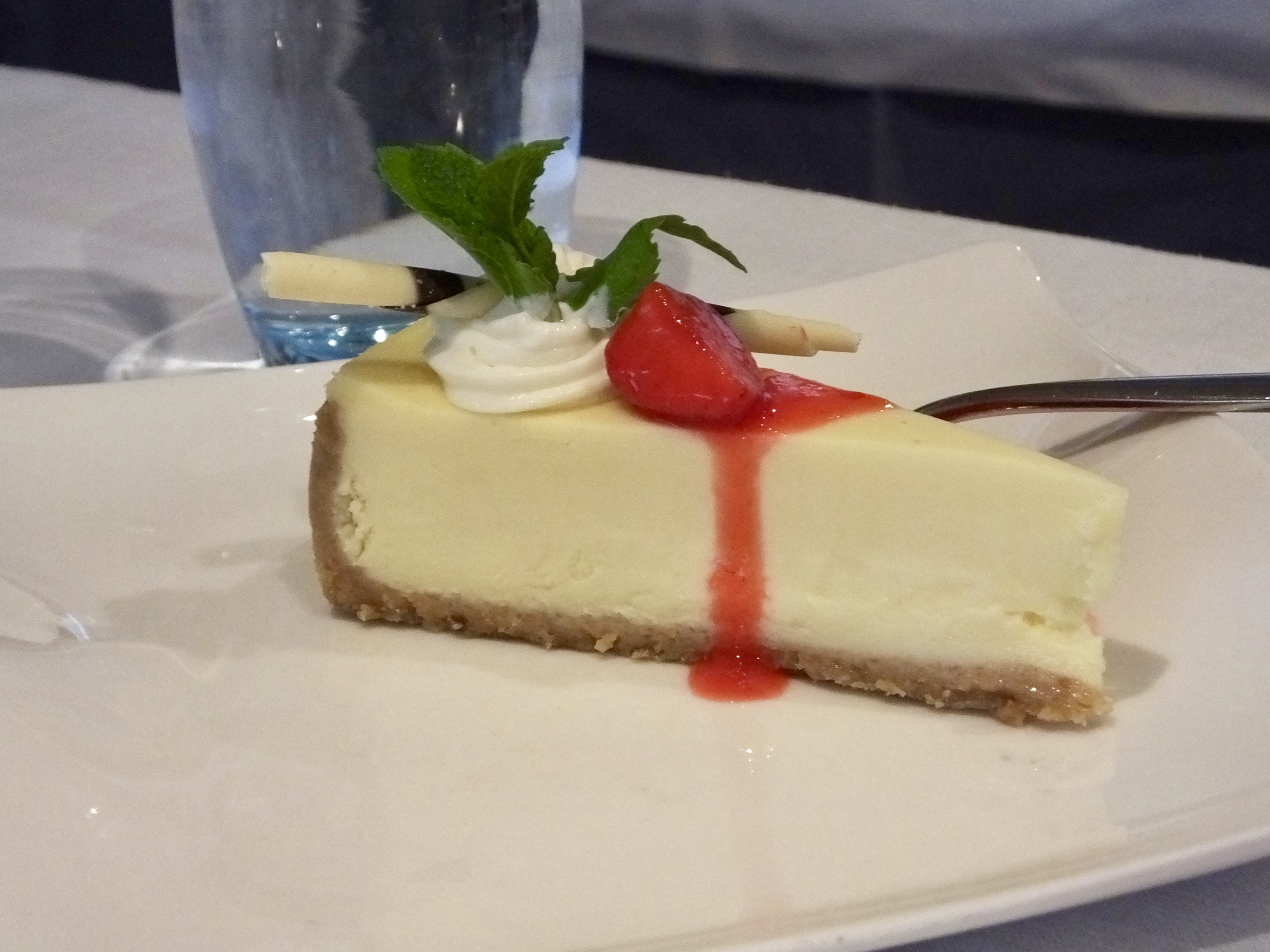 Our first dinner aboard ship was wonderful. Crab and tuna as an appetizer for me, followed by veal loin, and polished off with lucious New York style cheesecake with fresh strawberries. But equally as important, our dinner companions made the meal a special treat as we got to know Nick and Mary from St. George, Utah.
 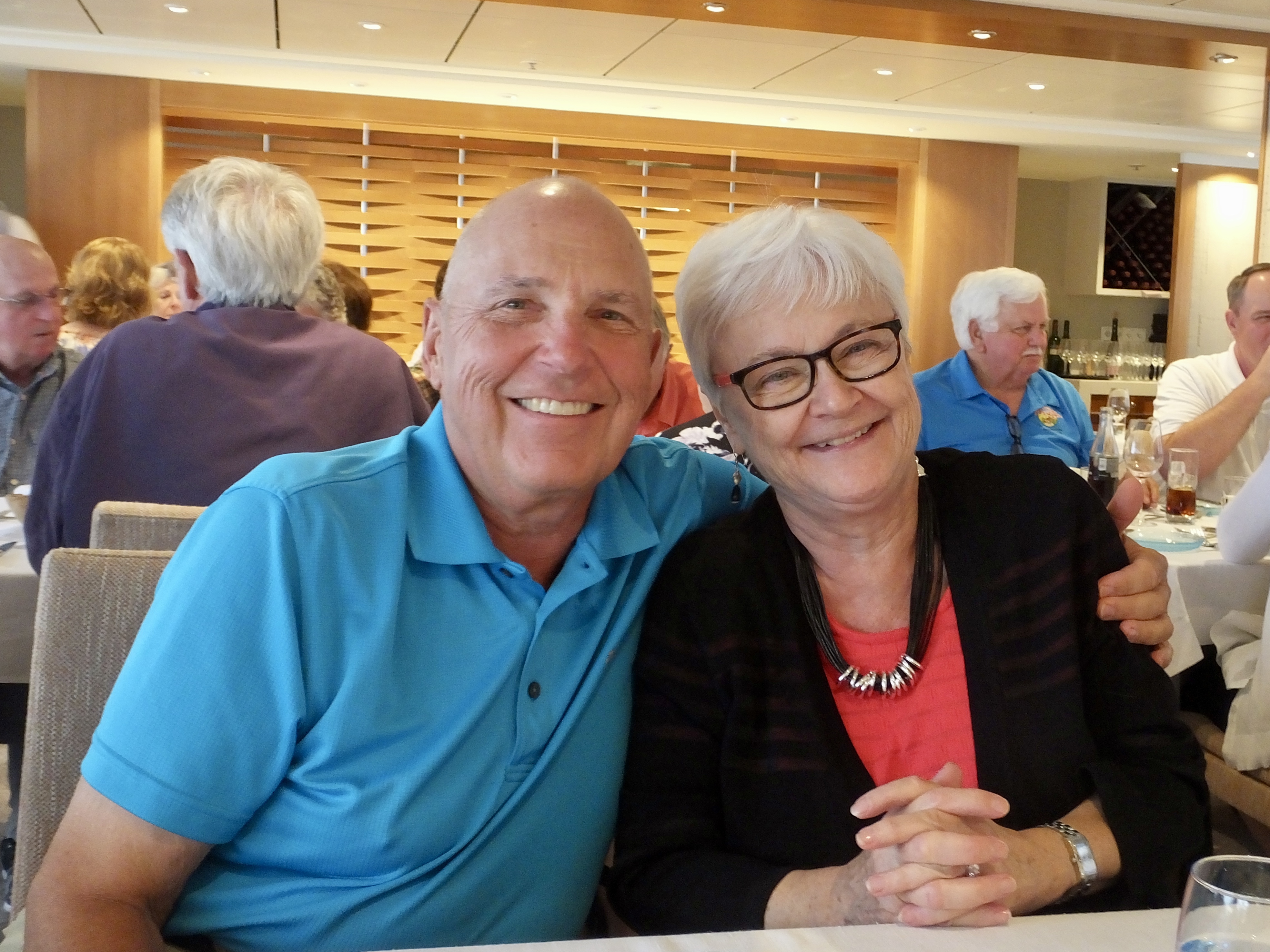 A delightful couple with a strong history of international travel, they told us a little about themselves as we filled them in on our past and family. We discovered what a small world this is when we learned that their friends in St. George used to work with our friend in South Carolina. (I confirmed by text that the connection, in fact, existed.) The hour and a half dinner passed too quickly and we’re looking forward to spending more time with our new traveling compatriots . Tonight they celebrated their 47th anniversary, and we toasted their marital longevity as they in turn toasted ours.
We pull out tonight at 11:30 (45 minutes from now), for a short cruise to Kinderdijk, a small town famous for it’s historic windmills which continue to operate, draining the water from land reclaimed from the sea. Tomorrow, we will tour the windmills before continuing our voyage up the Rhine.
More Pictures from Today:

Not Exactly on the Road Again
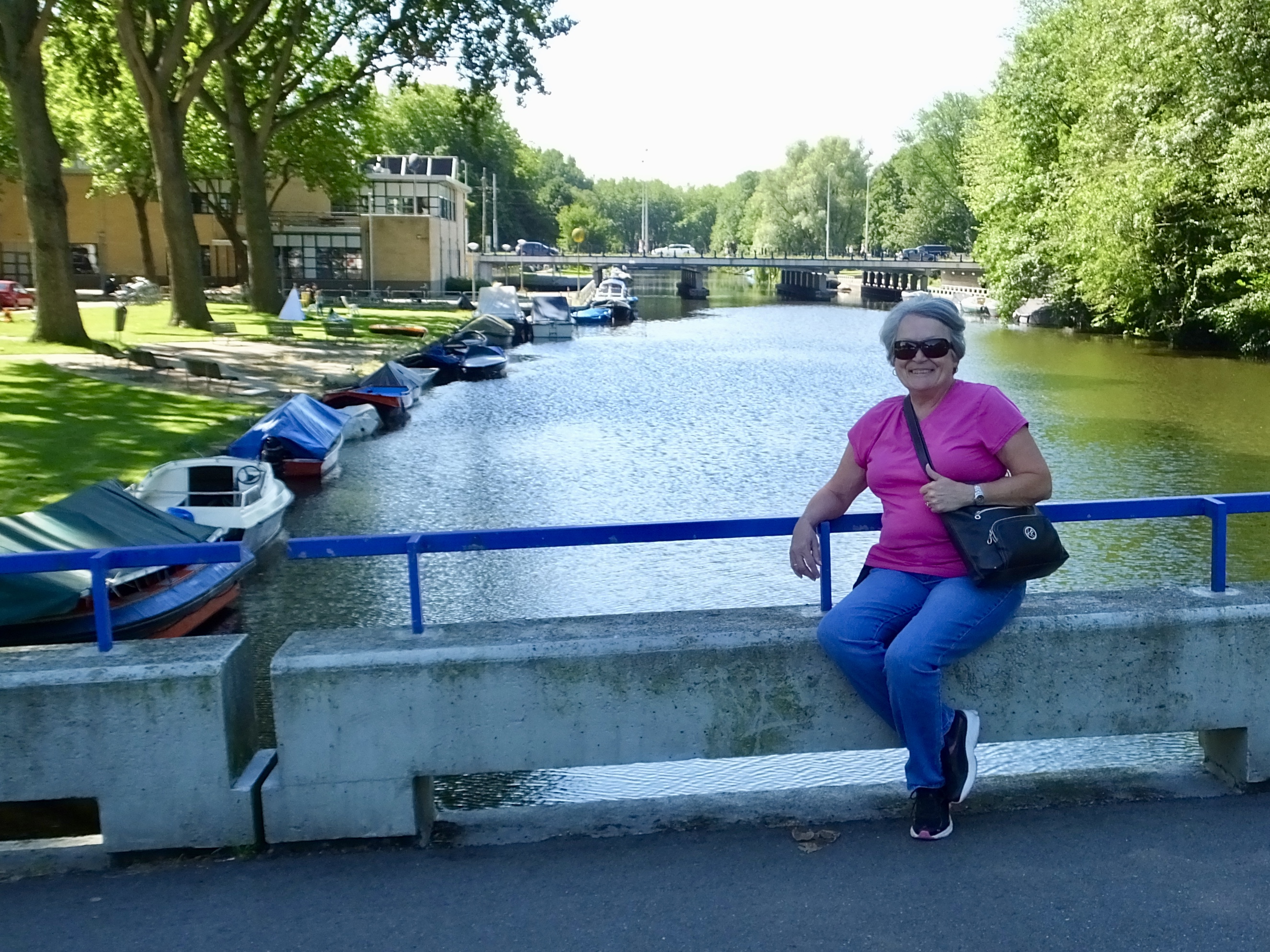 As nearly everyone who read my motorcycle adventure blogs in the past knows, this year’s daily missives will not involve a motorcycle. As I sit here writing the words you’re reading, I’m in Amsterdam, The Netherlands, polishing off a modest but savory bottle of French Grenache-Merlot, and anxiously anticipating the next 17 days that will see Marilyn and me sail on a Viking Cruise Lines long ship on the Rhine, Main and Danube rivers. It’s an appropriate way to celebrate our 50th anniversary later this year (though I still think a small bouquet of grocery-store flowers and a box of candy could have covered it and saved enough money to buy a new motorcycle in the process).
 We left Maggie Valley yesterday at 6 a.m., caught a noon flight from Charlotte to Atlanta then climbed aboard a Delta Airbus 330 at 3:30 for an eight-hour flight to Amsterdam. That put us on the ground again at 11:30. Atlanta time. Of course Amsterdam was 6 hours later, and the sunrise was spectacular when we landed there at 5:30 a.m., having somehow misplaced the time when I normally would have been sleeping. But that’s OK; we got two hours of non-restful REM-sleep on a cold, noisy plane and we’re young and vigorous so we can easily handle missing a night of battery charging sleep.
Click on any image to enlarge
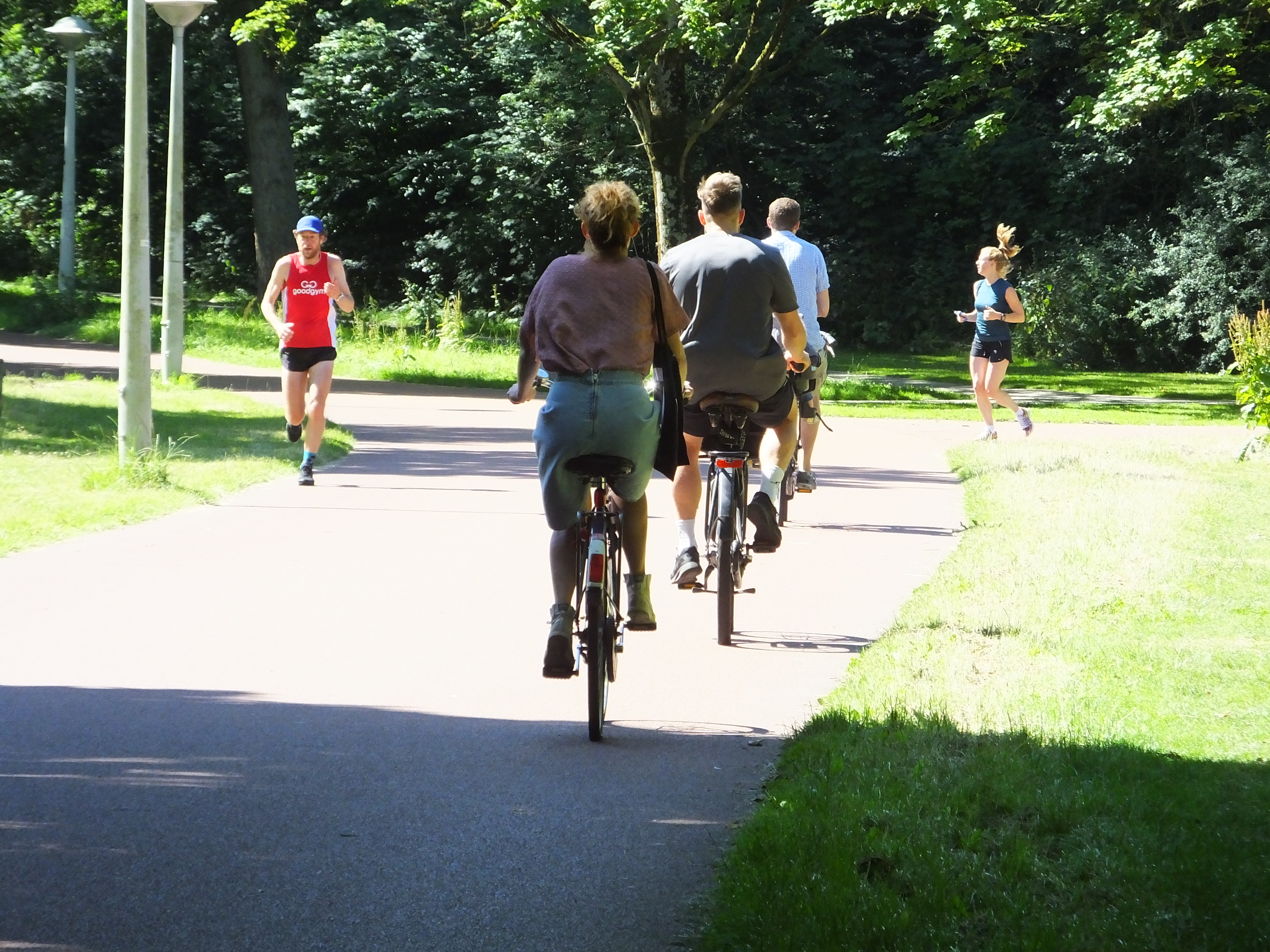
We hoped to check in at our hotel by 10 a.m. or so, but they didn’t have a room ready for us, so we had them store our four bulging, over-packed bags and took off for a five-mile round-trip walk through Amsterdam to visit one of the premier museums in Europe: The Vincent Van Gogh Museum. 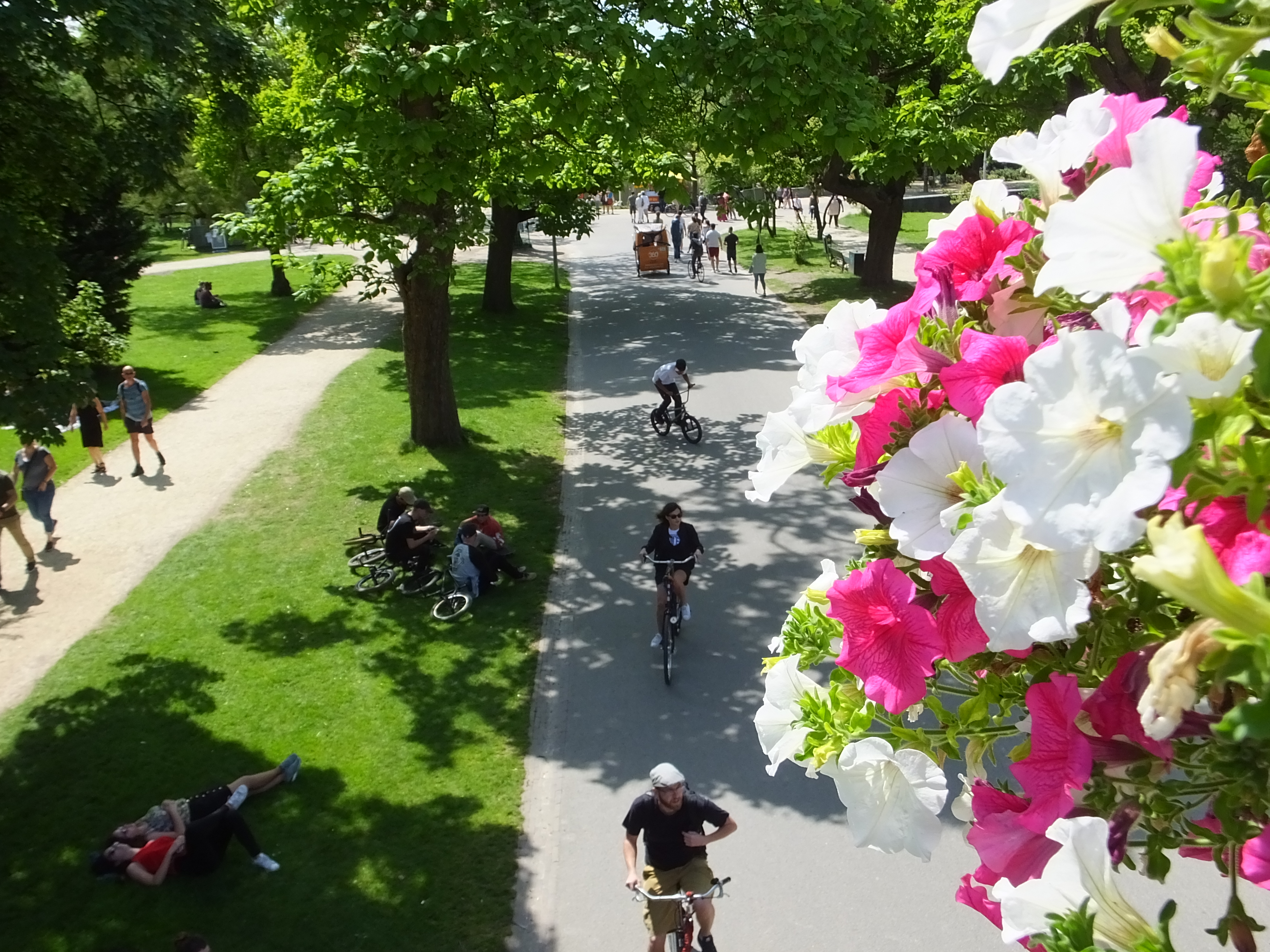 On the way there we strolled through two lovely parks dodging lithe runners and hard-body bicyclists who believe the parks’ paths belong to them. Actually, they do, and walkers are expected to remain off the asphalt where the fleet of wheel and foot reign supreme. Not knowing the rules, we nearly got run down several times before, with a little encouragement from vocal Sunday athletes, we figured out where our place was in the pedestrian pecking order.
  Despite the dangers, we had a wonderful walk but quickly using up the two-hours of what little battery charge we banked on the plane ride across the Atlantic.
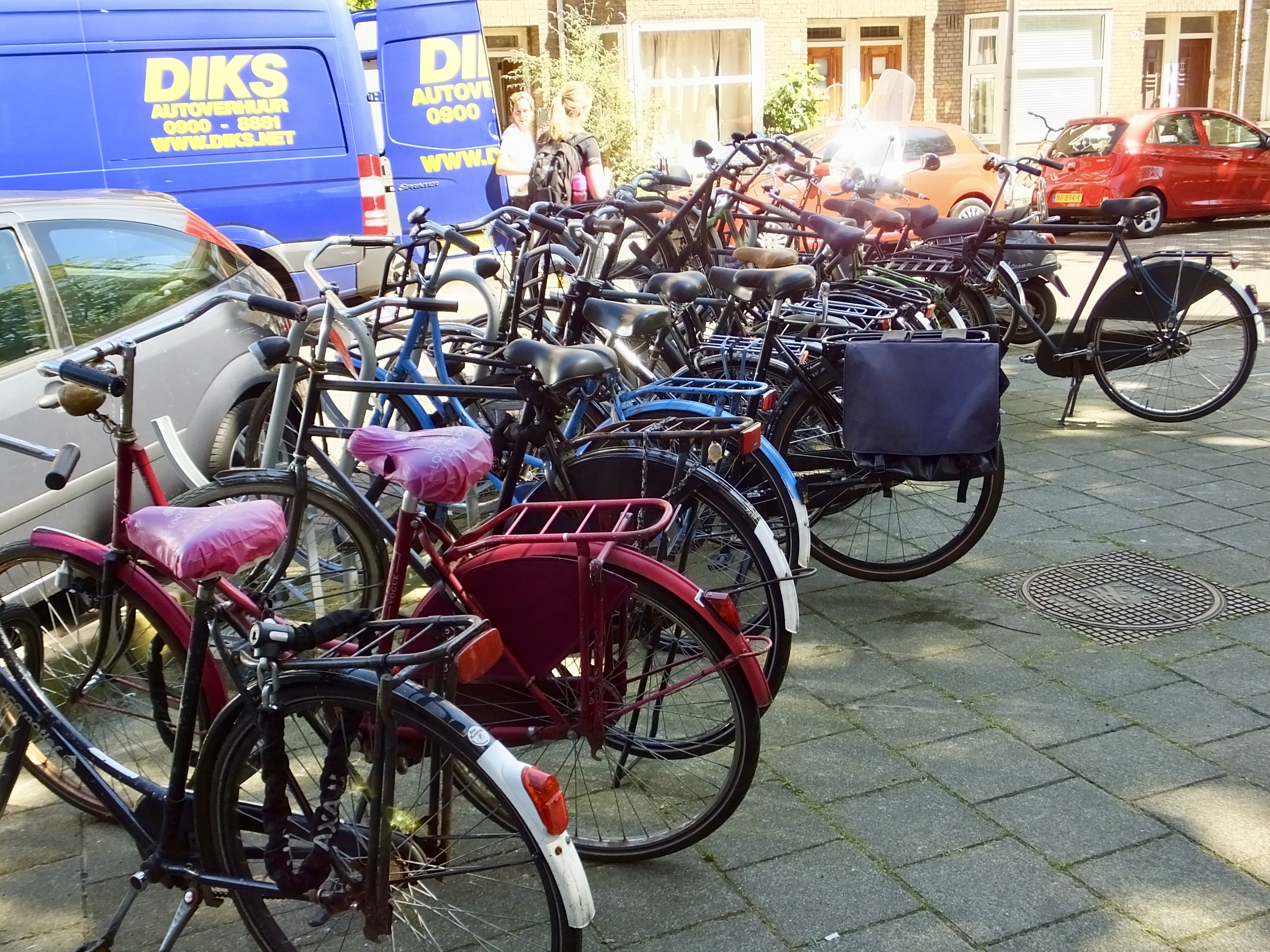
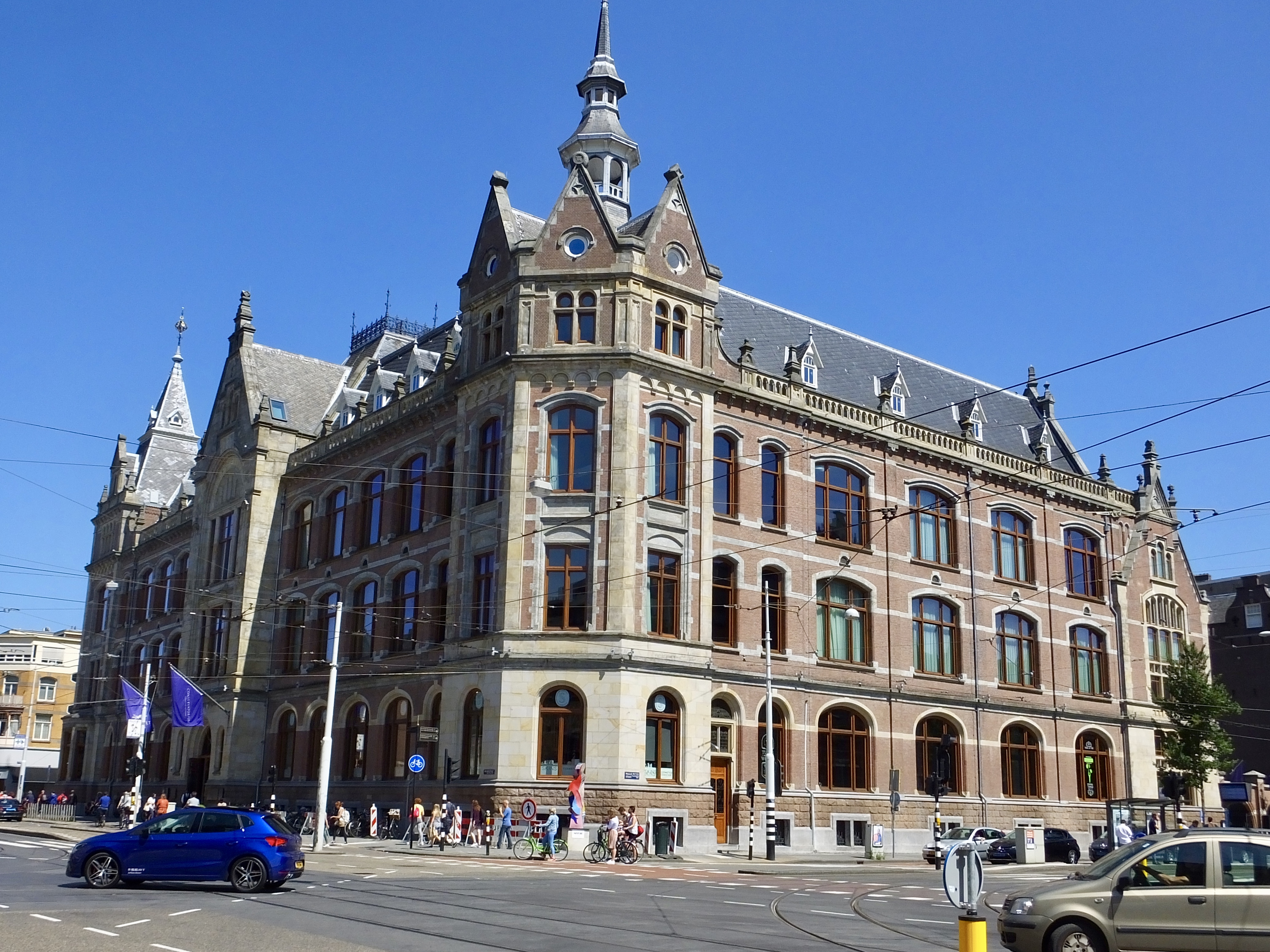 The parts of Amsterdam through which we perambulated on our way to Vincent’s art emporium were striking in their quaintness, their charm, their history, and their (over) abundance of bicycles. EVERYBODY in Amsterdam, it seems, travels on two mostly non-motorized wheels. Thousands of bicycles, many of them equipped with jury-rigged child and infant carriers, are locked to bike racks, trees, buildings and each other on every block we covered. Amsterdam must have the fittest, healthiest residents of any city in Europe.
 After a brief wait in the queue to buy our €44 museum tickets, we reveled in the chance to see the greatest, most complete collection of Van Gogh paintings and drawings anywhere in the world. Hundreds of priceless artwork hangs on the wall of this modern museum dedicated to one of the great art pioneers of the late 19th century.
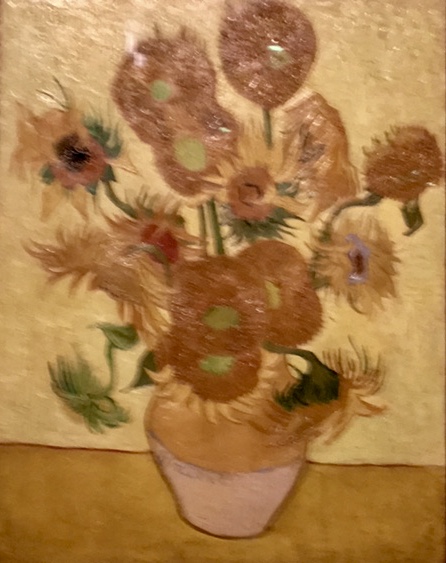
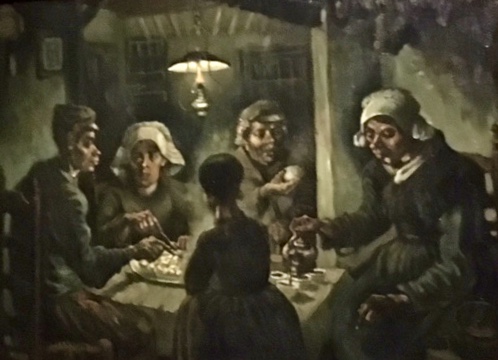
 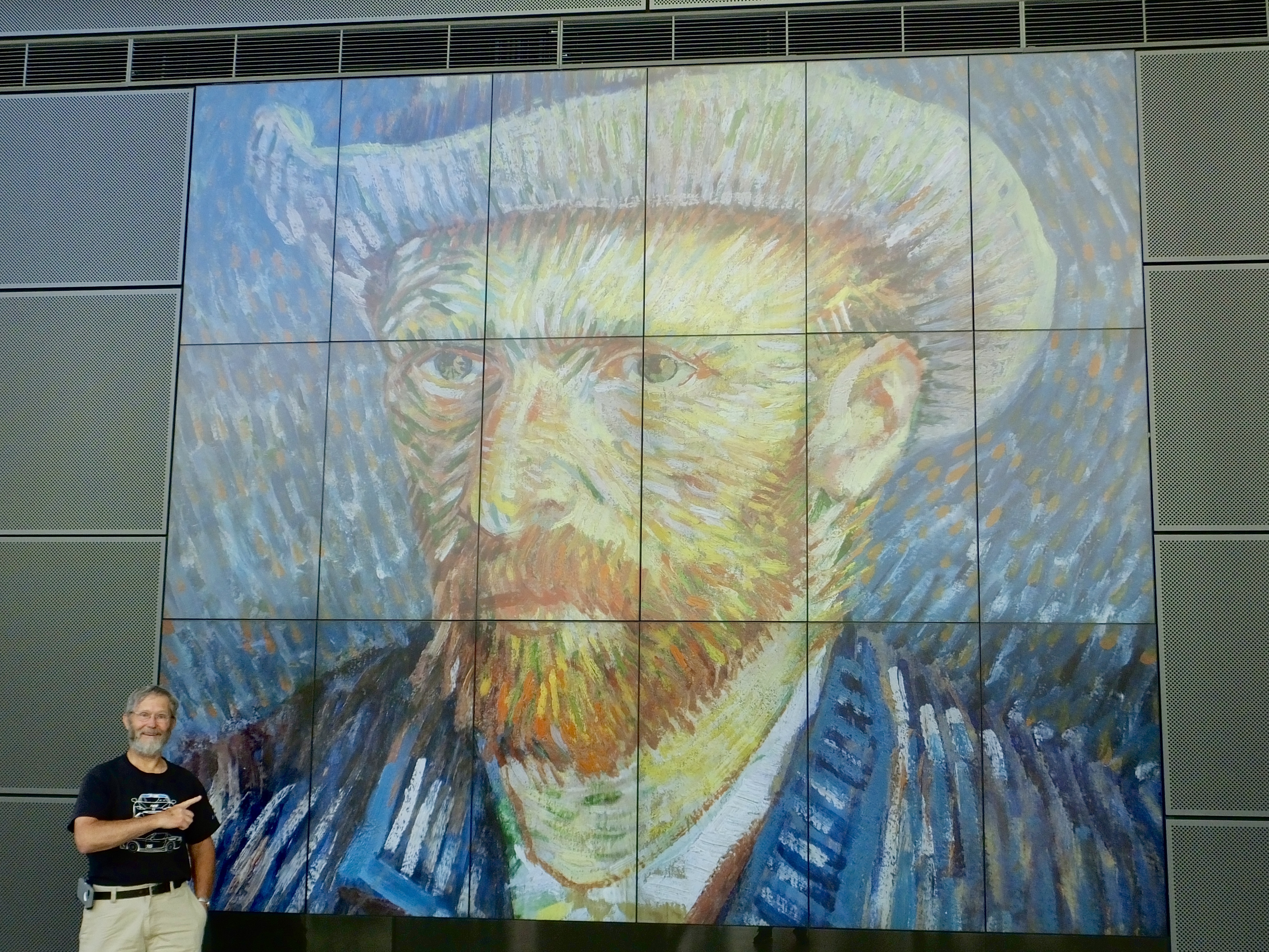 Despite only producing art for a period of 10 years before he shot himself in the chest in the course of a mental breakdown and died, Van Gogh influenced the art world during his lifetime and for more than a century afterward. His craftsmanship with a bold brush, his eye for striking color combinations and his largely plebeian subject matter secured his title as a master artist. Seeing the works during today’s three-hour visit convinced me his acclaim was and is well given and deserved. Despite admonitions by the museum authorities NOT to take pictures in the museum, I managed to surreptitiously digitally capture a few, two of which I offer here:
 Tired after almost no sleep and a five-mile urban hike, we arrived back at the hotel to find our room ready except for missing cushions on the sofa and a non-working USB port that was my only hope of charging four electronic devices.
  I’m making do with what power remains on my MacBook Pro, Marilyn doesn’t really need her phone, her iPad has enough juice to read e-mail and check FaceBook and my phone is currently at the front desk being charged at a working USB port.
Tomorrow we board the long ship Skirnir for our long-awaited cruise through the European heartland. I’m looking forward to a good night’s rest and to the delights that lay in store during the next two weeks. I’ll try to keep everyone informed of the celebratory events marking a half-century with a trouper who deserved better.
The wine bottle is now empty as is my well of travel wisdom. I’m going to bed.
I can’t wait to get on the River.
End of the Ride: Summary Thoughts
Every summer since I retired four years ago I’ve explored parts of North America many people dream about but never see. And I’ve done it on two wheels. Nearly 50,000 miles of riding, exploring, discovering and learning have led me to some of the most beautiful places in the world and, more importantly, have led me to people whose brief but extraordinary intersections with my life have made it exceptional and far more interesting than it would have been without them.
I’ve used “Alaska Redux” several times during the writing of this blog over the past 43 days and will probably use it again as the title for the consequent blog-based book. It means, of course, Alaska “brought back.” More than simply a return to places visited three years ago with Marilyn on my first post-retirement motorcycle excursion, this year’s ride has “brought back” to me the adventuresome spirit of Alaska, the always-present possibility of discovering or rediscovering something or someone that enriches my quotidian life. It has “brought back” to me the awesome and endless wonder of nature. It has “brought back” to me the critical reality that the vast majority of people are good, kind, generous and caring.
Anyone who rereads the blog or flips through the pages of the book to be produced will see what I mean. Look carefully at the pictures published in the blog and you’ll see the breathtaking wonder of soaring, rugged, snowy mountains, the tranquil but powerful cascading of glacier-fed waterfalls and the enticing beauty of small but hardy flowers blooming with unmatchable colors in a harsh environment. Look again and you’ll see a few of the many creatures whose presence in the vast wilderness reminds me of my own small place in the scheme of things and of generations of people who lived harmoniously with nature. Look again and you’ll meet amazing people whose small contributions provide essential and complementary addenda to my conventional and unremarkable life.
Some people I met remained nameless: helpful strangers who pointed me in the right direction or cheerfully guided me to a surprising discovery. Others, whom I met for the first time and whose names I learned–think of Rachael the traveling physical therapist or Greg the outstanding fishing guide or Näntsäna the information-filled Tutchone woman or Mikel the optometrist–offered small lessons in how to live a good life by doing the right thing and caring deeply about what they do. And family and friends–Jon and Ulla, Kent and Josiah, Linda, Jaylene–who reminded me of good times past and the promise of memories yet to be created.
Riding a motorcycle 12,000 miles isn’t about wearing out rubber and thoughtlessly consuming hundreds of gallons of gasoline. It isn’t about desperately trying to remain dry and warm when everything around you is wet and cold. It isn’t about successfully avoiding untoward encounters with giant potholes and wayward critters large and small. No, riding a motorcycle 12,000 miles is about “bringing back” the excitement of living, the joy of learning, the exhilaration of discovery, the enthusiasm of adventure.
This ride differed from the last two adventures that took me to Newfoundland and the Rockies because I had a riding partner. Mark Stevens had followed along on earlier blogs as I rode to Alaska, to the Maritimes and Newfoundland, and to the mountains of mid-continent North America. He decided when his time for retirement came, a long-distance motorcycle adventure had to be part of his new non-working life. Mark and I have ridden together for more than ten years, with an increasing number of shared miles in the past few years. No two people get the same experience out of an adventure like this, even when they cover the same roads together, but I think Mark returned home with new perspectives. We mostly rode quietly, without communicating with each other, enjoying that elemental sentience only true motorcyclists can appreciate. We shared thoughts at the end of each day, but we also mulled alone our silent thoughts. Throughout the 43 days together, Mark’s frequent “Wow!” succinctly suggested he was glad he made the trip.
Next year Marilyn and I will embark on a two-week, 50th Anniversary river cruise down the Rhine, the Main, and the Danube from Amsterdam to Budapest, so a long motorcycle ride is unlikely. But I’m already formulating my next extended, two-wheel trip, and this one may be my most challenging yet.
I’m planning a ride that will begin with the Lewis and Clark National Historic Trail from Pittsburg, Pennsylvania, to the Oregon coast, serving up a huge portion of history accompanied by a substantial helping of beautiful scenery. From the Oregon coast, I want to head to Vancouver Island, British Columbia, and there begin a cross-Canada ride ending in St. Johns, Newfoundland, before returning home. Depending on side trips, that ride could equal in length my 2013 Key West to Fairbanks jaunt. I have plenty of time to plan this two-month adventure, but right now it sounds like a trip worth taking.
I continue to be an evangelist for retirement. I’ve had jobs I enjoyed and that were fulfilling, but other than raising two daughters, nothing has brought me more pleasure than these long motorcycle rides. It’s probably a good thing my financial resources limit me to one trip a year or I’d be gone all the time. Anyone thinking about retiring and who is close to it should make the move sooner rather than later and should use their newly unencumbered time to explore the world around them in ways that weren’t possible when the demands of a job held them back.
As I sit here sipping a small glass of Jack Daniel’s Tennessee Whiskey and write this final post, I can only say “Thanks again” to everyone who followed this year’s blog, who kept Mark and me in their thoughts. If I made anyone envious, I’m pleased. Knowing friends and family waited for the daily critter count or pie report or foul weather update made sitting with a glass of Jack at my laptop and writing at the end of a long day much, much easier. My audience was small but loyal. Thank you.
 hdriderblog