
Great Alaska Adventure: Exploring the Kenai
A light rain with temperatures in the low 50s at Seward this morning meant spending extra time suiting up to avoid the distress of foul weather. There’s a very specific order of operation for donning cold weather and wet weather gear, and if you miss a step along the way you have to backtrack to the point of the missed step and start again from there. For example, if you put on your rain pants and zip them down, snap the button at the bottom of the leg and fasten the stirrups under your boots and THEN remember that you haven’t put on your overboots, you have to back up and emend the process accordingly. I’ve never numbered the discreet operations involved, but maybe one day I will. I’m guessing there are about three dozen separate steps before you’re ready to fire up the bike and roll down the road. As many times as we’ve done it, I don’t think we’ve yet done all the steps in proper order the first time. Once properly dressed and protected against the unkind elements, though, the ride went well as we set off to explore the Kenai Peninsula.
As we started our journey north, saying farewell to Seward, Resurrection Bay and the surrounding mountains, I wasn’t sure where we would go during our relatively short trip (125 miles) to Soldotna on the western side of the peninsula, but I wanted to avoid making a direct trip to Soldotna and finding ourself with little to do and lots of time to do it in when we got there. I remembered reading about a small, out-of-the-way town on the southern side of Turnagain Arm named Hope and Marilyn and I set our course there. The route took us about 20 miles north of the highway junction we would have used to go directly to Soldotna before branching off to the northwest to the foggy shores of Turnagain Arm and Hope. We should always opt for Hope, when we can.
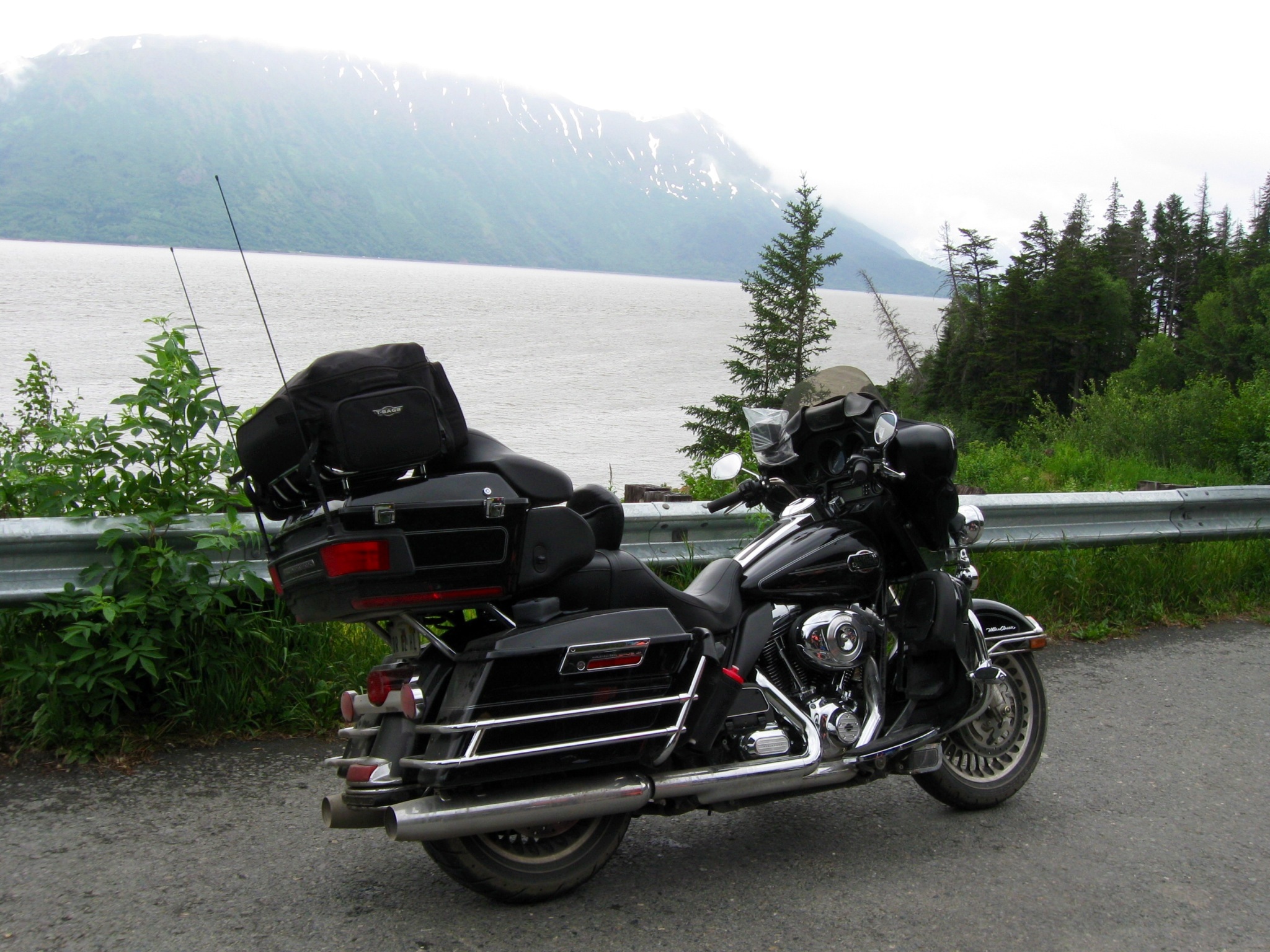
Always inspiring sights in Alaska.
The 17-mile road to Hope had some nice twists and turns that would have been much more exciting on dry pavement, but nevertheless offered the opportunity for gentle leans, even at slow speed on rain slicked asphalt. It also provided the never-stale, never-repetitious, always-welcome views of snow streaked mountains lunging skyward from the sea that seem to define much of Alaska’s sublime coastline. Even on a cold, rainy day with mist and clouds camouflaging the stony peaks (perhaps most of all on such a day) those views impart a sense of awe that make one pause and breathe deeply, absorbing the wild beauty of it all.
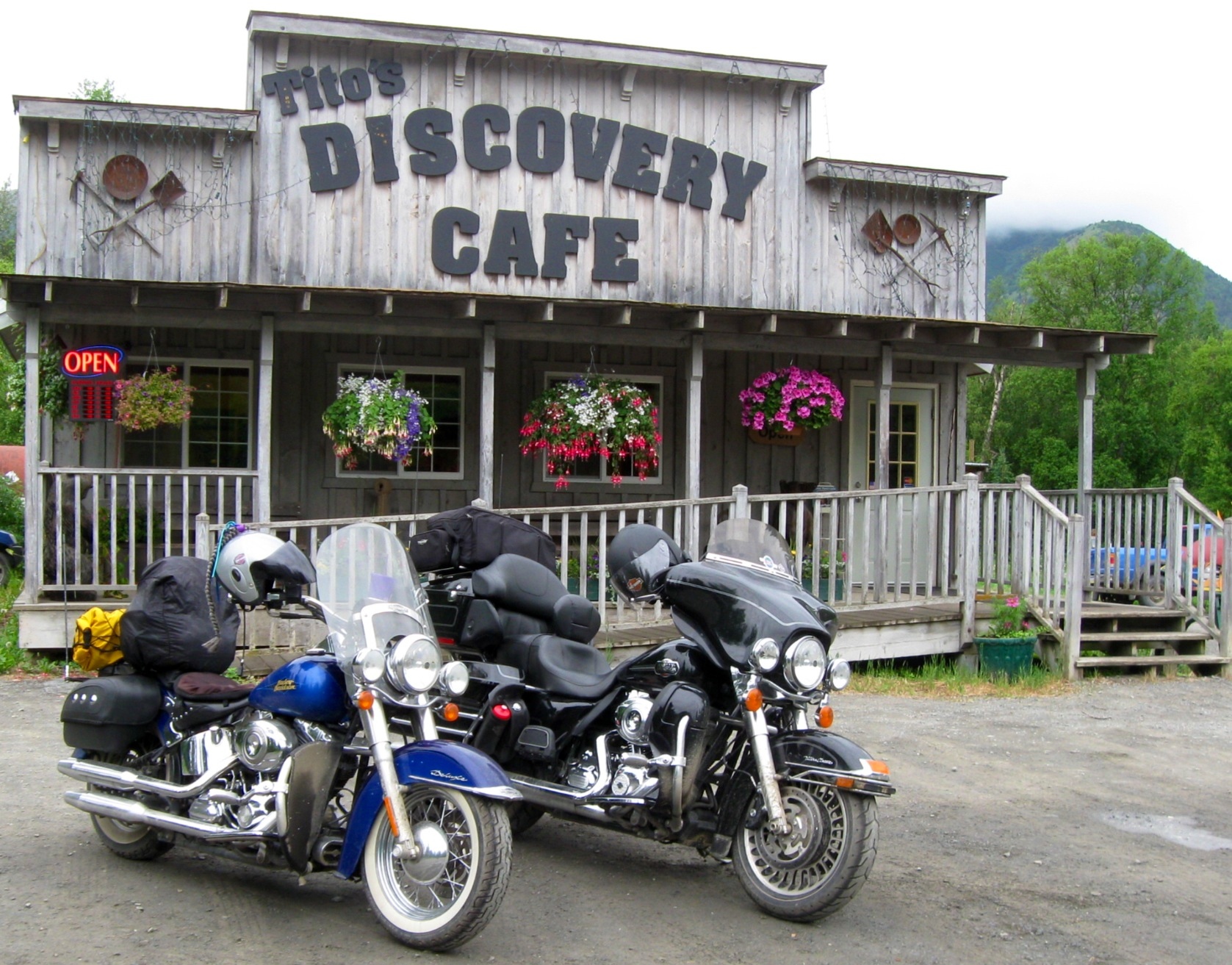
This was good Discovery.
When we arrived at Hope we turned down Main Street and discovered a few old buildings, a closed cafe and a dead-end into Turnagain Arm. We backtracked a short distance to a second eatery–The Discovery Cafe–we passed coming into town and, it being noonish, stopped for lunch. As we warmed up with a bowl of chili and finished with (you knew this was coming) a big slice of peach-blueberry pie, we began to learn a little more about Hope.
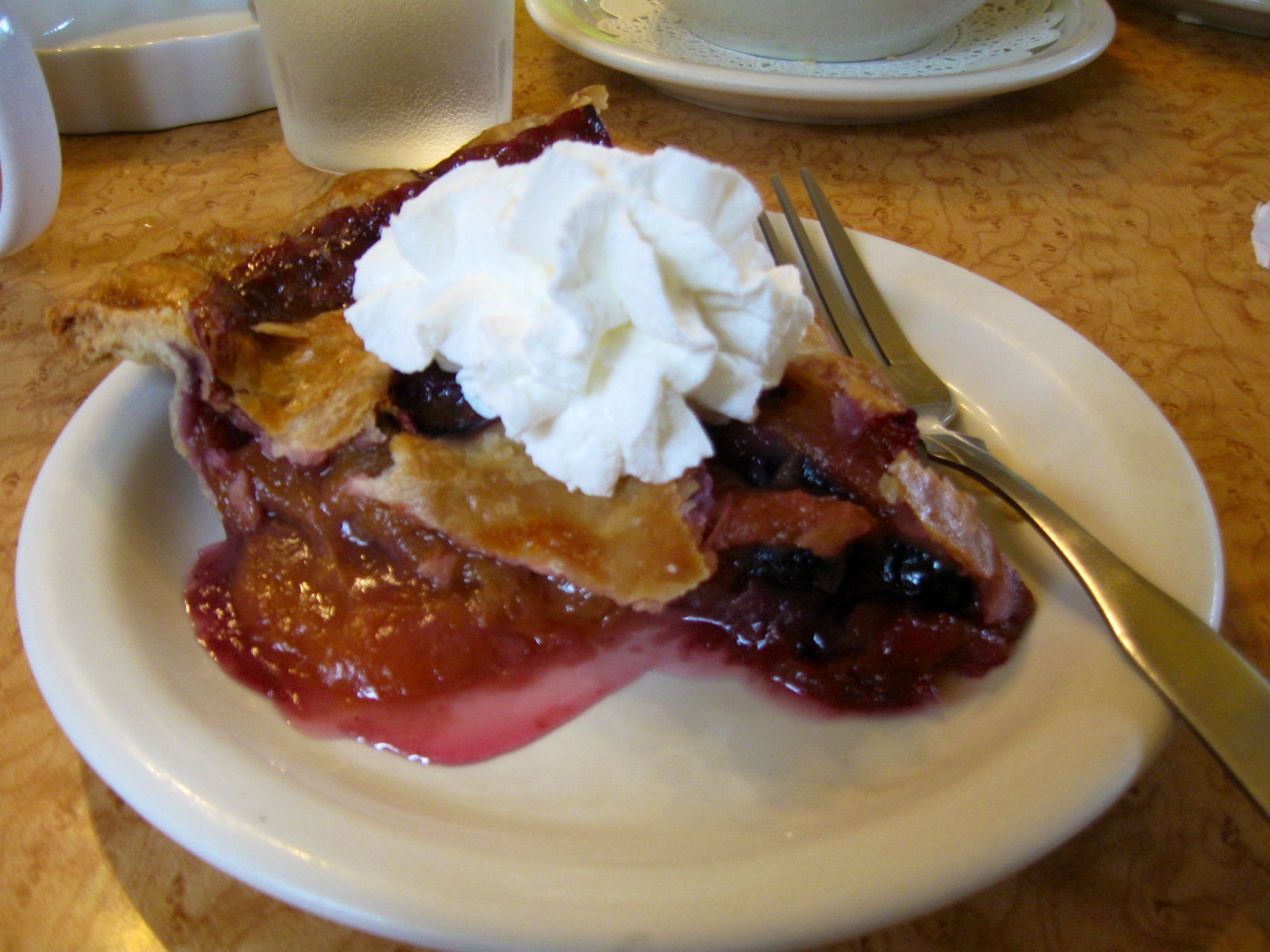
Another first for me: Blueberry-Peach
A map of Hope posted on the wall of the cafe showed that in my effort to avoid turning down a mudded road, we missed about 80 percent of Hope hidden in the trees. (Lesson: Never give up on Hope too quickly.) Leaving the bikes safely parked in front of the Discovery, we hoofed it through the trees to see what we could discover. A few hundred yards along a dirt road into the forest, we found several small cabins, a fix-it store, and, to my delight, a small local museum which we stepped into and back in time.
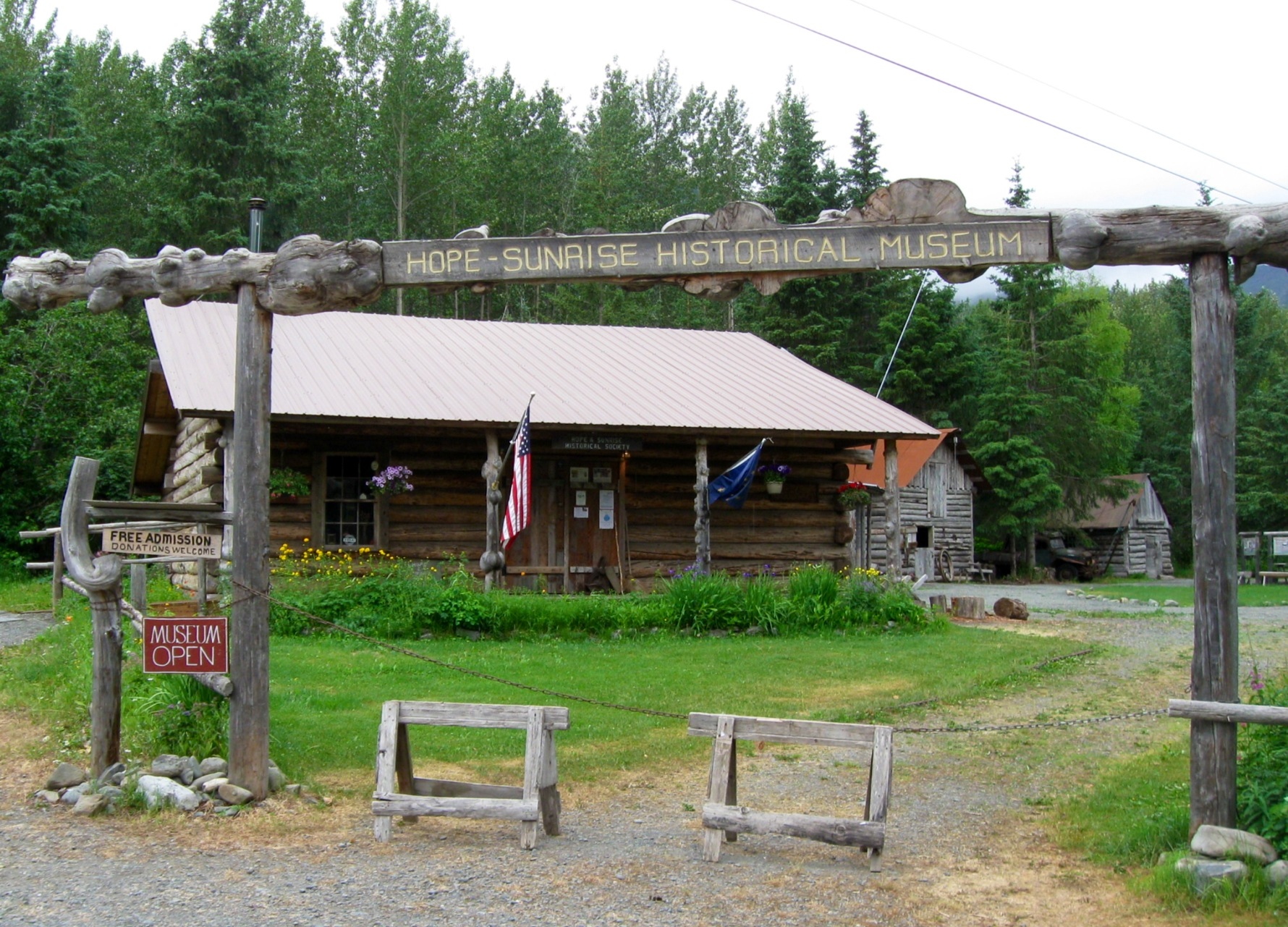
The Hope Museum keeps Hope alive.
The docent at the museum had answers to most of our questions as we perused the artifacts of Hope’s history but assured us that Billy-out-back would be a better source of information. As we were pondering whether to stay a while longer, Billy-out-back came in. And our real lesson in Hope began.
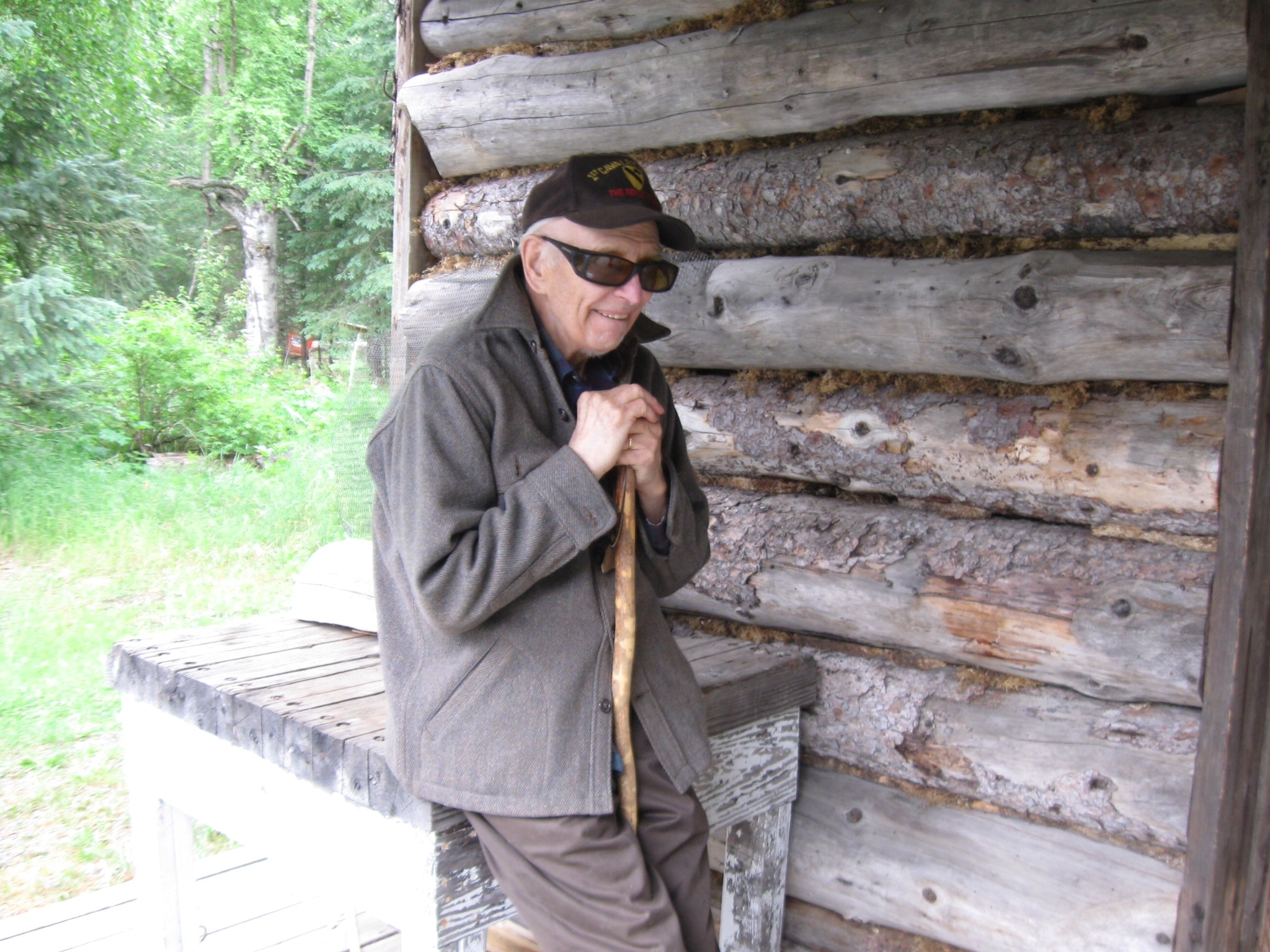
Bill Miller: Hope Historian
Bill Miller, an 88-year old, nearly blind, long-term resident of Hope, turned out to be a font of knowledge, not only about Hope but about gold mining in the area more than 100 years ago when Hope was born and christened in honor of the youngest resident miner, a 17-year old who sought to make his fortune in the Resurrection Creek mining district. Bill was there for the great Alaska earthquake on Good Friday, 1964, and he had stories about most of the people who lived in or near Hope for more than half a century.
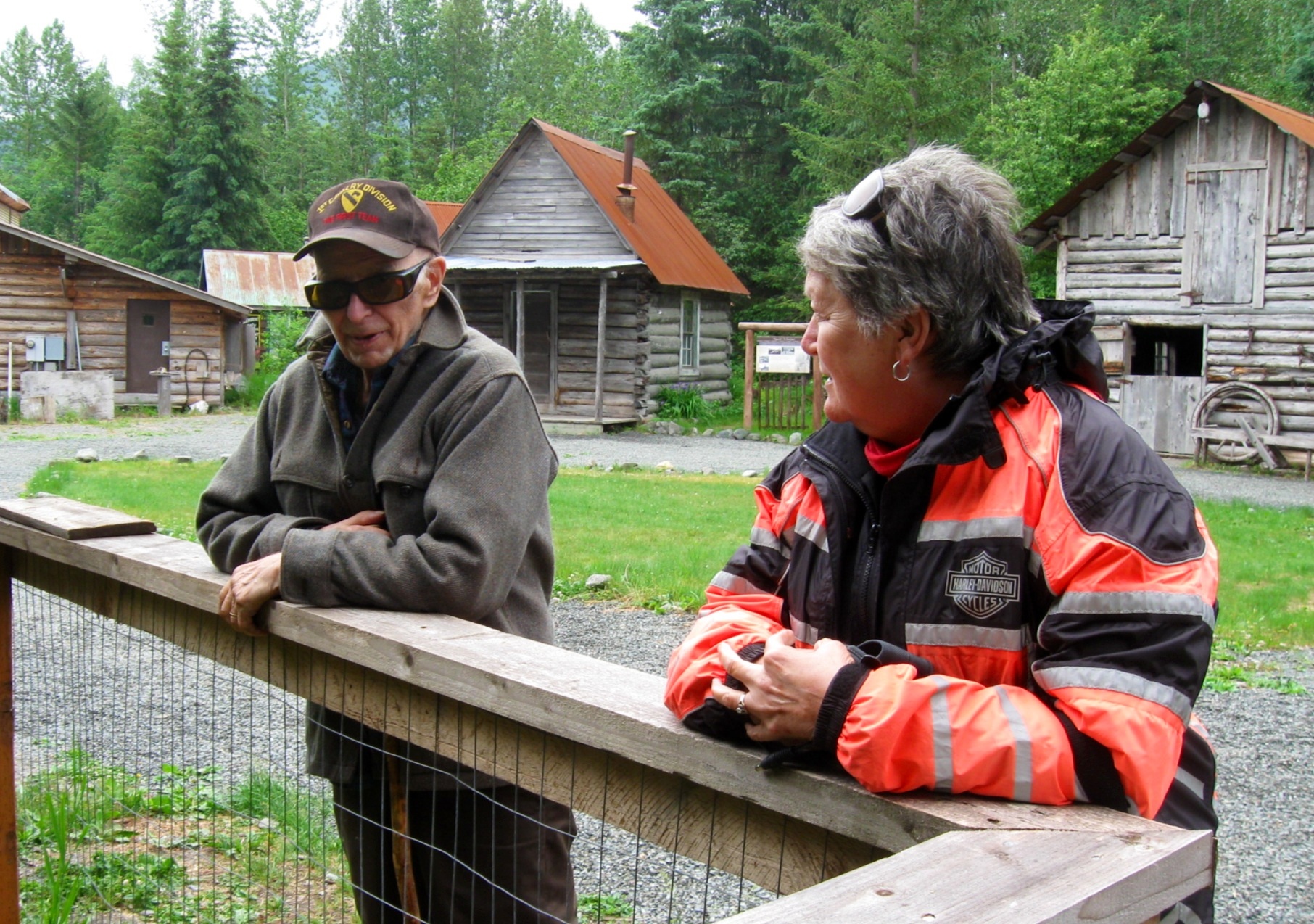
Bill Miller passes on Hope to Marilyn.
Bill Miller’s life for the past 30 or more years has been dedicated to preserving Hope’s history and several of its buildings that had been moved to the museum grounds and which he had reconstructed as necessary to save them from ruin and oblivion. Bill had done our little tour many times, it was evident, because though almost sightless he walked us to each building in the collection, opened the doors and told us the stories of the 1904 school house, the blacksmith shop, the miners’ bunk house, and a four-stall workhorse barn. Along the way, he told stories of moving the town inland half a mile following the earthquake because as the land sank, the tide rose and each year the town flooded twice at high tide. So the people moved the school, library, stores and houses. They were trying to keep Hope alive.
Hope is now home to slightly more than 150 people, though that number varies from year to year. This year three new families moved to town and several new babies made their appearance. And the new school, in danger of being closed for lack of students has a renewed lease on life.
There isn’t much to Hope. But it’s valuable to the people who call it home. And it’s valuable to those of us who believe that hope lies in the past as well as the future.
Tomorrow we’re headed for Homer and whatever we find along the way.
Great Alaska Adventure: Kenai Fjord National Park
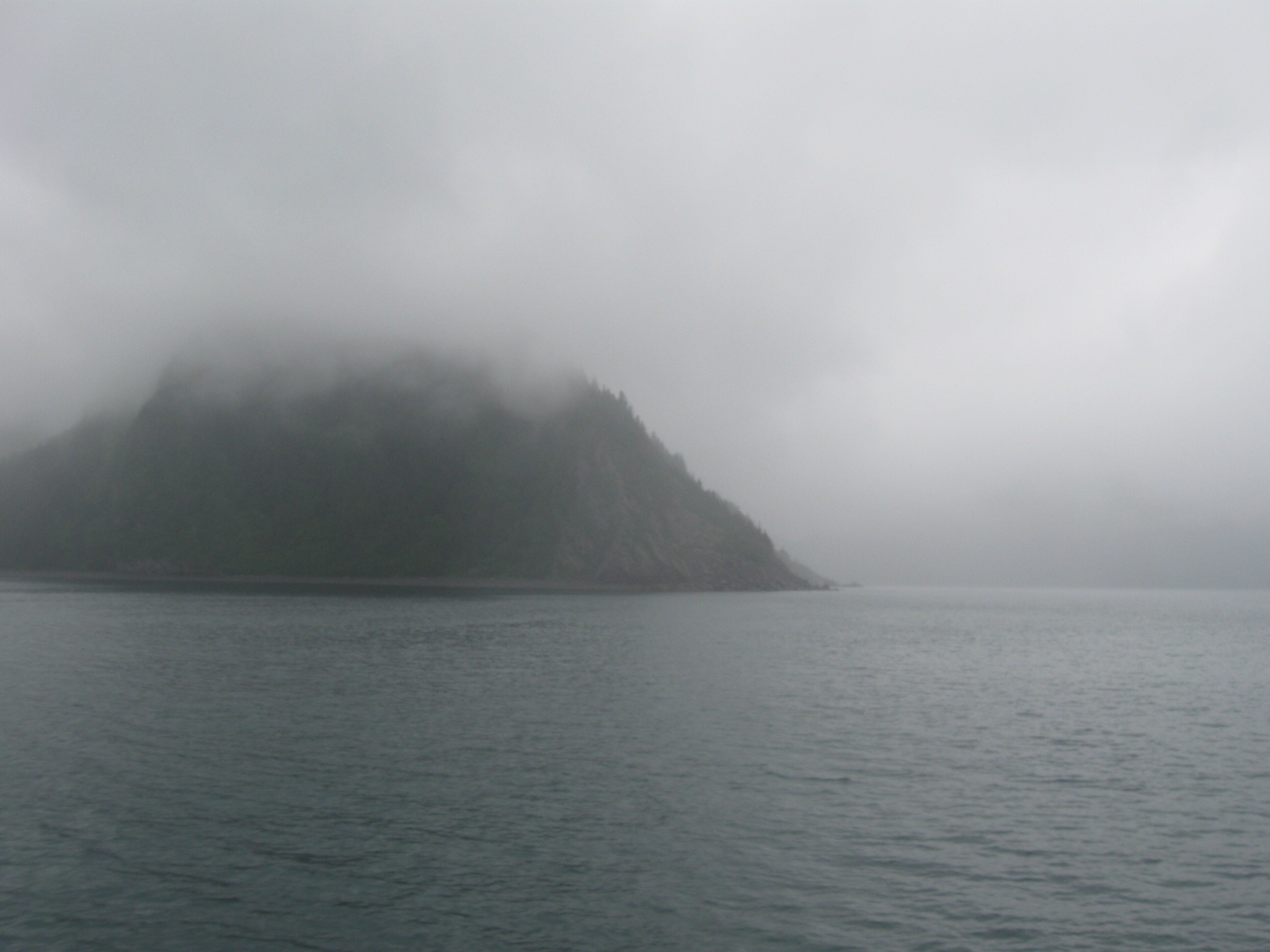
Foggy, misty, rainy. And still beautiful.
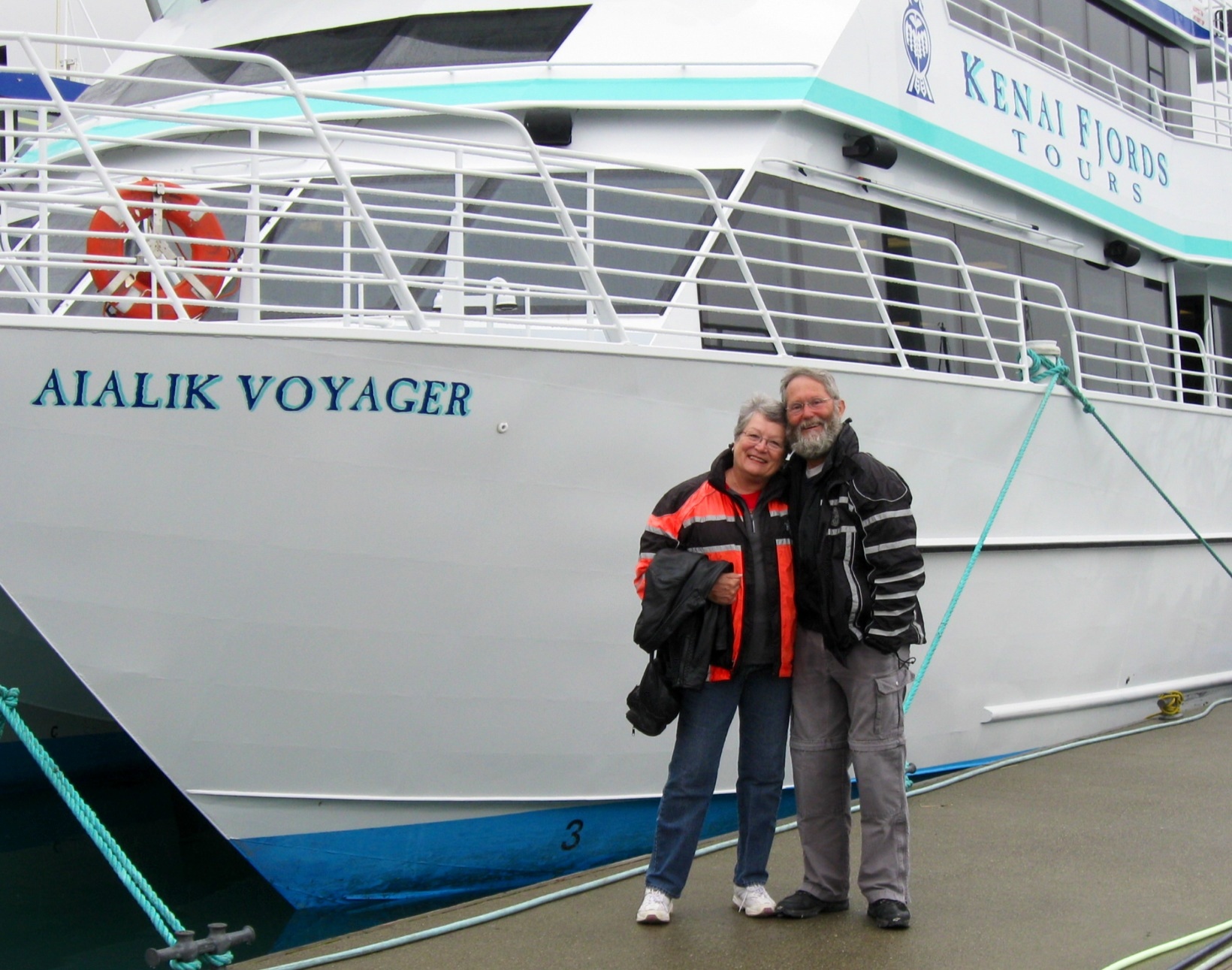
Today’s transportation out of Seward.
Today’s ride only went 95 miles round trip. And it took six hours. And it was on a boat. The Aialik Voyager, by name. And today’s numerous animal sightings were of the ocean-going kind.
After first ensuring we were not scheduled to sail on the SS Minnow, we signed on for a nautical tour of Kenai National Park and Kenai National Wildlife Refuge sailing out of Seward. The Aialik Voyager, a new catamaran owned by Kenai Fjords Tours could cruise at 26 knots (that’s 30 mph to you land lubbers) while allowing us to be warm and cozy inside with good service from the crew of three (plus the captain) but to go on deck when sightings were made. The warm and cozy was a good thing, because today’s temperature never rose above 60 degrees and at times dipped below 50.
The dramatic landscape featured sharp mountain-islands rising into the low hanging, ever present clouds. Early in the trip a misty, windy rain partially obscured the islands, but as we left Resurrection Bay and headed south into the Gulf of Alaska, the weather improved marginally when it quit raining. It wasn’t long before we had our first humpback whale sighting.
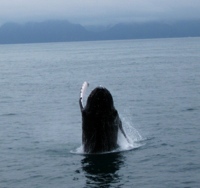
Humpback breaching with its 35-40 ton body.
Fortunately, the captain said, it was a happy playful whale that repeatedly slapped the smooth surface with its long dorsal fin or, even better, with it’s fluke. Every once in a while it would dive, disappear for 20 or 30 seconds then breach the surface, bringing the majority of its huge body out of the water and coming back down with a massive splash. The captain said that behavior is not seen often on the cruises because the whales are usually seen feeding, as were two other humpbacks we saw later in the day who dove, floated, dove again and floated again. The latter two were interesting. The first one was amazing.
We saw two different pods of resident Orcas (Killer Whales), the larger of which was close to the boat. We watched the black and white predators cleve the blue-green water for several minutes as they moved through their habitat hunting dinner. At the end of the stop, the 8-10 Orcas we had been watching began swimming in unison, rising to the surface, arching their dorsal-finned backs before a brief dive and then skimming along the surface again. It was like watching five-ton synchronized swimmers. Fascinating. The captain was able to identify some of them, but they all looked like Shamoo to me. By the way, Orcas are not actually whales. They’re the largest species of the dolphin family.
Between the whale sightings we also saw a pod of playful Dall Porpoises that swam back and forth across the bow wake like it was all good fun for them, frolicking for visiting Floridians. I wondered how you tip a porpoise for a good show, but I couldn’t come up with an answer. I think they do it for the fun of it. Just like riding a motorcycle
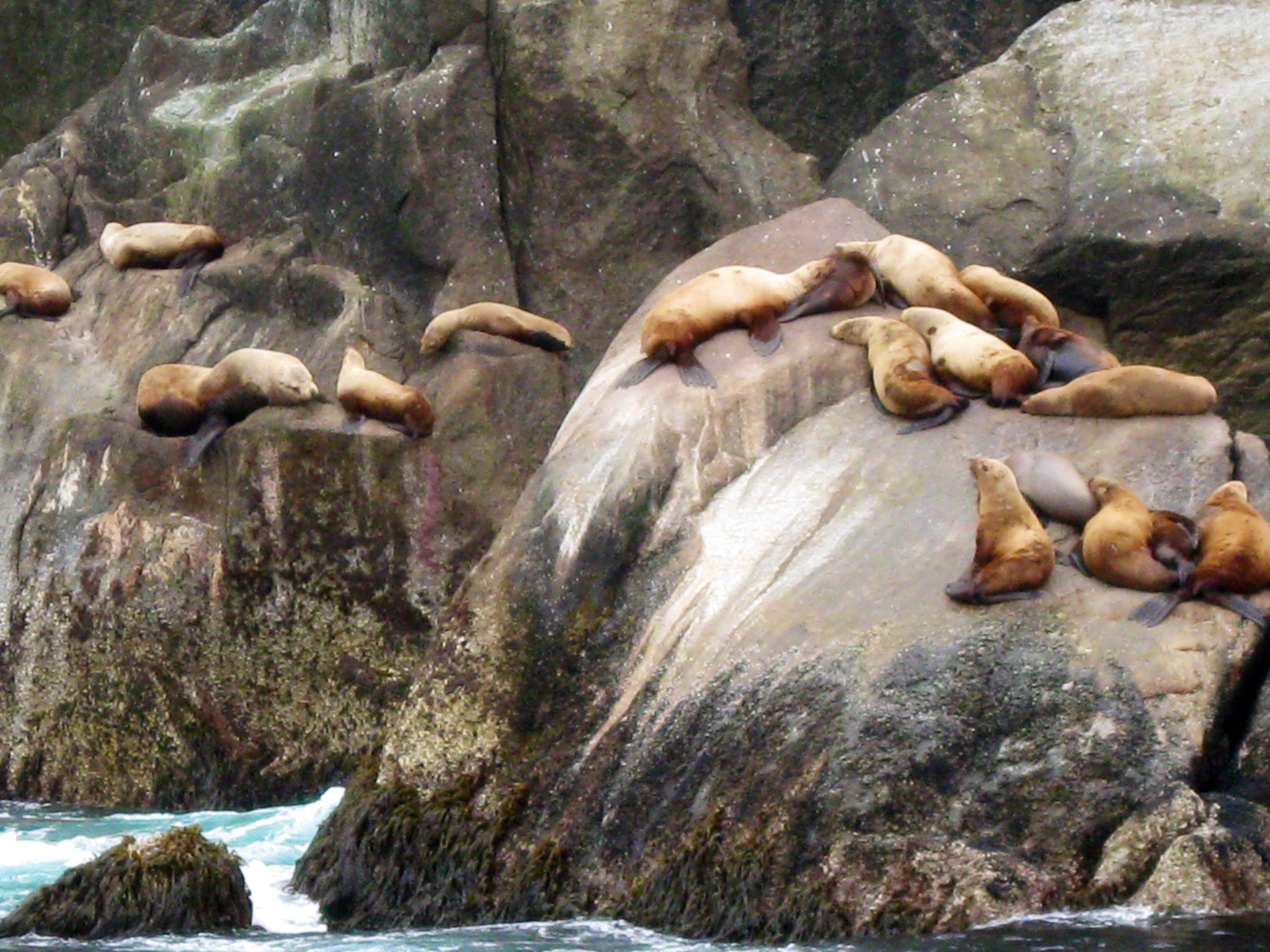
Stellar Sea Lions taking Sunday afternoon off and lounging on the rocks.
Less active, but interesting nevertheless, Stellar sea lions posed for the camera on rocks at the base of an inaccessible island, as did a half dozen seals at another location. And between the whales, porpoises, and seals, we watched colorful puffins attempt to land (and occasionally succeed) at their nesting areas high on the ledges of yet another stark rock island greenly capped on top by a small spruce forest.
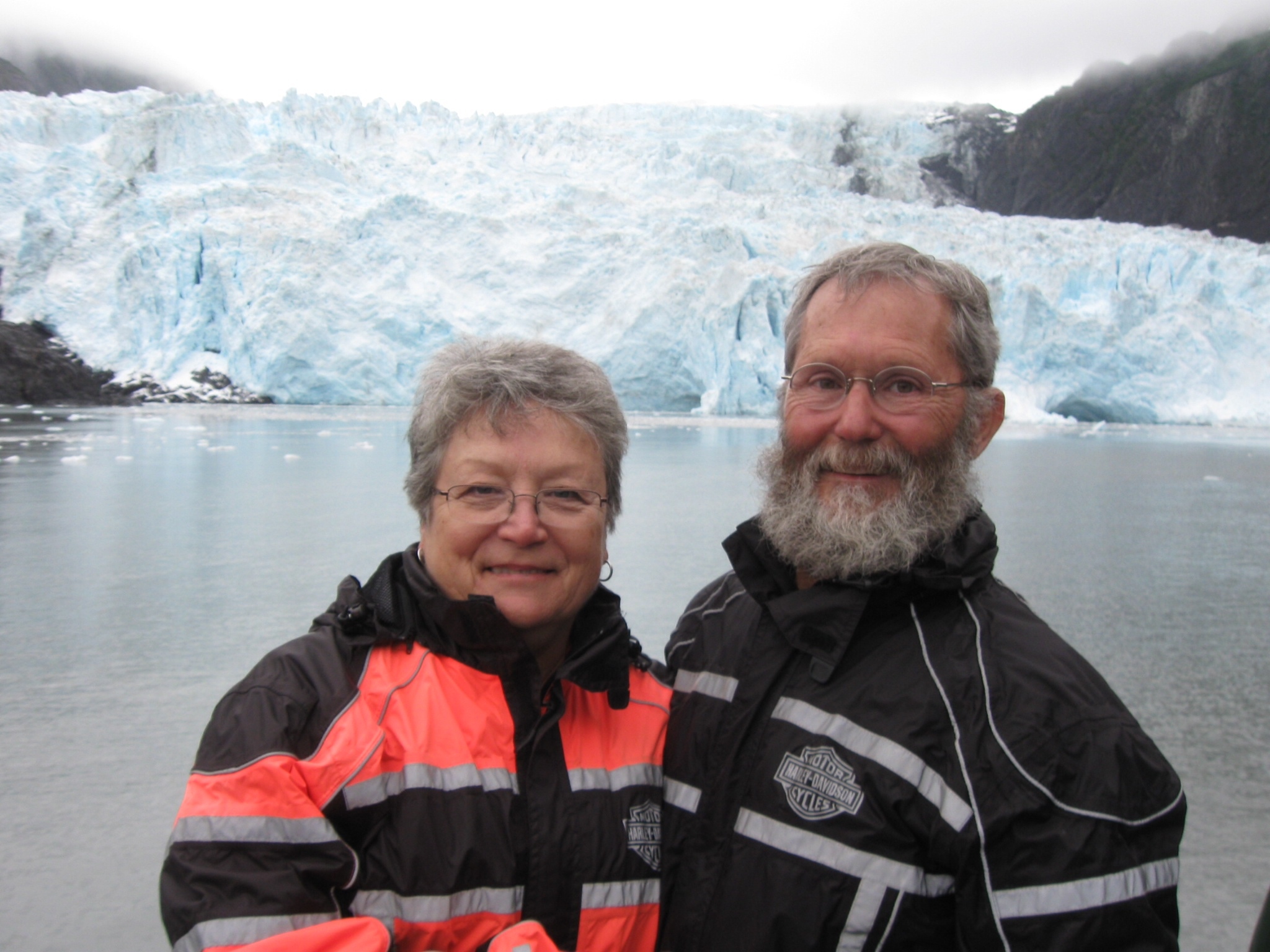
Adventurers at glacier’s edge.
Yesterday we walked to the edge of Exit Glacier. Today we boated to the edge (1/4 mile is as close as we were allowed to get) of Holgate Glacier, a part of the 700 square mile Richardson Ice Field. Exit Glacier is an extension of the same field. But Holgate Glacier was much bigger and much more dramatic as we floated soundlessly in the sound, listening to the living ice creak, grown and pop, continuing its relentless cycle of moving to the sea (at a glacial pace, of course) and breaking up.
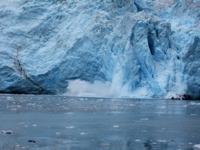
Even small calving makes a great splash.
We even witnessed several small calving events as tons of ice broke off the front of the glacier and crashed to the water with a thunderous roar and a huge splash. We could see the small 3-4 foot waves created by the calving but were told that larger chunks can create waves 10-20 feet high when they separate and slide to the sea, which is why the boat maintained a safe distance from the glacier’s face.
The glacier was the last scheduled stop on the tour, but we did come dead in the water once more for the second humpback sighting.
Dinner again back in Seward. Marilyn is developing a high-priced halibut habit, but that’s all part of the adventure. It’ll be cold turkey for her once we’re back in Orange Park.
Rain in store for the next three days we’re on the Kenai, but we’ll brave the elements as best we can, heading to Soldotna tomorrow for a two-day stint that may include an excursion to Homer and a little fishing. At any rate, the adventure will continue.
 hdriderblog